Church Leadership Series: Part 8: A Church Leader Must Not Be A New Christian

A church leader must not be a new believer, because he might become proud, and the devil would cause him to fall.

1 Timothy 3: 6 (NLT)

It is a great joy to welcome new believers into the church! But Paul gives a warning: “A church leader must not be a new believer.” We should look to those who are spiritually mature to lead us.

Paul doesn’t give us a length of time to wait, just that we are to wait. This is good, because some new believers mature faster than others. There are some who could take years to be ready while others might be ready in a year. The important thing is to give the new believer time to learn and grow in their faith in Christ.

What might be some problems with new believers in church leadership? Paul, in his letter to Timothy cautions that a new believer put into leadership too soon may become proud. The new believer may see this leadership role as a position of elevation in the eyes of others and think of themselves as something special, rather than as a servant. And Paul is concerned that this new believer, in their pride, may fall. The NIV puts it like this: He must not be a recent convert, or he may become conceited and fall under the same judgment as the devil. The devil fell because of his pride. He wanted to be higher than Jesus. Paul is concerned that a new believer will fall prey to the same sin and hurt his walk with God.

Other concerns may be tied to some of the earlier instructions given to church leaders. A leader needs to have a good reputation and live a goldy life. The new believer may not have that to begin with. He may need to have time to mature and become more like Jesus, and to gain that good reputation with others around him.

Another concern may be that a new believer will not be able to teach in the same way that a mature believer can. If a new believer is good at research, they may be able to put together a good lesson, but their teaching would generally be theory because they have not yet had time to put into practice what they are learning as a new follower of Jesus.

A new believer may also still carry sinful habits. He needs to learn to set those aside before stepping into leadership. While it is great to desire leadership, there should first be a strong desire to live in right relationship with Jesus by the power of the Spirit.

Churches often talk about discipleship when referring to the process of maturing as a believer, where over time the new believer becomes more and more like Jesus. A new believer would benefit from some discipleship first, whether formal or by spending time in the activities and teachings of the church. Part of that discipleship could include observing and learning from the leadership board or shadowing a leader as they go about their duties.

The official church leaders should be people who have already shown their leadership in the church as maturing believers. Asking them to serve on a board or a committee is a natural next step, affirming that they are already one of the people that others naturally look up to and learn from. Ongoing discipleship prepares maturing believers for the next steps in church leadership, taking on smaller roles to begin with and then being asked to higher levels of leadership as they prove themselves.

Church leaders should be mature and passionate about Christ and His church. They should learn and develop and grow until they are among the best in the church and well prepared for leadership. If you are that new believer, then do your part to continue to grow and be discipled as opportunities allow. God will build you up to the time when others recognize you have already become a leader. When that happens, step into leadership with a confident faith in God and a desire to serve.

Keep looking up,

Andy Wiebe

Book Reviews: Andy’s 2023 Reading Experience

I will be sharing a brief review of every book I read this year. Hope you enjoy and hope it encourages you to keep reading.


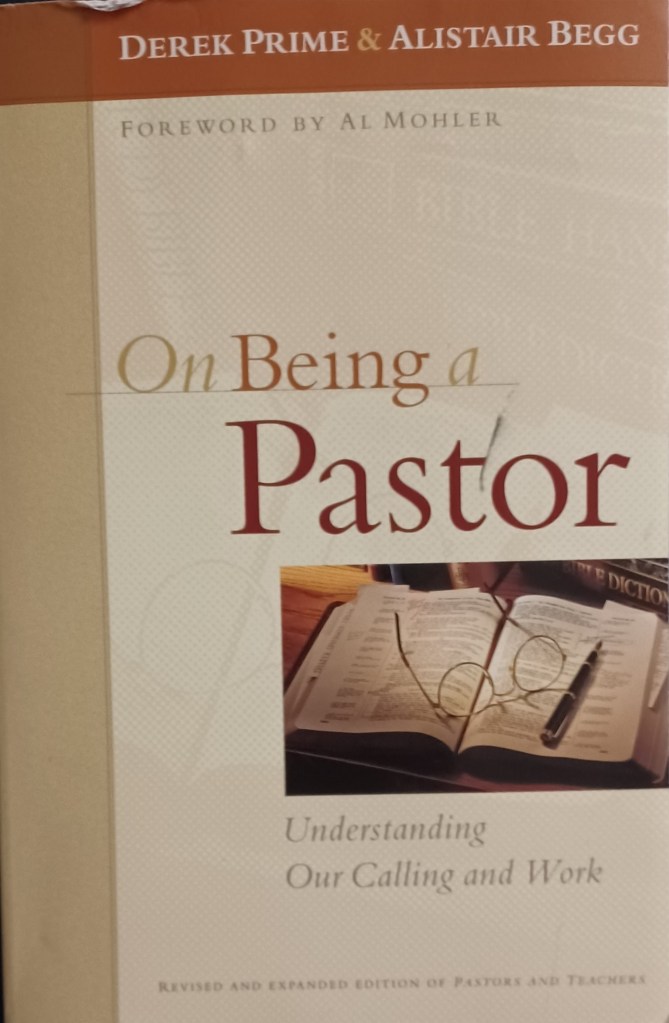
ON BEING A PASTOR – by Derek Prime & Alistair Begg

This is a great book for any pastor, especially for one who is just starting out. It covers many aspects of the pastor’s role and how to do it well. It is a bit dated, yet most of the content still speaks to the pastoral role today. The first chapter is a great discussion on the call to be a pastor, pointing out that the role can be difficult, but very rewarding if this is what God wants you to do. The authors, both pastors with years of experience themselves, then talk about the character of the pastor, his home life, and how to lead a serve a congregation well. The authors both share examples of how they have applied the teaching in many sections of the book. It is good to see the way two different pastors do the work of ministry. A great book for anyone in ministry!

Book Reviews: Andy’s 2023 Reading Experience

I will be sharing a brief review of every book I read this year. Hope you enjoy and hope it encourages you to keep reading.


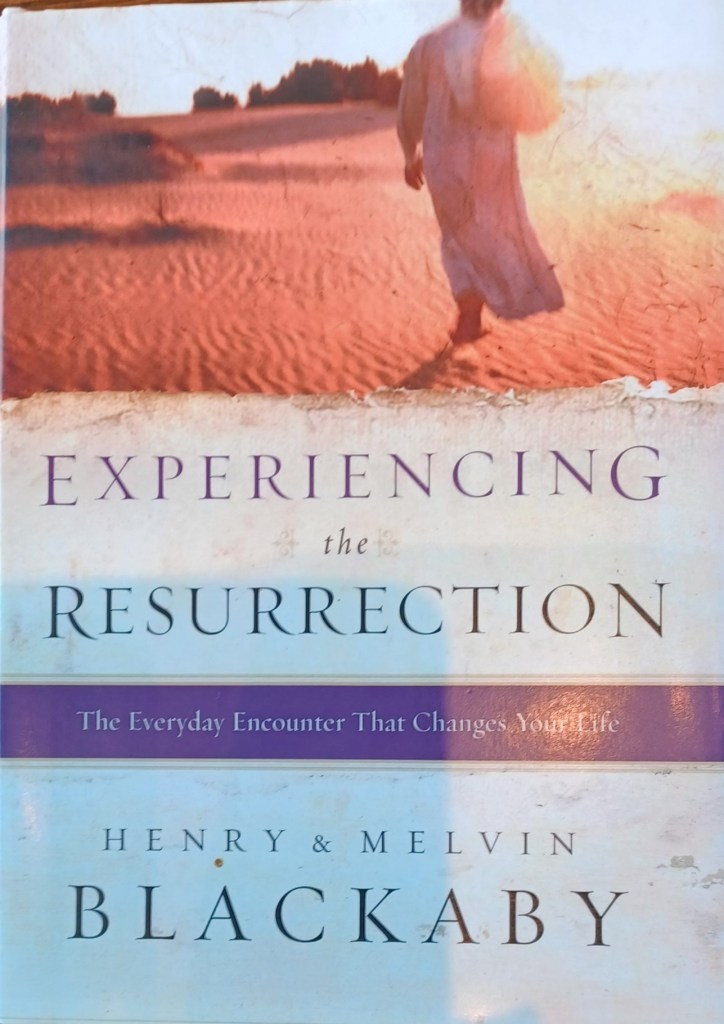
EXPERIENCING THE RESURRECTION – By Henry & Melvin Blackaby

Henry and Melvin Blackaby do a great job walking through the importance and value of the resurrection of Jesus Christ in every believer’s life. While they take time to discuss God’s purpose in the resurrection as well as Jesus’ experience of the resurrection, the value of the book is found in the third part of the book where they apply the resurrection to the believer’s experience. They write, “And as a result of what the Father has done, the resurrection is something believers can experience in daily life…as well as something they will experience for all of eternity.” To experience the resurrection in ourselves is to die to self, and to live in the power of the Spirit, dead to sin and alive to Christ living in and through us.

A great book on the resurrection!

Church Leadership Series: Part 3: The Hospitable Leader

He must enjoy having guests in his home…

1 Timothy 3: 2 (NLT) and Titus 1: 8 (NLT)

I wonder how many leaders love the idea of leading people as long as it doesn’t intrude on their personal time? We are quite private people as a culture. We want our own space. We want a place to leave all our work behind and unwind after a long day. We want some “me time.” How does that align with today’s leadership lesson?

In both Timothy and Titus, we read that a church leader needs to “enjoy having guests in his home.” Most other translations just use the word “hospitality,” or “given to hospitality” (KJV). The New Living Translation interprets it in a certain way.

In Jewish circles, out of which the church grew, hospitality was a high value. We can understand the benefit when we remember that there were not many hotels or BnB’s available in ancient Israel. Travelers depended on the kindness of others to open their homes to them for the night. But I wonder, how does caring for travelers relate to church leadership today?

In the larger picture, hospitality is about caring for people in need. They may not be travelers passing through, but they could be others in your church or neighbourhood with unmet needs. Since Paul includes this characteristic of leadership in both Timothy and Titus, it is not likely that he slipped it in as an extra. He made sure to highlight it. So how do we apply it to our lives as leaders in the church?

If you are a hospitable leader, you care about people. You care about their needs. I just recently took in the Global Leadership Summit(GLS). It was interesting to see the theme of loving people under your leadership come up again and again. A good leader understands that leadership is not about just getting people to get the job done, but recognizing and caring for the people whom you are leading.

Yes, you might open your home and have them over for a meal or backyard barbecue. It might be a great experience for those you are leading to see a bit more of your life and to spend time together outside of the work setting.

A hospitable leader might be one who has an open-door policy. A closed door closes off relationships, but an open door says, “I invite you in to interrupt me because I want to help.” If there are times you need to block everyone out to focus on something, then make sure that you have certain times where your office is clearly open and accessible to your team or your church.

At the GLS, Craig Groeschel taught that leaders who want to build trust must be transparent. Hospitality might be one way to be transparent and open. If they feel free to pop in for a chat or to discuss some questions, their trust in you will increase. They will see that you care enough about them to stop whatever you are working on to listen and to connect with them.

If hospitality is about meeting needs, a leader may want to go out of his way to talk to volunteers in the church to see what needs they have that the leader could help with. Serving alongside a Sunday School teacher or the youth leader may be a way of sharing a bit of yourself with that volunteer, learning what they need and encouraging them in the role they serve.

A hospitable church leader should also recognize the opportunity to welcome guest to church in a way that makes them feel welcomed and loved. While this is not inviting guests into your home, it is inviting them to the church and its services. If guests are not greeted warmly, they may not connect enough to want to return.

A hospitable church leader may welcome guests into their home but will also go out of their way to meet the needs of the people around them: church members, volunteers, and people you encounter in the community.

To be a hospitable leader is to go out of your way to meet the needs of others and to love them.

Keep looking up,

Andy Wiebe

Church Leadership Series – Part 1: An Honourable Position

Introduction To Series:

There are many leaders in the church, from volunteers to paid staff to elders and pastors. While the Bible seems to speak most directly to elders and pastors in Timothy and Titus, Paul speaks to anyone who is in leadership in the church and in Christian ministry as a whole. I believe it is valuable to explore what the Bibl3 says about church leadership and these various roles, and want to give good time and space to do so. As such, this is the first post of a series on this subject.

An Honourable Position

You may have heard the perspective that no one should be too quick to jump into a leadership position at church. They say things like: “If you were reluctant to become a pastor, that is better than someone who has desired it for a long time.” They seem to think that it is a good display of humility to drag our feet a little in becoming a pastor. Yet when we look at 1 Timothy 3: 1 we read, “If someone aspires to be a church leader, he desires an honourable position.” Not only is it an honourable or noble role in the church, it is honourable to desire to fulfill that role.

Church leadership is a position of great responsibility and great privilege.

Some translations of scripture describe the position referred to above as “overseer” or “bishop.” This person takes on a role of leading people in a certain direction. Paul is an example of this when he writes  “And you should imitate me, just as I imitate Christ.” (1 Corinthians 11: 1). While a church leader might teach a class or lead a program, a large part of their leadership is leading by example. People who spend time with a church leader will likely become a little like the leader they follow.

There are many different aspects of the leader’s role, but I specifically want to remind us that it is a role that is an honourable position because it helps point others to Christ and a relationship with Him. The honourable part is that the leader has chosen to move past being a disciple to being a disciple-maker. They are now pouring into others in the same way that others have given to their spiritual growth.

In the Old Testament, prophets spoke God’s words to the people and priests went before God on behalf of the people. While church leaders today do not fulfill those specific roles, leaders do have the honourable position of speaking God’s words to those they lead and to bring those who follow before God in prayer. In a small way, a church leader acts like a bridge between God and His people, introducing them to Jesus Christ, the one “true bridge” who made it possible to have a relationship with God in the first place. This is the great privilege of leadership, that we get to help others grow in their relationship with God through a growing faith in Jesus Christ!

How is it an honourable pursuit?

To desire to be a leader, specifically a church leader, is to desire to help others to grow. What better pursuit is there than to help people grow in their faith in God and their relationship with Jesus Christ? We should long for many more individuals to step into church leadership, as both volunteers and paid full-time servants. We should pray for others in our own churches and Christian circles to recognize God’s call on their lives and step up to what that call may be. It is important to recognize that not every leader is called to lead in the church – godly leaders are needed in the business or political world as well, but it is an honourable position to pursue in the church.

As leaders who are already serving and leading, we need to look for ways to continually invite others into this honourable position. Let’s give others opportunities to try to learn and grow as leaders. And let’s thank God for how He chooses to use church leaders to impact so many others for Christ.

Keep looking up,

Andy Wiebe

Book Reviews: Andy’s 2023 Reading Experience

I will be sharing a brief review of every book I read this year. Hope you enjoy and hope it encourages you to keep reading.


EMBODIED: Transgender Identities, the Church and what the Bible has to say – by Preston Sprinkle

Sprinkle asks the question: If someone experiences incongruence between their biological self and their internal sense of self, which one determines who they are – and why?

He then walks through a thoughtful and biblical journey of defining the transgender issue, understanding what the real issues are, and looking at how the bible speaks to this struggle many people face. He finishes by addressing some of the realities of how to love transgender people in a way that is kind and reflects Jesus. A great book for one of today’s tough struggles.

Allowing The Bible To Guide Our Leadership

Many issues arise in our world today because of our search for the answer to the question: What is the truth? Theological issues may come about when we search for answers in teachings we have not heard before. Political issues can begin when we as Christians question what our place is in politics or responding to decisions our governments make. Moral and lifestyle issues are often found when the church is unsure how to respond to what is becoming acceptable in the world around us and even in the church that has historically not been accepted. What is the truth?

While there are many today who pretend we can have different truths to guide us, truth doesn’t work that way. If I am driving down the highway and decide that my truth is that I am in England so I will drive on the left-hand side of the yellow line, my truth will be quickly confronted by another truth when the traffic in that lane comes hurtling towards me. That is a silly simple example, but the fact is, what we believe about things makes a difference, and impacts our relationship with others. Truth, as God has laid it out, affects all of us.

As people of God, and as leaders of churches, we need to recognize that our answers need to be found in God’s Word. His Truth must be upheld in our churches. I do understand that sometimes we need to do some work to determine how God’s truth impacts the questions we face. But our answers should be informed by God’s Word – the Bible.

How might we find answers in the Bible?

Read the Bible.

The first priority to actually read the Bible. Read it regularly and search it for answers to your questions.

As you read, ask God, through the Holy Spirit, to give you correct understanding of what you are reading. We recognize that the Bible is more than a story book, though it contains many stories. Whether we are reading biblical stories, or a teaching section, or even some of the poetic books like Psalms and Proverbs, we want God to help us understand what the truth is and how it applies to my life and to the church where I serve as a leader.

Consult with others on difficult passages or topics.

We are blessed to have the results of many experts at our fingertips. We can find commentaries where others have worked through scripture and give their expert opinions. We can make use of tools that help with word studies and guide us through some of the definitions of the original language. We can read books by people who are struggling through some of the same questions we are. We cannot interpret scripture completely on our own, there is importance in reading scripture in community. Whether we agree or disagree, there is benefit in seeing how others have processed biblical truth in light of this topic. I’m presently reading a great book on how to respond biblically to those living a gay lifestyle. There are many other topics that others have been able to work through in more detail than we have so we can learn from them. Just make sure their teaching is arrived at by careful study of scripture.

And one of the simplest ways to consult others is to have conversations with others in your church as you work through scripture to find the answers you need. Find some other believers and read the Bible together. Work through scripture as a leadership team and ask God to guide you to the correct understanding and application.

Do what it says.

The hardest part of allowing the Bible to guide our leadership, is to then do something about what it says. If it means leadership needs to confront false teachers or people living contrary to truth in your church, then do it. If it means changing policies on how volunteers are screened, then change the policies. If it means teaching the church what it means to live out truth and love in light of Gods Word, then teach your church that.

If we are going to allow the Bible a prominent role in church leadership, then we need to make sure we read it regularly. We need to do the work of understanding it clearly, and then we need to follow through on what God is asking us to do as a result.

If we are Christian leaders, whether in the church or elsewhere, our leadership must be informed by the truth of God’s Word.

Keep looking up,

Andy Wiebe

Book Reviews: Andy’s 2023 Reading Experience

I will be sharing a brief review of every book I read this year. Hope you enjoy and hope it encourages you to keep reading.


PEOPLE TO BE LOVED: Why homosexuality is not just an issue – by Preston Sprinkle

Preston Sprinkle provides a well thought out and Biblical response to questions about homosexuality. This is a much-needed book for our world and for the church. Sprinkle is writing about an issue that is important for him as he has gone out of his way to develop friendships with many gay people. He is writing about how to love real people and how to maintain truth. He does a thorough job of looking at scriptures, even refuting some that have been used as “anti-gay” artillery, while highlighting others that are clearly lay out God’s view against homosexuality. He helps us work through certain definitions that clarify what we are talking about. I appreciate how his struggle to maintain God’s truth as authoritative and maintain loving friendships with gay people is evident in his book. I highly recommend this book to anyone wanting a solid understanding of God’s view regarding people with same-sex attraction.

Elements of A Spiritual Checkup

I visited the dentist this week for what most people would call a regular checkup and teeth cleaning. Though since it had been seven years since my last checkup, it was not very “regular”. But as I was sitting in the chair, I began counting how many people were involved in my checkup. There was someone at the front desk, another taking my forms, someone doing the x-rays of my teeth, someone else to clean my teeth, and one or two others supervising. And that was all before I even saw the dentist! And then after, someone else fitted my teeth for a guard.  Each person had a specific role to play in making sure I received a full checkup and a thorough cleaning, and proper advice for caring for my teeth.

As I was lying in the chair, I began thinking of how this might compare to a thorough spiritual checkup. I would venture to say that we don’t take our spiritual checkups as seriously as this dentist and his team. Yes, many of us regularly read the scriptures and pray. We attend church regularly, and even examine our hearts before receiving communion, but might we benefit from more. If we were to have a thorough spiritual checkup, what might it look like? And would we be better served by having someone else walk us through it, or could we do an accurate enough checkup on our own?

Determing the present reality.

I don’t know if we need five of six specialized individuals to guide us, but we would benefit from a similar experience spiritually. We could have a trusted friend or a counselor or pastor walk through this process with us, or we could try it on our own. We could begin by looking at our spiritual condition.

Take inventory of reality. What does your spiritual life look like right now? In the same way a dental checkup begins with x-rays to identify the current situation, checking our spiritual life should start with an initial evaluation of what the situation is. Do we need some x-rays of our soul? With the psalmist we could ask God to examine us:

Search me, O God, and know my heart;

    test me and know my anxious thoughts.

Point out anything in me that offends you,

    and lead me along the path of everlasting life. (Psalm 139:23-24)

It’s rare that we can accurately identify our own state (otherwise, why would I need the x-ray in the first place?), so it can help to ask others in our lives who know us well. We could ask the people around us  what areas in our spiritual lives they see us perhaps needing improvement?

Ask God to guide the process of taking serious inventory of your spiritual condition.

A thorough cleaning.

Though I brush my teeth (probably not as often as I should), I still benefit from a professional to do a cleaning. In the same way, I can’t do a thorough cleaning of my own soul on my own. Instead, ask God to do a thorough cleaning of your soul. The initial evaluation shows you habits you need to remove, or sins you need to confess. Next, ask God to forgive. Wash me clean from my guilt. Purify me from my sin. (Psalm 51: 2)

After the regular cleaning, where God purifies your soul again and again, you can celebrate: our guilty consciences have been sprinkled with Christ’s blood to make us clean, and our bodies have been washed with pure water. (Hebrews 10: 22)

Maintaining spiritual health.

The dentist pointed out where some issues were occurring in my teeth and suggested some methods of caring for my teeth. He also suggested a teeth guard to wear at night. Going to the dentist isn’t very helpful if I stop caring for my teeth once I leave the clinic. In the same way, after reviewing your spiritual health and asking God to forgive those sins you have allowed to creep in, don’t continue in those old ways.

Instead, consider: what are some things I will do differently going forward, to protect my spiritual condition and even to make it better? This might be recommitting to reading the Bible regularly, maybe choosing a plan to follow. It might include reading books to help you grow. Decide what will help you be more spiritually healthy as you go on with life.

While there could be many more elements of a spiritual checkup, these are the key ones. If you aren’t sure how to start, you might want to talk to a pastor or work through this with a trusted friend.

May you be spiritually renewed going forward.

Keep looking up,

Andy Wiebe

Book Reviews: Andy’s 2023 Reading Experience

I will be sharing a brief review of every book I read this year. Hope you enjoy and hope it encourages you to keep reading.


UNSTUCK: A Nine-Step Journey to Change that Lasts – by Tim Lane

Tim Lane walks through a 9-step process to deal with lasting personal change. If there is an issue or a habit you are dealing with and would like to change, he believes his 9 steps will help you work your way through and overcome. He uses some examples from his own life and people he has helped to show how to work the process. If you are looking to make personal change, check out this book.