Joining God at Work

We look for answers to big questions our whole life. Even when we are young adults start asking us, “What do you want to be when you grow up?” As we come to the end of high school, we are faced with “what’s next?” Do we go off to college or university, or get a job, or start an apprenticeship? It’s not long before we need to decide if we want to marry and who.

One of the big questions of life for Christians is “What does God want me to do?”

An answer is found in John 5. Jesus healed a man, on a Sabbath, who had been sick for thirty-eight years. This gets him in trouble with the Jewish leaders, who accuse him of breaking Sabbath rules. Jesus replies by saying he is only doing what the Father is showing him to do.

John 5: 19 and 20 says: “So Jesus explained, ‘I tell you the truth, the Son can do nothing by himself. He does only what he sees the Father doing. Whatever the Father does, the Son also does. For the Father loves the Son and shows him everything he is doing.” In John 5: 30 he continues, “I can do nothing on my own.”

If Jesus, the Son of God, only did what the Father does or shows him to do, and if he couldn’t do anything by himself, then who are we to think we can do our own thing? If we are followers of Jesus, then we should be doing the same things as Jesus, including getting our directions from the Father.

“What does God want me to do?”

This question, if we follow Jesus’ example, can by answered by watching where God is at work and joining Him in what He is doing.

In the story, Jesus healed a sick man, and it sounds like only one sick man among a crowd of sick people. Why? Is it possible that he could see that God was at work in this one person? Was there something about this man that convinced Jesus he was receptive to God’s healing if only given the opportunity? Somehow, Jesus knew that this man was part of what God wanted done there on that day.

If we want to follow the example of Jesus, we need to learn how to be attentive to what God is doing and what He is asking of us. This begins with prayer. It’s interesting to notice how often Jesus spent time alone in prayer with the Father. We need to pray. And we need to invite the Holy Spirit to open our eyes to see what God is doing.

Jesus told us in John 14 that he was going to send us the Holy Spirit “who will teach you everything and will remind you of everything I have told you” (John 14: 26). We have the privilege of the Holy Spirit in us to guide us, to teach us, and to help us see where God is already working.

We need to ask for eyes to see receptive hearts and open doors of opportunity. We need to invite God to speak to us, and to help us hear his voice so we can respond in obedience.

Jesus assumes the Father will show him what to do. We need to join with Jesus in that same assumption and watch and listen with attentive eyes and ears so we can respond with willing hands and feet.

God does have a plan for this world, and He invites us as believers to join him in His work. If Jesus can do nothing on his own, we surely can’t either.

May you hear and see God at work and know how to follow Him obediently.

Keep looking up,

Andy Wiebe

Discipleship Is Practical

Therefore, go and make disciples of all the nations, baptizing them in the name of the Father and the Son and the Holy Spirit. Teach these new disciples to obey all the commands I have given you.
Matthew 28: 19, 20

Discipleship is one of the key responsibilities Jesus gave to the church. As the verse above says, Jesus commanded his followers to make disciples of others by teaching them everything that Jesus had commanded. Most discipleship is purely focused on teaching people spiritual truths: how to read and study the Bible, how to pray, how to hear God, and so on. These are incredibly important for every believer.

But I want to suggest that we need to recognize that discipleship is also very practical. Discipleship needs to include the practical aspects of serving and leading in a church. It might be as simple as helping volunteers plan how to set up for the next church potluck or teaching others how to run the sound board or set up the PowerPoint slides for Sunday’s service. It may include teaching musicians how to pick music, how to set up each of the instruments in the band, and how to do well at leading in music as well as leading in worship. Discipleship may include teaching a new chairman of the Elders board how to plan for and run a meeting. Even things like showing a new cleaning crew how to clean the church well is an aspect of discipleship. Don’t think you need to do all of these things as the pastor, but help those who know how to do these things to teach others.

I recently heard a volunteer complain that he was the only one who put away the chairs and tables after the potluck. Others saw him stacking chairs and hauling them away, but hardly anyone else stopped their conversation with friends to help clean up.

I understand and feel the frustration of a volunteer like that who sees a need and makes sure it is met. What needs to happen is practical discipleship. The volunteer who sees the need and knows what to do needs to learn how to recruit others to help, while respecting conversations that are happening. Sometimes it seems that doing things yourself is easier because you know what to do and where things go. It takes time to explain and show others how to do something, but unless you equip others, you will always be doing it by yourself, and what started out as a fun way to serve becomes a frustrating experience.

Here are some practical ways that the volunteer in the above story could disciple others. A first step may be to determine everything that needs to be done in this task, and the steps to make it happen. Sometimes these need to be in order and other times they do not, depending on the situation. A detailed sheet can be posted or handed out to new volunteers so they know exactly what is needed and how they can participate. For example, if a meal is planned, an appropriate number of volunteers can be recruited and shown the detailed to-do list. They can be clearly told what time to arrive so they will be ready for the event. The “discipler” who is used to setting up and taking down tables and chairs can still be there the first time or two to ensure that it is done right and that each new “disciple” knows how to do it.

Even if no recruits had been arranged beforehand, the experienced volunteer could have recruited a few people to help. Often, if people are asked and clearly told what is needed, they will respond. Unfortunately, those who know what to do often assume others do to, but that is not the case. People often need to be led, even in the simple case of putting away tables and chairs.

So practical discipleship includes recruiting people, preferably ahead of time, for a specific task. It involves having a clear understanding of what is needed, defined in a clearly written and posted list. And it involves the experienced one being available to guide the disciples until they know how to do it on their own.

Yes, discipleship must have a spiritual aspect and focus on growing as followers of Jesus, but practical discipleship is also highly important.

May God guide you as you disciple others in practical ways.

And please comment with suggestions of what has worked for you to do practical discipleship.

Keep looking up,

Andy Wiebe

Life-Enhancing Goals!

“Those too lazy to plow in the right season will have no food at the harvest.”

Proverbs 20: 4

“You ought to say, ‘If it is the Lord’s will, we will live and do this or that.’”

James 4:15

The one who has no goals in life will have nothing to live for. We all need purpose, and part of that purpose is to accomplish things, whether for oneself, for others, or for the betterment of the world around us. I don’t really like New Year’s Resolutions as they are often unrealistic dreams with no clear steps to accomplish them, but I do like the idea of asking God to guide us in setting meaningful goals that will help us live with purpose.

The one who has no goals will be like the lazy farmer who doesn’t plow and seed and harvest because he has no drive to make it happen. Instead, we ought to ask God what His will is for our lives. In James 1:5 we are told, “If you need wisdom, ask our generous God, and he will give it to you.” Let’s ask God for wisdom in how to set meaningful goals for our next year.

Spiritual Growth Goals: Set some goals that will help you to grow spiritually.

  • These may include reading the Bible and prayer, when you will do it, how often, and how much of the Bible you want to read. Many people follow a plan that guides them through the whole Bible in one year.
  • These goals may include reading books on spiritual growth – maybe even books that challenge your thinking and stretch your understanding of God and how He works today.
  • Maybe you can find a course or seminar that teaches you to grow spiritually.
  • Or determine to practice some new spiritual disciplines.

Ministry or Serving Goals: Set some goals about how you will serve others or serve in the church.

  • Maybe you need to try serving in a new area of ministry in the church.
  • Maybe you can find a place to serve in your community. It may be serving the poor or underprivileged. It may mean serving on a community board or committee.
  • Maybe there is some training that you need to take to become better equipped to serve somewhere. Look for a course that will help you develop new skills.

Health Goals: Set some goals that will help you be at your best health.

  • Decide what you will do for exercise, how often, where, and so on.
  • You might want to adjust your menu so you eat healthier meals.

Personal Growth: Set some goals to grow personally.

  • This could be through setting a goal for the type of books you will read or how much time you will spend reading each month.
  • Look for experiences to enter into – like a retreat or a mission trip, and make it a goal to arrange your budget and schedule to attend.
  • Maybe you will regularly set aside time to learn and practice a new skill – like knife making or cake baking.
  • Maybe you want to study a new language.
  • Imagine what you want your life to be like in ten years and build a plan to achieve that by setting short-term goals along the way

May God guide you as you ask Him for wisdom to become the person He longs for you to be. Ask Him to guide you to the right goals and how to achieve them.

Keep looking up,

Andy Wiebe

Train Yourself to Be Godly #8: Honouring Your Body in a Way That Honours Christ.

*Training yourself to be godly may include honouring your body.

So you must honour God with your body. (1 Corinthians 6:20)

There is a website that lists 20 Famous Temples to Visit Once in Your Lifetime. These are incredible works of art and design.

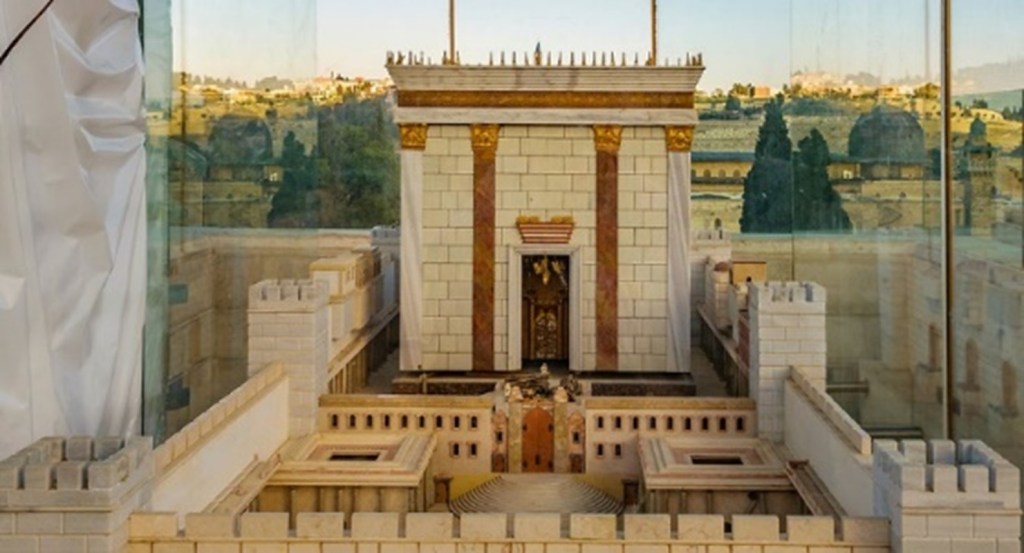
A temple not on the list but would have been great to see is King Solomon’s Temple. Before Solomon built a temple, God had Moses and the Israelites build a Tabernacle, a tent. This is described in Exodus 25 – 40. We are given all kinds of details about what the Tabernacle was to be like, how to design it, what colours to use, who was to design and build or sew it, and what kind of furniture was needed.

And then we come to Exodus 40: 35. “Moses could no longer enter the Tabernacle because the cloud had settled down over it, and the glory of the Lord filled the Tabernacle”. God came and lived on earth in the temple. Leviticus goes on to explain the role of priests who served in the tabernacle and details about sacrifices that were done at the tabernacle.

Many years later, when the Israelites are in the Promised Land, God asks Solomon to build Him a temple, a more permanent place of worship. There are four chapters in 1 Kings dedicated to describing the details of this temple (1 Kings 5-8) including measurements and designs and decorations to be used. 2 Chronicles gives us even more details about the temple in another six chapters(2 Chronicles 2-7).

“When Solomon finished praying, fire flashed down from heaven and burned up the burnt offerings and sacrifices, and the glorious presence of the Lord filled the Temple. The priests could not enter the Temple of the Lord because the glorious presence of the Lord filled it” (2 Chronicles 7:1-2).

God comes in fire and smoke to dwell in the Temple. God comes to live in, dwell in this Temple, and He gave very specific, detailed instructions to ensure it was designed, built, and furnished just right. Think about how much detail, all those chapters of details, went into this place that God would choose to live in here on earth.

The Bible tells us that God no longer lives in a temple of stone, but in the hearts of believers. In 1 Corinthians 3: 16-17 we read: “Don’t you realize that all of you together are the temple of God and that the Spirit of God lives in you?”

Did you catch that? Now, the temple is us!!

Let’s look at one more scripture. 1 Corinthians 6:18-19 “Don’t you realize that your body is the temple of the Holy Spirit, who lives in you and was given to you by God? You do not belong to yourself, for God bought you with a high price. So you must honour God with your body.”

God is no longer living in a physical building, but in His people, and specifically in each one of us as believers. And the exhortation is to “honour God with your body”.

John 14: 23 says, “Jesus replied, ‘All who love me will do what I say. My Father will love them and we will come and make our home with each of them.’”

Jesus, by the Spirit lives in us! The Father by the Spirit lives in us! We are the temple of God.

The phrase, “So you must honour God with our body” comes after a warning to flee sexual immorality. Many, if not all sins we commit, we do by using our bodies.

  • We lie by using our mouth.
  • We listen to gossip by our ears.
  • We lust for things with our eyes.
  • We dwell on temptations with our minds until we act on them or say no to them.
  • We hit with hands and use our feet to walk into places we shouldn’t.

But the very same body can…

  • Use the mouth to speak words of encouragement.
  • Use the ears to listen to a grieving friend.\
  • Use our eyes to see the needy around us and help them.
  • Use our minds to consider ways to help others.
  • Use our hands and feet to help in practical ways – and to walk into church and lift our hands in worship!

We need to honour God with our bodies, to recognize that we are the Temple of God, and then to invite Him to take up residence in our lives as he did at the Temple. Invite the Holy Spirit to fill you as you surrender your body to be used for his honour.

We will look at a few spiritual disciplines next week, but for now, as you think of training yourself to be more godly, recognize that your body is a gift from God that He chooses to live in, so honour God with your body.

Keep looking up,

Andy Wiebe

Train Yourself to Be Godly #7: The Encouragement of Fellowship

*Training yourself to be godly may include fellowship and community.

It is a joy to be part of a church family that truly loves each other and cares for each other. There are some churches where people are truly experiencing fellowship as they encourage each other to become more like Jesus.

Hebrews 10: 19-25 gives a great description of what this fellowship can and should look like. It begins with a reminder that all believers are together in their relationship with Jesus. “We” can boldly enter the Most Holy Place – we – not just you, or just me, but the idea is that “we” can. And not just the people of the Old or New Testament. Not just Jews.

He is using inclusive language – as in “we are in this incredible journey of relationship with God together.” We are all on the same road to heaven, not on a bunch of unrelated individual roads or journeys, but we are on this journey of relationship with God through faith in Jesus together.

And then, in verses 23 -25, the author describes how we should be encouraging each other in our life with Jesus.

Verse 23 Let us hold tightly without wavering to the hope we affirm…

Let “us” hold tightly without wavering to the hope we affirm. “Us”. We are not clinging to that hope – that life raft – by our self. Our hope in Jesus is not something we have to hold onto alone. We are invited to hold onto our hope in Him together!

Verse 24 Let us think of ways to motivate one another to acts of love and good works.

Let “us” think of ways to motivate one another. This may require a little creativity, we need to find ways of encouraging each other. The NIV says it like this: let us consider how we may spur one another on toward love and good deeds.

The Greek word for “spur” actually means: provocation, stirring up, sharp disagreement. We are to provoke one another to good deeds.

So the NIV is right. A spur in the side of a horse gets it moving. A spur in your side from a Christian brother or sister may get you moving in the right direction as a follower of Jesus – provoking you to consider getting involved in acting out your faith. We are to stimulate our brothers and sisters in their journey with Jesus.

Our journey with Jesus was never meant to be a solitary voyage. I have a friend who loves canoeing. This summer, he went on a 10-day canoe trip, all by himself. While that is fun for him, that is not the right picture of the Christian life. The Christian life might be best pictured by a voyageur canoe, or those Chinese Dragon boats. It is many people working together and pulling in the same direction.

Verse 25 And let us not neglect our meeting together, as some people do, but encourage one another…

There are some who think they can have a personal faith in Jesus and a relationship with God, and they don’t need anyone else. That is not the picture of the Bible. We need to be intentional about meeting together. This is about more than joining others in a worship service but to meet together to encourage each other in our Christian life.

We need each other. We need to meet so we can spur each other on. We need to live life in connection with each other.

To encourage one another is to give one another courage. There are times one person has more courage than another. One person’s faith is stronger at one point than another. One person is discouraged or un-couraged and needs to be en-couraged!

Let’s finish with something practical. Here are some “Fellowship Questions” you can ask of each other when you meet with another believer. Move beyond the weather and sports and the latest hobby you are learning to finding ways of encouraging each other in our walk with Jesus.

1.         What have you been reading in the Bible lately?

2.         What have you been learning about your walk with Jesus?

3.         Do you have sense of how God is using you or wants to use you to love and do good deeds?

4.         Where are you discouraged or feeling down in your life?

5.         How can I encourage you or pray for you today?

Keep looking up,

Andy Wiebe

Train Yourself to Be Godly #5: Other Spiritual Practices of Prayer

*Training yourself to be godly may include a rhythm of prayer and fasting, prayer and solitude, and listening or conversational prayer.

Last week, we talked about the spiritual practice of prayer. We have the privilege, as children of our heavenly Father, to talk with him about everything in our life. We can pray about all our concerns and thank him for all he has done for us.

There are a few other spiritual disciplines that are tied to prayer. It may be that you pray often, but haven’t tried some of the practices below. Or maybe you have tried them but have not intentionally made them part of the rhythms of your life. Check them out and ask God for direction on which one to try this week and which ones to incorporate into your walk with God.

SPIRITUAL PRACTICE: Prayer

The first practice is simply prayer but being intentional about determining when and where and what you will pray about. You could develop a prayer list about whom or what to pray for and schedule a regular time of day to pray. If you want to grow in your relationship with Jesus, you need to pray.

SPIRITUAL PRACTICE: Prayer and Fasting

Scripture is clear that fasting was part of people’s lives as they sought God – and usually prayer goes with the fasting. In the book of Esther, Esther asks Mordecai to tell her people to fast. She doesn’t ask them to pray, but that is the assumption – if they fast, they will be praying. They were fasting in order to hear from God and for God to give direction to Esther.

Fasting is simply going without food for a meal or two, or day or two. Some choose to fast for a week or more. Some emulate Jesus and his forty-day fast after his baptism. Some choose to fast by removing something else of importance from their life besides food, such as fasting from technology, or that special hot drink you like. The goal is to demonstrate that one’s desire for God is greater than our desires for other things.

You might want to include prayer and fasting in your walk with Jesus.

SPIRITUAL PRACTICE: Prayer and Solitude

Payer is talking with God. At other times it is just sitting and resting in the presence of God. To be in solitude. This is a hard one!

We fill our lives with busyness and with people and noise. Maybe you want to practice the discipline of Solitude – just stopping and being with Jesus. Sometimes I see this as having coffee with Jesus. Grab a coffee and just sit in prayerful thought as if Jesus is right there having coffee with you. This is less about what you need from Jesus and more about just being in his presence.

Wait. Maybe Jesus will say something – impress a certain thought or scripture on your mind. Maybe even give you direction for the day.

SPIRITUAL PRACTICE: Listening Prayer/Conversational Prayer

Very often, our prayer time is a time of giving God a list of requests and thanking him for what He has done. Sometimes we sit in solitude enjoying being in His presence.

We also need to take time to specifically listen to God. This is not about getting through my list and going on with my day, but taking time to ask God questions and wait for His answers. It is about listening for His still small voice, or a sense, or a reminder of a scripture.

For me, listening prayer works well with a journal, I write down my conversation – what I am saying and then what I think He is saying. I then ask another question to clarify or to learn more, like in any conversation.

I encourage you to slow down and spend time with God, listening and talking with, not just to, God.

Keep looking up,

Andy Wiebe

Train Yourself to Be Godly #4: The Spiritual Practice of Prayer

*Training yourself to be godly will include intentional prayer.

It is easy to worry. We all face things that are out of our control, whether it’s the state of the world that we see in the news or the health conditions of loved ones. We don’t have to look far to realize that we do not control most things in life. This may cause us to worry, but scripture suggests an alternative.

Look at the words of Philippians 4:6-7,

Don’t worry about anything; instead, pray about everything. Tell God what you need, and thank him for all he has done. Then you will experience God’s peace, which exceeds anything we can understand. His peace will guard your hearts and minds as you live in Christ Jesus.

We are encouraged not to worry or be anxious about anything. Anything seems to, well, include everything. There is nothing worth worrying about. It won’t help us anyway, even if we do.

Instead, we are to pray and pray about everything. We should have nothing to worry about and everything to pray about. Everything. That means that everything we can think of or imagine can be prayed about. We should pray for those suffering with cancer and for persecuted Christians, and for our work situation or relationships, and even a parking spot or finding the right Birthday present for our spouse.

The verse continues, “tell God what you need, and thank him for all he has done.”

God wants us to communicate our need to him. He wants us to ask for help. And he wants us to thank him for what he has done for us. This helps explain what praying for everything means as prayer includes both asking for help and thanking God for all the help he has already given. That covers everything, doesn’t it?

The verse goes on to explain the peace we can have as we bring everything to God. His peace can become a guard for our hearts and minds so that we continue to experience his worry-free peace. This peace comes from “living in Christ Jesus.” We need to continue to remain connected to Jesus if we want to have peace.

As a child, I enjoyed flying a kite, watching it get smaller and smaller as I let out the string. One day, the string came off my spool. I no longer had control of the kite. What happens to a kite that is not anchored to the person flying it? The wind may blow it for a while, but it will eventually drop to the ground. The kite is only flying free in the wind when it is anchored to its master. We are only able to fly free in the winds of life if we remain anchored to our Master, and that anchoring, that string that ties us to him is our prayer.

We need a consistent and intentional prayer life, a plan for how we will pray, if we are to train ourselves to be godly or remain connected to the God we serve. If we want to train ourselves to become more like God, we must engage in the spiritual practice of prayer. This means that I will be intentional, not just to pray for meals or to say a prayer before I go to sleep, but to pray intentionally and about specific things and even in specific ways.

I would suggest you make a prayer plan. When will you pray? What will you pray about? And then ask God to speak as you pray.

As you regularly talk with God, he will help you become more like Him.

Keep looking up,

Andy Wiebe

Spiritual Training Series #1: Train Yourself to be Godly

Imagine you just received a baby picture from friends who just had a baby. What if they sent you a picture every year? What if you are like me and don’t clean your fridge very often? As you put up the picture from year five, you notice the picture from the first announcement. And then you realize there has been very little change. The baby is still hardly any bigger and doesn’t seem to have developed much. Unfortunately, there are some children who do not mature the way we expect, who never crawl or walk or communicate. This makes us sad because a baby needs to grow.

As followers of Jesus, we need to grow, too.

1 Timothy 4:7 says “train yourself to be godly”.

Philippians 2:12 says “work out your salvation”.

We are to become more “godly” or Christ-like. We are to continue to grow and develop spiritually to become a better expression of the image of God as we were created to be, according to Genesis 1:27.

So God created mankind in his own image,
in the image of God he created them;
male and female he crated them.

Genesis 1:27

This is not just about our own hard work though. In Colossians 1:29, the Apostle Paul writes: “I work and struggle so hard, depending on Christ’s mighty power that works within me.” Yes we are to train ourselves and work out our salvation and struggle. We have a part to play in our spiritual development, but this is never something we do no our own. Like Paul we can depend on “Christ’s mighty power that works within me”.

We can and should do our part. It may be that we choose to practice some of the Spiritual Disciplines that Christians have practiced throughout history. This includes prayer, scripture reading, fasting, sabbath, generosity, and so on. As we practice these disciplines, we make an effort to do our part as we invite the Holy Spirit to do His work in us to make us a little more like Jesus.

Whatever training we want to instill in our lives, we do need to train ourselves to become godly. For this to be a priority in our lives, we need to intentionally prepare a training schedule or plan. When will you read the Bible, and what will you read? When will you pray, and what will you include in your prayer time? When will you choose to fast, and what kind of fast? How will you practice generosity, and so on?

Think back to the time when you first became a believer in Jesus. We could say you were a baby Christian. What would that picture have looked like if your heavenly Father had taken a picture and hung it on his fridge in heaven? What would a picture he took this year look like? As I look back 51 years, to the time He could have taken my “spiritual baby” picture,  I trust that my picture – the me that God sees – would give evidence of much spiritual growth and maturity. Maybe the picture would not just include me, but other people around me who have come to know Jesus or been impacted for Jesus by me.

I pray that you are intentionally pursuing Jesus and looking for ways to grow toward every fuller spiritual maturity.

Keep on looking up,

Andy Wiebe

Persistent Prayer

Believers have the wonderful privilege of talking to their God. We can pray and expect that God hears us. We can pray and expect that God will speak to us as we listen. What a privilege!

Many believers pray. May churches have prayer meetings and prayer in their services. But how long do we pray? Do we pray once and then go on with life? Or do we continue in prayer until we hear from God?

One day, Jesus told a story:

“There was a judge in a certain city,” he said, “who neither feared God nor cared about people. A widow of that city came to him repeatedly, saying, ‘Give me justice in this dispute with my enemy.’ The judge ignored her for a while, but finally he said to himself, ‘I don’t fear God or care about people, but this woman is driving me crazy. I’m going to see that she gets justice, because she is wearing me out with her constant requests!’”

Then the Lord said, “Learn a lesson from this unjust judge. Even he rendered a just decision in the end. So don’t you think God will surely give justice to his chosen people who cry out to him day and night? Will he keep putting them off? I tell you, he will grant justice to them quickly! But when the Son of Man returns, how many will he find on the earth who have faith?” – Luke 18: 1-8

Jesus uses this story to show the value of persistence in prayer. A persistent  resulted in the intervention of a judge who “neither feared God nor cared about people”. The judge finally gave in and helped the woman because of her persistence.

Jesus applies this story to the Christian life: “So don’t you think God will surely give justice to his chosen people who cry out to him day and night? Will he keep putting them off?” (Luke 18:8)

Jesus wants us to understand the value of persistence in prayer – not to have a reluctant judge or a reluctant God respond – but because we have a God who is much better than a reluctant judge. God loves us more than that reluctant judge. He wants to help his people; he honours those who persist in prayer.

Jesus continues in verse 9, “I tell you, he will grant justice to them quickly!”

Jesus wants his disciples to recognize God’s willingness to answer prayer and encourages them to keep on praying and not to give up. As followers of Christ today, we can similarly apply this message in our lives and persist in prayer.

Unless you have a clear answer from God, continue praying. The Apostle Paul wrote about a problem he had that he wanted God to clear up. He describes how he persisted in prayer three times and then stopped. “Three different times I begged the Lord to take it away. Each time he said, “My grace is all you need. My power works best in weakness.” So now I am glad to boast about my weaknesses, so that the power of Christ can work through me.” (2 Corinthians 12: 8-9) Paul didn’t stop praying until he heard God’s answer.

Keep praying until you get an answer from God. Persist in prayer.

Keep looking up,

Andy Wiebe

Persevering Through Leadership Challenges

Leadership is not for the faint of heart. Leaders can expect to face challenges from those they lead. Church leaders are not exempt from this reality.

I recently met with a church board who were facing these kinds of challenges. Some of the congregation were complaining that the board wasn’t leading well, others said they would never submit to the board’s leadership, and others said they didn’t even know who the leaders on their board were. Leaders can expect to face condemnation from every angle, facing criticism for being both too controlling and at the same time not leading strongly enough.

The Apostle Paul writes in 1 Timothy 3:1: “Here is a trustworthy saying: Whoever aspires to be an overseer desires a noble task.” It is a good thing to desire to be a leader, but Paul immediately follows up that statement with a list of qualifications a godly leader should measure up to. Not just anyone can be a leader.

Once you are a leader, you are entrusted with the care of those you are called to lead. It doesn’t matter how you came to your position; you have to believe that you are there because God wanted you there. Whatever system your church uses to select leaders, the assumption is that the church trusts God to guide that process. That means you are not just there because some people in the church wanted you there; you are there because God wanted you there. This is important as you face challenges from those you are called to lead. If you believe God put you in that position, then you can persevere with His strength, no matter the challenges.

How can you face these challenges and continue to lead?

Believe you are called to your leadership position by God.

When you are called by God, you can trust Him to help you persevere through tough leadership challenges because He will empower and equip you to do so.

Pray and read scripture.

As a church leader, you need to be in tune with God and to hear from Him as you navigate the hard seasons. Take time to talk to God about your challenges. Ask God to help you understand those who criticize you. Listen for God’s direction, either directly to you in prayer or through scripture.

Read the Bible with the desire to find answers to your challenges. This could be through examples of good leadership in scripture. It may be that you are encouraged by Paul’s letters to churches and leaders. Read so you can be encouraged by the Word of God.

Learn and grow in leadership.

I have found that reading leadership books, attending seminars or conferences, and listening to podcasts has encouraged me and helped to equip me to tackle various challenges I have faced as a leader in the church. We can learn from the stories of others. We can gain knowledge, skills, and encouragement from others who have faced similar situations.

Leadership can be exciting when everyone is working well together, but it can be difficult when people you are called to lead do not trust you and question every step. I hope you can find encouragement in your calling, find direction in God’s Word, and hear from God in prayer. Continue to persevere as you face challenges.

Keep looking up,

Andy Wiebe