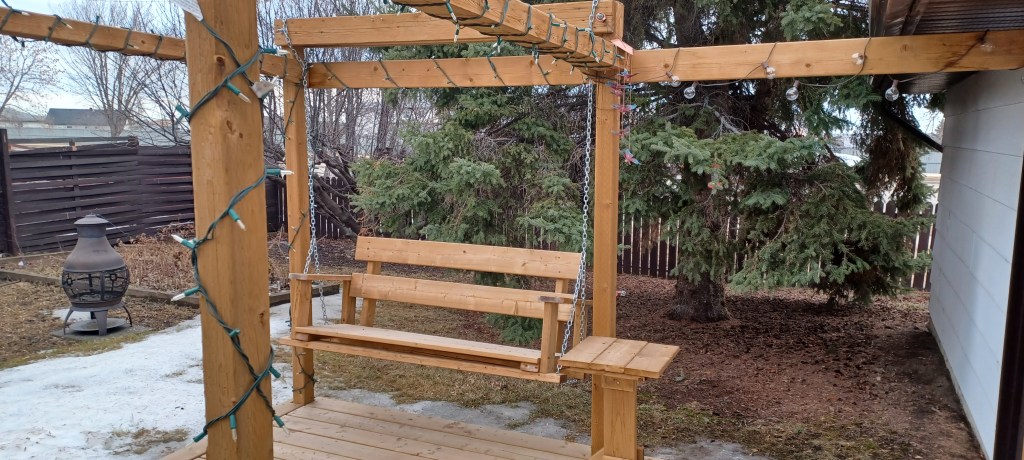
My wife and I enjoy spending time in our backyard. Two summers ago, I extended our deck. I had built a small deck, but it just couldn’t accommodate enough people. We began to dream about how we could extend it. My wife asked for a bench swing to be incorporated in it. A vision began to take shape in our minds of what could be, but vision alone accomplishes nothing. I had to develop a strategy that included practical steps, in the right order, to make the vision a reality. I had to determine how much lumber I needed, and how many of the different lengths and sizes. I had to figure out how many screws I needed. I would need chain to hang the swing. Once I had the materials delivered, I needed to work the steps, one at a time. Not being an experienced carpenter, there were a few times I had to sit and think, to evaluate if I was doing things in the right order. I didn’t want to put the decking on only to realize I had missed something underneath. There were also things I hadn’t planned for and learned along the way. I had to put in extra bracing in the frame to ensure the swing would not pull the deck apart when someone was swinging on it.
The end result is an enlarged deck with a bench swing – that actually works!
Many churches have realized the value of a vision. They work hard to develop a dream for their future. They pray, and they discuss, and create a vision of a future they can picture. But now what? While defining a vision can be difficult, it gets even harder as you move to developing a strategy to work towards that vision. This is where churches often fall short. They have a vision but don’t know how to actually achievve it. They lack a strategic plan.
When I work with a church to support their development of a strategic plan, I suggest the following steps and ask these questions along the way:
One: Pray
Pray first, pray during the planning, and pray as you move toward your goals. The church belongs to God so listen to him as you create and implement your strategy. Invite him to do his work in and through your efforts.
Two: Set clear Goals.
What goals can you work towards that will help you accomplish your vision? These goals act as checkpoints on the way to fully reaching your vision, to help make it less overwhelming.

Three: Create Action Steps
For each goal, determine the steps needed to accomplish that goal.
What smaller steps can be taken to move toward that goal? Can that larger goal be broken down into smaller manageable steps?
Are there certain steps that need to be accomplished before others?
Four: Assign Resources
This is primarily about people and finances.
Who needs to be assigned to this goal, or specific steps along the way?
Who needs to be in on decisions affecting these steps?
How much money is required for each step?
Will this be funded from a fund already in place or will fundraising be required?
Five: Establish a Timeline
What order do these steps need to be in? Determine a timeline, along with completion dates.
When will you start each step? When will you finish each step?
Six: Evaluate, Adjust, and Keep Going.
When it seems you are nearing the achievement of your goals, take time to evaluate to ensure you accomplished what you needed or if any readjustment or reworking of the strategy is needed.
If you want to see your vision becoming a reality, it is important to do the difficult work of creating a strategic plan and sticking to it. So, church leaders, I hope you have a vision for your church. Take the time to develop a strategy to help you move forward to achieving it.
Keep looking up,
Andy Wiebe
 Elevate with Andy