Spiritual Training Series #1: Train Yourself to be Godly

Imagine you just received a baby picture from friends who just had a baby. What if they sent you a picture every year? What if you are like me and don’t clean your fridge very often? As you put up the picture from year five, you notice the picture from the first announcement. And then you realize there has been very little change. The baby is still hardly any bigger and doesn’t seem to have developed much. Unfortunately, there are some children who do not mature the way we expect, who never crawl or walk or communicate. This makes us sad because a baby needs to grow.

As followers of Jesus, we need to grow, too.

1 Timothy 4:7 says “train yourself to be godly”.

Philippians 2:12 says “work out your salvation”.

We are to become more “godly” or Christ-like. We are to continue to grow and develop spiritually to become a better expression of the image of God as we were created to be, according to Genesis 1:27.

So God created mankind in his own image,
in the image of God he created them;
male and female he crated them.

Genesis 1:27

This is not just about our own hard work though. In Colossians 1:29, the Apostle Paul writes: “I work and struggle so hard, depending on Christ’s mighty power that works within me.” Yes we are to train ourselves and work out our salvation and struggle. We have a part to play in our spiritual development, but this is never something we do no our own. Like Paul we can depend on “Christ’s mighty power that works within me”.

We can and should do our part. It may be that we choose to practice some of the Spiritual Disciplines that Christians have practiced throughout history. This includes prayer, scripture reading, fasting, sabbath, generosity, and so on. As we practice these disciplines, we make an effort to do our part as we invite the Holy Spirit to do His work in us to make us a little more like Jesus.

Whatever training we want to instill in our lives, we do need to train ourselves to become godly. For this to be a priority in our lives, we need to intentionally prepare a training schedule or plan. When will you read the Bible, and what will you read? When will you pray, and what will you include in your prayer time? When will you choose to fast, and what kind of fast? How will you practice generosity, and so on?

Think back to the time when you first became a believer in Jesus. We could say you were a baby Christian. What would that picture have looked like if your heavenly Father had taken a picture and hung it on his fridge in heaven? What would a picture he took this year look like? As I look back 51 years, to the time He could have taken my “spiritual baby” picture,  I trust that my picture – the me that God sees – would give evidence of much spiritual growth and maturity. Maybe the picture would not just include me, but other people around me who have come to know Jesus or been impacted for Jesus by me.

I pray that you are intentionally pursuing Jesus and looking for ways to grow toward every fuller spiritual maturity.

Keep on looking up,

Andy Wiebe

Pastors Are Doing Too Much!

Pastors do a large part of what is required in the work of most churches; after all, that is their role. And pastors are quick to take on duties that are not part of their responsibility. Pastors face the temptation to do too much. They often do more than their job description asks of them, doing things that others in the church could do.

As time passes, pastors slowly add more tasks to their plate thinking it’s easier to take on one more duty than to find someone else to do the job, especially if they need to be trained to do it. Rather than train a volunteer to design and print the weekly bulletin, the pastor takes it on. After all, “it’s only going to take about an hour.” Rather than finding someone else to look after locking up on Sunday, the pastor just does it. Slowly, the pastor does more and more of what someone else in the church could be doing. And, in a sense, without realizing it, pastors are hoarding the work of the ministry.

A few churches that I have heard from that saw value in the time they had between pastors alluded to this tendency. They found the transition period was good for their church because when the pastor left, more people in the congregation felt the freedom to step up and serve.

Churches in transition may see new opportunities for people to serve in those extra duties that the pastor took on that were outside of his role. As they look for people to serve, new people are stepping up and getting involved. The work is shared with more people, and there is a greater sense of everyone playing a part.

Pastors, we need to delegate. This is discipleship. This is mentoring. This is equipping. When we show a volunteer how to lock up or do the bulletin, we are equipping them with information and skills they did not have and were not using before. When we train a volunteer to manage the prayer chain, we disciple them, helping them to be part of the prayer ministry. When we train others to lead small groups, we are discipling.

And the things you have heard me say in the presence of many witnesses entrust to reliable people who will also be qualified to teach others.

2 Timothy 2:2 (NIV)

It is too easy for pastors to think that discipleship is only about spiritual things or helping people learn to share their faith. Pastors need to recognize that discipleship is about other parts of the Christian life too, the practical ways that people can learn to contribute to the work of the church and the expansion of God’s kingdom. Discipleship includes training someone to be an usher or training a new sound person. It includes training people to be good greeters.

Pastors have the responsibility of equipping their members for acts of service. In Ephesians 4:11-13, the Apostle Paul stated the roles of church leadership: “to equip his people for works of service, so that the body of Christ may be built up.” Pastors must equip members to serve, so hand off some of the responsibilities you have been carrying.

Pastors, let’s not take on roles in the church that the Holy Spirit has gifted others to do. The Holy Spirit gives spiritual gifts to every believer in the church. Help each member find their areas of gifting and release them to serve, even if it means a little extra effort on our part to equip and disciple them.

Keep looking up,

Andy Wiebe

6 Ways to Engage Your Team in Vision Setting

I love to work on vision. I’m a dreamer. It’s not hard for me to come up with new ideas, and I do it often. Not everyone has that mindset. I also think quickly and I realize not everyone does. In my present role, I work with a different church each year, and lead them through a process of vision setting. This means I’m engaging with a wider range of individuals, some who are excited about and comfortable with working on vision setting, and some who are not.

Here’s the big question: how can you make sure that everyone is able to fully engage in the process of setting vision for your church or organization?

  • Follow a written plan.

When you lead a team through the process of setting vision for your organization, make sure you first identify a written plan. Whether you use something developed by another, or like me, pick and choose exercises from a variety of sources, make sure that everyone has access to the plan before starting the process. Then each person – not just the leaders – can see where the process is heading.

I provide everyone with a booklet they can follow. One of my team has a difficulty hearing, so the booklet helps him know where we are even when he misses some of what is said in the discussion.

In addition to the overall plan document, for each meeting, I also provide a clear agenda, complete with breaks, and times listed for each exercise so everyone can see if we are falling behind. I try to be a little flexible with the time, and even skip some pages in the workbook if we are running behind schedule. The participants can check those out later if they want.

  • Use Variety

I like to do more than just a question-and-answer format. Some of the exercises I like to use for vision setting sessions are multiple choice or circle the best answer. Some are fill in the blank. I provide examples from other organizations that can spark ideas. I do a little leading but prefer to get the team to do most of the talking, especially since I am the consultant and will not be with the church as they move to implement the plan. My job is to make sure they can arrive at a common vision that is truly theirs. This means that I invite a lot of discussion. I do some work on a white board when trying to bring their ideas together so everyone can see any common threads. I even included a few colour charts to help visualize some exercises. I also like to add a few cartoons! Make sure to include times where people can get up and move around a bit. Sitting for too long will slow people’s thought processes down.

  • Go Slow

When leading a vision process, go slower than you think you should. There are always a few who think slowly and need time to think about things. Some ideas may be brand new and might need some mulling over. Some participants will read and process the directions for the next exercise slower so you can’t rush the process. Too much information too fast will not work. Instead, give time to process to keep everyone’s thinking clear.

  • Circle Back

I have found that it is helpful to present exercises that to get the team to see the present reality and the future possibilities from a number of different angles.

As I recently led our team through a visioning process, it was interesting to see some of the same ideas coming up throughout the session, and ideas coming up later that built on what was previously discussed.  As these topics came up multiple times, it resulted in more clarity.

  • Highlight Recurring Themes

When you are working through a vision process, note these recurring ideas so that everyone is aware of them. It’s obvious that these are the themes that will be a major contributor to the final vision statement and vision picture. Listen to how their answers to different questions tie together and form a common theme. As the leader of the session, you are in position to observe these connections and identify them for the group.

  • Listen to God

In the recent process I led, there were a few times where we just stopped and prayed, both talking to God and listening to Him as well. There were a few times where different members of the team felt God was saying something we needed to pay attention to. When there were others that concurred, we took those thoughts seriously and integrated them into the values and vision that were taking shape.

It was very encouraging to me to see our team fully engaged through a 6-hour vision marathon! Everyone contributed to the conversation and was involved in the process right from the beginning to the end.

What are some ways you have found helpful to keep people engaged in process of developing a vision or strategy?

Keep looking up,

Andy Wiebe

The Incredible Value of Checklists!

During one of our breaks from pastoral ministry, I learned to drive a school bus. It was definitely an interesting experience. When I was about to complete the season, another driver commented that I had lasted very well on the worst run in the city. I picked up inner city kids and took them to school. Most of them came from difficult situations, but I tried to find ways of connecting with them and encouraging them.

As I was taking my training for my Class 2 license, which you need to drive a bus, the instructor walked me through a detailed list of what to check each morning to ensure the bus was safe to drive. This is not unique to driving busses; truckers have a similar pre-trip check to do. Usually this is done with a memorized checklist, but when I was later driving bus for a different company, they had a specific checklist I had to go through and sign each morning.

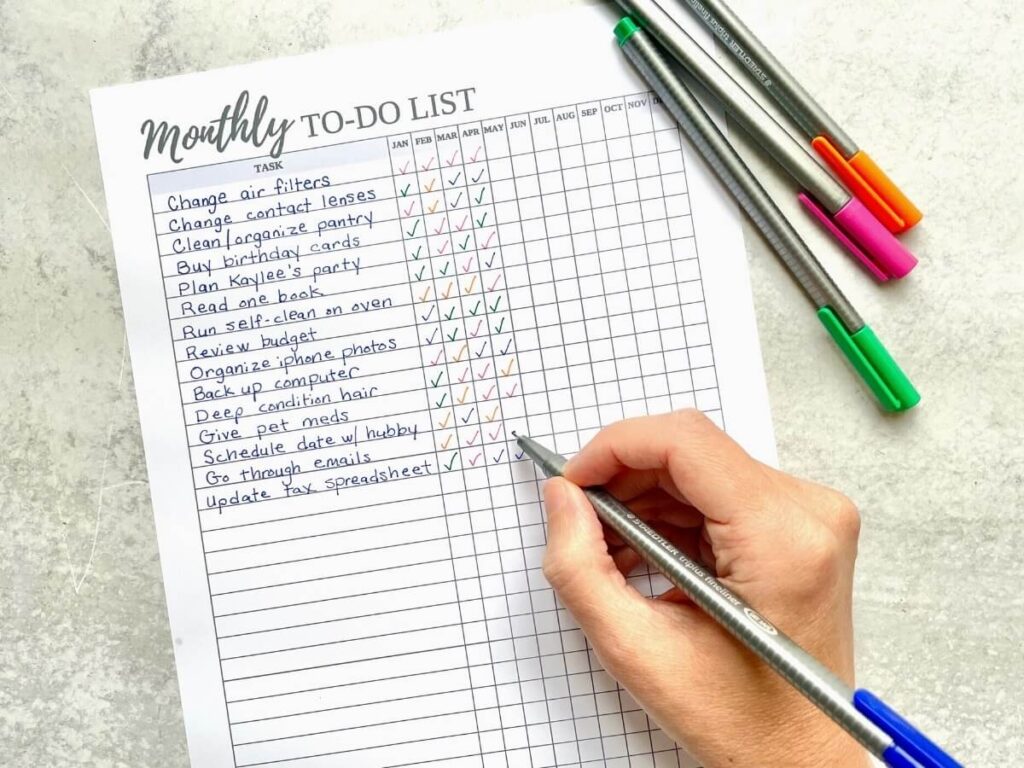
Checklists help you to make sure you remember to check all the important things. This applies to many places in life.

Photo by Suzy Hazelwood on Pexels.com

I go through a mental checklist most evenings before I head to bed:

  • Is my lunch prepared?
  • Have I laid out my clothes for the next work day?
  • Did I brush my teeth?
  • Did I remember to take my medications?
  • Did I set my alarm?
  • Did I plug in my phone?

The list helps me to remember what I want to remember.

Checklists can help you to train new volunteers at church. Checklists are doubly useful in training, both for the trainer and the new volunteer.  A checklist ensures the trainer knows exactly what training needs to take place. The checklist will remind them of what paperwork needs to be filled out, or what activities need to be practiced. The new volunteer can also be provided with a checklist to remind them what needs to be done.

Let’s pretend you are training a new worship leader. You can have them work alongside a current worship leader like an apprentice for a few weeks. The leader can make sure they are following the current checklist, a copy of which is then provided to the new volunteer. The checklist could look something like this:

  • Get the theme and scripture from the speaker for that Sunday.
  • Choose 5 songs that fit into that theme.
  • Sort/find the music for all musicians that will be leading worship with you.
  • Send the music titles (and music sheets) to all the worship staff and volunteers on your team.
  • Practice the music yourself.
  • Arrange practice time and practice with team during the week.
  • Arrange for all the team to come early on Sunday to do Sound checks
  • Etc.

Create lists according to the tasks that need to be done in each role, and encourage new volunteers to add to the list as they notice things that may have been missed.

I use a checklist like this in creating my sermons. I have a fairly long list that has certain comments and questions that help me think through my sermon from every aspect I think is important. Here are just a few things on my sermon checklist:

  • Who is the original audience?
  • How will this appeal to the 12-year-old boy in the pew?
  • What practical application steps can I suggest?
  • What are questions this scripture answers?

This list reminds me of what I have found to be important in the creating of a sermon. Some of them remind me of certain steps in my research. Other items remind me how to develop a good application at the end of the sermon. This is a list I have slowly compiled over the years, adding or adapting items as I discovered more steps I wanted to remember to use.

Checklists need to be open to adjustment. Sometimes a good book will encourage you to add another step. Over time some steps may be eliminated if they become irrelevant.

Checklists are a great tool to become better at what you do, to develop consistency, and to train new volunteers.

I’d love to hear about how checklists have helped you.

Keep looking up!

Andy