Turning Vision Into Reality

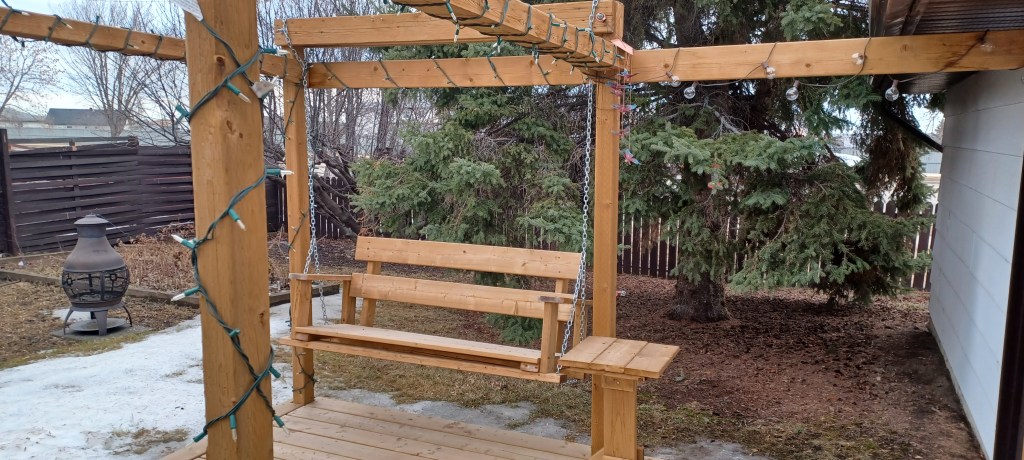
My wife and I enjoy spending time in our backyard. Two summers ago, I extended our deck. I had built a small deck, but it just couldn’t accommodate enough people. We began to dream about how we could extend it. My wife asked for a bench swing to be incorporated in it. A vision began to take shape in our minds of what could be, but vision alone accomplishes nothing. I had to develop a strategy that included practical steps, in the right order, to make the vision a reality. I had to determine how much lumber I needed, and how many of the different lengths and sizes. I had to figure out how many screws I needed. I would need chain to hang the swing. Once I had the materials delivered, I needed to work the steps, one at a time. Not being an experienced carpenter, there were a few times I had to sit and think, to evaluate if I was doing things in the right order. I didn’t want to put the decking on only to realize I had missed something underneath. There were also things I hadn’t planned for and learned along the way. I had to put in extra bracing in the frame to ensure the swing would not pull the deck apart when someone was swinging on it.

The end result is an enlarged deck with a bench swing – that actually works!

Many churches have realized the value of a vision. They work hard to develop a dream for their future. They pray, and they discuss, and create a vision of a future they can picture. But now what? While defining a vision can be difficult, it gets even harder as you move to developing a strategy to work towards that vision. This is where churches often fall short. They have a vision but don’t know how to actually achievve it. They lack a strategic plan.

When I work with a church to support their development of a strategic plan, I suggest the following steps and ask these questions along the way:

One: Pray

Pray first, pray during the planning, and pray as you move toward your goals. The church belongs to God so listen to him as you create and implement your strategy. Invite him to do his work in and through your efforts.

Two: Set clear Goals.

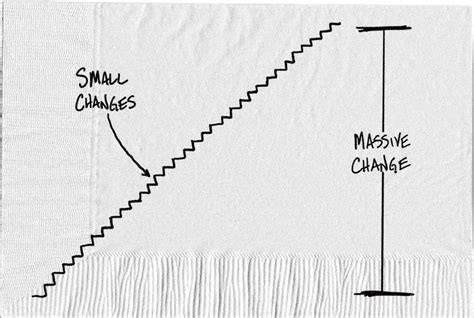
What goals can you work towards that will help you accomplish your vision? These goals act as checkpoints on the way to fully reaching your vision, to help make it less overwhelming.

Three: Create Action Steps

For each goal, determine the steps needed to accomplish that goal.

What smaller steps can be taken to move toward that goal? Can that larger goal be broken down into smaller manageable steps?

Are there certain steps that need to be accomplished before others?

Four: Assign Resources

This is primarily about people and finances.

Who needs to be assigned to this goal, or specific steps along the way?

Who needs to be in on decisions affecting these steps?

How much money is required for each step?

Will this be funded from a fund already in place or will fundraising be required?

Five: Establish a Timeline

What order do these steps need to be in? Determine a timeline, along with completion dates.

When will you start each step? When will you finish each step?

Six: Evaluate, Adjust, and Keep Going.

When it seems you are nearing the achievement of your goals, take time to evaluate to ensure you accomplished what you needed or if any readjustment or reworking of the strategy is needed.

If you want to see your vision becoming a reality, it is important to do the difficult work of creating a strategic plan and sticking to it. So, church leaders, I hope you have a vision for your church. Take the time to develop a strategy to help you move forward to achieving it.

Keep looking up,

Andy Wiebe
Make Prayer a Priority

We have the incredible opportunity to talk with our Heavenly Father regularly. 1 John 5:14 tells us: “This is the confidence we have in approaching God: that if we ask anything according to his will, he hears us.” We can come to God in prayer, not afraid of him, not afraid we are intruding on his time, or worried that what we are asking is too trivial for him to care about. As pastors, we need to help the members of our church know they can talk to God in prayer too, and often.

Personal Prayer
It begins with the pastor’s prayer life. If you are not praying, it will be difficult to lead your congregation in prayer, You need to lead by going ahead. You need to talk with God often – not just because you are a pastor, but because you are a follower of Jesus. Have a conversation with him. Expect him to answer your prayers. Talk to him about your own spiritual life. Talk to him about your family. Pray for your church members by name. Use a prayer list to help you pray for everyone. Pray for specific aspects of their lives.

Implement practices that will help you improve your praying. Schedule a regular time daily for prayer. Read books on prayer. Read the prayers of the Bible. Equip yourself so that you can equip others.

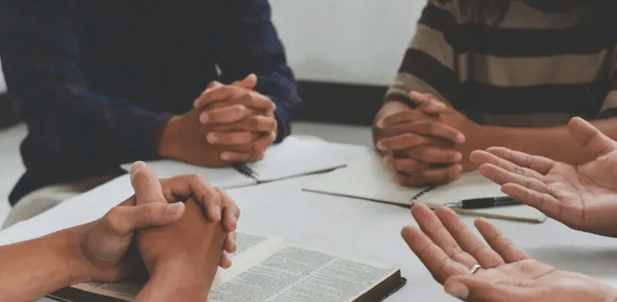
Hands of a man praying in solitude with his Bible.

Corporate Prayer

Make sure that your church is a “house of prayer.” Include prayer in any meetings you have. Make sure you pray in your services. I attended a church once where the sermon was on prayer and the only prayer in the service was a quick wrap-up after the sermon. That is not good. Yes, we need to read scripture, and we need to worship in song, but we also need to pray.

Schedule prayer events for the church throughout the week. Plan regular prayer meetings. If you have small groups, ensure that the groups are taking time for prayer. You could even give them a guide or a list of things to pray for each week or each month. The “prayer chain” has been replaced in many churches with more updated options, but find an app that works for your church where you can share prayer requests with the whole church quickly, calling on everyone to pray for certain needs.

Special Prayer Opportunities

It is good to plan special prayer events or focuses throughout the year. I have often invited the church to a “3-week prayer” focus on a certain theme or topic, providing a guide which includes a few verses of scripture and prayer requests to pray.

Setting aside a “day of prayer” can be a good way to focus the church on prayer all day for one day. Invite people to come pray together at the church early in the morning before they go to work. Invite people to connect to an online prayer event over the lunch hour. Have a special prayer service in the evening. Send out hourly prayer reminders and encouragements to keep people praying.

In one church, we did an all-night “prayer vigil” open to all teens and adults. We began with a Saturday evening prayer service. People signed up to pray for an hour. Some people came on their own, some came as a group. One group in the middle of the night was three teen girls. One group early in the morning was dads and their sons. People could choose to follow guides prepared for them to read and pray through. Then, Sunday morning, we had a Celebration Service where we worshipped God, and people shared some of what they had experienced and heard from God!!

Let’s remember that we have a God who loves us and wants to have a regular conversation with us. We can go to him with anything and anytime. And, Pastors, let’s make sure we help our church to pray too.

Keep looking up,

Andy Wiebe

Keeping Your Board Purposeful

As a pastor, I have spent many evenings around a board table (or plastic folding table), discussing the ministry of the local church with appointed leaders. Each board is different in how the members work together, how they make decisions, and how they attempt to fulfill their role. But how can you, as a board, ensure some basics that will help the board meetings be meaningful and effective?

Do you know why you meet?

Board members do not meet as a church board just because that’s how it has always been, or because the government requires non-profit organizations to have a board. Each board member need to understand what their main purpose is and how they contribute to accomplishing that.

Purpose: A board exists to look after the “big picture” of the church.

This means that you, as a board, need to know the big picture. You need to know the vision of the church, the values and policies and procedures, and how they speak into how the board governs.

This is essential because the board is in place to ensure that the vision, values, policies, and procedures are clearly defined and followed. As a board member you may have been involved in forming these documents or you may arrive after previous members have completed that work. Now each board member needs to understand them clearly so you can help ensure they are fulfilled.

In a church board, much of the work is done by the pastor. If the church is smaller, board members may be involved with the pastor in following through on decision that are made. In larger churches, the board may be more of a policy board entrusting the lead pastor and his staff to do the working out of the decisions. The board sets the policy and entrusts the lead pastor to fulfill what has been decided. He then hands off aspects of that to the rest of the staff to accomplish.

In either case, the board needs to know the guiding documents well enough to know if the decisions they make are in alignment with this guidance and the scope of the board’s mandate. Board members need to know how the guiding principles speak into every decision that is made. These documents are intended to guide the decision making process and keep the board, the pastor, and the church heading in the agreed upon direction.

One aspect boards often forget is their role as “gate keepers” and “protectors.” The board functions as a gate keeper when it makes sure that leadership and the church are not heading in a direction away from what they stand for and believe in. They function as gate keepers when they ensure that vision, values, policies and procedures continue to guide them. As gate keepers, the board must receive regular updates from pastors and ministry leaders to be aware of where these leaders are going and to ensure that it is in the right direction.

A church board needs to also see the importance of its role in protecting the church. This may involve protecting the church from teaching or practices that do not align with what they believe the Bible teaches or what they have agreed upon in their guiding documents. Protection also includes protecting the people of the church from physical and emotional harm. Many churches have clear safety guidelines and practices in place to guide their ministry to children and youth and seniors. Church boards need to ensure they are protecting all who attend, serve, or lead the various ministries of the church.

If you are a board member, remind yourself and your board regularly that everything you do should be about promoting and protecting the big picture of the church. While there are times boards should get involved in day to day activities of the church, they should never relinquish this role of promoting the big picture and protecting the church.

Keep looking up

Andy Wiebe

Good Systems Enable Good Work

We can create systems that allow our work to be done easier and better.

Systems are the procedures and practices – even rituals – that we put in place in order to do a job. Some of these emerge naturally as we repeat certain tasks, but often we need to carefully think about crafting a system that will enable us to do our best efficiently.

A system includes all the little things we do in order to accomplish a task. Adhering to well-known systems helps people understand new settings or tasks with little training. People generally know where to park when they go to the local mall. There are curbs and signs and pained lines that everyone understands and can follow easily. We don’t need a training session every time we go to a new parking lot because the system is usually pretty clear.

The ushers at my church have a system that allows each usher to know when it is their turn to serve. They know they are to wear an “usher” tag and know where to find it. They know where to stand to greet people and ensure they find a seat.

They know when they will be called on to collect the offering and where to get the offering bags. They know where to take the bags when the offering has been collected. They all do it the same way every Sunday, no matter who is on, because they follow a clear system.

When I write a sermon, I have a system I have developed over the years. I don’t have to learn how to write a sermon every week because I have a system of how I choose a scripture text and create a sermon. I know how I will do my research. I have a list of questions to ask myself to guide the interpretation and research part of the process. I know how to write an outline. I know what questions to ask to make sure I have an appropriate application. I have a list of questions that guide me to bring creativity into the presentation.

A system helps me complete the work efficiently and accurately. Sometimes, when things are not going well in a church or organization it may simply be that we do not have a clearly defined system that everyone follows. This can cause conflict when individuals try to work according to different systems.

If something falls through the cracks, it may be that we have a faulty system. For example, if important announcements are consistently absent from the weekly bulletin, it may simply be that the person responsible for the announcements did not know how to communicate those to the person creating the bulletin.

As we develop new programs or change existing ones, we need to think of what systems to establish to set up the new program for success. Systems give clear directions for what to expect, when, and in what order and help us remember to do things that we might otherwise forget.

In developing systems be clear about the expected outcome. Identify the steps required to achieve the outcome and make it as simple as possible so that new people taking on the responsibility for that area can easily and quickly know what is expected, and then do it efficiently and accurately.

Here are some simple steps to develop a system.

  1. Think through the whole process and what steps would help you get a consistent result.
  2. Determine which person in which role is responsible for each step along the way.
  3. Lay out the best order for the tasks to be completed.
  4. Print out or post the complete system step by step indicating who does what in the process.
  5. Train people to know how to do each step and give them authority to do those steps.

Systems enable good work. Take the necessary time to develop them clearly and make them available to the right people.

Keep looking up,

Andy Wiebe

No Regrets.

The start of a new calendar year often causes people to evaluate their lives. This may include both looking back and looking forward. Some of us seem to spend more time looking in the mirror, while others focus only on what is in front of them. I generally focus on what’s ahead. I love planning and dreaming and preparing for what’s coming up.

The other day I overheard people talking about regrets they had. They felt they had missed out on opportunities in life because they were not willing to risk and try new things. We can look ahead with a “no regrets” mindset where we learn from the past and move on. We don’t need to look back and regret where we felt you missed out.

As I look around my office, filled with my Coke collection, I’m reminded of regrets the Coca-Cola Company had some years ago. They introduced “New Coke” on April 23, 1985, hoping to revitalize the brand and gain more market share of the beverage industry. It was a big flop! According to Brittanica, “original Coke was hoarded or sold at Prohibition-style prices. In addition, New Coke was dumped publicly into the sewers in Seattle. After 77 days the previous version of Coke was brought back as “Coca-Cola Classic” on July 11, 1985”. (https://www.britannica.com/topic/New-Coke) Hopefully you don’t have any regrets as notable as that, but it is possible that we do have some things we wish went differently for us in our past.

Regrets may come in many forms. Some are mistakes that were made. Some regrets have to do with roads not taken and opportunities missed out on. Some regrets have to do with fear of risk. While I’m not promoting revisioning history, I do think that we need to find ways of using regrets to our benefit, so they end up not being regrets in the end.

We can benefit from our experience, even if they seem like regrets at first. If your regret is a mistake that was made, learn from the mistake. Did you do something wrong on purpose? Was it a deliberate mistake? Then figure out why you did it and how you can learn from that for the next time you are in the same situation. Was it a mistake because you didn’t have the full story? Then determine to get more information, or more pertinent and accurate information the next time. Don’t live with regrets about mistakes in the past, just learn from them and move on. You cannot change what happened but you can change how you handle your future.

When considering missed opportunities, asking “what if” questions do not help us with reality. We don’t know how things would have turned out if we had taken a different direction. We can imagine, but we don’t really know. Hindsight is not always 20/20 because we don’t know what might have happened if we had stepped into a possible opportunity. If your regrets are about things that could have been different because of a missed opportunity, remember that you have no idea how it would have turned out. So don’t live with regrets for something you never did.

Another regret may be the way fear of risk kept you from stepping into roles and opportunities. If fear of risk is still predominant in your life, then learn to take small risks and learn that some risks have good benefits. Instead of letting fear keep you back, learn what you can, and then carefully move ahead, into the risk. When you have a relationship with God, you can ask him to help you know when to move ahead and when not to. If God wants you to move, then the risks is not as risky anyway.

As you look back over the last year, I hope you have no regrets. Learn from mistakes, grow in areas you feel you fell short in, and focus on what went well. Don’t focus on what could have been but learn what you can from what did happen. And then look ahead to the next year with anticipation and determination to do your best to keep growing and learning and contributing to the world in any way you can.

Don’t have regrets, just memories that help spur you on!

Keep looking up

Andy Wiebe

The Joy of Connecting with Teammates.

I had the privilege this past week of spending a day with others who have a similar role as I do. We don’t actually work together on the same projects or in the same church, but we are all part of the same denomination functioning in the role of transition pastors. There is a special joy in connecting with people who know your role and the situations you face because they face those situations, too. In the past, I was able to connect with fellow rural pastors and pastors in the same region. We may not all serve the same church, but we can connect and relate to shared experiences because of our similar roles.

It may feel like getting to know and spend time with these teammates takes too much time or effort that could be used for other priorities, but I have personally found value in connecting with others who understand my roles.

They understand the frustrations and joys.

    When I met with rural pastors as a rural pastor, I knew that they understood what small-town life was like. They understood the realities of serving a smaller church. When I meet with transition pastors, they know what it is like to face church conflict and to try to mediate it. Transition pastors know what it is like to help churches, to fall in love with them, and then have to move on to a new assignment in a year or two.

    When you are talking with others who know your role, you can share jokes and stories that they understand. They are “in the know” because they do the same things you do. Other transition pastors know the frustration of churches that do not want to change, even though they know they need to. They understand the joy of a board catching God’s vision together as they plan vision and strategy for the church.

    They can provide ideas and advice.

    When I meet with transition pastors, I know they use similar tools and processes as I do in helping churches transition. Transition pastors know what it is like to help churches build on the past to look to the future. One of the benefits of my recent meeting with other transition pastors is to learn about how they handle particular situations. Most of them have more experience in this role than I do so I love to soak up ideas as they talk about their ministry.

    They can pray for me with understanding and clarity.

    One of the joys of meeting with others in similar roles is that we can pray for each other with an understanding of the situations we face. Often we don’t even have to finish our story and the others are already smiling or nodding or even crying as they have gone through similar situations. They can pray for me, and I pray for them, with clarity because we have seen very similar situations where we have served.

    I encourage you to find others who are in a similar situation as you. You need to find “your people” so you can have people around to encourage you and help guide you as you need input and wisdom from them.

    Keep looking up,

    Andy Wiebe

    Unravelling the Tangled Mess

    When I was a kid, I loved flying my kite. I remember one windy summer day in the field just down from our house, releasing my kite into the sky. It was a thrill to feel the pull of the wind on the spool of string as the kite dove back and forth. I let out more string, and more string. The kite grew smaller as the string rolled off the spool until… oh no! The string was not tied to the spool in my hand! I had let the string reel out and suddenly the string was all gone – the kite was no longer tethered to the spool in my hand! I panicked! I scrambled after the kite, desperately trying to grab the string. After a few frantic attempts I managed to snag the string. In my panic I hauled the string in, not rolling it up neatly on its spool, but gathering it in a tangled pile at my feet until I had the kite back in my hands. I never managed to untangle that pile of string again.

    Sometimes, in an attempt to control our busy lives, it seems we end up with a tangled mess of roles and responsibilities at our feet. We do everything we are supposed to do or have signed up for, but we desperately try to untangle the mess and get a sense of control back. Each of us needs to manage various roles in work and life.

    Recently I felt like my life was resembling that pile of tangled string. I had some family issues that took precedence over all my other responsibilities. Everything else got put on the shelf for a week or so. I focused on the one thing that was most important in the moment. After that week, I recognized I had some untangling to do.

    I needed to figure out which strings to pull to start unravelling the mess. I had to take out a calendar and plot out my responsibilities to make sure I was working on the right things at the right time. We can’t work on everything at once. No matter how many responsibilities we think we can handle, we can only work on one at a time. I had to break down my responsibilities into manageable periods and schedule them on my calendar. I had to plot when I would focus on my transitional pastor responsibilities. I needed to chart when I would work on my transitional coaching duties. I needed to clearly schedule when to work on my doctorate work. I needed to schedule some family responsibilities. It took some work to sort it all out, but the end result was a plan that gave me peace. I could see my way through.

    Whatever is in your tangled mess of string, you can find your way through. Ask God to help you sort it out. And ask God to give you the time you need to accomplish what is on your plate. I know from experience, that God can enable you to work faster or to somehow stretch your time to do all He is asking of you. He will help you sort it out. Don’t panic or give up. Sort it out and begin working on one responsibility at a time.

    Carve out a time of retreat. Even a hour or so away from everything may give you the necessary time to evaluate your priorities and determine what you need to focus on and in what order. Then after the retreat you can advance with a plan.

    We all have numerous responsibilities. Sometimes they pile up and its hard to know where to start in addressing all the needs, but with God’s help you can do it.

    Keep looking up,

    Andy Wiebe
    Book Reviews: Andy’s 2024 Reading Experience

    I will be sharing a brief review of every book I read this year. Hope you enjoy and hope it encourages you to keep reading.


    THINKING, FAST AND SLOW – by Daniel Kahneman

    As the title says, this book is about thinking. Slow and fast refers to the two systems Kahneman describes in the book. System 1 is like instinct. This is our automatic thinking system where we don’t have to exert any effort to know certain things like one object is bigger than another or that 2 + 2 = 4. This is learned thinking, by experience or by effort. System 2 is where we have to take time to ponder something in order to come up with the right answer. Our choices and decisions originate from system 2. The first part of the book and the explanation of how these two systems work, is the best part of the book. The rest of the book then works through various examples of how our understanding of these systems affects our everyday lives. A great book on thinking to make you think!

    Summer Road Signs Series – #5: No U Turn Signs

    There were a few times this summer where I was driving in unfamiliar territory and realized too late that I should have taken an earlier turn. I was headed the wrong direction and unsure how to safely turn around. Many intersections have “No U Turn” signs, sometimes with just the symbol, other times with the words “No U Turn” also posted. I would have loved to just turn around and go back to the starting point.

    In my experience working with churches in transition, I could have used No U Turn signs a few times. Some churches long for the “good old days.” There is a hope that if only they could get back to what they were like and the programs they ran some years ago, when the church was growing, then things would turn around in the church and it would start to grow again.

    In my experience working with churches in transition, I could have used No U Turn signs a few times. Some churches long for the “good old days.” There is a hope that if only they could get back to what they were like and the programs they ran some years ago, when the church was growing, then things would turn around in the church and it would start to grow again.

    The reality is a church cannot forget the last few years and the experiences they have gone through and just start over. Time moves on. Culture changes. The congregation changes, and so does the community around the church. Instead of looking backwards, the church must learn how to move forward with clarity and purpose.

    I love working on vision with churches. I love to help them see the reality of today and the possibilities of tomorrow. Instead of churches looking back to a certain period of history as the high point for the church, I want them to see that God has great things in store for them, so the best times are still ahead. It may take some work, and prayer, and trusting God, but looking back will not help. I tell churches that as we work on vision, I do not expect there to be radical change from what has happened in the past and what is going on in the church at the present. Instead, I believe God has the church on a trajectory that may need some adjusting here and there but the future will generally be consistent with their history.

    The same applies to our personal lives. Many of us can look back to certain periods of our life where we felt things were going really well. Looking back, those seemed like stress-free times, times of excitement and joy. As tempting as it may be to somehow replicate what we once had, life moves on. We have new experiences. We have new responsibilities and new relationships. As we grow our family and develop our careers, we can’t just drop all of that to return to a more carefree time. Instead, we need to find a way forward, to try new roads and look for what God is going to do in our lives in the future.

    U-turns are tempting because they seem like a quick and easy fix. Let’s just get back there and try again. This is usually not an option if we are leading a church or setting direction for our personal future. Time moves on like water under a bridge. Our past is not a static thing we can return to. We need to keep looking ahead.

    The reality of being human is that we cannot start over. Yes, we can come back to some original principles to live by. We can reorient ourselves to God and His Word. We can re-establish guidelines for our life that served us well in the past, but we cannot remove history and start over. Sometimes a map directory in a mall has a little icon stating “you are here” so you know where you are starting from. The reality is, we are where we are. Now we need to know how to move on from here. We cannot change the past, but we can make changes for our future.

    May God help us to learn from the past and keep moving ahead. U-turns to an earlier period in our life or in our church are not possible. Keep moving ahead.

    Keep looking up,

    Andy Wiebe

    Summer Road Signs Series #3: Watch for Wild Animals

    On any road trip you take, you will pass signs warning about wildlife in the area – especially if you are in a rural area. These signs are intended to make you aware of the local wildlife because of the potential dangers you may face if you and your vehicle encounter them. These signs are used to keep you safe – both you and the wildlife. For me, these signs notify me of the possibilities of seeing some of the animals common in that area.

    In many areas of Canada the danger comes in the form of deer or moose. Deer are dangerous because they move fast and can come across the road in front of you when you least expect them. I know. I have had an encounter with one that stopped us on the side of the highway and made us wait hours for a tow truck to haul us and our car home in the middle of the night. Moose are dangerous because they are so big. Hitting a moose might not just damage your vehicle but cause you injury as well.

    I recently made a trip up to Yellowknife, Northwest Territories. There were many signs alerting us to the possibility of meeting bison on the highway. We did see some. Again, very big animals that would do a lot of damage to a car and its passengers if you were to hit one at highway speed. Majestic animals to watch, but not one you would want to hit.

    Some signs are more unusual. There are signs near Lethbridge, in southern Alberta, warning of snakes crossing the road. I don’t think there would be much danger to a car if you hit one, but these signs are also to protect the snakes.

    Speaking of protecting vulnerable animals, I like the signs that warn of ducks and geese crossing a road. Mama ducks and geese and their babies are very vulnerable. They have nothing to protect themselves with, and they are not very fast. The adults just head across the road and the little ones follow in a neat straight line. I remember recently just barely maneuvering around a mama leading her ducks.

    So what might these road signs teach us?

    They remind us of how unpredictable things can be. If you come around a corner, or pop over a hill, you have no idea what may be on the road. I have seen moose, elk, deer, antelope, bison, ducks and geese, coyotes, even a cow. I narrowly missed a horse on the road once driving late at night.

    Life, and what we encounter, can be quite unpredictable. We don’t know when we may get a health scare. Even healthy people can have heart attacks or fall and break a bone. We often go through life as if we are in full control. We make plans. We dream and strategize. We have expectations. We think that if we work hard, it will all work out. Unless we have been surprised too many times.

    Too many encounters with “wildlife” can make us paranoid. We are scared to drive at night, or too nervous to drive the speed limit. Instead of moving ahead with excitement and anticipation, we fear every next move, wondering when the next shoe will drop.

    These wildlife warning signs can remind us that we are not in control of all that happens. There are always potential dangers lurking around every corner. But we do not need to be afraid.

    We can be reminded that God is in charge. God is sovereign over all things. Nothing happens that God does not orchestrate, or allow. As we place our trust in him, we can move ahead with confidence. Not confident in our efforts or that everything will go exactly as we want, but that it will go exactly as God wants. Our confidence is in God. No matter what happens, he will walk with us. No matter what surprises we encounter in life or in business or as leaders in the church, we can trust that God is in charge, and he will direct our paths.

    Trust in the Lord with all your heart
        and lean not on your own understanding;
    in all your ways submit to him,
        and he will make your paths straight.

    Proverbs 3:5-6 New International Version

    Keep looking up,

    Andy Wiebe