Leading Well When the Unexpected Happens!

We think we have a lot more control on things than we really do. We plan and prepare, but there are many things out of our control. We cannot control the weather, so it is not really all that unexpected when a picnic gets rained out. We cannot control people so it should not surprise us that people do things we hoped they wouldn’t, or don’t do things we wish they would.

Parents have hopes for their children but children choose their own paths. Business owners have dreams for their business but sometimes the market has more influence on how well they do than anything they could prepare. You plan for a big event only to have a small crowd because there were other more interesting things to do.

Most people like to be optimistic. We have to be if we want to make plans or develop anything. We have to believe that things well go well and get better. Reality sometimes chips away at that optimism.

So, what can we do when the unexpected happens?

  1. Pray

Too often we think that we need to find our way through a situation. We have worked hard on a project and want it to go well, so when the unexpected happens we feel that we need to come up with the solution. Instead, we need to remember that God is greater than any problems we come across. And God is never surprised. When challenges surprise us, why not go to God with them?

God will help you through it. He may give you an answer to quickly figure out a solution. He may give you strength as you struggle to find answers and push your way through. But God wants to be part of our lives. And if we are dedicated to serving God, then all that we do in some way should help to build God’s kingdom. If that is our goal, then the God of that kingdom would probably want to help us find our way through.

Remember to Pray.

2. Manage your Responses

An emotional response to the unexpected is not unusual, but obviously not very helpful. If we respond in a negative way to something that surprised us in a negative way, we are only compounding the problem. That is not going to help save the situation or fix what went wrong. Unfortunately, this is my natural response when a car darts in front of me in traffic. Maybe some of you can relate?

If we have enough bad unexpected things happen, when we get to that tipping point or that final straw that breaks the camel’s back, some of us give up. Whatever we were trying to do may just seem like too big of a task if too many unexpected things interfere.

Often it is our emotions that drag us down. We need to find a way to manage our emotions and push on.

3. Determine to Persevere

Some of us are resilient and continue to push ahead, looking for ways to overcome unexpected challenges. While some give up, others find a way through. Don’t immediately let the unexpected stop you from what you were planning to do. If your pursuit is of any value to you, then determine to find your way through.

These first three actions quickly lead you to the fourth one.

4. Triage the Situation

Good leaders will learn to assess the situation quickly and prioritize the needed response. When you go to the Emergency Room at the hospital, you are first taken to triage, where they assess your level of need so they can make sure that the greatest need is served first.

When the unexpected happens, you need to be able to determine the correct response by assessing if the unexpected situation needs to be dealt with first before going on with your plans.

For example, if you are planning a wedding and the hall floods on the week of your special day, you need to determine if the flooding can be dealt with or a new hall needs to be booked. This may take priority for the moment while you put aside the planning of the rehearsal to deal with the unexpected. In the same way, when something unexpected comes up at work or in your personal life, assess the situation to determine where to focus your attention for the best result.

5. Plan the Solution

Once you have triaged to identify your priorities, use that list to guide you through to a resolution. Figure out who can deal with which part of the problem and who can continue to work on the original project. Maybe part of the solution is to shut down your project or event for now and figure out how to reschedule with more planning in the future.

6. Delegate or Recruit Help

The unexpected often means that your time and resources are disappearing more quickly than you had planned. Can you hand off some of the responsibilities either in addressing the unexpected challenges or in the original project? Find someone who can step in to help. Don’t feel that you have to be limited to your abilities or that of your present team.

7. Pray and Trust God to Intervene

Continue to pray throughout the process. If you are a Christian leader, you have access to the God of Heaven. Our creative, miracle-working God can help us when we feel completely overwhelmed. I like seeing where God steps in and does the unexpected. I was just reading in 2 Kings 3 where the kings of Judah, Israel, and Edom were facing an army of Moabites. They thought they were hopelessly defeated, but then God stepped in. Water ran into the valley and onto the plains. The morning sun made it look like blood.

But when they got up the next morning, the sun was shining across the water, making it appear red to the Moabites—like blood. “It’s blood!” the Moabites exclaimed. “The three armies must have attacked and killed each other! Let’s go, men of Moab, and collect the plunder!”

But when the Moabites arrived at the Israelite camp, the army of Israel rushed out and attacked them until they turned and ran. The army of Israel chased them into the land of Moab, destroying everything as they went. (2 Kings 3: 23-24)

God can do the unexpected. Leading well when the unexpected happens depends to a large extent on how much you depend on God.

Keep looking up,

Andy

Book Reviews: Andy’s 2022 Reading Experience

I will be sharing a brief review of every book I read this year. Hope you enjoy and hope it encourages you to keep reading.


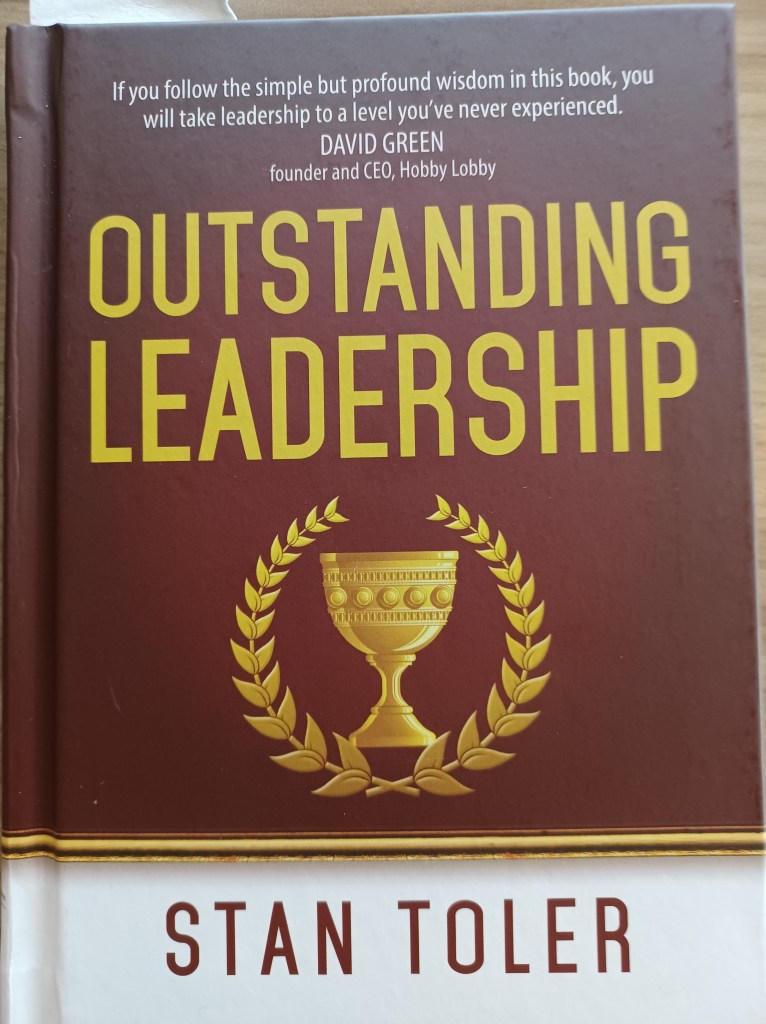
OUTSTANDING LEADERSHIP – by Stan Toler

There are many books on leadership, and this little book is among the best. Every short chapter is chockfull of ideas and definitions and quotes and generally good leadership advice. Stan Toler shares great advice drawing on many other good leaders. In Part 1: Leadership that Motivates, he shares how to develop and share a good vision. Part 2: Leadership that Relates lays out the value of communication and how to best communicate so that you can transform individuals and organizations. A great little book.

Do You Really See Your Team?

We are quick to make judgements about people. Our first impressions can be completely wrong but we hold onto them anyway. Other times, the we may have known someone for a long time but do not realize they are not the same person they were years ago. For someone in a leadership role, there is a particular danger of viewing people one way and not realizing who they truly are and how they can be of help in our organization.

King Solomon, in Ecclesiastes, describes some of the unfortunate ways that people see others.

13 Here is another bit of wisdom that has impressed me as I have watched the way our world works. 14 There was a small town with only a few people, and a great king came with his army and besieged it. 15 A poor, wise man knew how to save the town, and so it was rescued. But afterward no one thought to thank him. 16 So even though wisdom is better than strength, those who are wise will be despised if they are poor. What they say will not be appreciated for long. (Ecclesiastes 9: 13-16, NLT)

These people greatly benefited from the wisdom of a poor person. They appreciated the rescue but did not appreciate the person. We are like these townspeople: quick to write people off, even if they have valuable gifts and insights. We see them a certain way and do not allow that to change as we begin to get to know them and what they offer.

Because of this oversight, we – and by extension our teams and organizations – may lose out on valuable skills and insight just because we have identified a person in one way so we do not think they have anything to add.

King Solomon continues:

There is another evil I have seen under the sun. Kings and rulers make a grave mistake when they give great authority to foolish people and low positions to people of proven worth. I have even seen servants riding horseback like princes—and princes walking like servants! (Ecclesiastes 10: 5-7, NLT)

Our quick judgements can create further damage when we choose to promote or demote the wrong people. This can be due to existing relationships or the desire to honour certain people. The unfortunate result is that we listen to the advice of the wrong person when there is someone much wiser nearby.

Most of us work with teams and volunteers in some way at some point in our life. This is especially true in ministry, when programs and services rely on staff and volunteers.

Get to know these staff and volunteers. This could be through personality tests, or at a minimum, putting in the effort to get to know each person well enough to see how they can contribute best. Intentionally take time with this in order to avoid making quick assumptions or writing someone off because of one or two missteps. Often the best outcome happens when people are in roles that suit them best, and it often takes time to identify these roles and responsibilities.

As you work with your teams and notice people are in the wrong roles, be brave enough to reorganize and reassign individuals to roles where they will excel and your team will be better in the long run.

I love to get things done, but I have realized that there are times where I am better off taking time to get to know people first. As we get to know each other, I will learn where someone can serve and give their best, and we will be able to communicate better because I know them and they know me.

Good organizations will have a regular system of evaluating people. The leader does a formal review every six months or a year to continue to help the person get better. In the evaluation, the leader can also discern if this person is still a fit here or would fit better in a different role. A system of regular evaluation is good, but the personal relationships are even better. As you develop good relationships with your key people, they will be brave enough to approach you when they want to learn or grow in a certain area or if they would like to try a different role. If open communication is valued and practiced, you will be more likely to continually give the right responsibilities to the right people.

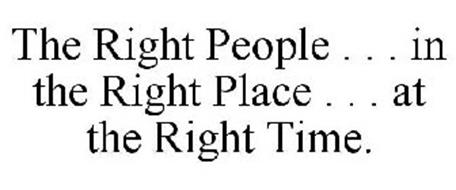
So much of what we do in life involves working with people. Let’s figure out how to help our teams be the best by putting the right people in the right seats where everyone can contribute their best.

Get to know your people first, then get the work done.

Keep looking up,

Andy Wiebe
Is This Church?

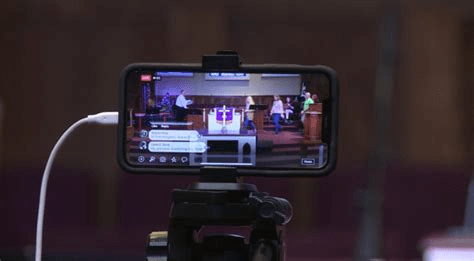
I have many unique and incredible experiences of church. I have been to churches meeting in large auditoriums, in school gymnasiums, in homes, and at a golf course. I have been to churches on three continents. I have been in churches that speak various languages. I grew up in a church where everyone felt comfortable speaking Low German. In one church most members were speaking Tagalog until the service began in English. I had the opportunity of preaching in a church in Choma, Zambia, where the pastor interpreted it into one of the local languages, Tonga. I have been in church services that started right on time and ended exactly one hour later. I have been in services where there was an approximate ending time but usually it went much longer. I have been in churches of thirty people and churches of hundreds of people.

I have been in churches where the staff led everything in the service and in churches where most of the service was led by volunteers. I have been in services where it felt like we were watching a performance, and I have been in services where the congregation was invited to participate in a number of ways.

So, what makes it church?

Let’s think of a few things that need to be present for it to be church, and before that, let’s define church. Church is the people of God meeting together. So let’s look at a few things that make something “church”.

  • Church is the people of God gathered.

When Paul wrote his different letters, he addressed them to the church in Corinth, or Ephesus, etc. He was addressing people. In Corinthians 1: 2 Paul writes, “I am writing to God’s church in Corinth, to you who have been called by God to be his own holy people.” Church is a gathering of people.

  • Church is the encouraging and motivating of God’s people.

Hebrews 10: 24 and 25 says, “Let us think of ways to motivate one another to acts of love and good works…encourage one another….” When the gathered disperse, they should feel encouraged and motivated to continue to grow in their love of God and their service to others. Something needs to happen when gathered so that the people going home are different than when they came in. They should have been challenged to change in some way.

In order for something to be church, the gathered must leave encouraged.

  • Church is the people of God praying to God.

In 1 Timothy 2: 8 Paul advises this young pastor, “In every place of worship, I want men to pray with holy hands lifted up to God….” One aspect of a church service, when God’s people gather, should be prayer. Somehow, as part of the time with each other, God’s people need to spend time talking with God.

In order for something to be church, the gathered must pray.

  • Church is the people of God gathered to listen to Scripture.

Here is some more advice from Paul to Pastor Timothy: “Until I get there, focus on reading the Scriptures to the church, encouraging the believers, and teaching them.” God’s Word should be read in church. While everyone should read at home on their own as well, there should be public reading of Scripture. That means, preaching through a popular book does not cut it.

In order for something to be church, the gathered must read Scripture.

  • Church is the people of God gathered to be taught.

In the advice to Timothy in the last point, Paul says to “teach them.” Someone, or more than one, needs to expound and apply Scripture to the regular daily lives of God’s people. Someone who has more training or more experience in a passage of Scripture can help others understand it and figure out how the rest of the Bible contributes to what is said in the verses read.

In order for something to be church, the gathered must be taught.

  • Church is the people of God gathered to celebrate communion.

In 1 Corinthians 11 Paul reminds the Corinthian church to respect the Lord’s Supper as a special event reminding us of Jesus’ death and resurrection: “For I pass on to you what I received from the Lord himself. On the night he was betrayed, the Lord Jesus took some bread…” (1 Corinthians 11: 23) He goes on to describe what happened during that meal Jesus had with his disciples, leaving us an example to follow. Many churches regularly celebrate communion, or whatever your church calls it. Some practice it every Sunday, others monthly.

In order for something to be church, communion will be celebrated regularly.

Is this church?

These are some of the elements that make church “church.” Basically, church is the gathered people of God, but the above elements are usually part of that gathering. Not every item above will be in every gathering of believers, and there may be others included. The point is, do we know what needs to included and what does not? Do we understand the incredible value of regularly meeting with others who are part of God’s family? Please leave a comment sharing what you would add or remove from the list. What do you believe needs to be present to be “church”?

I hope you have found a great local church to regularly gather with. If you have not found one, keep looking. You need to meet with others of God’s people.

Keep looking up,

Andy Wiebe

9 Reasons To Quit

In my last article I gave nine reasons not to quit your present role or position. I think those are important reasons to be aware of. On the other hand, sometimes it is the perfect time to quit. My daughter, who edits my blogs for me, reminded me of the times I have quit and suggested I approach this issue from the opposite side. Great idea! So here it is. Nine reasons to quit.

1. God has clearly called you somewhere else.

I believe that God has the authority to redirect me if he so chooses. You may have experienced that in your own life. Sometimes it is clear that God is asking you to take on a new role elsewhere. One pastor suggested that every time you quit to take on a new role, look for both the push and the pull. Look at the reasons you feel like quitting and the reasons the next role seems so appealing. It may be that God is pulling you to a new opportunity elsewhere.

2. You believe you have done all you can in your current role.

Sometimes we take on roles with great excitement. It seems like such a great fit. You work hard and do a good job, but then you come to the point where you feel you have done all you can. Church planters are a good example of this. They start a church and get it to a certain size or place of stability and then hand it off to another pastor so they can start another new church.

3. You have lost the confidence of your team.

There are times, whether it is your fault or not, where you know that you have lost the confidence of your team. Your board may no longer trust you or believe that you are capable of leading into the next chapter of your church or organization, and you realize that you will no longer be able to lead in your current role. I experienced this when someone misread my actions, and I knew that no matter what I did, I would not be able to change their opinion of me. It would be hard to gain the team’s trust back. It was time to move on.

4. Outside factors indicate a need to move.

Sometimes we need to leave a position because of external factors. These factors could be related to medical care, family care needs, or education. For example, one move my wife and I decided to make was influenced in a large part by the fact that both our daughters were entering High School and a move later would be much harder to manage.

5. You are pursuing further training.

You may recognize that in order to grow in areas you are called to and to continue to be effective, you need to pursue further education or training. That may be a meaningful reason to quit.

6. Your present role is taking too much of a toll on you.

There are times when we find ourselves in a role that is wearing on us to the point that we are emotionally and physically becoming ill. We need to recognize when we are no longer able to endure the pain or difficulty of our present role.

7. When your vision and the church’s vision are too different.

I left a pastoral role at a church after only being there a short time, when I finally realized that the church’s vision was too different from mine.

This had not been clarified before taking the position. It is impossible to maintain your integrity when you have to work in a role that does not align with your own values and goals. It is better for you, and the organization you are working for, to find a better fit elsewhere.

8. You are being asked to do more than you are capable of.

Sometimes our roles change. We may have been a great fit in the beginning, but things have changed to the point where you no longer fit. It could be that you have done a great job as a pastor so your church has grown, but you recognize that it is now bigger than you are capable of leading and someone else is needed. Alternatively, you may be in a situation where your job description is changed, and you need to evaluate the situation to see if you are still in the right role or need to move on.

9. If you can’t afford the role anymore.

Sometimes, you need to make a decision to quit and find a new role because you are not being paid well enough. Some churches are small, and are limited in what they can offer as a salary. If the wage is no longer enough to meet the climbing expenses of you and your family, there may come a time when you need to resign and look for a better paying role.

If you think it is time to quit, make sure you are doing it for the right reasons, and then do it with confidence.

Keep looking up,

Andy Wiebe
Book Reviews: Andy’s 2022 Reading Experience

I will be sharing a brief review of every book I read this year. Hope you enjoy and hope it encourages you to keep reading.


STRUCTURED FOR MISSION – By Alan J. Roxburgh

The thesis of Structured for Mission is that the present way denominations are structured must change to be effective in today’s culture. He believes that the time for experts in a denominational office is up. The real experts today are the ones at the local level. Local churches need to be given more freedom and take more ownership of their local ministry. Roxburgh doesn’t really give answers on how the local church or the denomination need to change. Instead, he suggests a new format for working through decisions in each local ministry. He suggests experimenting is necessary to see what new ideas work. The question he believes need addressing is this: “What are the challenges we currently face for which we presently have no answer but must address if we’re to live into God’s future for us?”
If you are struggling with how denominations and local churches presently work, this book will help you think further on that subject.

How to Set Plans that Work

“The best laid plans of mice and men oft go awry,” goes the saying. I like dreaming and planning. I like looking ahead and doing strategic planning with churches. I get excited about the possibilities of what could happen if things worked out right. The problem is, many good plans do not bear the fruit we had hoped. So how can you set plans that will not fail?

“The best laid plans of mice and men oft go awry.”

John Steinbeck

In James 4:14-15 it says, “How do you know what your life will be like tomorrow? Your life is like the morning fog—it’s here a little while, then it’s gone. What you ought to say is, ‘If the Lord wants us to, we will live and do this or that.’” 

James reminds his readers that no one knows what tomorrow brings. We can do all kinds of planning and scheming and base it all on good research, but in the end, no one knows what will really happen. There are always many unknowns that we cannot prepare for. We can do our best, and often plans work out, but not always. The only one who knows what tomorrow will bring is the Lord God.

God is not bound by time, so He knows what will happen tomorrow and the next day, and the next year. So as events happen, He is not surprised. Maybe we need to ask Him to help us make plans that match His for us.

In Jeremiah 1: 4-5, we read:

The Lord gave me this message:

“I knew you before I formed you in your mother’s womb.
    Before you were born I set you apart
    and appointed you as my prophet to the nations.”

God told Jeremiah that He knew him before he was born, even before he was conceived. That is quite the theological issue to work through at another time, but the point is that God knows us and has plans for us. He had a plan for Jeremiah. He appointed him to be a “prophet to the nations.” Jeremiah didn’t need a career counselor or an aptitude test of some kind to help him discover what he wanted to do with his life. God told him exactly what he should be “when he grew up.”

This morning I was reading in Psalm 138 when I came across a line in verse 8: “The Lord will work out his plans for my life.” The psalmist believes that God has a plan for his life. He trusts that to be true. I felt comforted as I read that verse. My life and my plans are not dependent on my own abilities or lack thereof. If King David is right, and I believe other scriptures agree, then God has a plan for MY life, and a plan for YOUR life.

I don’t think God has every detail of your life planned out in such a way that you need to be constantly afraid that you are making the wrong decision. I don’t think God was disappointed that I chose the Mexican Bean soup at lunch instead of the Butternut Squash soup. And honestly, I don’t know if there is one specific girl for each guy or if God leaves that up to us. What I do know is that God is intimately aware of who you are and who I am. He has plans for us as one person of humanity and plans unique to each of us as an individual.

God’s plan for all humans is that they would come to faith in Jesus and a relationship with God the Father through Him. God wants all people to join him in living in His kingdom here on earth. God desires for all people to join him in the afterlife, in His new kingdom. But I believe he also has plans unique to us. These plans are more like the plans of a coach for each individual player. He puts the player in goal who has been playing that position all his life and is best equipped and prepared for that role. He will probably put the fastest skater and best player on the first line, maybe even at centre. God knows each of us, after all, He created us. Like Jeremiah, God knew you and me before we were even born. He has observed us all our lives. He knows how we are equipped to handle situations we will face in life. And I believe that he has certain roles He wants us to be in.

If I want to make plans that will work out, I had better talk with God about those plans. Whatever the plans, we can talk to God about them as we make them. There is generally good value in involving others on our team in plans we make for organizations we are part of. We can benefit from the input of good friends. Yet the best input is to ask God to help you in the dreaming and planning. Ask Him to guide your thinking. Ask Him to help you get the best research and information to base your planning on. Ask Him to tell you what He wants done. After all, if God has plans for me, I will be better off doing what he has planned.

There are many different steps that experts could suggest as you desire to make plans that work, but if you believe in God, your first step needs to be to check in with Him. Sometimes it takes hard work and effort to accomplish meaningful plans. Again, God is the one who can help you persevere to the end.

You want to make plans that work? Then ask God to guide you in making your plans.

Keep looking up,

Andy Wiebe

Book Reviews: Andy’s Reading Experience 2022

I will be sharing a brief review of every book I read this year. Hope you enjoy and hope it encourages you to keep reading.


NO LIMITS – by John Maxwell

John Maxwell has written many books on Leadership. This one is on helping leaders expand their potential. He begins by helping the reader become aware of how they are and what they are presently capable of. He wants people to know they are probably capable of doing or becoming more than what they realize. He addresses seventeen different areas of capacity with the desire to help you maximize your capacity in each of those areas in your life. He concludes the book with this equation: AWARENESS + ABILITY + CHOICES = CAPACITY. If you wish you could do more, then this book will help you do that.

Encourage Second-Career Ministry

I meet monthly with other Transition Pastors. We are all serving churches by helping them say goodbye to a previous pastor, move to good health, and welcome a new pastor. In the last couple of months our conversations have included discussions about how few resumes are submitted for Lead Pastor positions at the churches we are serving. There seems to be a shortage of pastors. There are not enough pastors stepping into the role to balance those exiting that role.

Last week I said we need to encourage our young people to consider being a pastor or a missionary. When I was a young boy, I dreamed of becoming a doctor. There is nothing wrong with being a doctor. I have been really appreciative of a doctor’s work for me and my family many times. I dreamed of becoming a doctor. Our children are dreaming of what they want to be when they grow up. We need to encourage our children to dream of becoming pastors and servants of God in foreign contexts. We need to find good examples of pastors and missionaries to highlight for them.

Young people are not the only ones who could consider these roles. There is another group of individuals who are choosing to become a pastor later in life. I know of some who were farmers most of their life, or truckers, or welders, and then shifted to becoming a pastor.

Pastors, we have a special opportunity to encourage those in our congregation that seem to display the necessary qualities and character to choose pastoral ministry as a second career – or third, or whatever. People of God, ask God to show you if He wants to redirect you to become a pastor or missionary.

There are many godly people in our churches who work at their job all week and then serve at the church evenings and weekends. Some of them are clearly not just volunteering because someone is needed to fill a certain slot. Some of them are gifted teachers or mentors of others. They have a heart for God which is evident in the way they serve in the church and in how they operate their business or work at their jobs. Some of them have already graduated from Bible College or Seminary but never pursued the role of a pastor.

There is a group of faithful and godly people who graduated from Bible College, and maybe even Seminary, who have often not been the first choice in pastoral roles, but that has changed a lot in the last few years. Women are being hired more often and for roles beyond just Children’s Pastor or Women’s Pastor. While I, personally, may be hesitant to encourage a woman to pursue a Lead Pastor position, many churches now are open to hiring a woman for any pastoral role in the church. They are hiring based on the gifts of the person rather than on gender. So, let’s encourage our women to consider pastoral ministry as well, listening to God as to where and how he wants them to serve. Pastors, some women have not felt a freedom to pursue pastoral ministry and God is asking you to encourage them in that direction.

Some people have never considered being a pastor because they were not “good enough.” They had a certain image in their mind of what a pastor was like, and they didn’t match up to their ideal. If you look around, you will find that pastors come in all shapes and sizes. They come in all varieties of personalities. Some are great for serving in small churches and others are perfect for large churches. You don’t have to match up to an ideal. You just need to say “yes” if God is asking you to step into that role.

Some faithful servants of God felt God hadn’t specifically called them to the role of pastor, so they headed in a different direction. Just a question: “Did God call you to head in that direction?” If God did not specifically call you to be a pastor, did you use those same criteria to decide to be a welder or business owner? Many people chose to pursue a career because they thought they would do well in it, make good money, and they would feel fulfilled in that role. But maybe God never called you to that role. You just chose it. Maybe its time to specifically ask God if you should step into a role as pastor. Take time to prayerfully consider this. Talk to your pastor and other godly people around you and ask them what they think. And if all signs point to becoming a pastor, then pursue it with your whole heart!

Some have decided not to be a pastor because it is too hard of a job. Sometimes the pay will be way lower than what you are making right now. People will not appreciate what you are doing, and complain. Your family may suffer. You will be frustrated at how slow things move in the church compared to the business you were running. It seems like too much of a sacrifice to say yes to this role. Not to be too direct, but remember the sacrifice Jesus made for your salvation? He gave His all, His life, faced ridicule from people, and even separation from His Father as He died on the cross. If God is asking you to become a pastor, then He will give you the strength to persevere. I can give witness to that. I have had some very difficult moments in a few different churches, but God has been faithful through it all!

There are some of you who considered being a pastor, and maybe even served as a pastor for a short while, but you were frustrated with the institution of the church. You feel that it is not accomplishing what it should. You are probably right. But you may be just the right person to step into this role. If God is showing you where the church is lacking, can you trust that God will show you some answers in how to improve that? Sometimes it is a person new to the role that will see what is wrong and how to change it for the better. Your voice in the conversation may be exactly what is needed to raise the level of discussion on improving the church.

“Second Career Pastors” can have incredible ministries accomplishing great things for God and the expansion of His kingdom! Will you accept the challenge and become a pastor?

Keep looking up,

Andy Wiebe

Book Reviews: Andy’s 2022 Reading Experience

I will be sharing a brief review of every book I read this year. Hope you enjoy and hope it encourages you to keep reading.


PATHWAYS TO THE KING – by Dr. Rob Reimer

Pathways to the King: Living a Life of Spiritual Renewal and Power, is another on the Spiritual life by Dr. Rob Reimer. If you want to live a live of Spiritual Renewal and Power, then this book will help you as you move toward that. He uses a number of personal examples to show that it has been quite a journey for him. You will be able to identify with him, no matter where you are at in the journey right now. He helps the reader to get a better understanding of who we are in light of our relationship with God and his Spirit at work within us. Each chapter walks through a way to open ourselves up more to the filling and empowering of the Holy Spirit for personal growth and kingdom effectiveness. Learn to live with a fresh and deepening relationship with the Spirit.