If you are not experiencing “January Joy” right now, that may be for a few reasons. One may simply be that the holiday fun and family get-togethers are over. Either you miss your family or you are frustrated because things didn’t turn out the way you had hoped. The emotional and sentimental church activities like Christmas Eve Service have come and gone and it’s easy to feel an emotional slump. For some pastors, December is extremely busy so the slower days of January feel like a letdown.
Maybe January brought New Years Resolutions, and you have already failed at keeping them. The second Friday of January is widely known as “Quitters Day,” and some mark January 17 as “Ditch New Year’s Resolutions Day.” The optimism of new goals and plans can take quite the hit when the pessimism of unfulfilled goals and failed habits becomes reality.
Some talk about January blahs and others talk about winter blues. One psychologist, Dr. Cliff Arnall, determined that the third Monday in January is the most depressing day of the year, labelling it “Blue Monday” (https://westernfinancialgroup.ca/How-to-Beat-the-January-Blahs). This is made more severe if the sun forgets to shine and the weather is cold and its hard to spend much time outdoors. Seasonal Affective Disorder (SAD) affects some people severely, along with serious episodes of depression. And on top of the emotional and mental difficulty, there can be financial difficulty as the credit card bills start arriving for all the fun gifts you bought and parties you funded.
January Joy is not something people celebrate because for many people that is far from reality. I want to suggest some ways to beat the January blahs that go beyond the regular suggestions of exercise, eating right, and getting enough sleep.
First, turn to God and to His Word. Consider the psalms, like Psalm 100. Read them slowly and allow them to remind you of how great God is and how much He loves you and cares for you.
Psalm 100
1 Shout with joy to the Lord, all the earth!
2 Worship the Lord with gladness.
Come before him, singing with joy.
3 Acknowledge that the Lord is God!
He made us, and we are his.
We are his people, the sheep of his pasture.
4 Enter his gates with thanksgiving;
go into his courts with praise.
Give thanks to him and praise his name.
5 For the Lord is good.
His unfailing love continues forever,
and his faithfulness continues to each generation.
Second, listen to music. Find some good music that celebrates our good God. Listen, sing along, and begin to rejoice in our great God and His goodness to us.
Third, start giving thanks. Start listing all you are grateful for. Thank God for people in your life. Thank God for the joys you have experienced. Thank God for His protection and provision in your life. Celebrate God and his love for you.
And soon you will be full of January Joy and have no room for January blahs or winter blues. You can’t complain and remain discouraged when you are singing praises and shouting out all that you are thankful for. Have a great January!
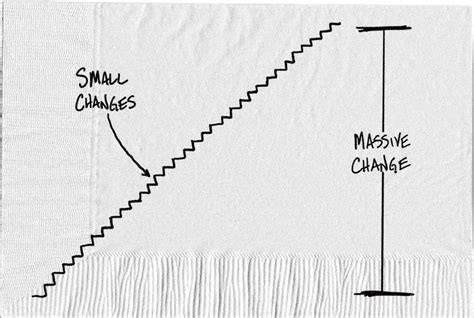
We experience some changes gradually; others come as an abrupt shock. When prices at the gas pumps go up by a cent or two at a time, we don’t notice as much as when it is a five-cent increase or more at once. Easing into a change can help a church be more accepting of the change as it develops. This gives people time to adjust to smaller changes instead of the whole change at once.
Break the Change into Smaller Parts
For many churches, Sunday Worship services have a familiar flow. The order of service is the same each Sunday. If you want to lead your church in changing its service, you may want to begin with small changes. Instead of changing everything, change one or two things at a time.
For example, if you want to add some variety to the service, you could begin by breaking the usual group of worship songs into two smaller groups, inserting a scripture reading or prayer time in between. Then, after a while, you could move the second group of songs to the end of the service for a time when you want to follow a sermon on praise with singing praise songs as a sermon response. After people get used to some changes in the singing, you can change how the welcome and announcements are done. If you always start with a song and then the welcome and announcements, try starting with a video clip highlighting a ministry in the church before doing the welcome and announcements. Instead of depending on the song to gather the church to worship, gather them with a video followed by a scriptural “call to worship” from one of the psalms.
Whatever your change, see if there are ways of breaking it into smaller changes to allow people to adapt slowly. As people see you make small changes that work, they may be willing to try a bigger change next time.
Do a Trial Run
It may be appropriate to introduce a change by announcing it as a “trial run.” You can set a date for the trial period. The caveat that this is a temporary change that will be evaluated later may give your church the willingness to try it for a while. You could even introduce the change by explaining that you are looking for a way to do things better, but you aren’t sure if this is the best way to do so. You can encourage your congregation to give you feedback as you try the change.
If you introduce a “trial run” change, make sure it is a long enough period to give it a good test run, but a short enough time to still be a trial period. If you introduce a change that you will try for a year or two, that is obviously no longer a trial run. And make sure to stick with your timeline. Do not extend it. Respect people by keeping your promises.
Promise an Evaluation
Whether it is presented as a trial run or not, you can promise all those involved in implementing the changes that you will be doing a thorough evaluation, which they can take part in, on a certain date. Evaluate it against the intended purpose. Be honest with the results.
Three options arise out of an evaluation. First, if it didn’t do what you hoped, you can always revert to the old way. Second, if the change didn’t work, you can adjust aspects of it and try again. Or, third, you can introduce a completely reworked change to try again. You may have to wait a while before people are ready to try again, but that will give you time to figure out how best to move ahead, if that seems the best option.
May God guide you as you introduce change to your church.
I usually write about leadership or spiritual issues. I also do book reviews on books I have read. Today is different – I will give you part of the introduction to a book I recently published. Here it is.
CRAFTING A WORSHIP EXPERIENCE
It is possible to create worship services that your church will hate to miss. Every week pastors and church leaders around the world prepare for the Main Event at their church, hoping it will impact their congregation in some way. Whatever it is called locally, and whatever day it takes place, every church has a Main Event where the whole congregation comes together to worship Jesus and to encourage each other. This is often the key means through which a church disciples their people. Most have other programs as well, but this is the one event that most people attend and engage with. We need to make it the best event it can be. I believe this requires creativity to help the congregation feel more involved and connected to what happens during the service. Churches need to find ways of making their Main Event less of a performance and more of an experience.
Each church has their own expression of worship. These vary greatly from one church to another. Each church has a certain expectation of what will take place and how it will be done. Some are quite somber; some are extremely exuberant. Some are very strict about the time; others are very flexible. Some have a clearly laid out agenda that rarely changes, while others change formats frequently. Some churches have services that are fine-tuned performances, where everything is practiced or even performed by professionals, and the agenda is planned out to the precise minute. In other churches, the agenda is loosely put together. They may start late and run late, but no one minds. In others, congregations have expectations of when the service has to conclude. In one church I served there was an older couple who just got up and walked out at 12:00, whether the service was done or not.
Though much of a service varies from church to church, most churches share some common characteristics when it comes to their Main Event. Typically, the experience of the congregation is more like that of an audience with very little participation. The congregation is invited to sing along with the worship songs, or maybe participate in responsive readings or prayers when prompted, but in many cases the congregation does little more than sit and watch the performance at the front.
When I was a young pastor in the 90’s, the big push was to have “seeker sensitive” worship services, and it was very effective for some. Seeker services often were designed and performed with a high level of excellence. Some churches hired professional musicians. Others made sure they had only the best speakers. The seeker service was something that people attended to enjoy, a little like going to the opera or even a sporting event, where the audience is there to watch, and maybe cheer occasionally. They may be invited to sing along to some songs but not many, as the emphasis was more on a great performance, than on participatory worship. This was appropriate for the time as there were still many people who had a bit of a church background and were just looking for something “better,” or more “real.” They were truly “seeking.” While many people came to know Jesus through this style of worship service, times have changed where people are looking for an experience and not just a performance.
Experiential Worship
I believe the time has come for us to move to a more experiential worship event. Churches need to find ways to invite people to participate in the worship service. This may mean including more volunteers in the actual creation and leadership of the event instead of just staff, or it may mean finding ways to invite the congregation to participate more during the event.
Those who are entrusted with the task of creating meaningful worship experiences need to realize that the next generation wants to be more involved in the service. Gary Collins, shares some research about the values of the younger emerging generation, and I believe what he says has great impact for churches and pastors as they craft the weekly Main Event in a way that will reach the next generation. Here are a few of his key concepts to consider:
Values and experiences are more important than vision casting and reaching goals;
Images and stories are more valued than words and facts;
Active participation and ownership are preferred over passive submission to authority and professional expertise; and
It is time to evaluate why we create our worship services the way we do. It is time we determine to find ways of inviting people to enter into the whole worship experience from start to finish. Young people are less impressed with excellence than previous generations were. They would rather see authenticity and be invited to participate in the experience. I want to help you create participatory and multisensory worship experiences.
If you are looking for ways to invite your congregation into an experience every worship service, then you are in the right place. This book will encourage you to create your service in such a way that those in attendance feel they are part of what is going on instead of watching a performance. Each chapter will look at one specific aspect of a worship service. We will look at how to invite more participation where those in attendance are invited to an experience they can engage with.
When I arrived as a new pastor at one church, I discovered that the church had used the same general service agenda for the last five years with little or no change. I, personally, have a hard time with that. While there may be something comforting about knowing exactly what to expect and when, I love to be creative, and as their pastor, wanted to give them some variety. This desire to be creative impacts my leadership style so much so, that at a different church, a senior commented, “Andy, I never know what to expect when I show up on Sunday.” He meant it as a compliment. He liked the variety. It wasn’t that every Sunday was extremely different, but no two Sundays were the same. I changed the order of service most Sundays. Sometimes the sermon would be earlier in the service, or we would change the number of worship songs. My goal was to allow the theme of the sermon to guide how best to create each service. The idea was to craft each Sunday’s service around a specific text and theme, and to communicate that theme in creative and interactive ways.
I remember taking our two daughters to a creative and interactive experience when they were young; it was a football game. The team ownership had realized that even a football game had to have a larger experience. Our girls were thrilled to watch the mascot. If you were fortunate, you could catch one of the plush footballs they threw up into the stands when the team scored. Cheerleaders were dancing and jumping, some being thrown in the air. Young men and women were running up and down the stairs offering all kinds of drinks, food, and candy. This was an experience beyond just the football game. If you were not a true fan and were just there with family members who were, you could still have an enjoyable experience…



 Elevate with Andy