I will be sharing a brief review of every book I read this year. Hope you enjoy and hope it encourages you to keep reading.
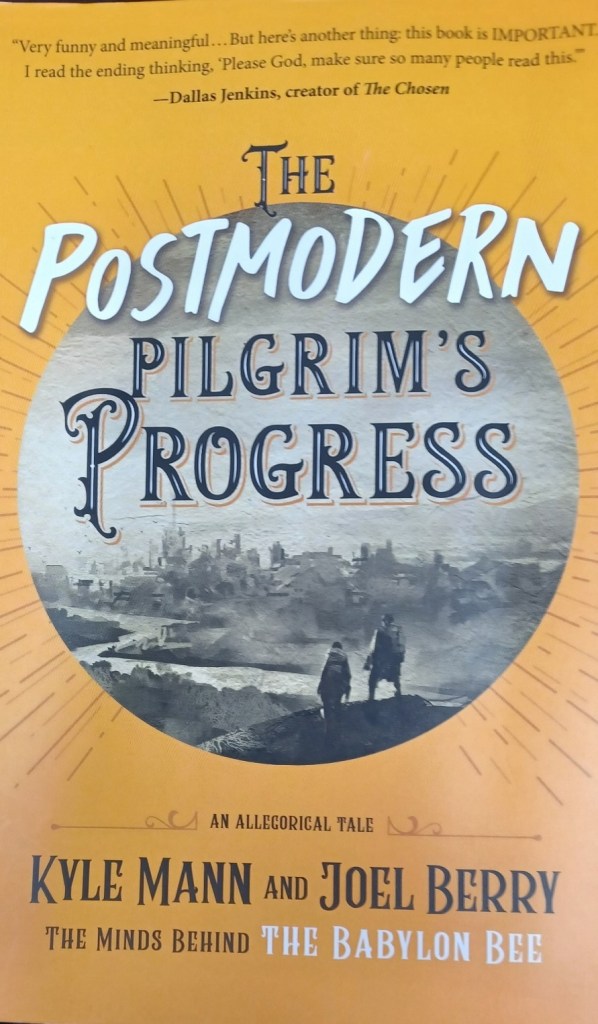
THE POSTMODERN PILGRIM’S PROGRESS by Kyle Mann and Joel Berry
Mann and Berry write a funny and entertaining allegory of the Christian life. It is a light read with a powerful reminder of how we get sidetracked with many varieties of ways we live our Christian lives. They do a good job reminding us of the main purpose of the Christian life, to keep on going forward in the journey toward a true relationship with the King!
I will be sharing a brief review of every book I read this year. Hope you enjoy and hope it encourages you to keep reading.
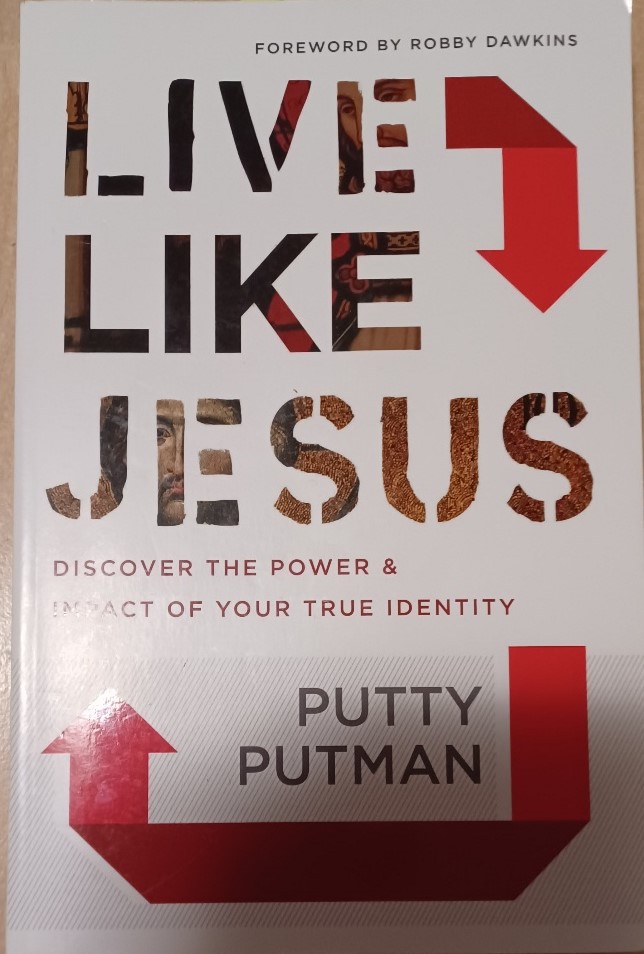
LIVE LIKE JESUS: Discover the power and impact of your true identity – by Putty Putman
Live Like Jesus: Discover the power & impact of your true identity, by Putty Putman
This is one of the best books I have read on the reality of our life in Christ. Putman asks questions and looks for answers that many Christians are afraid to ask. He does a good job asking questions that make a person think, and thus find answers that the average person is not looking for. If you want to be challenged in your walk with Jesus, this is the book you need to read.
I will be sharing a brief review of every book I read this year. Hope you enjoy and hope it encourages you to keep reading.
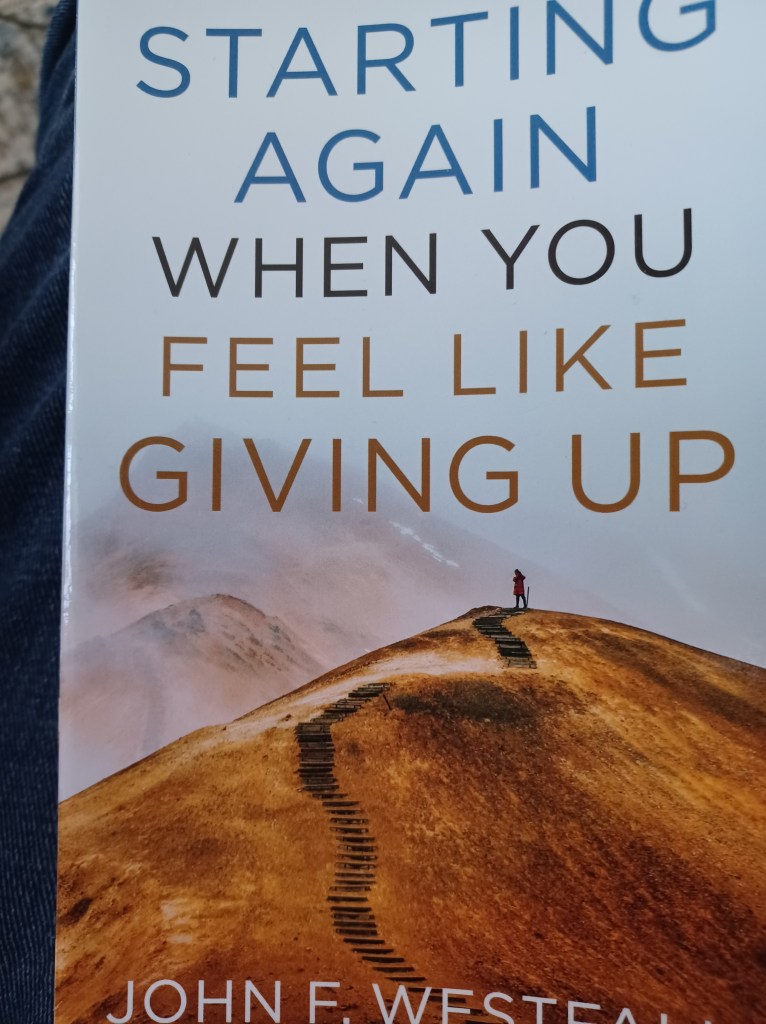
STARTING AGAIN WHEN YOU FEEL LIKE GIVING UP – by John F. Westfall
In Starting Again When You Feel Like Giving Up, John F. Westfall addresses the issue of feeling life has gone in such a terrible direction that it is sometimes hard to get back up. Life can be disappointing and disheartening when things go wrong and our goals are not achieved. I appreciate how, as he encourages the ones trying to get up, he addresses risk. Here are a healthy risks he thinks are worth taking. He expounds on the following:
Risk getting turned down.
Risk failing.
Risk being misunderstood.
Risk saying, “I love you”.
Risk being yourself.
Risk not being good enough.
Risk being good enough.
Risk getting hurt.
This might be just the book if you are struggling and trying to get back up again.
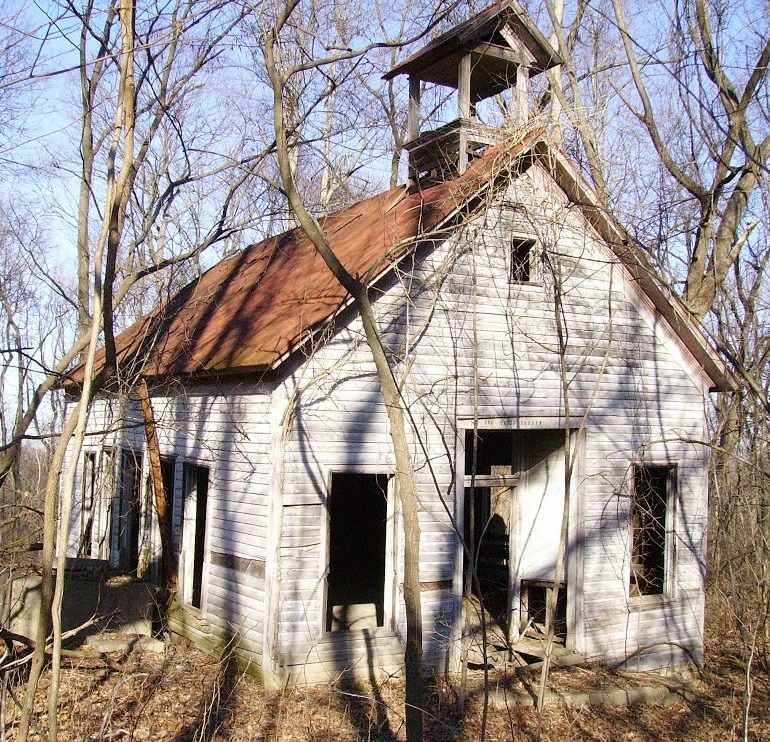
There’s a church I drive by occasionally. Each time I do, it makes me sad. I drove by it just the other day and noticed how dilapidated it was. You see, I attended that church a few times many years ago. I remember how excited the people were. The building was new, and still in the process of being completed. The congregation was already meeting there in the fellowship hall even though the sanctuary was not yet completed. They were looking ahead with excitement and anticipation. There was laughter and the noise of young children. While I was only a visitor, I could tell there was a sense of expectation as they had raised enough money to get to where they were now. They had outgrown a smaller, older building and were in good spirits.
Now, as I drive by and remember that excitement, instead of giving me a sense of hope, I feel sad. The building looks run down. The gravel parking lot now has twelve-foot-tall trees growing in it. I didn’t see a cross on the building anywhere. And I wondered what happened. What happened to the excitement of that forward-looking congregation? Did they finish the building? Did people move away? Why did they not continue to grow?
I think back to the church where I first started as a young pastor. I was on staff as the youth pastor. That church no longer exists either, and it makes me sad. I know some of what happened there, but that doesn’t make it any better. I know the great history they had of sending and supporting missionaries. They were part of planting other churches, but they lost their way. Over time, more and more people left. Eventually the denomination shut down the church. While that church experienced a lot of loss, one good thing is that the building is still being used for ministry purposes, but that church of people no longer exists. What a sad ending for a church that had prospered over the years.
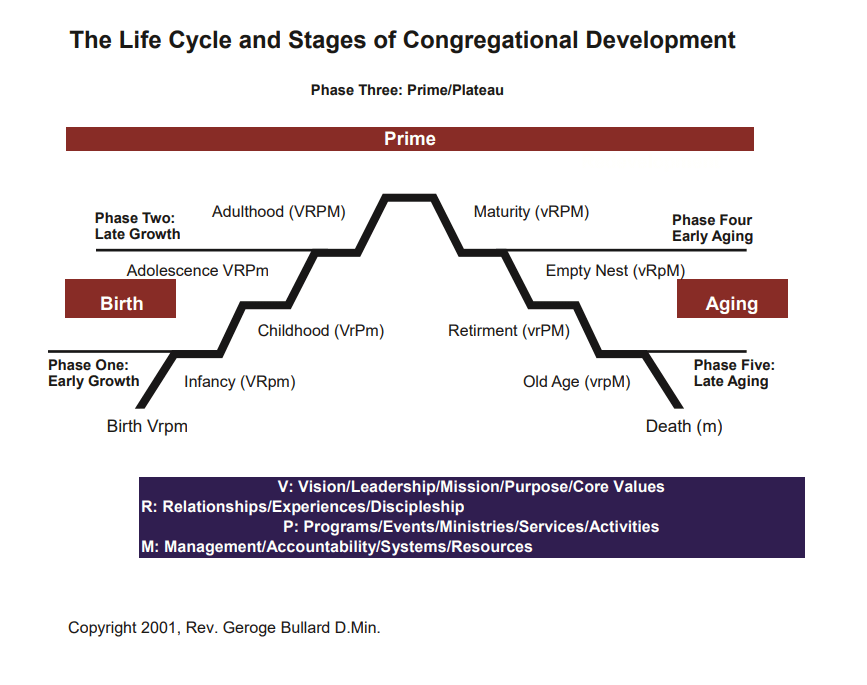
Just this week, as part of a class I am taking, we were given a handout by George Bullard entitled: Will Your Congregation Still Exist Ten Years From Now? His research has led him to this list of 25 Factors That May Impact Your Survivability, Vitality, and Vibrancy. Bullard invites churches and church leaders to evaluate their church by a set of 25 categories such as: vision, true relationships, high expectations of members, and a well-maintained facility . His research has concluded that there are at least 25 different things that can impact a church’s life expectancy.
Most of us never consider that our church may die. We just go on with our activities as if it will go on forever. But we need to do some serious evaluation from time to time. We need to look at the church with critical eyes – not to criticize but to evaluate boldly. And then we need to decide to correct what needs correcting. When this is done regularly and early in your church’s life, the changes made to correct occasionally may be small, but if your leadership has not evaluated your church and made adjustments over the years, there will come a time when you will need to make drastic changes. Some pruning will be required as you prayerfully cut out what is diseased and a distraction from what God has called your church to be.
If the evaluation and correction process is not something you are familiar with or equipped to handle, then call in someone who can. There may be resources available through your denomination, or call in a church coach or consultant. We are trained to walk a church through this process in a meaningful way. Whichever path you choose, do not just give up and hope the church will correct itself without the necessary work needed.
Churches and organizations need regular evaluation and appropriate action to correct where things are not going as they should. Don’t be scared to tackle this important yet painful process. Be more afraid that not doing anything will lead to the death of your church!
So call in someone to help. Contact someone like me to help you.
My natural tendency is to be a people pleaser. I don’t feel good when someone disagrees with me. Recently I was talking with a friend who challenged a statement made by my church. It was regarding a practice of the church that we believed was scripturally accurate, but he was not willing to agree to this statement. I realized that I was trying really hard to come up with at solution so that he would be satisfied. I was trying to please him, rather than stand true to a statement we had made and believed to be biblically accurate. There was no reason for me to try to please him except that I like this guy and didn’t want to feel like there was disagreement between us.
Any leader needs to realize the value of being considerate and finding ways to get people to follow, but we cannot lead from a position of pleasing people first.
Know What You Believe.
I realized that I was a little unsure in this conversation. I was being asked to support a statement that I hadn’t given a lot of thought to. I believed it to be true, but when questioned, my first thought was to figure out how to make him happy rather than about showing him why I believed this statement.
I realized that I needed to be clear on what I believed. My job as a leader was not first to make him feel good about this statement but to show why we believed it was biblical and one worth following. Yes, I wanted him to agree – and I wanted him to feel good about it and accept it as worthwhile. But I should have begun with a desire to protect the truth of the statement rather than trying to please him.
If you know what you believe, then you know what to stand up for.
Know Why You Believe it is True.
Not only did I need to believe the statement was one that we should live by, I needed to know why. The more we understand the why of something, the easier it is to stand up for it. When there are certain expectations in our church or organization that we don’t agree with, it is hard to stand up for them. If we believe them, it may help to also know why we believe them to be worth operating by.
Sometimes the “why” can help us explain it to those who are questioning us. If I am convinced of the value of something, I will be more likely to stand up for it instead of trying to downplay it with the hope the person I am speaking with will agree with me.
Know What You Will Do if Someone Disagrees with You.
Not everyone you encounter will agree with you on certain issues. Even the people in your organization, and your friends, will not always see eye-to-eye with you on everything. What then?
Sometimes it is easier to try to please the person, and we end up being wishy-washy, always changing our minds according to whom we are talking with.
Sometimes it is easier to fight for what we believe and stand for, with the risk of losing relationships.
We need to find a way to balance, standing up for what we believe and our desire to be in a good relationship with people. Ideally, we convince our friend to agree with us, or realize they were right. And we have maintained our relationship.
Unfortunately, we will have disagreements where we cannot convince someone to change their mind and agree with us. We need to figure out how to continue to have good relationships with people who see things differently than we do. This will not always be easy. Some relationships will not continue. Even if relationships fall apart, maintain a proper love and respect for the other person. Sometimes we will not be able to maintain our integrity and our relationships at the same time. Then part in as amiable manner as possible.
We will always come across people we disagree with. Let’s ensure we stand up for what we believe even as we value the relationships we have.
We can all do a pretty good job of getting along when everything is going our way. We can enjoy time with people and think they are pretty good friends. Life is good when no one challenges me or my ideas. But what do we do when someone we thought we were on good terms with ends up on the opposite side of an issue?
The church I am presently serving is facing an issue that is fairly divisive. I won’t tell you what the issue is. You can insert your own issue as I address how we are attempting to maintain unity even as we deal with a divisive issue.
Clarify the Issue
Whatever the issue is that you as a church or organization or team are facing, make sure that you clarify the issue. We thought we had been quite clear on the issue, but we realized that even after weeks of talking about it, people were confused. Do everything you can to make sure everyone knows exactly what you are talking about.
I remember a story of three men going into business together. They had rented a building and were setting up their restaurant. And then a problem arose. One of the men started talking about where he wanted the buffet area. A second interrupted him and told him clearly that a buffet was not part of the plan. They were going to have people come to the counter to order and pick up their meals. By now the third man was getting a little agitated. “I thought this was a fish and chips place!” We have to clarify the issue, and sometimes it means talking about it again and again to get down to what the real issue is so effective communication can take place.
2. Gather Supporting Information
For us, this was a decision that would affect some of our bylaws, so we had to make sure people understood what the bylaw was that was affected by the decision we were about to make. It was an issue that we believed had spiritual connotations, so we made sure to provide documents to our membership with scripture verses and explanations of how they spoke into the question at hand. We did some historical checking to see how this situation had been handled in the past. We even contacted our denominational office to get their input.
3. Prayer
We made sure to pray about this event. We encouraged people to pray on their own, we prayed about it in our services, and we prayed about it at leadership meetings. We prayed about it at discussion meetings we had regarding this question. We asked God to give us clarity and unity in the process.
4. Discussion Events
We hosted one formal evening of discussion on the topic. We recognized that there were people on either side of the question. Each side felt they had scriptural backing to why they believed what they believed. We determined not to enter into a debate. We did not want to set up a situation where we caused people to publicly take sides against each other. So we arranged for a time to carefully look at both sides of the issue. We invited people to speak up, but only in a positive way. No one was allowed to speak against an issue, they could only speak for their side. In this way, everyone was given opportunity to speak into the issue without it being against an individual.
As an aside, it was very encouraging to me as we ended that Discussion Evening, that many present stated their commitment to the unity of the church even if the vote did not go their way when decision time came. They were more concerned about protecting unity as one family or body, than about fighting for their point of view!
5. Make a Decision
At some point you have to decide how you will answer the question at hand. Like us, you may want to have a formal vote by the membership. You will need to decide at which level of authority in your church or organization that decision needs to be made. We encouraged our people to vote as their conscience directed after all the discussion and prayer we had. And then, whatever way the vote went, we trusted that God spoke into our situation and moved ahead according to the results of the vote.
Once a decision has been made, it is important to recognize that not everyone will agree with the decision as you move forward. Be alert to situations where people are having a hard time accepting the decision and take time to walk them as they process the results. You may need to meet with some individuals who are slow in processing the results so that you can help them move forward, encouraging them to trust God will continue to walk with us even as we trusted him to guide our decision process.
May God guide you with divisive issues you face. Too often, we become so closely tied to the issue that we would rather cause disunity than lose out on a vote. May God guide you and help you maintain unity as you too work through issues that could divide.
I would love to hear how you have worked through divisive issues and what worked for you. Let me know. Comment or email me.
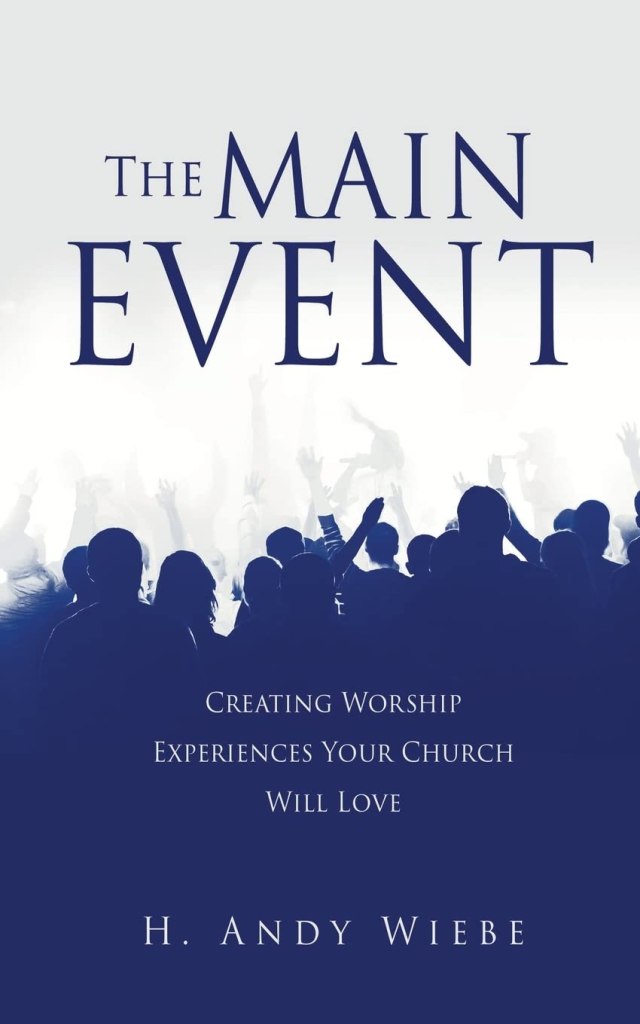
I usually write about leadership or spiritual issues. I also do book reviews on books I have read. Today is different – I will give you part of the introduction to a book I recently published. Here it is.
CRAFTING A WORSHIP EXPERIENCE
It is possible to create worship services that your church will hate to miss. Every week pastors and church leaders around the world prepare for the Main Event at their church, hoping it will impact their congregation in some way. Whatever it is called locally, and whatever day it takes place, every church has a Main Event where the whole congregation comes together to worship Jesus and to encourage each other. This is often the key means through which a church disciples their people. Most have other programs as well, but this is the one event that most people attend and engage with. We need to make it the best event it can be. I believe this requires creativity to help the congregation feel more involved and connected to what happens during the service. Churches need to find ways of making their Main Event less of a performance and more of an experience.
Each church has their own expression of worship. These vary greatly from one church to another. Each church has a certain expectation of what will take place and how it will be done. Some are quite somber; some are extremely exuberant. Some are very strict about the time; others are very flexible. Some have a clearly laid out agenda that rarely changes, while others change formats frequently. Some churches have services that are fine-tuned performances, where everything is practiced or even performed by professionals, and the agenda is planned out to the precise minute. In other churches, the agenda is loosely put together. They may start late and run late, but no one minds. In others, congregations have expectations of when the service has to conclude. In one church I served there was an older couple who just got up and walked out at 12:00, whether the service was done or not.
Though much of a service varies from church to church, most churches share some common characteristics when it comes to their Main Event. Typically, the experience of the congregation is more like that of an audience with very little participation. The congregation is invited to sing along with the worship songs, or maybe participate in responsive readings or prayers when prompted, but in many cases the congregation does little more than sit and watch the performance at the front.
When I was a young pastor in the 90’s, the big push was to have “seeker sensitive” worship services, and it was very effective for some. Seeker services often were designed and performed with a high level of excellence. Some churches hired professional musicians. Others made sure they had only the best speakers. The seeker service was something that people attended to enjoy, a little like going to the opera or even a sporting event, where the audience is there to watch, and maybe cheer occasionally. They may be invited to sing along to some songs but not many, as the emphasis was more on a great performance, than on participatory worship. This was appropriate for the time as there were still many people who had a bit of a church background and were just looking for something “better,” or more “real.” They were truly “seeking.” While many people came to know Jesus through this style of worship service, times have changed where people are looking for an experience and not just a performance.
Experiential Worship
I believe the time has come for us to move to a more experiential worship event. Churches need to find ways to invite people to participate in the worship service. This may mean including more volunteers in the actual creation and leadership of the event instead of just staff, or it may mean finding ways to invite the congregation to participate more during the event.
Those who are entrusted with the task of creating meaningful worship experiences need to realize that the next generation wants to be more involved in the service. Gary Collins, shares some research about the values of the younger emerging generation, and I believe what he says has great impact for churches and pastors as they craft the weekly Main Event in a way that will reach the next generation. Here are a few of his key concepts to consider:
Values and experiences are more important than vision casting and reaching goals;
Images and stories are more valued than words and facts;
Active participation and ownership are preferred over passive submission to authority and professional expertise; and
It is time to evaluate why we create our worship services the way we do. It is time we determine to find ways of inviting people to enter into the whole worship experience from start to finish. Young people are less impressed with excellence than previous generations were. They would rather see authenticity and be invited to participate in the experience. I want to help you create participatory and multisensory worship experiences.
If you are looking for ways to invite your congregation into an experience every worship service, then you are in the right place. This book will encourage you to create your service in such a way that those in attendance feel they are part of what is going on instead of watching a performance. Each chapter will look at one specific aspect of a worship service. We will look at how to invite more participation where those in attendance are invited to an experience they can engage with.
When I arrived as a new pastor at one church, I discovered that the church had used the same general service agenda for the last five years with little or no change. I, personally, have a hard time with that. While there may be something comforting about knowing exactly what to expect and when, I love to be creative, and as their pastor, wanted to give them some variety. This desire to be creative impacts my leadership style so much so, that at a different church, a senior commented, “Andy, I never know what to expect when I show up on Sunday.” He meant it as a compliment. He liked the variety. It wasn’t that every Sunday was extremely different, but no two Sundays were the same. I changed the order of service most Sundays. Sometimes the sermon would be earlier in the service, or we would change the number of worship songs. My goal was to allow the theme of the sermon to guide how best to create each service. The idea was to craft each Sunday’s service around a specific text and theme, and to communicate that theme in creative and interactive ways.
I remember taking our two daughters to a creative and interactive experience when they were young; it was a football game. The team ownership had realized that even a football game had to have a larger experience. Our girls were thrilled to watch the mascot. If you were fortunate, you could catch one of the plush footballs they threw up into the stands when the team scored. Cheerleaders were dancing and jumping, some being thrown in the air. Young men and women were running up and down the stairs offering all kinds of drinks, food, and candy. This was an experience beyond just the football game. If you were not a true fan and were just there with family members who were, you could still have an enjoyable experience…
I was shocked when I attended church this Sunday. I get an occasional Sunday off so I get to take in a service at a church I am not leading. It was a great Sunday with good worship, and the commissioning of a new Lead Pastor. But one thing was missing: the offering. There was no offering received as part of the service. There may have been some information regarding giving on the slide announcements that were playing prior to the service, but I didn’t notice them. On the way out I did notice that there was a “giving station” on the wall. There may have been a few. I don’t know what you would do at the station but it must have been a way to give financially to the church.
Now, you may be wondering why I was shocked, and why I would make such a big deal about this. Here’s why.
First, I know that the church is struggling financially, and had to let a few staff members to in recent months because they couldn’t afford them.
Second, giving of our tithes and offerings to God and the work of his kingdom on earth is part of what following Jesus looks like. It is part of discipleship.
Third, if we want people to do something, we need to make it as easy as possible. Do you want to have your congregation learn how to give back to God, trusting Him to provide all their needs with the remaining money they still have? Then make it easy for them to do so.
We need to make it easy for people to do what we want them to do, whether we are leading an organization or leading a church. Whatever you want your team to do, make it clear and easy to do.
As we entered 2023, I encouraged our church to read the Bible, every day. In fact, I encouraged them to read the whole Bible this year. I printed four different Bible Reading Guides that followed different reading strategies from reading straight through the Bible from beginning to end or jumping around to different topics. I was hoping that at least one of these methods may appeal to people who had never read the whole Bible. Each Guide was a different color, and we included a lengthy description of each guide in the Sunday bulletin, with descriptions in the color of the Guide. I announced that these Guides were available, for four weeks in a row, continually reminding the congregation to choose their plan and begin reading. We placed the guides in a display at the information table everyone walks by every Sunday, making it easy to grab one on the way in to the service or on the way out. We did everything we could to make it as easy for people to choose a reading plan as possible.
As for the way we take up the offering, we do a few things to make it simple and clear how and why we do it. We have a clear step by step direction in the bulletin as to the various ways people can give, including online and in person in the service. We place offering envelopes on the chairs so when people come in for the service, not only is it easy to find an envelope to put their offering in, by prominently displaying these envelopes, it is a reminder that we value their financial gifts to the church. We always include a time in the service when we pass a basket and invite members to drop their financial gift in the basket as it goes by. Just before we pass the basket, we take a moment to talk about why we give and how we do it, thanking everyone for their faithful and willing giving. We pray, inviting God to bless the offering for His work. The whole process doesn’t take long, but it shows we value that part of discipleship and want to include it in our worship service.
As you consider an aspect of your organization or church where you want people to take a certain action, think about how to make it as simple as possible. Explain the purpose and instructions for the activity in multiple ways so it is accessible, and provide materials and time to complete the task. If you want people to fill in a certain form, begin by clearly explaining what is expected in an accessible medium. It may be a public announcement, an email, or text, or even a phone call. It may be a combination of these along with a clear statement explaining each step. Along with the direction, provide a designated time and deadline for completing the task. For example, if it is an evaluation of an event, give the participants time right after the event, or a few minutes the next office day after the event. Make sure that everyone has access to the correct form in a format that is as easy to access as possible – providing each person their own copy (and even a pen) is the most effective for ensuring they will complete it. Do whatever you can to make completing the desired task easy to do.
We all have expectations of our congregation or our team. Let’s do the work to make sure that it is as simple as possible for them to meet your expectations.
BREATHE: The New Science of a Lost Art – by James Nestor
If you have read my reviews you know that most of the books I read are on Christian Growth, or Leadership, or Change. This book is in a different category, but I sure enjoyed it.
Breathe: The New Science of a Lost Art is very interesting book about something we all do, automatically. Unfortunately, according to James Nestor, and his research, many of us are doing it wrong. Nestor describes a number of different breathing techniques that he personally experienced in order to understand them clearly. Many (there are many) of the breathing techniques have origins in Asia and India, from thousands of years ago. The techniques are believed to give more energy and even heal certain illnesses. He concludes the book with a helpful summary of how a number of techniques can be practiced and how they benefit a person. Very interesting book.
I love to work on vision. I’m a dreamer. It’s not hard for me to come up with new ideas, and I do it often. Not everyone has that mindset. I also think quickly and I realize not everyone does. In my present role, I work with a different church each year, and lead them through a process of vision setting. This means I’m engaging with a wider range of individuals, some who are excited about and comfortable with working on vision setting, and some who are not.
Here’s the big question: how can you make sure that everyone is able to fully engage in the process of setting vision for your church or organization?
Follow a written plan.
When you lead a team through the process of setting vision for your organization, make sure you first identify a written plan. Whether you use something developed by another, or like me, pick and choose exercises from a variety of sources, make sure that everyone has access to the plan before starting the process. Then each person – not just the leaders – can see where the process is heading.
I provide everyone with a booklet they can follow. One of my team has a difficulty hearing, so the booklet helps him know where we are even when he misses some of what is said in the discussion.
In addition to the overall plan document, for each meeting, I also provide a clear agenda, complete with breaks, and times listed for each exercise so everyone can see if we are falling behind. I try to be a little flexible with the time, and even skip some pages in the workbook if we are running behind schedule. The participants can check those out later if they want.
Use Variety
I like to do more than just a question-and-answer format. Some of the exercises I like to use for vision setting sessions are multiple choice or circle the best answer. Some are fill in the blank. I provide examples from other organizations that can spark ideas. I do a little leading but prefer to get the team to do most of the talking, especially since I am the consultant and will not be with the church as they move to implement the plan. My job is to make sure they can arrive at a common vision that is truly theirs. This means that I invite a lot of discussion. I do some work on a white board when trying to bring their ideas together so everyone can see any common threads. I even included a few colour charts to help visualize some exercises. I also like to add a few cartoons! Make sure to include times where people can get up and move around a bit. Sitting for too long will slow people’s thought processes down.
Go Slow
When leading a vision process, go slower than you think you should. There are always a few who think slowly and need time to think about things. Some ideas may be brand new and might need some mulling over. Some participants will read and process the directions for the next exercise slower so you can’t rush the process. Too much information too fast will not work. Instead, give time to process to keep everyone’s thinking clear.
Circle Back
I have found that it is helpful to present exercises that to get the team to see the present reality and the future possibilities from a number of different angles.
As I recently led our team through a visioning process, it was interesting to see some of the same ideas coming up throughout the session, and ideas coming up later that built on what was previously discussed. As these topics came up multiple times, it resulted in more clarity.
Highlight Recurring Themes
When you are working through a vision process, note these recurring ideas so that everyone is aware of them. It’s obvious that these are the themes that will be a major contributor to the final vision statement and vision picture. Listen to how their answers to different questions tie together and form a common theme. As the leader of the session, you are in position to observe these connections and identify them for the group.
Listen to God
In the recent process I led, there were a few times where we just stopped and prayed, both talking to God and listening to Him as well. There were a few times where different members of the team felt God was saying something we needed to pay attention to. When there were others that concurred, we took those thoughts seriously and integrated them into the values and vision that were taking shape.
It was very encouraging to me to see our team fully engaged through a 6-hour vision marathon! Everyone contributed to the conversation and was involved in the process right from the beginning to the end.
What are some ways you have found helpful to keep people engaged in process of developing a vision or strategy?








 Elevate with Andy