I will be sharing a brief review of every book I read this year. Hope you enjoy and hope it encourages you to keep reading.
SPIRITUAL AUTHORITY – by Dr. Rob Reimer

You do not have to say “yes” to every opportunity to serve that comes your way.
When we are young, and just starting out in life, the opportunities are endless. You could go in almost any direction for a career. As you get older and get more experience you learn that there are certain things that you are good at and certain things you are not as good at. There are certain roles you take on that you love and others where you struggle to survive the day.
As we get older, and hopefully a little more experienced, we begin to narrow down the real and meaningful opportunities for us. We are not quick to jump in to jobs that will require us doing things we hate. We choose to do what we enjoy if at all possible. We prefer doing what we enjoy, and over time get a clear sense of what those things are.
Beyond that, I believe that God has certain roles for us to fulfill. He has given us gifts and abilities, and led us through circumstances that prepare us for what is next. We can ask him to clarify for us what he wants us to do with our life, and he will. I believe that God has a role for everyone, if we will only ask him to help us discover that.

Through a number of different circumstance God has brought me to the place where I believe he wants me to focus on helping churches and leaders achieve their God-given dreams. I have been a pastor for about 30 years, and generally loved the role. I had the opportunity, with a few others, to start up and establish the Rural Church Pastors Network. I loved the opportunity to equip and encourage fellow pastors. I enjoy writing and sharing my thoughts with others. And God, through these experiences and some clear signs from him, called me to this role of helping leaders and churches.
God has called me to help churches and leaders discover their God-given dreams. I was recently offered a position that looked interesting. I knew I could do what was required, I might even enjoy the role, but I couldn’t say yes. As I prayed about it, God reminded me that he had called me to this role of helping leaders and churches. This new opportunity was not part of that. Saying “no” to something that I might enjoy was not easy, but I knew what God called me to do.
Knowing your “yes” helps you know your “no”. When you have a clear understanding of what God has called you to do, you can clearly say no to that which is not part of the plan. I know it is hard to say no to people. We want people to like us and so we try to please them. Knowing our specific calling from God helps us have an easier time making decisions about what we choose to agree to and what opportunities we decline. Then we can say no with a clear conscience when we know what fits in God’s plan for us and what does not.
Sometimes we are overwhelmed with all that is on our plate. I wonder how often that is a result of us not clearly understanding what we are called to do so we do everything that comes our way. We say yes to every good thing when maybe God would like us to focus in on a specific opportunity. We tell ourselves that we can’t get out of these responsibilities when maybe we just need to say no. Sometimes we get frustrated with people and all they demand of us, but the problem may be us. We haven’t set clear boundaries on what we should or should not do, what fits into the scope of who we are and what does not.

Clarifying who we are and what God is calling us to may be harder to determine when we are young and have not had time to try new things or experience various roles and opportunities. As we get involved in different jobs and serve in a variety of places, we can narrow down who we are and what we are called to do.
This allows us to figure out how God has gifted us and what talents we have. But clarifying who we are and what we become involved in does not just depend on age and experience. I believe we need to have time with God asking him to clarify what he wants us to do with our lives. God may speak to you through your reading of scripture. He may speak to you in your prayer time. He may speak to unique ways such as dreams or visions. What I do know is this: if we ask God, he will answer. Ask him to clarify his calling on your life and then you will be able.
I hope you can clarify your “yes” so you can also know your “no.” May God show you your unique place in this world.
Keep looking up
Andy
I recently heard two statements by two different people that I believe are prophetic words for the church. In my experience, there have been shifts in how the church functions or what church leaders think is important in reaching people for Christ. When I was a young youth pastor, it seemed the emphasis was on finding ways to make church fun and cool. As I got a little older, books and seminars seemed to focus on the church being relevant and relatable to unbelievers. What is the next emphasis of the church as we reach out to people who have not yet met Jesus personally?
On January 24, 2022, I heard Adam Browett of Glad Tidings Church in Victoria, B.C., make a profound statement in his sermon: The church moving forward “looks more like a healing center than a rec center.” He pointed out that if we were to be following Jesus’ example, we would be surrounding ourselves with hurting people and healing their hurts.
Our world offers all kinds of entertainment. The church does not need to provide entertainment. The church needs to find ways of helping the hurting and lonely. Our church buildings should be places where people find healing. Those of us who have a relationship with Jesus, the Healer, should be people in whom others can find healing as we point them to Jesus.

Dr. Rob Reimer writes in Spiritual Authority, “I think more people are going to come to faith in Christ in this generation because they know they are broken and in need of a Healer than because they know they are sinners in need of a Savior.” Our emphasis when we share the gospel has so often been about showing people how sinful they were so they would recognize they need a Saviour. Instead, if we focus on brokenness and healing, people don’t need us to point out how hurt and lonely they are. And we have an answer to that hurt and loneliness. We have a Healer.
In his book, Reimer points out that almost every time Jesus mentioned the kingdom of God he also mentioned healing from diseases and casting out of demons and restoring what is good and right in people. The church has been too focused on the “getting out of here” aspect of the Kingdom of God, where our goal is to gain eternal life and then just wait for that to be fulfilled. The kingdom of God is where what is bad is made right. The kingdom of God must be evident in displays of God’s power, as can be seen in demons cast out and people healed and relationships restored.
Our world is full of conflict. Countries are at odds with each other. People are at mad at each other. Large demonstrations and protests are rising up out of people’s frustrations. Violence is not uncommon. Disputes and arguments dominate social media. People are mad at the government and frustrated with the pandemic and all its fallout. Marriages and families are struggling and breaking apart. Many people are struggling with depression. Suicide is a way out for many. People are hurting.

If we truly love our world, if we as Christians want to truly love the hurting as Jesus did, then we need to be people offering healing, and our churches need to be places of healing. We need to believe God can still do miracles and bring healing and restoration. We need to speak and act with His authority and power to bring healing to our world.
This will not be just up to the pastors or church leaders. This is the role of every believer. We have the Holy Spirit in us. We have his power at work in and through us. We need to learn how to bring his healing to the hurting people around us. This will take much prayer, some in depth reading, and practice, as well as a continual filling of the Holy Spirit.
This is the need of the church today, but it is really just going back to what Jesus did when he was on earth, and what the apostles did as they established churches, and what New Testament church leaders did in their communities. We need to come back to inviting God to display his power and to bring healing to our hurting world again.
Let’s pray that the church will become the healing center it is meant to be.
Keep looking up
Andy

N. T. Wright always makes you think. In this book, he works through themes found in the Gospel of John. He focuses in on seven themes: Justice, Love, Spirituality, Beauty, Freedom, Truth, and Power. He shows how each was to be a signpost pointing to what the effect of Christ’s coming in this world should be. He concludes, “By the power of the Spirit of Jesus the Messiah, crucified and risen from the dead, they can become genuine signposts, mended signals, missional marker posts.” He is portraying what effect Christianity should have in this world.
This past Christmas our church again served its annual Christmas Dinner, primarily for those who regularly access the local Food Bank. Some aspects of the dinner had to be adjusted in response to current Covid restrictions, and we were able to serve a drive-through take-home dinner. At the following leadership meeting we evaluated the event. It was a great experience as the Elders were not often doing evaluation, and they recognized the benefits. We recorded details that we wanted to make sure next year’s team would benefit from. We realized we needed to prepare more food. We discussed including some evangelism materials in their take-home bag. As we reflected on the event and went through our evaluation form, we identified what needed to improve and came up with some solutions.
Evaluation scares many of us. We are afraid that someone will say something bad about us or what we have worked on. No one likes hearing something negative about themselves, but what if we could realize the benefits and actually look forward to evaluation?
Throughout my experience both leading evaluations and being evaluated, I’ve identified five benefits of the practice of evaluation.
1. Evaluation helps you see what you did well.
Celebrate what went well, what worked, and what accomplished what it was supposed to accomplish. Evaluation should always find a way to point out what went well. Sometimes we need others to help us see the good others see. We are often our worst critics. We often measure ourselves against unreal expectations and can benefit from others showing us that we did well.
2. Evaluation helps you see what you did not do well.
Sometimes we need others to make us aware of what did not go as well as we thought. They may see areas of our life or our endeavors that need improving. So listen to the hard words. The perception of evaluators may be more accurate than our prideful self-evaluation. Evaluation can help remove “blinders” we have to what is truly going on.
Evaluation can point out, or even just remind us, of the areas that need work. And who doesn’t want to get better? You can only get better if you remove or improve that which was standing in the way.
3. Evaluation gives you a picture of true reality.
This is the “you are here” point of evaluation. I was on holidays recently in a city that I did not know. At one point, my wife and I were looking for the local museum because we wanted to see the Lego display they advertised. We were not far away so we decided to walk. We had the address, so we headed in the direction we thought we were supposed to go. After walking further than we thought was right, we checked the address again, and then tried our Google Maps. Again, we walked for awhile and realized we were not finding our way. It was only when we realized we had not started at the point we thought we were at and we were heading in the wrong direction that we finally found our way to the advertised Lego display.
Evaluation can help you figure out where you are at, and then in what direction to go. This can apply to us personally, as we realize we are not coming across as we thought we were. This can help as we evaluate a program we are running and realize we are not accomplishing our stated purpose. We need to know where we are at before we can figure out what direction to go to get to where we want.
4. Evaluation opens up new ideas.
After identifying where you are and where you want to go, evaluation can open up ideas of how to get there. Evaluation should not be just a process of highlighting everything that is wrong, but become a bridge to new ideas. Evaluators may have suggestions on how to change a negative to a positive, or a not so good aspect to a great one. Learn from the evaluation and then build on it with new and better ideas.
5. Evaluation helps you improve.
Evaluation moves you from where you are to where you want to go, at least it can if you are willing to learn from the experience. All of us want to be our best. Our best can only be achieved through ongoing evaluation that helps us know what needs improving. We can then focus on the areas that need work, while maintaining what already worked well.
As a pastor, I have benefited from evaluation of my sermons. I have realized that at times I was not connecting with the audience like I thought. My sermons improved as I included more stories and illustrations to get my points across clearly.
I have benefited from evaluation of programs and ministries we have run. We all make assumptions about how things work. Evaluation has shown me times where my assumptions kept me from seeing how areas of a program or ministry were experienced by those involved.
Evaluation is something many of us rarely do. We may criticize something, or complain about what went wrong. We may offer some critiques. But we rarely take time for evaluation. Think about ways to include this in your work and personal life, and make it important by adding it to your calendar and following through. You will be better for it.
Keep looking up
Andy
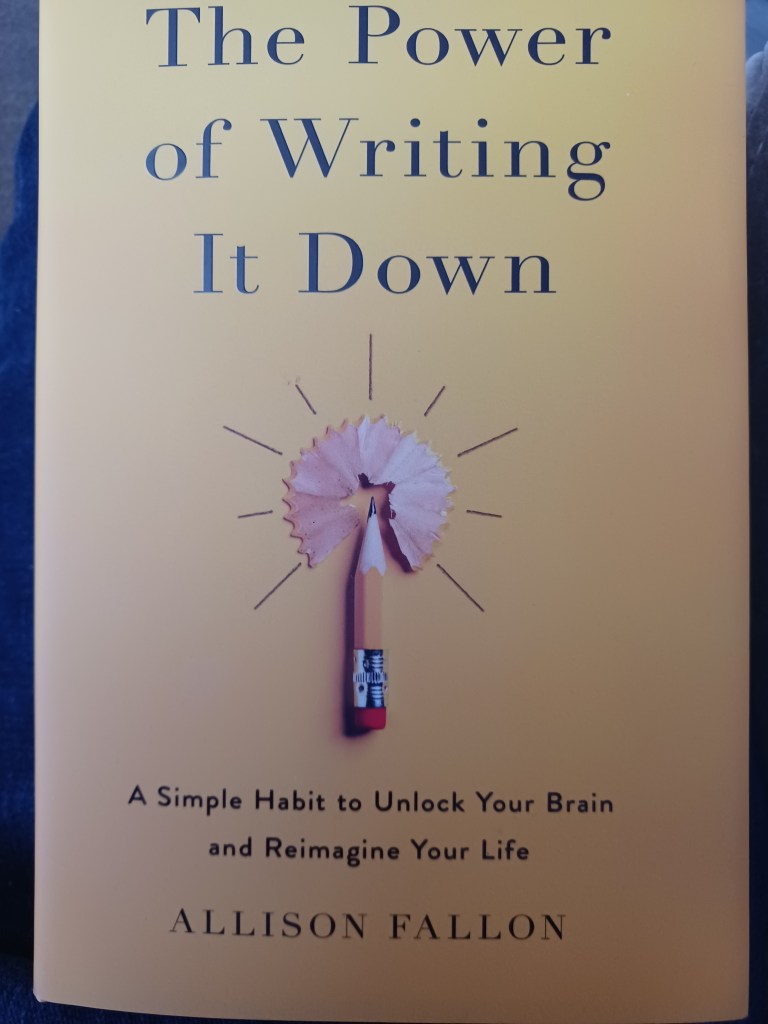
Allison Fallon is a writer who helps others write. Her book walks through a number of tips on how to keep writing, whether for publishing or for personal purposes. She draws a number of parallels to life and has a number of examples of how encouraging people to write about their life has actually helped them through tough times in their life. So if you like to write, anything from journaling to writing a novel, you could benefit from this book. If you are not a writer, but would like to try something new to help you deal with circumstances in your life, this might be the book for you.
A while back I was trying to find a church to attend. We were new to the area and had no specific ties to any church, so we tried a few. There was one church that I really liked. They had a number values and practices similar to my own. This church seemed like a great option for us, but there was one aspect of their theology in practice that I did not agree with.
So what could I do?
I decided to spend time thinking and praying about it. For the next few weeks, maybe even months, every time I prayed and every time I read the Bible, I had this one question on my mind. I needed clarity from God. I wanted to have an answer that would change my thinking so I could feel comfortable attending this church. I thought about it throughout the day. Finally, I just couldn’t find peace about attending that church, but at least I had spent some time seriously thinking through what was right for me and my wife.
Praise generally goes to the “doer,” while the “thinker” is often considered lazy. We have been taught from a young age that there is great value in getting things done. We are told, “Quit daydreaming! Get back to work.” What if thinking about something for a long time was getting things done? Is it possible that thinking about something for a long time can be beneficial?
My desire is to help people pursue their God-given dreams. Some of this involves taking time to think, to meditate or contemplate.
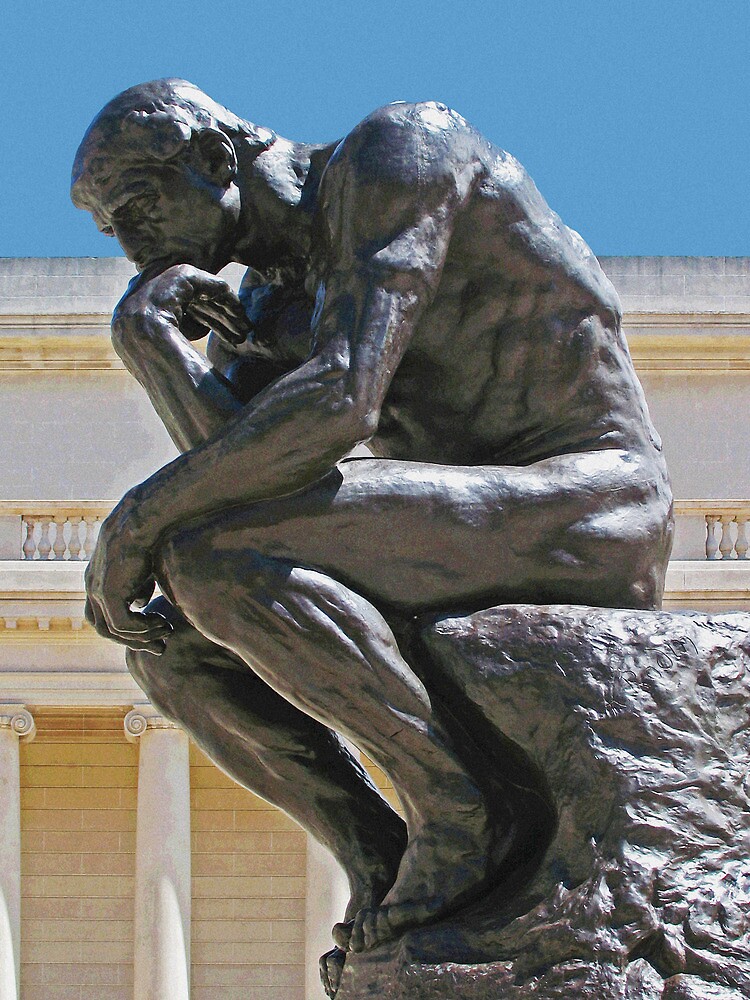
Most definitions for both words include something like this: “thinking seriously about something for a long time.” Whether you are meditating, or contemplating, there are times when it is of great value to slow down, and just think.
Do you know what God wants you to do with your life? Do you know what the next step of the journey is? Before you make a big decision, take some time to think. Seriously consider your situation and what God might have in mind next. Allow God to interrupt your thinking time. Read scripture. Pray. And think.
You may need to block out some time just for thinking. Maybe stay up after everyone else has gone to bed, so you can focus on your thinking, or get up before everyone else does so you can think in peace and quiet.
Have you ever read a scripture and just couldn’t get it out of your mind? I mean, it just kept ringing around in your mind. It may be that God was teaching you something, and he didn’t want you to forget what you had read. You thought about it all day. You thought about it in the shower, and when you were commuting, and when you were supposed to be working. Sure, you did your job like usual, but in the back of your mind you were still thinking about that verse.
We would all benefit from taking time to think on scripture more often. I read my Bible almost every day, but I don’t often stop to just think about what I read, or what God wanted me to hear from Him that day.

It’s too easy to see Bible Reading and Prayer as part of a to-do list to conquer and check off, rather than time to slow down and allow God to soak His words into our minds.
When is the last time you actually just stopped everything to think? To think about something for an extended period of time? Is there an issue in your life that needs to be resolved? Is there a question you would like answered? Why not book off some time, and take a mini-retreat for yourself to purposefully think? Find a place or time where you can have peace and quiet, where all distractions are removed if possible, and think on the issues facing you. You might want to begin with reading some scripture, with a time of prayer, and then just think. If you are like me, and benefit from writing thing down, then write it down. If you are someone who has to think out loud, then think out loud.
You may be meditating, or you may be contemplating, either way, take time to seriously think about something for an extended period of time. See if that doesn’t help you get some perspective on your present issue. Do the hard work of thinking.
Keep looking up
Andy
I am a Christian. I love Jesus, and am greatly thankful for the salvation He has given me. I want others to have that same experience with God, to find purpose in life, and peace and joy today and for the future. The reality is that some people do not want to hear about church or Jesus.

It is quite difficult to share Jesus with people who do not know Jesus and have clearly indicated that they do not want to know Jesus. All of us associate with people who do not yet know Jesus.
How do we share Jesus with them when they have already said they don’t want anything to do with Him or with church?
I think this is an especially difficult reality for those living in smaller rural towns. You know people, and you know their families. People know you and your family. You may have grown up with many of them and went to school with them. They know you are part of a church, and you know they are not. It seems that there is no way to help them see they need Jesus because they have clearly told you they want no part of that.
Some say they don’t come to church because it is too hard with kids. Others say they tried church and didn’t like it, or they were hurt by it, or “they are all hypocrites there.” So inviting them to church seems like an impossible and useless endeavor.
Ok, then. If we are to be faithful to share Jesus “as we go into all the world,” as we go on with life and all of its activities, what can we do to reach them with the good news of great joy? Let me share a bunch of ideas that can all be part of sharing Jesus with unbelievers. These will all lie on a spectrum between no interest in Jesus, to asking how they can become a Christian.

I hope you get the point. If you truly want to win someone to Christ, you need to be a friend. This is not about seeing certain people as a project but just becoming friends with people you are in contact with already.
You may think some of the suggestions in the list are really just about being a good friend and not really about outreach, but that is exactly the point. You need to be intentional, in making friends and being a good friend. The idea is to find ways to be friends, and then talk with them about Jesus as you already do with the friends you already have. We can pray for them regularly, asking God to draw them and work in their lives. It may take years, and then when it happens, it will be so exciting!
Keep looking up
Andy
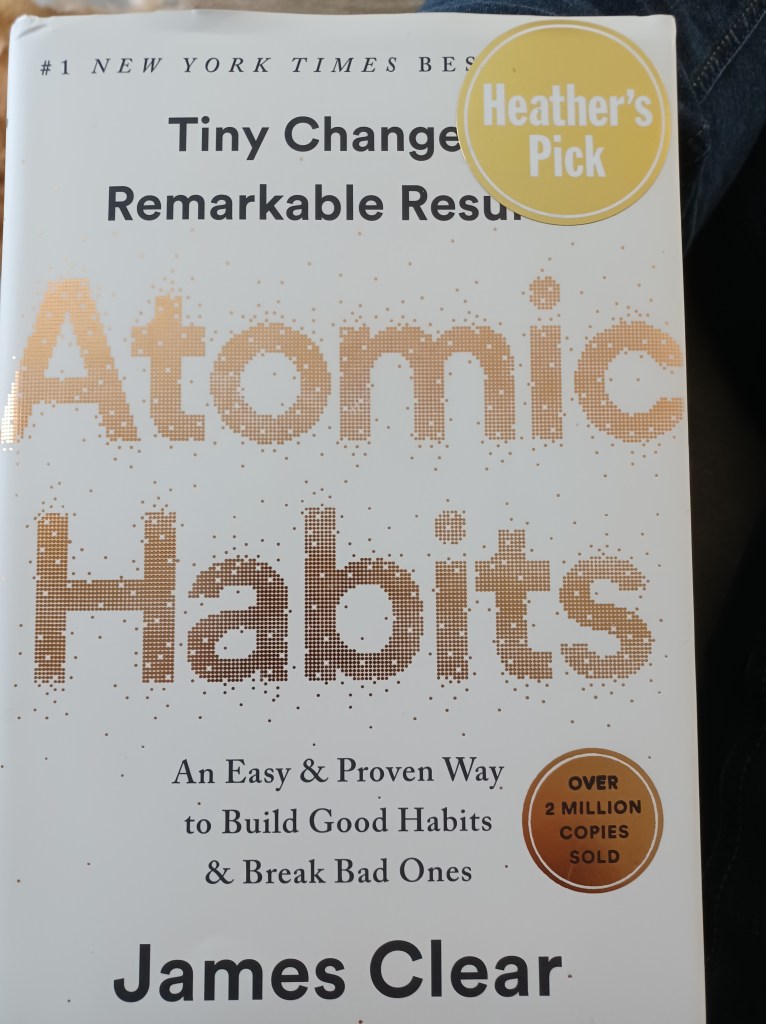
James Clear has written a well-researched and scientifically backed book on how small habits can lead to big changes. By “Atomic” he means small, like atoms. Small changes can have great affect over time. The book breaks down how habits are formed and how new ones can be created or old ones overcome. James gives a number of examples that help to make sense of what he is teaching.
I especially like how he ties our habits to our identity. Deciding it would be good if I would run occasionally is very different than calling yourself a runner. If you are a runner, then you run. If you are trying to make a habit of running because I need to lose weight you will not have the same impetus as if you were identifying as a runner in the first place.
Want to overcome bad habits? Want to start new beneficial ones? Then this book will be a great help!!
Keep reading
Andy
Who are you? I mean, if friends were to describe you, what words and phrases would they mention?
As we transition into a new year, we are often asked about our resolutions. I prefer setting goals rather than making resolutions.
Some of us might want to rethink goals just a bit. I tend to set goals to accomplish something. For example, I want to read the whole Bible this year, using the Chronological reading plan that puts things in the order they probably happened. I also want to finish writing a book. But should I be setting some different goals?
How about goals that affect who we are? Should we be setting some goals in areas that would impact who we are, what our personality is, or how we face life?
If you want to be seen as a generous person, you could make your goal to be more generous this year. However, vague goals like that are less effective than those with more specific or concrete descriptors. Maybe we could write a list of what a “generous person” is like or what they do and how they interact with others. Perhaps you view generosity as being freer with your resources and time, for example, such as lending your tools or giving food to the food bank. Or your focus could be on buying meaningful things for people you care about or inviting more people to your home for a meal. You could do some research and find a worthwhile cause to support, financially or by volunteering, being generous with money and generous with your time. You might choose to lend your books to a friend after you read them. It’s your goal, so make it yours. You could consider reading some books or taking a course on generosity.

If being generous doesn’t resonate with you, consider a few other character goals. Think about your own life and moments of personal frustration or struggle to identify where you might want to focus your personal growth.
1. Do you want to be more forgiving? You realize you are quick to judge, quick to get angry and offended, and slow to forgive. You want to forgive more freely. Then set a character goal of becoming more forgiving.
2. You might desire to be more patient. You struggle with having to wait for anything. You could set a goal to deliberately always take the longest line in the grocery store, or when buying gas. You could find ways of thinking about other things while waiting. You could memorize scripture…so every time you wait in line you bring up the verses you are learning and go over them. Now the slow line becomes productive for you, and you are being more patient.
3. Would you like to be more creative? You could read books and take courses. You could find ways of trying new things that require creativity. Maybe you schedule in some “day-dreaming” into your day so that you can focus on your creativity.
4. Maybe you want to be more at peace and worry less. You could memorize scripture verses on not worrying. You could pray, even ask others to pray with you, that God would help you have peace in your life.
5. Maybe you want to be more considerate of other people. This is one I have to work on. I have set a goal for me to connect with at least two people who are not in my immediate family or part of the church. Personally, I want to text or visit or connect in a meaningful way with others that are outside of my immediate thought process. These are people I care about, but they may not realize it because I rarely connect with them.

I’m sure that if you ask yourself: “What is one area in my life where I would like to improve?” you will quickly come up with an answer.
Now, before we leave this, I want to suggest that some of these self-improvement goals may need some outside help. Maybe you connect with a coach, or book a few sessions with a counselor. Maybe you meet with your pastor, or a good friend. And you ask for others to speak into your life and help you think of how to improve in your area you want to grow in.
I’m thinking that a number of us probably have people in our life who are really good at the area we want to improve. At least for me, my lack shows up when I see others who are doing so well in this area. My wife is one who is great at noticing others and connecting and loving – and that is why I recognize I have some improving to do. Take time to talk with those in your life who exemplify the area you want to work on. Maybe you are doing well in an area they want to work on and you can help each other.
I encourage you to set some risk-taking goals for the year: tasks to complete as well as areas of personal character growth. Put a plan into place, to learn and grow in these areas.
I wish you all the best for 2022. May it be a life-changing year for you!!
Keep looking up!
Andy
 Elevate with Andy