Is Your Church Alive?

There’s a church I drive by occasionally. Each time I do, it makes me sad. I drove by it just the other day and noticed how dilapidated it was. You see, I attended that church a few times many years ago. I remember how excited the people were. The building was new, and still in the process of being completed. The congregation was already meeting there in the fellowship hall even though the sanctuary was not yet completed. They were looking ahead with excitement and anticipation. There was laughter and the noise of young children. While I was only a visitor, I could tell there was a sense of expectation as they had raised enough money to get to where they were now. They had outgrown a smaller, older building and were in good spirits.

Now, as I drive by and remember that excitement, instead of giving me a sense of hope, I feel sad. The building looks run down. The gravel parking lot now has twelve-foot-tall trees growing in it. I didn’t see a cross on the building anywhere. And I wondered what happened. What happened to the excitement of that forward-looking congregation? Did they finish the building? Did people move away? Why did they not continue to grow?

I think back to the church where I first started as a young pastor. I was on staff as the youth pastor. That church no longer exists either, and it makes me sad. I know some of what happened there, but that doesn’t make it any better. I know the great history they had of sending and supporting missionaries. They were part of planting other churches, but they lost their way. Over time, more and more people left. Eventually the denomination shut down the church. While that church experienced a lot of loss, one good thing is that the building is still being used for ministry purposes, but that church of people no longer exists. What a sad ending for a church that had prospered over the years.

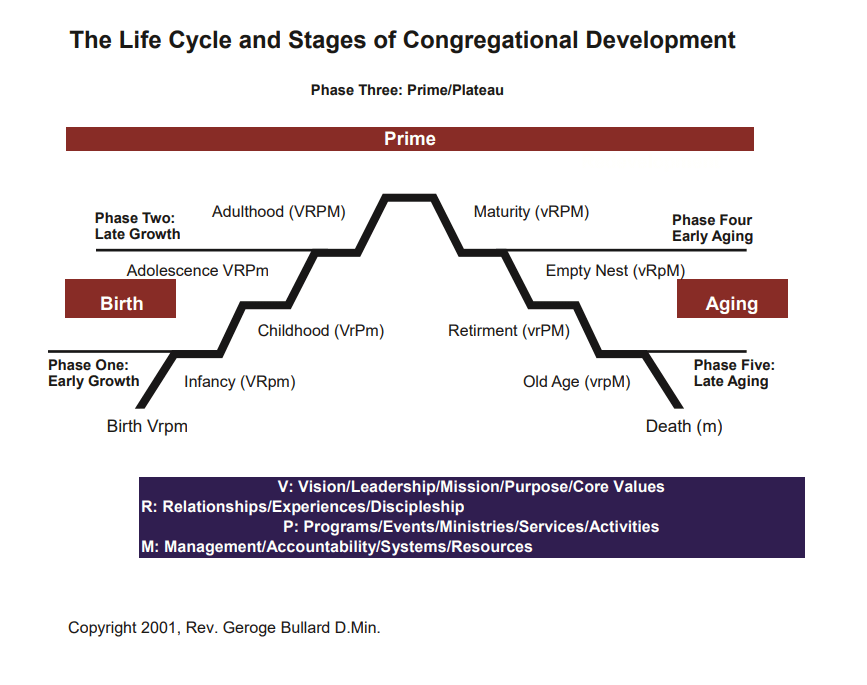
Just this week, as part of a class I am taking, we were given a handout by George Bullard entitled: Will Your Congregation Still Exist Ten Years From Now? His research has led him to this list of 25 Factors That May Impact Your Survivability, Vitality, and Vibrancy. Bullard invites churches and church leaders to evaluate their church by a set of 25 categories such as: vision, true relationships, high expectations of members, and a well-maintained facility . His research has concluded that there are at least 25 different things that can impact a church’s life expectancy.

Most of us never consider that our church may die. We just go on with our activities as if it will go on forever. But we need to do some serious evaluation from time to time. We need to look at the church with critical eyes – not to criticize but to evaluate boldly. And then we need to decide to correct what needs correcting. When this is done regularly and early in your church’s life, the changes made to correct occasionally may be small, but if your leadership has not evaluated your church and made adjustments over the years, there will come a time when you will need to make drastic changes. Some pruning will be required as you prayerfully cut out what is diseased and a distraction from what God has called your church to be.

If the evaluation and correction process is not something you are familiar with or equipped to handle, then call in someone who can. There may be resources available through your denomination, or call in a church coach or consultant. We are trained to walk a church through this process in a meaningful way. Whichever path you choose,  do not just give up and hope the church will correct itself without the necessary work needed.

Churches and organizations need regular evaluation and appropriate action to correct where things are not going as they should. Don’t be scared to tackle this important yet painful process. Be more afraid that not doing anything will lead to the death of your church!

So call in someone to help. Contact someone like me to help you.

Keep looking up,

Andy Wiebe

3 Steps to Ensure You Are Not a People-Pleasing Leader

My natural tendency is to be a people pleaser. I don’t feel good when someone disagrees with me. Recently I was talking with a friend who challenged a statement made by my church. It was regarding a practice of the church that we believed was scripturally accurate, but he was not willing to agree to this statement. I realized that I was trying really hard to come up with at solution so that he would be satisfied. I was trying to please him, rather than stand true to a statement we had made and believed to be biblically accurate. There was no reason for me to try to please him except that I like this guy and didn’t want to feel like there was disagreement between us.

Any leader needs to realize the value of being considerate and finding ways to get people to follow, but we cannot lead from a position of pleasing people first.

Know What You Believe.

I realized that I was a little unsure in this conversation. I was being asked to support a statement that I hadn’t given a lot of thought to. I believed it to be true, but when questioned, my first thought was to figure out how to make him happy rather than about showing him why I believed this statement.

I realized that I needed to be clear on what I believed. My job as a leader was not first to make him feel good about this statement but to show why we believed it was biblical and one worth following. Yes, I wanted him to agree – and I wanted him to feel good about it and accept it as worthwhile. But I should have begun with a desire to protect the truth of the statement rather than trying to please him.

If you know what you believe, then you know what to stand up for.

Know Why You Believe it is True.

Not only did I need to believe the statement was one that we should live by, I needed to know why. The more we understand the why of something, the easier it is to stand up for it. When there are certain expectations in our church or organization that we don’t agree with, it is hard to stand up for them. If we believe them, it may help to also know why we believe them to be worth operating by.

Sometimes the “why” can help us explain it to those who are questioning us. If I am convinced of the value of something, I will be more likely to stand up for it instead of trying to downplay it with the hope the person I am speaking with will agree with me.

Know What You Will Do if Someone Disagrees with You.

Not everyone you encounter will agree with you on certain issues. Even the people in your organization, and your friends, will not always see eye-to-eye with you on everything. What then?

Sometimes it is easier to try to please the person, and we end up being wishy-washy, always changing our minds according to whom we are talking with.

Sometimes it is easier to fight for what we believe and stand for, with the risk of losing relationships.

We need to find a way to balance, standing up for what we believe and our desire to be in a good relationship with people. Ideally, we convince our friend to agree with us, or realize they were right. And we have maintained our relationship.

Unfortunately, we will have disagreements where we cannot convince someone to change their mind and agree with us. We need to figure out how to continue to have good relationships with people who see things differently than we do. This will not always be easy. Some relationships will not continue. Even if relationships fall apart, maintain a proper love and respect for the other person. Sometimes we will not be able to maintain our integrity and our relationships at the same time. Then part in as amiable manner as possible.

We will always come across people we disagree with. Let’s ensure we stand up for what we believe even as we value the relationships we have.

Keep looking up,

Andy Wiebe

5 Steps to Maintaining Unity When Confronting Divisive Issues

We can all do a pretty good job of getting along when everything is going our way. We can enjoy time with people and think they are pretty good friends. Life is good when no one challenges me or my ideas. But what do we do when someone we thought we were on good terms with ends up on the opposite side of an issue?

The church I am presently serving is facing an issue that is fairly divisive. I won’t tell you what the issue is. You can insert your own issue as I address how we are attempting to maintain unity even as we deal with a divisive issue.

  1. Clarify the Issue

Whatever the issue is that you as a church or organization or team are facing, make sure that you clarify the issue. We thought we had been quite clear on the issue, but we realized that even after weeks of talking about it, people were confused. Do everything you can to make sure everyone knows exactly what you are talking about.

I remember a story of three men going into business together. They had rented a building and were setting up their restaurant. And then a problem arose. One of the men started talking about where he wanted the buffet area. A second interrupted him and told him clearly that a buffet was not part of the plan. They were going to have people come to the counter to order and pick up their meals. By now the third man was getting a little agitated. “I thought this was a fish and chips place!” We have to clarify the issue, and sometimes it means talking about it again and again to get down to what the real issue is so effective communication can take place.

2. Gather Supporting Information

For us, this was a decision that would affect some of our bylaws, so we had to make sure people understood what the bylaw was that was affected by the decision we were about to make. It was an issue that we believed had spiritual connotations, so we made sure to provide documents to our membership with scripture verses and explanations of how they spoke into the question at hand. We did some historical checking to see how this situation had been handled in the past. We even contacted our denominational office to get their input.

3. Prayer

We made sure to pray about this event. We encouraged people to pray on their own, we prayed about it in our services, and we prayed about it at leadership meetings. We prayed about it at discussion meetings we had regarding this question. We asked God to give us clarity and unity in the process.

4. Discussion Events

We hosted one formal evening of discussion on the topic. We recognized that there were people on either side of the question. Each side felt they had scriptural backing to why they believed what they believed. We determined not to enter into a debate. We did not want to set up a situation where we caused people to publicly take sides against each other. So we arranged for a time to carefully look at both sides of the issue. We invited people to speak up, but only in a positive way. No one was allowed to speak against an issue, they could only speak for their side. In this way, everyone was given opportunity to speak into the issue without it being against an individual.

As an aside, it was very encouraging to me as we ended that Discussion Evening, that many present stated their commitment to the unity of the church even if the vote did not go their way when decision time came. They were more concerned about protecting unity as one family or body, than about fighting for their point of view!

5. Make a Decision

At some point you have to decide how you will answer the question at hand. Like us, you may want to have a formal vote by the membership. You will need to decide at which level of authority in your church or organization that decision needs to be made. We encouraged our people to vote as their conscience directed after all the discussion and prayer we had. And then, whatever way the vote went, we trusted that God spoke into our situation and moved ahead according to the results of the vote.

Once a decision has been made, it is important to recognize that not everyone will agree with the decision as you move forward. Be alert to situations where people are having a hard time accepting the decision and take time to walk them as they process the results. You may need to meet with some individuals who are slow in processing the results so that you can help them move forward, encouraging them to trust God will continue to walk with us even as we trusted him to guide our decision process.

May God guide you with divisive issues you face. Too often, we become so closely tied to the issue that we would rather cause disunity than lose out on a vote. May God guide you and help you maintain unity as you too work through issues that could divide.

I would love to hear how you have worked through divisive issues and what worked for you. Let me know. Comment or email me.

Keep looking up,

Andy Wiebe

Make It Easy For People To Do What You Want

I was shocked when I attended church this Sunday. I get an occasional Sunday off so I get to take in a service at a church I am not leading. It was a great Sunday with good worship, and the commissioning of a new Lead Pastor. But one thing was missing: the offering. There was no offering received as part of the service. There may have been some information regarding giving on the slide announcements that were playing prior to the service, but I didn’t notice them. On the way out I did notice that there was a “giving station” on the wall. There may have been a few. I don’t know what you would do at the station but it must have been a way to give financially to the church.

Now, you may be wondering why I was shocked, and why I would make such a big deal about this. Here’s why.

First, I know that the church is struggling financially, and had to let a few staff members to in recent months because they couldn’t afford them.

Second, giving of our tithes and offerings to God and the work of his kingdom on earth is part of what following Jesus looks like. It is part of discipleship.

Third, if we want people to do something, we need to make it as easy as possible. Do you want to have your congregation learn how to give back to God, trusting Him to provide all their needs with the remaining money they still have? Then make it easy for them to do so.

We need to make it easy for people to do what we want them to do, whether we are leading an organization or leading a church. Whatever you want your team to do, make it clear and easy to do.

As we entered 2023, I encouraged our church to read the Bible, every day. In fact, I encouraged them to read the whole Bible this year. I printed four different Bible Reading Guides that followed different reading strategies from reading straight through the Bible from beginning to end or jumping around to different topics. I was hoping that at least one of these methods may appeal to people who had never read the whole Bible. Each Guide was a different color, and we included a lengthy description of each guide in the Sunday bulletin, with descriptions in the color of the Guide. I announced that these Guides were available, for four weeks in a row, continually reminding the congregation to choose their plan and begin reading. We placed the guides in a display at the information table everyone walks by every Sunday, making it easy to grab one on the way in to the service or on the way out. We did everything we could to make it as easy for people to choose a reading plan as possible.

As for the way we take up the offering, we do a few things to make it simple and clear how and why we do it. We have a clear step by step direction in the bulletin as to the various ways people can give, including online and in person in the service. We place offering envelopes on the chairs so when people come in for the service, not only is it easy to find an envelope to put their offering in, by prominently displaying these envelopes, it is a reminder that we value their financial gifts to the church. We always include a time in the service when we pass a basket and invite members to drop their financial gift in the basket as it goes by. Just before we pass the basket, we take a moment to talk about why we give and how we do it, thanking everyone for their faithful and willing giving. We pray, inviting God to bless the offering for His work. The whole process doesn’t take long, but it shows we value that part of discipleship and want to include it in our worship service.

As you consider an aspect of your organization or church where you want people to take a certain action, think about how to make it as simple as possible. Explain the purpose and instructions for the activity in multiple ways so it is accessible, and provide materials and time to complete the task. If you want people to fill in a certain form, begin by clearly explaining what is expected in an accessible medium. It may be a public announcement, an email, or text, or even a phone call. It may be a combination of these along with a clear statement explaining each step. Along with the direction, provide a designated time and deadline for completing the task. For example, if it is an evaluation of an event, give the participants time right after the event, or a few minutes the next office day after the event. Make sure that everyone has access to the correct form in a format that is as easy to access as possible – providing each person their own copy (and even a pen) is the most effective for ensuring they will complete it. Do whatever you can to make completing the desired task easy to do.

We all have expectations of our congregation or our team. Let’s do the work to make sure that it is as simple as possible for them to meet your expectations.

Keep looking up,

Andy Wiebe

6 Ways to Engage Your Team in Vision Setting

I love to work on vision. I’m a dreamer. It’s not hard for me to come up with new ideas, and I do it often. Not everyone has that mindset. I also think quickly and I realize not everyone does. In my present role, I work with a different church each year, and lead them through a process of vision setting. This means I’m engaging with a wider range of individuals, some who are excited about and comfortable with working on vision setting, and some who are not.

Here’s the big question: how can you make sure that everyone is able to fully engage in the process of setting vision for your church or organization?

  • Follow a written plan.

When you lead a team through the process of setting vision for your organization, make sure you first identify a written plan. Whether you use something developed by another, or like me, pick and choose exercises from a variety of sources, make sure that everyone has access to the plan before starting the process. Then each person – not just the leaders – can see where the process is heading.

I provide everyone with a booklet they can follow. One of my team has a difficulty hearing, so the booklet helps him know where we are even when he misses some of what is said in the discussion.

In addition to the overall plan document, for each meeting, I also provide a clear agenda, complete with breaks, and times listed for each exercise so everyone can see if we are falling behind. I try to be a little flexible with the time, and even skip some pages in the workbook if we are running behind schedule. The participants can check those out later if they want.

  • Use Variety

I like to do more than just a question-and-answer format. Some of the exercises I like to use for vision setting sessions are multiple choice or circle the best answer. Some are fill in the blank. I provide examples from other organizations that can spark ideas. I do a little leading but prefer to get the team to do most of the talking, especially since I am the consultant and will not be with the church as they move to implement the plan. My job is to make sure they can arrive at a common vision that is truly theirs. This means that I invite a lot of discussion. I do some work on a white board when trying to bring their ideas together so everyone can see any common threads. I even included a few colour charts to help visualize some exercises. I also like to add a few cartoons! Make sure to include times where people can get up and move around a bit. Sitting for too long will slow people’s thought processes down.

  • Go Slow

When leading a vision process, go slower than you think you should. There are always a few who think slowly and need time to think about things. Some ideas may be brand new and might need some mulling over. Some participants will read and process the directions for the next exercise slower so you can’t rush the process. Too much information too fast will not work. Instead, give time to process to keep everyone’s thinking clear.

  • Circle Back

I have found that it is helpful to present exercises that to get the team to see the present reality and the future possibilities from a number of different angles.

As I recently led our team through a visioning process, it was interesting to see some of the same ideas coming up throughout the session, and ideas coming up later that built on what was previously discussed.  As these topics came up multiple times, it resulted in more clarity.

  • Highlight Recurring Themes

When you are working through a vision process, note these recurring ideas so that everyone is aware of them. It’s obvious that these are the themes that will be a major contributor to the final vision statement and vision picture. Listen to how their answers to different questions tie together and form a common theme. As the leader of the session, you are in position to observe these connections and identify them for the group.

  • Listen to God

In the recent process I led, there were a few times where we just stopped and prayed, both talking to God and listening to Him as well. There were a few times where different members of the team felt God was saying something we needed to pay attention to. When there were others that concurred, we took those thoughts seriously and integrated them into the values and vision that were taking shape.

It was very encouraging to me to see our team fully engaged through a 6-hour vision marathon! Everyone contributed to the conversation and was involved in the process right from the beginning to the end.

What are some ways you have found helpful to keep people engaged in process of developing a vision or strategy?

Keep looking up,

Andy Wiebe

Growing Your Joy

A new year often brings New Years resolutions. Many people make them, and while few keep them, the idea of making commitments to improve your life is a good one. Resolutions are often about our personal health like losing weight or becoming more fit. Again, not a bad idea. Some may make commitments about their career. Maybe they want to pursue another level at their job or more education hoping that will result in a financial boost in income down the road.

But what about personal growth? What about growing in your joy? We all know that people of joy are much more fun to work with than people with no joy. And we personally feel better if we have joy inside as well.

Are you a person of joy? Do you share joy or do people sense a dark cloud over your head every time you walk by? What is it in your life that affects your Joy?

Our joy can be impacted by a number of things. If you always spend time with negative people, it will be hard to stay positive and maintain joy. It is not always possible to avoid spending time with negative people, especially if your co-workers or family are negative. What you can do, is choose to seek out and spend time with joyful people. If you have to look for them, then do that. Notice the people in life that make you feel just a bit happier and find ways to connect with them. You could even initiate a coffee date to deliberately spend some time with them.

Our joy may be impacted by the news. If you always consume the news, you will have to work at being full of joy because the news rarely shares positive stories. Make a commitment to cut down on how much news you consume. You might need to reduce your time on social media. Rather than cut these habits out completely, identify new habits that can take the place of the time you typically spend consuming new or other media

Some of us have a hard life. Things have not gone the way we hoped and dreamed. Our realities include single parenting, the loss of a child, or unemployment. The circumstances of our life can affect our joy. We can become sad, or discouraged, or even angry about what life has thrown at us. We look around and see happy people with good families and healthy children and perfect jobs and we get even more discouraged. The truth is, there are some things that we encounter in our life that are not good, terrible in fact. And yes, they drain all our joy. What can we do about that? I’ve been there, where I questioned God about what He was allowing to happen to me. I get it.

What do we do when we cannot change our life circumstances right now? How do we find joy?

One of the things that has helped me a lot is my faith in God. Yes, I said earlier that I have had times where I really questioned God, wondering if He really cared for me or not. But I have always come back to God because He and I have history together – a history of him being faithful in the past, and answering prayers. When I come back to God, I can trust Him to take care of me. I know that I am safe in His hands. I remember that He loves me, even when it seems others don’t. I remember that He has a future for me.

I can go to the Psalms in the Bible and receive encouragement there, that begins to open up the possibility of Joy again.

Psalm 62:8

O my people, trust in him at all times. Pour out your heart to him, for God is our refuge.

Psalm 46:1

God is our refuge and strength, always ready to help in times of trouble.

Psalm 2: 12

What joy for all who take refuge in him!

Psalm 4:7

You have given me greater joy than those who have abundant harvests of grain and new wine.

Psalm 28:7

The Lord is my strength and shield. I trust him with all my heart. He helps me, and my heart is filled with joy. I burst out in songs of thanksgiving.

Our joy can be affected by our circumstances. Sometimes we can change them, and then we should. Sometimes we can’t. I would encourage you to turn to God. Turn to the Bible. Read the psalms. And ask God to give you new Joy.

As you make commitments for personal growth this year, I encourage you to choose to develop more joy.

Keep looking up,

Andy Wiebe

Book Reviews: Andy’s 2022 Reading Experience

I will be sharing a brief review of every book I read this year. Hope you enjoy and hope it encourages you to keep reading.


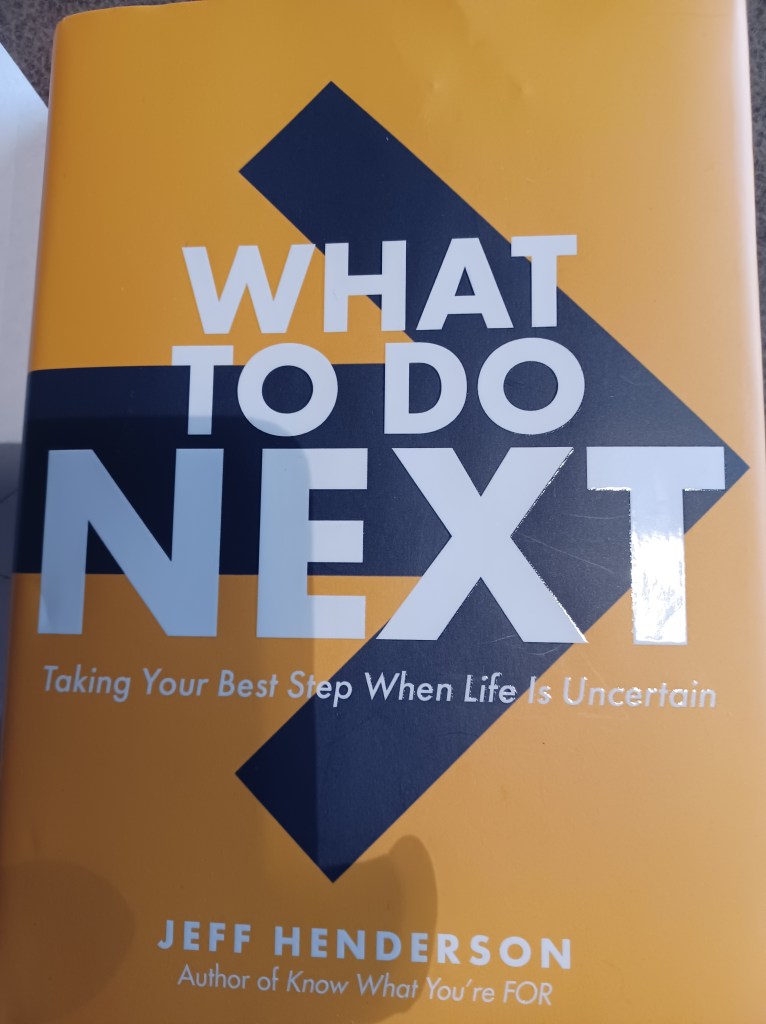
WHAT TO DO NEXT – By Jeff Henderson

I highly recommend What to do NEXT: Taking Your Best Step When Life is Uncertain to anyone who is contemplating a possible move to a different position at work or a change in career or even just a change out of something when you are not sure what is next. Jeff Henderson reflects on his own recent journey of change of career, along with a number of helpful stories, to provide a helpful guide to anyone wishing they were somewhere else or doing something else. Many of us have faced transition in the last couple of years. This book may help make sense of transition you had to make and are now trying to cope with as well. A very helpful book.

Rest, Refresh, Re-energize!

I realized that I did not take a day off last week, and it showed. I was more tired by the end of the week than I usually am. I felt a push to get certain things done and decided to work on them on my day off. Most of us get a day or more off from work each week, and if you work shift work you may get a few days or weeks off after putting in several weeks in a row.

Time off should be a time to rest, refresh, and energize:

A Change of Routine

Some say that a change is as good as a rest. I’m not sure that is true, but a change of routine can be good for us. If we always go in to work, a day home can be a good change. If you work from home, not logging onto your computer for the day might be a good change or spending the day out of the house going shopping and running errands might be a welcome change. Your mind can take in a different set of stimuli than it has at work all week. It uses different parts of your brain to do these tasks than what you would do at work. You may use different muscles on a day off which can benefit your body.

A Rest

Rest is not easy to get in our busy lives, but a day off may allow you to sleep in a bit or grab a nap in the afternoon. You can demand less of your body, giving it a rest as well.

If you regularly spend your day on the computer, you can rest your eyes. I didn’t feel I needed rest on my last day off, so I worked instead. At the end of the week, I realized a restful day would have been of benefit in the long run. I may have had a little more energy to carry me through the next week.

Do Errands

All of us have things on our to-do-lists. Some of them have been there for a while. We may be able to be more focused at work if we know that we cleared some of those items off our list at home. If we have maintenance on our house or car that should have been done but has been put off, that can hang on us all week at work. Do the things you need to at home on your day off so you can focus on your work through the next week.

Catch up with Friends

Some of us have few friends. Is it because we never take time to connect with people outside of work. If your “work friends” are true friends, then hopefully you do some fun things together outside of work. Most of us will have other friendships that we maintain outside of work. Do something fun together. It could be a simple dinner out or a game night together. Find people who charge you up. We all know people who drain us. Those are not people you want to spend your time off with. You can’t afford to be drained from your time off and then head back to work exhausted. Get together with friends who pour into you and energize you.

Learn Something

I like to read. That is relaxing and energizing at the same time for me. I want to learn and be challenged. Learn something new. If you like working around the house, you could watch a YouTube video about how to place tile on your kitchen counter. Or you could sign up for a self-directed online course that you can work on a bit every time you have some time off. You could even watch baking shows, both for the entertainment, but also to learn another trick to try the next time you bake.

Do Something Meaningless

Some of us are so driven that we feel we can’t “waste” any time. Every day has to accomplish something.

Maybe you just need to watch a movie for fun or go feed ducks. Maybe you need to make a fire in the backyard and just watch the flames and enjoy a s’more or two. Read a fiction book to let your imagination run wild.

Do Something Meaningless

Some of us are so driven that we feel we can’t “waste” any time. Every day has to accomplish something. Maybe you just need to watch a movie for fun or go feed ducks. Maybe you need to make a fire in the backyard and just watch the flames and enjoy a s’more or two. Read a fiction book to let your imagination run wild.

Use your time off, whether it is a weekly day or a week each month, to rest, refresh, and re-energize yourself for the next stretch of work. Take time to slow down and enjoy life.

Keep looking up,

Andy Wiebe

Book Reviews: Andy’s 2022 Reading Experience

I will be sharing a brief review of every book I read this year. Hope you enjoy and hope it encourages you to keep reading.


UNBURDENED – by Vance Pitman

This is among the TOP 3 books of the year so far! I know that I often describe the book I am reviewing as good, this one is great. Unburdened: Stop Living for Jesus so Jesus Can Live Through You is a much needed book for today’s Christian. We get so caught up in “doing what I need to do” to be a good Christian, that we slip into religion and loose the relationship with Jesus. Vance Pitman states in the Introduction: “The Christian life is not me living for Jesus but Jesus living His life in and through me.” Instead of having a list of do’s and don’ts to become a better Christian, work at building your relationship with Jesus. The more time you spend with Him, in tune with Him, listening to Him, and obeying Him, the more like Jesus you will become. Pitman describes our purpose as a Christian: God brought you to Himself so out of the outflow of your intimate relationship with Him – which is Christ in you, working through you – you could share in His mission locally and globally in fellowship with others.” The key in all of that is to pursue an intimate relationship with Jesus and the rest will flow out of you naturally. A great book that you will be challenged and encouraged by as a Christian.

Pursue Excellence: Develop Useful Templates

When you drive to work in the morning, do you always go the same way? Do you go the way that you know is the quickest, or takes you past the best coffee shop, or has the least traffic? Or do you change up your route each day? I always take the same route. In fact, over time it becomes so automatic that I find myself turn toward work when I’m driving those roads on my day off.

Taking the same route is like using templates in the office. Templates are the well-worn tracks that help work become more automatic and less stressful. Templates can be used in many different situations and for varying purposes.

Templates create efficiency:

As a leader, you are probably quite busy. You don’t want to have to re-learn how to do something every time you do it. When you find a good way of doing something, keep track of that method or format, and use that to create a template to follow. When you create a new document or work on a new project, pull out this template and follow the plan you have learned to trust. This saves you from trying to figure out how to put it all together.

In the same way that a familiar route to work ensures you get there on time, templates become familiar paths to work through quickly and save time.

Templates ensure uniformity:

In addition to ensuring you follow the same method, templates help you produce similar-looking documents. For example, I use templates when I am writing job descriptions. In this way it easy to compare one document to another. It also ensures that I include all the pertinent information in the order I want in the job description.

There are times when various team members may independently prepare documents for a shared project. Without a template you may end up with very different looking pieces making it difficult to combine efforts or compare results. A template helps everyone follow the same format. In this way, you can easily compare information across various documents because you know exactly where to look to find the information you need.

Templates provide consistent processes:

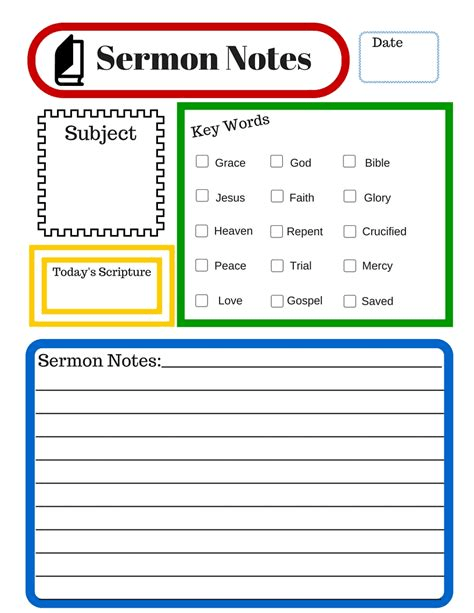
I use a template in my sermon preparation. Using a templated provides me with a format and process to follow. My sermons don’t always look the same, but the research and preparation process often does. I know what steps I have benefited from in the past and want to make sure I don’t forget them. For example, I like to ask myself certain questions as I work on the application of the sermon, such as: How does this sermon speak to a twelve-year-old boy?

In addition to sermon preparation, I use templates when working with planning teams for church events. I this way I make sure that we talk about costs, budgets, available resources, plans for prayer, and various other essential steps in planning.

Templates are also effective for more administrative work. For example, when working on Terms of Reference, a template can make sure you have the important details listed. For instance, I want to make sure that if people are working on an agreement for working together, I want there to be no question as to who has the final say. A template reminds me to include a statement about that.

Useful templates:

Pursuing excellence requires a plan and a template can get you there. As you begin to use templates you will adjust and refine them to become the most helpful tool they can be. If a template makes you do more work than you want, if it is not actually useful, then redo it or find a better one. You could start by finding a template someone else has used and adapting it to make it your own.

Templates and creativity:

I have found that adapting and implementing templates to my work has been incredibly helpful. While I would always advise using a template when possible, there are times when using a simplified template – more of a checklist – is a better option. If your goal is creativity, rigid templates may be a hinderance. As a pastor, I have created hundreds of Sunday morning worship services. I love to create each service in a unique way, meaning the different parts in the service can be moved around to accomplish the best result for each service. I joined one church that had exactly the same order of service every Sunday for the last seven years! In this instance, using a service template may restrict some creativity. Instead, a template that focuses on the planning process, or even using a checklist, provides guidance while allowing room for more freedom. As I mentioned earlier, I use a template for sermon preparation, but I have developed it to aid my creativity. While the final sermon is different each week, I use a template to guide each step of the process, which includes adding creative elements. On the other hand, a template makes each order of service exactly the same, but a checklist could be an effective way to ensure all the items to include are included, while still allowing you to be creative. (More on checklists: The Incredible Value of Checklists)

You have probably already figured out that I place a high value on creativity. At the same time, I want to be efficient in my work. Templates save time, and if used in the right circumstances still allow for creativity in the efficiency.

Templates can be very useful if you find ones that fit your situation. Use them well and save time.

Keep looking up,

Andy Wiebe