The Privilege of Dreaming

I like to help people to discover what God is asking of them and how they can do it. We have the privilege of dreaming today, maybe much more so than the average person a few centuries ago. Life has become so much easier for many of us and we don’t often consider how people used to work hard from dawn to dusk just to put food on the table and keep a roof over their family. Today, many of us have the privilege of time for entertainment, and time to get bored, but we also have time to dream. We have time and energy to dream about what we could do with our lives.

As someone who has put my faith in God, my starting point for dreaming is God and His desires for me.  While a bucket list of things we might like to do or see or experience is fun, I find it gives me greater purpose in my life to know that I am responsible to God and He knows best for my life. As a child of God, I can trust that my Father knows best.

What a privilege –  to dream about what could be.

When students graduate from high school, well-meaning parents and teachers tell them a lie. “You can be anything you want to be.” That is absolutely not true. Yes, you can dream big and pursue many different options, but we all have certain limitations. If you can’t carry a tune you will not be a backup singer for Taylor Swift. If you have poor eyesight, you will not be flying fighter jets. There are many things that limit our ability to choose to do anything we want. But if you are listening to God, you can do anything that God wants you to do. When we reorient ourselves to the will of God, He opens the doors to possibilities that we may not have imagined.

I have seen God give me opportunities that I never expected. He has opened doors I would never have tried to open. As Ephesians 3:20 says, I have experienced God doing more than I can ask or imagine. For example, I have gone on trips that I would never have thought possible, and serve rural churches and pastors beyond my local church.

We have the privilege of asking God for His dreams, so when we dream, our imagination is guided and informed by God Himself. Now our dreams flow from a heart surrendered to Him rather than focused on us and what we can do or experience.

In the Bible, the letter from James warns about dreaming and planning for tomorrow. In James 4:15 we are cautioned, “Instead, you ought to say, ‘If it is the Lord’s will, we will live or do this or that.’” Our dreams should be God-given dreams where we listen for the Lord’s will and then work toward fulfilling it.

I believe that we need to look forward with hope and excitement. We need to see that God has put opportunities in our path. He has called us to certain responsibilities and wants to help us do our best with them.

Right now, God has called me to serve as a Transition Pastor, serving different churches for about a year or so, helping them to be as healthy as possible as they prepare to welcome their next full-time lead pastor. I believe God gave me this dream even before I knew exactly what it looked like. I believed I was to help churches, so I started taking some courses and reading books on coaching and consulting with churches. As I was doing that, God opened doors for my first Transitional Pastor position. As God gave me a dream, He opened doors to fulfill that dream.

Rather than focusing on our own hopes and desires, I believe that we need to ask God to direct our dreams and give each of us a vision for the future. We need to pray and ask God to speak to us and help us to hear clearly as we choose what to focus our life on.

In my experience, dreaming God-given dreams is not static, but ongoing as I continually come back to what God wants. Over the years He has adjusted the dreams for me and redirected me to other opportunities that I had not anticipated.

Keep on dreaming. Keep on listening to the voice of God. Keep on obeying and pursuing His dreams for you.

Keep looking up,

Andy Wiebe
3 Ideas to Renew Your Passion

A while back I realized that my passion for my job was fading. When I started the job, I was excited and could see new opportunities. I loved the vision and purpose of the group I was leading. I loved working with these people because of their heart for the church and their desire to grow in their relationship with Jesus.

There are times in my life as a pastor that I have had to renew and restore my passion for my role. I always want to give my best and be excited about what I am working on, but I realized that initial excitement had faded. So I decided I needed to work on renewing my passion for that role, and here is what I did.

Add Variety

One reason I tend to lose passion is because I get bored with routine. I long for some creativity and variety.

I add variety in my preaching. This is an area that I have control over, so may be one of the first places I can work at renewing my passion. For example, I might use a video or story to help people connect with the sermon. I might use an object lesson and provide those items to each person when they arrive at church. Beyond Sunday sermons, I might identify a project that I could initiate with others to help us work toward our vision.

Celebrate something.

Sometimes the boring monotony can be awakened to new passion when I take a moment to reflect on the exciting things happening. Good things are happening. God is at work. People are being changed. Programs are reaching people. People are responding to sermons and applying what they learn. When I get stuck in feelings of boredom, I can identify reasons to celebrate. I might celebrate by myself, or with my family, or my coworkers or church. It’s amazing what praising and thanking God can do in lift my spirits and reawakening that passion for my role.

Talk to God about it.

There are times I have taken a mini-retreat – maybe even just an afternoon away from my office – where I can stop everything and talk with God. I talk with Him about what is going on and how my passion is fading. I ask him to show me where I need to focus. I ask Him to give direction. Often this time with God reaffirms my calling, renews excitement in me about what God is doing and inviting me into. Sometimes I come away with new ideas, other times it is a re-enforcing of what I already knew I was to do. But the time with God reminds me of my role and what I need to be doing.

There is often an ebb and flow in the intensity of our passion for the work we are doing. Don’t let it fade too long. Choose to renew your passion again and again so that you will enjoy your role and will continue to contribute well to the vision you and your team or church are pursuing.

What are some ways you have renewed your passion? Let me know.

Keep looking up,

Andy

Make Your Sermons More Engaging

I love preaching. I love opening a passage of scripture, expounding on it, and seeing eyes opened and hearts encouraged. The natural tendency is to make the sermon a monologue. Often this serves just fine, but I think it can be enhanced visually.

Personal Sermon Notes

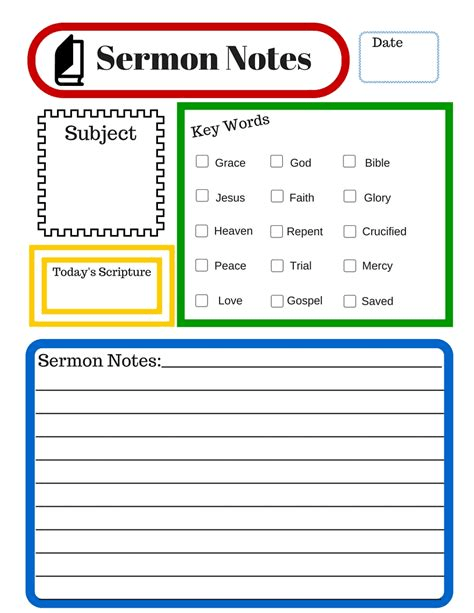
Sermon outlines or notes pages can be included in bulletins or handouts that each person receives as they arrive at church. Adding visual aids in these notes can provide an additional way the congregation follows along with the sermon.

Slides accompanying the sermon

In addition to outlines for each person, slides can be used to highlight a point you are making or a scripture you are referring to.

As a visual person, I appreciate seeing slides that go beyond the text that the pastor is saying, and include relevant images or other visual aids. For example, when quoting a person, include their photo. A sermon illustration could be accompanied by a picture of what is being referenced. If you are speaking on the Lord being our shepherd you could have a picture or brief video clip of a shepherd working with his sheep.

Props

While pictures are useful, the real thing can be even better. Some sermons make it easy to bring in a prop. An easy example could be pointing to a cross  already in your church when you are preaching about Christ’s death. Communion includes props which Jesus instituted: the bread and juice. A sermon from Matthew 7:3-5 about the person with a log in their eye pointing out a speck in another’s eye would be a great time to bring in a 2 X 4 and a little sliver and visually show people the absurdity of that action. A sermon on reaching the world for Christ might be a time to bring in a large world map or globe to point out some of the least reached areas of the world.

Models

This past Sunday I asked my wife, and she agreed, to be a model for me. I am preaching through Colossians, and we were in chapter 3 where Paul writes to the church in Colossae about how to dress as a believer. He specifically talks about “getting rid”, and “putting off”, and “stripping away” certain things. Then he twice says “clothe yourself with” something.

I had my wife put on an old T-shirt over her clothes. Then, after reading the scripture, invited people from the congregation to shout out all the things that were of the old life and were to be put off. As they listed the items from the scripture, I had preprinted words and phrases that I taped to this T-shirt. When they were all taped onto her T-shirt I reminded them that verse 5 talks about “putting to death” the things of the old life. So I picked up a pair of scissors and cut the shirt off of her and through it on the ground. That has now been put to death.

Then I had her put on a suit jacket of mine. Now we continued in the scripture and as they called out the things that we are to “clothe” ourselves with, I taped those words and phrases onto the suit jacket. Once she was wearing all the good things, I had her walk around as if she was a runway model, displaying all the things Paul was telling us to “put on”. I concluded by pointing out how Paul finishes that section by telling us to do all we do for the glory of God. The New Living Translation says we are to be good representatives of Christ in all we do. We are like a model, continually displaying what a Christian should be like. I pointed out that this was not “Dress to Impress”, but “Dress to Express”. We are to put on the things of Christ to show the world what Christ is like.

Look for ways to occasionally bring in a visual to aid your sermon. There will definitely be some who appreciate your efforts.

Keep looking up,

Andy Wiebe

Good Vision Work Requires Time and Patience

Every organization and every church benefits from having a clear vision describing their purpose and how they will focus their efforts. A vision helps determine if certain programs in the church will be helpful or not. If something does not help move the vision forward, then it is wasted effort or worse – detrimental to your organization or church. Develop a clear vision to give direction to all you do.

Realistically, the vision creating process takes time. Those involved need to be able to mull over different ideas in order to come up with the best ones. Most people in volunteer board/committee roles do not have the same time to commit to this process as those leading it, so we have to go slower than we think we should. It is no use pushing ahead if that means we lose people along the way. Consider those on your team and provide appropriate time and space they need to work alongside you as you lead the process.

Time and patience also are needed as we pray about the vision. Our church is currently doing 40 Days of Prayer and Fasting, with part of that time specifically focused on asking God for vision and direction for the church. This is best done over time too. Don’t think one short prayer will be enough. The more time we spend in conversation with God, the more likely we will hear clearly from Him. As we patiently take our time, we will be better off in the end.

As I work with my church to create our vision, we started with identifying three core values. This took time, too. We gathered for one six-hour session with this outcome. While there was a lot of conversation around the whole process that will continue to contribute to the vision, our end result was three core values. Since then, we had a second five-hour session where we now came up with a possible two-word mission statement. Again, there was a lot of conversation that will continue to speak into the ongoing vision discussion, but didn’t result in a finished vision.

All of that to say, it takes time, patience, and a lot of conversation to come up with a meaningful vision to give direction to the leadership team and the church as a whole.

Our next step is to share with the congregation what we have come up with so far, inviting them to speak into the process and tell us how what we have so far connects or doesn’t connect with them.

Some leaders say that good vision creating can take months if not years. My contract with them will be ending in a few months, so we are trying to get to a point where they can easily continue to build on the work being done now with the next pastor. So we are working on this with purpose, but patience. We want to keep the vision work moving along, but not rush it and miss out on important conversations along the way. Hopefully we will determine a vision with enough clarity to guide us in creating a practical strategy for how to work toward accomplishing this vision.

Take time for the important work of vision defining so that everyone knows exactly what you are committed to doing and how you will do it. Ask God to walk with you in the whole process so your end product is a vision that reveals God’s heart and resonates with the church. And then, as you begin to work out the vision, you will all be on the same page and moving ahead together.

Keep looking up,

Andy Wiebe

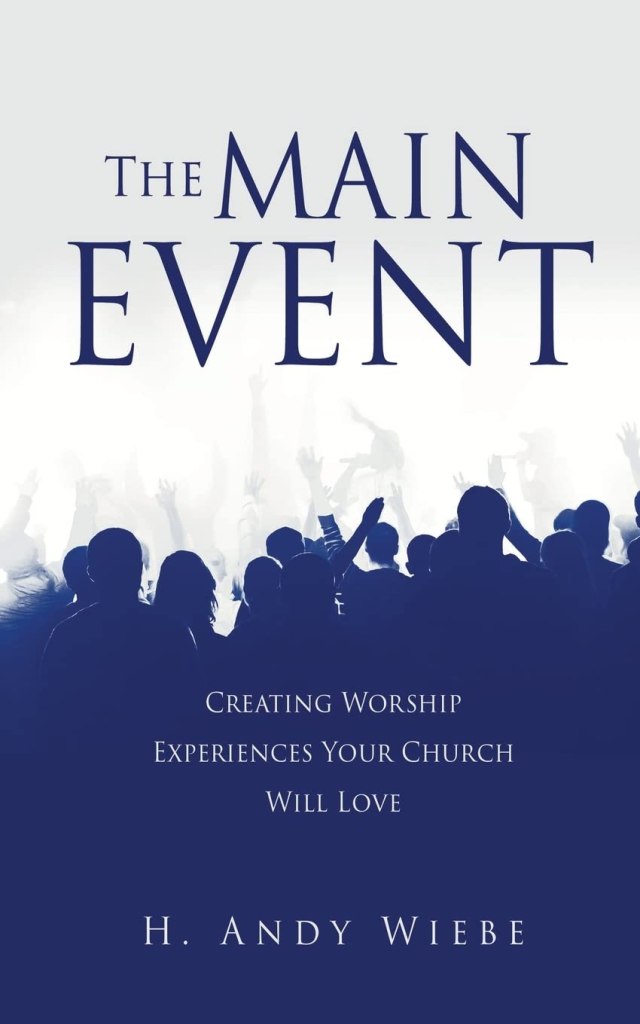
The Main Event: Creating Worship Experiences Your Church Will Love

I usually write about leadership or spiritual issues. I also do book reviews on books I have read. Today is different – I will give you part of the introduction to a book I recently published. Here it is.

CRAFTING A WORSHIP EXPERIENCE

It is possible to create worship services that your church will hate to miss. Every week pastors and church leaders around the world prepare for the Main Event at their church, hoping it will impact their congregation in some way. Whatever it is called locally, and whatever day it takes place, every church has a Main Event where the whole congregation comes together to worship Jesus and to encourage each other. This is often the key means through which a church disciples their people. Most have other programs as well, but this is the one event that most people attend and engage with. We need to make it the best event it can be. I believe this requires creativity to help the congregation feel more involved and connected to what happens during the service. Churches need to find ways of making their Main Event less of a performance and more of an experience.

Each church has their own expression of worship. These vary greatly from one church to another. Each church has a certain expectation of what will take place and how it will be done. Some are quite somber; some are extremely exuberant. Some are very strict about the time; others are very flexible. Some have a clearly laid out agenda that rarely changes, while others change formats frequently. Some churches have services that are fine-tuned performances, where everything is practiced or even performed by professionals, and the agenda is planned out to the precise minute. In other churches, the agenda is loosely put together. They may start late and run late, but no one minds. In others, congregations have expectations of when the service has to conclude. In one church I served there was an older couple who just got up and walked out at 12:00, whether the service was done or not.

Though much of a service varies from church to church, most churches share some common characteristics when it comes to their Main Event. Typically, the experience of the congregation is more like that of an audience with very little participation. The congregation is invited to sing along with the worship songs, or maybe participate in responsive readings or prayers when prompted, but in many cases the congregation does little more than sit and watch the performance at the front.

When I was a young pastor in the 90’s, the big push was to have “seeker sensitive” worship services, and it was very effective for some. Seeker services often were designed and performed with a high level of excellence. Some churches hired professional musicians. Others made sure they had only the best speakers. The seeker service was something that people attended to enjoy, a little like going to the opera or even a sporting event, where the audience is there to watch, and maybe cheer occasionally. They may be invited to sing along to some songs but not many, as the emphasis was more on a great performance, than on participatory worship. This was appropriate for the time as there were still many people who had a bit of a church background and were just looking for something “better,” or more “real.” They were truly “seeking.” While many people came to know Jesus through this style of worship service, times have changed where people are looking for an experience and not just a performance.

Experiential Worship

I believe the time has come for us to move to a more experiential worship event. Churches need to find ways to invite people to participate in the worship service. This may mean including more volunteers in the actual creation and leadership of the event instead of just staff, or it may mean finding ways to invite the congregation to participate more during the event.

Those who are entrusted with the task of creating meaningful worship experiences need to realize that the next generation wants to be more involved in the service. Gary Collins, shares some research about the values of the younger emerging generation, and I believe what he says has great impact for churches and pastors as they craft the weekly Main Event in a way that will reach the next generation. Here are a few of his key concepts to consider:

  • Values and experiences are more important than vision casting and reaching goals;
  • Images and stories are more valued than words and facts;
  • Active participation and ownership are preferred over passive submission to authority and professional expertise; and
  • Spirituality is valued, religion is not.[i]

It is time to evaluate why we create our worship services the way we do. It is time we determine to find ways of inviting people to enter into the whole worship experience from start to finish. Young people are less impressed with excellence than previous generations were. They would rather see authenticity and be invited to participate in the experience. I want to help you create participatory and multisensory worship experiences.

If you are looking for ways to invite your congregation into an experience every worship service, then you are in the right place. This book will encourage you to create your service in such a way that those in attendance feel they are part of what is going on instead of watching a performance. Each chapter will look at one specific aspect of a worship service. We will look at how to invite more participation where those in attendance are invited to an experience they can engage with.

When I arrived as a new pastor at one church, I discovered that the church had used the same general service agenda for the last five years with little or no change. I, personally, have a hard time with that. While there may be something comforting about knowing exactly what to expect and when, I love to be creative, and as their pastor, wanted to give them some variety. This desire to be creative impacts my leadership style so much so, that at a different church, a senior commented, “Andy, I never know what to expect when I show up on Sunday.” He meant it as a compliment. He liked the variety. It wasn’t that every Sunday was extremely different, but no two Sundays were the same. I changed the order of service most Sundays. Sometimes the sermon would be earlier in the service, or we would change the number of worship songs. My goal was to allow the theme of the sermon to guide how best to create each service. The idea was to craft each Sunday’s service around a specific text and theme, and to communicate that theme in creative and interactive ways.

I remember taking our two daughters to a creative and interactive experience when they were young; it was a football game. The team ownership had realized that even a football game had to have a larger experience. Our girls were thrilled to watch the mascot. If you were fortunate, you could catch one of the plush footballs they threw up into the stands when the team scored. Cheerleaders were dancing and jumping, some being thrown in the air. Young men and women were running up and down the stairs offering all kinds of drinks, food, and candy. This was an experience beyond just the football game. If you were not a true fan and were just there with family members who were, you could still have an enjoyable experience…

To purchase The Main Event, click here.


[i] Gary R. Collins, Christian Coaching: Helping Others Turn Potential into Reality (Colorado Springs, CO.: Navpress, 2002), 323.

6 Ways to Engage Your Team in Vision Setting

I love to work on vision. I’m a dreamer. It’s not hard for me to come up with new ideas, and I do it often. Not everyone has that mindset. I also think quickly and I realize not everyone does. In my present role, I work with a different church each year, and lead them through a process of vision setting. This means I’m engaging with a wider range of individuals, some who are excited about and comfortable with working on vision setting, and some who are not.

Here’s the big question: how can you make sure that everyone is able to fully engage in the process of setting vision for your church or organization?

  • Follow a written plan.

When you lead a team through the process of setting vision for your organization, make sure you first identify a written plan. Whether you use something developed by another, or like me, pick and choose exercises from a variety of sources, make sure that everyone has access to the plan before starting the process. Then each person – not just the leaders – can see where the process is heading.

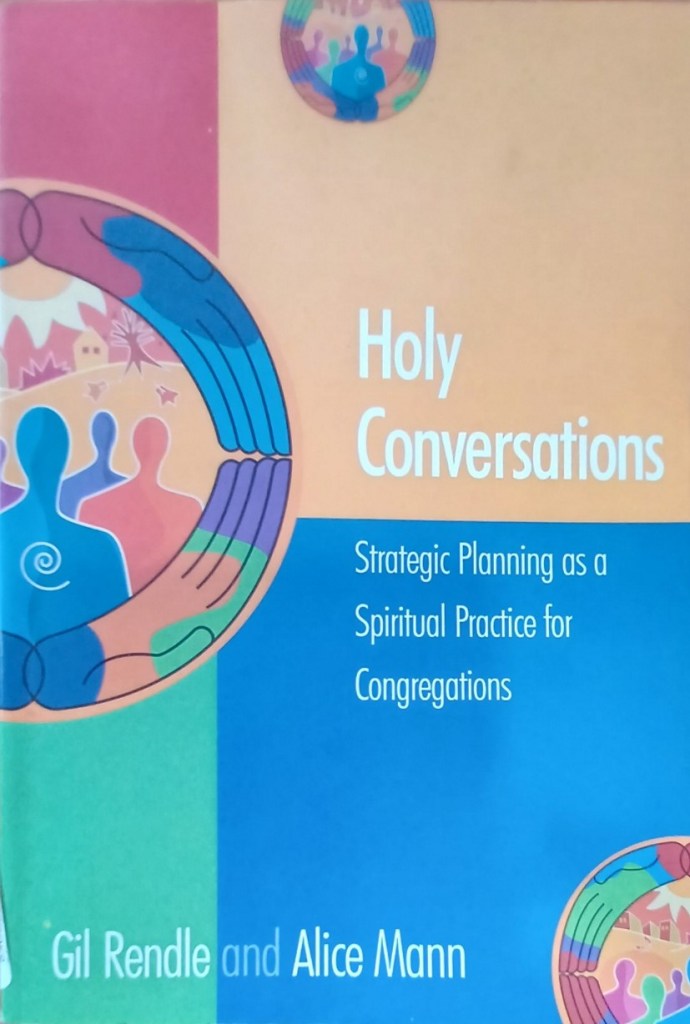
I provide everyone with a booklet they can follow. One of my team has a difficulty hearing, so the booklet helps him know where we are even when he misses some of what is said in the discussion.

In addition to the overall plan document, for each meeting, I also provide a clear agenda, complete with breaks, and times listed for each exercise so everyone can see if we are falling behind. I try to be a little flexible with the time, and even skip some pages in the workbook if we are running behind schedule. The participants can check those out later if they want.

  • Use Variety

I like to do more than just a question-and-answer format. Some of the exercises I like to use for vision setting sessions are multiple choice or circle the best answer. Some are fill in the blank. I provide examples from other organizations that can spark ideas. I do a little leading but prefer to get the team to do most of the talking, especially since I am the consultant and will not be with the church as they move to implement the plan. My job is to make sure they can arrive at a common vision that is truly theirs. This means that I invite a lot of discussion. I do some work on a white board when trying to bring their ideas together so everyone can see any common threads. I even included a few colour charts to help visualize some exercises. I also like to add a few cartoons! Make sure to include times where people can get up and move around a bit. Sitting for too long will slow people’s thought processes down.

  • Go Slow

When leading a vision process, go slower than you think you should. There are always a few who think slowly and need time to think about things. Some ideas may be brand new and might need some mulling over. Some participants will read and process the directions for the next exercise slower so you can’t rush the process. Too much information too fast will not work. Instead, give time to process to keep everyone’s thinking clear.

  • Circle Back

I have found that it is helpful to present exercises that to get the team to see the present reality and the future possibilities from a number of different angles.

As I recently led our team through a visioning process, it was interesting to see some of the same ideas coming up throughout the session, and ideas coming up later that built on what was previously discussed.  As these topics came up multiple times, it resulted in more clarity.

  • Highlight Recurring Themes

When you are working through a vision process, note these recurring ideas so that everyone is aware of them. It’s obvious that these are the themes that will be a major contributor to the final vision statement and vision picture. Listen to how their answers to different questions tie together and form a common theme. As the leader of the session, you are in position to observe these connections and identify them for the group.

  • Listen to God

In the recent process I led, there were a few times where we just stopped and prayed, both talking to God and listening to Him as well. There were a few times where different members of the team felt God was saying something we needed to pay attention to. When there were others that concurred, we took those thoughts seriously and integrated them into the values and vision that were taking shape.

It was very encouraging to me to see our team fully engaged through a 6-hour vision marathon! Everyone contributed to the conversation and was involved in the process right from the beginning to the end.

What are some ways you have found helpful to keep people engaged in process of developing a vision or strategy?

Keep looking up,

Andy Wiebe
Book Reviews: Andy’s 2023 Reading Experience


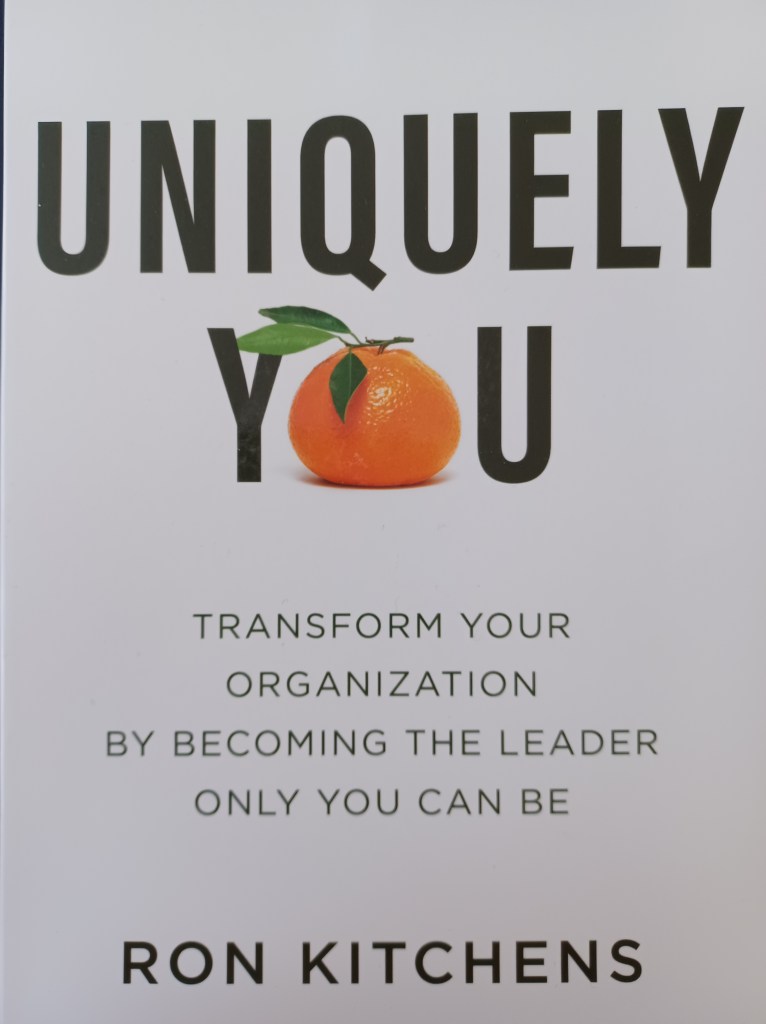
UNIQUELY YOU – by Ron Kitchens

Uniquely You: Transform Your Organization by Becoming the Leader Only You Can Be is an encouraging book for any leader. Ron Kitchen builds off his own experience and the many lessons he has learned along the way. Ron shares many stories as he highlights the value of building a great team. He gives a number of great ideas on how to build that team. I like how he puts family first, and makes that an important part of his business, so that everyone on the team has that same priority. His ideas have a great track record as his teams don’t have alot of turnover because they love working together.

This books has short chapters which will be appreciated by those who don’t like reading but still want to learn.

Pursue Excellence: Develop Useful Templates

When you drive to work in the morning, do you always go the same way? Do you go the way that you know is the quickest, or takes you past the best coffee shop, or has the least traffic? Or do you change up your route each day? I always take the same route. In fact, over time it becomes so automatic that I find myself turn toward work when I’m driving those roads on my day off.

Taking the same route is like using templates in the office. Templates are the well-worn tracks that help work become more automatic and less stressful. Templates can be used in many different situations and for varying purposes.

Templates create efficiency:

As a leader, you are probably quite busy. You don’t want to have to re-learn how to do something every time you do it. When you find a good way of doing something, keep track of that method or format, and use that to create a template to follow. When you create a new document or work on a new project, pull out this template and follow the plan you have learned to trust. This saves you from trying to figure out how to put it all together.

In the same way that a familiar route to work ensures you get there on time, templates become familiar paths to work through quickly and save time.

Templates ensure uniformity:

In addition to ensuring you follow the same method, templates help you produce similar-looking documents. For example, I use templates when I am writing job descriptions. In this way it easy to compare one document to another. It also ensures that I include all the pertinent information in the order I want in the job description.

There are times when various team members may independently prepare documents for a shared project. Without a template you may end up with very different looking pieces making it difficult to combine efforts or compare results. A template helps everyone follow the same format. In this way, you can easily compare information across various documents because you know exactly where to look to find the information you need.

Templates provide consistent processes:

I use a template in my sermon preparation. Using a templated provides me with a format and process to follow. My sermons don’t always look the same, but the research and preparation process often does. I know what steps I have benefited from in the past and want to make sure I don’t forget them. For example, I like to ask myself certain questions as I work on the application of the sermon, such as: How does this sermon speak to a twelve-year-old boy?

In addition to sermon preparation, I use templates when working with planning teams for church events. I this way I make sure that we talk about costs, budgets, available resources, plans for prayer, and various other essential steps in planning.

Templates are also effective for more administrative work. For example, when working on Terms of Reference, a template can make sure you have the important details listed. For instance, I want to make sure that if people are working on an agreement for working together, I want there to be no question as to who has the final say. A template reminds me to include a statement about that.

Useful templates:

Pursuing excellence requires a plan and a template can get you there. As you begin to use templates you will adjust and refine them to become the most helpful tool they can be. If a template makes you do more work than you want, if it is not actually useful, then redo it or find a better one. You could start by finding a template someone else has used and adapting it to make it your own.

Templates and creativity:

I have found that adapting and implementing templates to my work has been incredibly helpful. While I would always advise using a template when possible, there are times when using a simplified template – more of a checklist – is a better option. If your goal is creativity, rigid templates may be a hinderance. As a pastor, I have created hundreds of Sunday morning worship services. I love to create each service in a unique way, meaning the different parts in the service can be moved around to accomplish the best result for each service. I joined one church that had exactly the same order of service every Sunday for the last seven years! In this instance, using a service template may restrict some creativity. Instead, a template that focuses on the planning process, or even using a checklist, provides guidance while allowing room for more freedom. As I mentioned earlier, I use a template for sermon preparation, but I have developed it to aid my creativity. While the final sermon is different each week, I use a template to guide each step of the process, which includes adding creative elements. On the other hand, a template makes each order of service exactly the same, but a checklist could be an effective way to ensure all the items to include are included, while still allowing you to be creative. (More on checklists: The Incredible Value of Checklists)

You have probably already figured out that I place a high value on creativity. At the same time, I want to be efficient in my work. Templates save time, and if used in the right circumstances still allow for creativity in the efficiency.

Templates can be very useful if you find ones that fit your situation. Use them well and save time.

Keep looking up,

Andy Wiebe

Book Reviews: Andy’s 2022 Reading Experience

I will be sharing a brief review of every book I read this year. Hope you enjoy and hope it encourages you to keep reading.


AQUACHURCH 2.0by Leonard Sweet

AQUACHURCH 2.0: Piloting Your Church in Today’s Fluid Culture uses the metaphor of water to teach on the church and it’s role in today’s culture. He addresses many aspects of church ministry, even chapters on “Risk Taking” and “Intuition” which most other church leadership books do not include. He is encouraging churches to be more aware of the culture we live in and minister in so we can understand how best to differentiate between places we join in and times we act counter-culturally. He makes a point of saying, “For leaders, not having a Web ministry is more than being without a calling card, not using a Web site as a communications and community-building tool is to have fumbled the future.” That is an appropriate message to the many churches who went to online service through Covid but have not chosen to have a meaningful online presence going forward. This book is a great resource for any church leader.

The Church Needs More Creativity

Our Bible begins with the Creator at work, creating our world. When He makes people, they are created in the “image” of God, as creators themselves. While different animals are incredibly industrious and clever, humans are set apart from the animal world by our ability to think through problems and find new solutions and create new things.

Merriam-Webster online defines “create” like this:

  • To bring into existence
  • To invest with a new form, office, or rank
  • To produce or bring about by a course of action or behavior
  • To produce through imaginative skill

Create with a twist on what already exists

God brings into existence something out of nothing. We, as humans, have to use what is already available to create something new or different. Even the creativity of thought or speech builds on the thoughts and words of others.

Creativity uses and builds on what others have created. Of course, we need to acknowledge other’s works and do not want to claim something as ours when it isn’t, but we usually create out of what already exists.

As a church, too often, we buy curriculum and programs that others have found to be useful. We run programs and events that have been effective elsewhere. These can be great options for times when we do not need to “re-invent the wheel” and use materials that others have invested in developing.

Even when we purchase a complete program, we often realize there are aspects that don’t quite fit. In order for the program to work well in our own situation, we need to implement frequent evaluations of our programs and events, and be open and flexible to make changes. These changes require a sense of creativity to consider what we could take out and add to improve the pre-made materials for our situation. We may also find that there are times when we are better off creating our own completely new program that more appropriately contributes to our ministry as a church. Just because a club program works well in large urban centers in the United States does not mean it will transfer to rural northern Alberta. While the teaching may still transfer, the application part may have to be adapted to connect with rural northern kids.

Stretch yourself to think creatively

We need to learn how to be creative. Many of us had all our creativity schooled out of us. We were forced to colour within the lines for too long. We no longer know how to think outside of what already exists. We need to stretch our creative muscles and limber them up so that we can think of things that do not exist yet, building something new on something old. This could be through reading and listening on a variety of subjects. It could be dreaming and brainstorming as a team. It could be learning how to take aspects from many different places to put together something that is new and different, and perfect for what we are hoping to accomplish.

Being creative is not an individual task. Instead, seek creative input from people in your community. Talk to people in different fields to learn how their knowledge and experience could be adapted to work in the church. For example, what might we learn from someone’s expertise in trees about how to structure small groups? Or how might talking to an electrician spark ideas for discipleship?

Areas for creativity in the church

As we focus in on church ministry, creativity can add some new life in almost every area!

The Worship Service – Our worship services have not changed much in decades. We may sing less hymns and more worship songs and we may use versions of the Bible with up-to-date language, but the service as a whole still consists of singing, prayer, scripture reading, and preaching much as it did years ago. Even if we don’t get creative with the outline and contents of the service, we could benefit from creative ways of doing these essential pieces of our worship traditions.

What if we celebrated communion with different stations spread around the room where we could physically enter into confession, repentance, and celebrating the forgiveness Christ offers? We could write sins on paper and run them through a shredder or nail them to a cross.

What if we built on the message of the sermon by inviting people to discuss the application of the lesson and promise to hold each other accountable to follow through on our commitments? Not only would this invite more participation in the service, but encourage engagement with one another throughout the week.

Discipleship – This has been one of the most talked about topic in my church circles over the last decade or two. How do we best disciple others? How do we grow as disciples of Jesus ourselves? Often the process is built on information. We teach people scriptural truths and encourage them to memorize verses. Could we borrow ideas from the trades where people progress through stages of practical learning along with class time? Maybe we could apprentice new believers through stages of learning and development. What if we “walked” through life together? An apprentice disciple could be in touch with their mentor throughout the day, perhaps checking in at certain times, and being available for advice and prayer? We need to creatively find ways of doing this better.

Children’s Ministry – Every church has some type of ministry for their children, and often they are very similar. Could we be creative in how we help our children get to know Jesus and grow in their faith in Him? Yes, use all kinds of media, and creatively insert “old-school” ideas that we enjoyed as children that our youngsters have never experienced. Sometimes creativity may mean re-creating something old with a new twist. You could use puppets, play a video, or have them record their own video on a topic. Find ways to engage them physically through games or dance or hands on interactive learnings stations.

Creativity is the means, not the end goal.

While our desire is to be creative, that is not our goal! While it may be nice to be known as a creative church, the creativity is only meant to help us reach our other goals and to engage more people in the process. As a church, God has called us to reach and teach people; to come to faith in Jesus and to grow as a disciple. Creativity can help us get people’s attention and keep them interested. Creativity can be the container that carries our goals forward. The colour and shape and size of the container helps draw attention. Who wants to watch black and white movies when you can watch them in High Definition colour?

Let’s learn to stretch our creative muscles prayerfully and creatively to be the best church offering the best programs you can!

Keep looking up,

Andy Wiebe