Book Reviews: Andy’s 2022 Reading Experience

I will be sharing a brief review of every book I read this year. Hope you enjoy and hope it encourages you to keep reading.


DEFINED: Who God Says You Are – by Stephen Kendrick & Alex Kendrick

Many in our culture are struggling with their identity. They are confused about who they really are. The Kendrick brothers present a great answer by walking through “who God says you are.” They draw on the book of Ephesians as they say “His Word teaches that you can discover, believe, and set your heart on your true identity – your identity in heaven.” The book is laid out in a daily reading style with extra scriptures and a prayer at the end of each day’s reading. Want to know who God says you are? Then this book is for you.

Book Reviews: Andy’s 2022 Reading Experience

I will be sharing a brief review of every book I read this year. Hope you enjoy and hope it encourages you to keep reading.


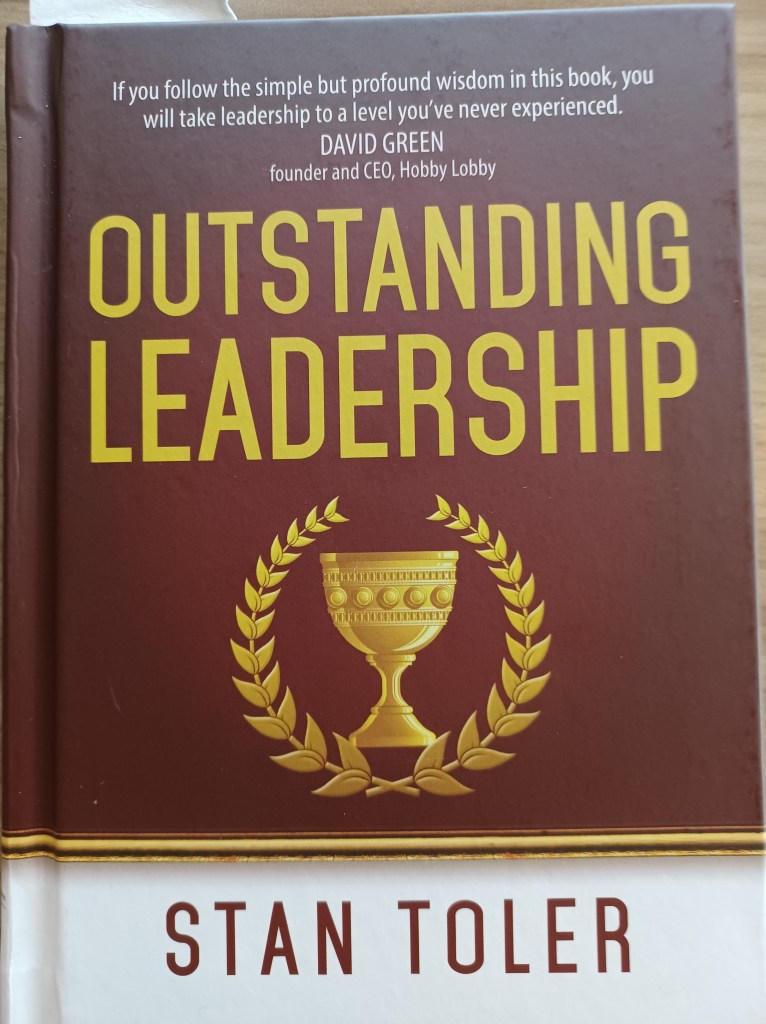
OUTSTANDING LEADERSHIP – by Stan Toler

There are many books on leadership, and this little book is among the best. Every short chapter is chockfull of ideas and definitions and quotes and generally good leadership advice. Stan Toler shares great advice drawing on many other good leaders. In Part 1: Leadership that Motivates, he shares how to develop and share a good vision. Part 2: Leadership that Relates lays out the value of communication and how to best communicate so that you can transform individuals and organizations. A great little book.

Book Reviews: Andy’s 2022 Reading Experience

I will be sharing a brief review of every book I read this year. Hope you enjoy and hope it encourages you to keep reading.


HOPE IN THE DARK – by Craig Groeschel

Hope in the Dark: Believing God is Good When Life is Not addresses those questions we have when life is not going as well as we think it should. Craig Groeschel asks many of the questions that we have all asked from time to time, questions like: “Where are you God?” and “Why aren’t you doing something?” He draws on the book of Habakkuk where the prophet asks some of the same questions. Let me give you one quote that I thought was very helpful. He writes, “Habakkuk urges us to draw on our long-term memories of God rather than being so shortsighted that we choose to keep replaying only our immediate, distressing circumstances.” That is so good! As we take our eyes off of our present situation we can remind ourselves of God’s goodness in the past and know that that same God is still walking with us in the difficulties we face. This is a very encouraging book for anyone asking the questions about where God is in our pain.

Do You Really See Your Team?

We are quick to make judgements about people. Our first impressions can be completely wrong but we hold onto them anyway. Other times, the we may have known someone for a long time but do not realize they are not the same person they were years ago. For someone in a leadership role, there is a particular danger of viewing people one way and not realizing who they truly are and how they can be of help in our organization.

King Solomon, in Ecclesiastes, describes some of the unfortunate ways that people see others.

13 Here is another bit of wisdom that has impressed me as I have watched the way our world works. 14 There was a small town with only a few people, and a great king came with his army and besieged it. 15 A poor, wise man knew how to save the town, and so it was rescued. But afterward no one thought to thank him. 16 So even though wisdom is better than strength, those who are wise will be despised if they are poor. What they say will not be appreciated for long. (Ecclesiastes 9: 13-16, NLT)

These people greatly benefited from the wisdom of a poor person. They appreciated the rescue but did not appreciate the person. We are like these townspeople: quick to write people off, even if they have valuable gifts and insights. We see them a certain way and do not allow that to change as we begin to get to know them and what they offer.

Because of this oversight, we – and by extension our teams and organizations – may lose out on valuable skills and insight just because we have identified a person in one way so we do not think they have anything to add.

King Solomon continues:

There is another evil I have seen under the sun. Kings and rulers make a grave mistake when they give great authority to foolish people and low positions to people of proven worth. I have even seen servants riding horseback like princes—and princes walking like servants! (Ecclesiastes 10: 5-7, NLT)

Our quick judgements can create further damage when we choose to promote or demote the wrong people. This can be due to existing relationships or the desire to honour certain people. The unfortunate result is that we listen to the advice of the wrong person when there is someone much wiser nearby.

Most of us work with teams and volunteers in some way at some point in our life. This is especially true in ministry, when programs and services rely on staff and volunteers.

Get to know these staff and volunteers. This could be through personality tests, or at a minimum, putting in the effort to get to know each person well enough to see how they can contribute best. Intentionally take time with this in order to avoid making quick assumptions or writing someone off because of one or two missteps. Often the best outcome happens when people are in roles that suit them best, and it often takes time to identify these roles and responsibilities.

As you work with your teams and notice people are in the wrong roles, be brave enough to reorganize and reassign individuals to roles where they will excel and your team will be better in the long run.

I love to get things done, but I have realized that there are times where I am better off taking time to get to know people first. As we get to know each other, I will learn where someone can serve and give their best, and we will be able to communicate better because I know them and they know me.

Good organizations will have a regular system of evaluating people. The leader does a formal review every six months or a year to continue to help the person get better. In the evaluation, the leader can also discern if this person is still a fit here or would fit better in a different role. A system of regular evaluation is good, but the personal relationships are even better. As you develop good relationships with your key people, they will be brave enough to approach you when they want to learn or grow in a certain area or if they would like to try a different role. If open communication is valued and practiced, you will be more likely to continually give the right responsibilities to the right people.

So much of what we do in life involves working with people. Let’s figure out how to help our teams be the best by putting the right people in the right seats where everyone can contribute their best.

Get to know your people first, then get the work done.

Keep looking up,

Andy Wiebe

Is This Church?

I have many unique and incredible experiences of church. I have been to churches meeting in large auditoriums, in school gymnasiums, in homes, and at a golf course. I have been to churches on three continents. I have been in churches that speak various languages. I grew up in a church where everyone felt comfortable speaking Low German. In one church most members were speaking Tagalog until the service began in English. I had the opportunity of preaching in a church in Choma, Zambia, where the pastor interpreted it into one of the local languages, Tonga. I have been in church services that started right on time and ended exactly one hour later. I have been in services where there was an approximate ending time but usually it went much longer. I have been in churches of thirty people and churches of hundreds of people.

I have been in churches where the staff led everything in the service and in churches where most of the service was led by volunteers. I have been in services where it felt like we were watching a performance, and I have been in services where the congregation was invited to participate in a number of ways.

So, what makes it church?

Let’s think of a few things that need to be present for it to be church, and before that, let’s define church. Church is the people of God meeting together. So let’s look at a few things that make something “church”.

  • Church is the people of God gathered.

When Paul wrote his different letters, he addressed them to the church in Corinth, or Ephesus, etc. He was addressing people. In Corinthians 1: 2 Paul writes, “I am writing to God’s church in Corinth, to you who have been called by God to be his own holy people.” Church is a gathering of people.

  • Church is the encouraging and motivating of God’s people.

Hebrews 10: 24 and 25 says, “Let us think of ways to motivate one another to acts of love and good works…encourage one another….” When the gathered disperse, they should feel encouraged and motivated to continue to grow in their love of God and their service to others. Something needs to happen when gathered so that the people going home are different than when they came in. They should have been challenged to change in some way.

In order for something to be church, the gathered must leave encouraged.

  • Church is the people of God praying to God.

In 1 Timothy 2: 8 Paul advises this young pastor, “In every place of worship, I want men to pray with holy hands lifted up to God….” One aspect of a church service, when God’s people gather, should be prayer. Somehow, as part of the time with each other, God’s people need to spend time talking with God.

In order for something to be church, the gathered must pray.

  • Church is the people of God gathered to listen to Scripture.

Here is some more advice from Paul to Pastor Timothy: “Until I get there, focus on reading the Scriptures to the church, encouraging the believers, and teaching them.” God’s Word should be read in church. While everyone should read at home on their own as well, there should be public reading of Scripture. That means, preaching through a popular book does not cut it.

In order for something to be church, the gathered must read Scripture.

  • Church is the people of God gathered to be taught.

In the advice to Timothy in the last point, Paul says to “teach them.” Someone, or more than one, needs to expound and apply Scripture to the regular daily lives of God’s people. Someone who has more training or more experience in a passage of Scripture can help others understand it and figure out how the rest of the Bible contributes to what is said in the verses read.

In order for something to be church, the gathered must be taught.

  • Church is the people of God gathered to celebrate communion.

In 1 Corinthians 11 Paul reminds the Corinthian church to respect the Lord’s Supper as a special event reminding us of Jesus’ death and resurrection: “For I pass on to you what I received from the Lord himself. On the night he was betrayed, the Lord Jesus took some bread…” (1 Corinthians 11: 23) He goes on to describe what happened during that meal Jesus had with his disciples, leaving us an example to follow. Many churches regularly celebrate communion, or whatever your church calls it. Some practice it every Sunday, others monthly.

In order for something to be church, communion will be celebrated regularly.

Is this church?

These are some of the elements that make church “church.” Basically, church is the gathered people of God, but the above elements are usually part of that gathering. Not every item above will be in every gathering of believers, and there may be others included. The point is, do we know what needs to included and what does not? Do we understand the incredible value of regularly meeting with others who are part of God’s family? Please leave a comment sharing what you would add or remove from the list. What do you believe needs to be present to be “church”?

I hope you have found a great local church to regularly gather with. If you have not found one, keep looking. You need to meet with others of God’s people.

Keep looking up,

Andy Wiebe

Book Reviews: Andy’s Reading Experience 2022

I will be sharing a brief review of every book I read this year. Hope you enjoy and hope it encourages you to keep reading.


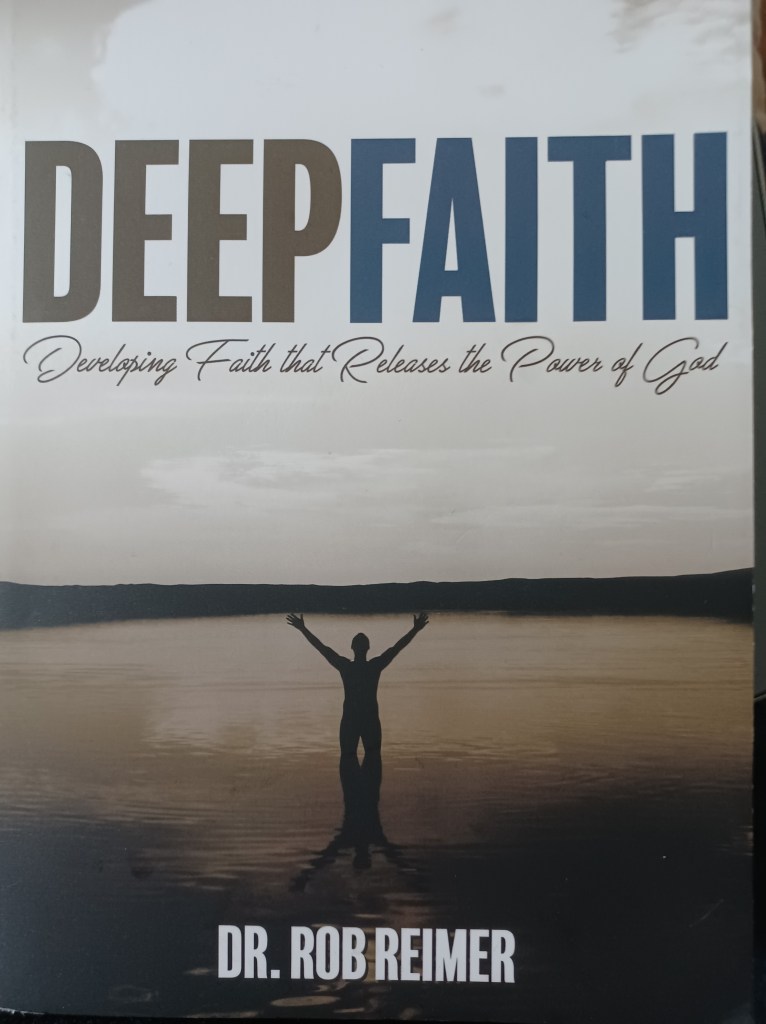
DEEP FAITH – by Dr. Rob Reimer

Rob Reimer has written another great book regarding personal renewal and spiritual growth. In Deep Faith, he helps the reader see how they may deepen or grow their faith. Reimer does a good job of showing how this has worked in his own life and his experience with others. He says on page, “Faith is not static; it is dynamic. We can and must take an intentional path toward growing and developing our faith if we want to see the works of the Kingdom in greater measure, for the glory of the King, and for the sake of his mission to the world.” He wants to help people grow in their faith for the glory of God and for the continuing growth of the kingdom. A great read if you want to deepen your faith.

Learn From Me

I love to read. You are probably well aware of that as you see me regularly posting reviews on books I have read. I read all kinds of books. I love learning new things and being challenged to think about how I am living my life. I also love to read for entertainment and to relax.

I often go through times where I am focused on a certain topic. Recently, I have been reading on the issue of the Holy Spirit and spiritual renewal personally and for the local church. As you will see from my reviews when I find an author that writes about this, I like to read all he has written.

Over the years I have attended many seminars and pursued life-long learning. I took my first course towards my Masters of Arts in Leadership and Ministry in 1992. My last course was completed in 2018. It took me 26 years to graduate. This was due to a few reasons. I was not always able to afford the cost or time to take another course. But I also preferred learning a little at a time rather than sitting in class for 2-3 years and getting one big dump of knowledge. I love to learn.

Recently, God chastised me regarding my learning focus. I was praying and journaling when God gave me a picture. I was running a race.

There were a number of runners just in front of me but for some reason I wanted to see who it was in front of them, but I just couldn’t see past them. I asked God what this was all about. It seemed unfocused, unclear.

And then it was as if God said, “Learn from me. Don’t just learn from others on the journey, even if they are ahead of you.  Learn from me.” It was a good reminder that my focus should be on Jesus, and listening to and learning from the Holy Spirit. Not just from other people.

Matthew 11: 29 says, “Learn from me, for I am gentle and lowly in heart, and you will find rest for your souls.” (ESV)

I read my Bible just about every morning, but I have made a commitment to read more of the Bible more often. I want to learn from the Master, not just from others who have learned from the Master.

We fall into this trap quite easily. As believers, we need to regularly read the Bible and hear from God. Too many Christians are content to listen to their pastor and other preachers online or on television while not reading for themselves. Too many people of faith treat hearing from God like a mama bird feeding it’s young, eating only what has been regurgitated for them. God doesn’t want us to be satisfied with others feeding us. He wants us to chew our own food, to read the Bible ourselves and to ruminate over it. We need to personally hear God speak to us and rather than only hear the stories of others who have heard from God.

“Learn from me, for I am gentle and lowly in heart, and you will find rest for your souls.”

– Jesus

I love that you are reading this blog. Thank you! But I hope you are going to the Master and learning directly from him too. I’m glad that people show up in church to hear the sermon I prepared and preach. But I hope you are taking the time to learn from the Holy Spirit. After all, that is the job of the Holy Spirit. Jesus said, “The Spirit will tell you whatever he receives from me.” (John 16: 15, NLT)

Learn from the Master, and keep looking up,

Andy Wiebe

Encourage Second-Career Ministry

I meet monthly with other Transition Pastors. We are all serving churches by helping them say goodbye to a previous pastor, move to good health, and welcome a new pastor. In the last couple of months our conversations have included discussions about how few resumes are submitted for Lead Pastor positions at the churches we are serving. There seems to be a shortage of pastors. There are not enough pastors stepping into the role to balance those exiting that role.

Last week I said we need to encourage our young people to consider being a pastor or a missionary. When I was a young boy, I dreamed of becoming a doctor. There is nothing wrong with being a doctor. I have been really appreciative of a doctor’s work for me and my family many times. I dreamed of becoming a doctor. Our children are dreaming of what they want to be when they grow up. We need to encourage our children to dream of becoming pastors and servants of God in foreign contexts. We need to find good examples of pastors and missionaries to highlight for them.

Young people are not the only ones who could consider these roles. There is another group of individuals who are choosing to become a pastor later in life. I know of some who were farmers most of their life, or truckers, or welders, and then shifted to becoming a pastor.

Pastors, we have a special opportunity to encourage those in our congregation that seem to display the necessary qualities and character to choose pastoral ministry as a second career – or third, or whatever. People of God, ask God to show you if He wants to redirect you to become a pastor or missionary.

There are many godly people in our churches who work at their job all week and then serve at the church evenings and weekends. Some of them are clearly not just volunteering because someone is needed to fill a certain slot. Some of them are gifted teachers or mentors of others. They have a heart for God which is evident in the way they serve in the church and in how they operate their business or work at their jobs. Some of them have already graduated from Bible College or Seminary but never pursued the role of a pastor.

There is a group of faithful and godly people who graduated from Bible College, and maybe even Seminary, who have often not been the first choice in pastoral roles, but that has changed a lot in the last few years. Women are being hired more often and for roles beyond just Children’s Pastor or Women’s Pastor. While I, personally, may be hesitant to encourage a woman to pursue a Lead Pastor position, many churches now are open to hiring a woman for any pastoral role in the church. They are hiring based on the gifts of the person rather than on gender. So, let’s encourage our women to consider pastoral ministry as well, listening to God as to where and how he wants them to serve. Pastors, some women have not felt a freedom to pursue pastoral ministry and God is asking you to encourage them in that direction.

Some people have never considered being a pastor because they were not “good enough.” They had a certain image in their mind of what a pastor was like, and they didn’t match up to their ideal. If you look around, you will find that pastors come in all shapes and sizes. They come in all varieties of personalities. Some are great for serving in small churches and others are perfect for large churches. You don’t have to match up to an ideal. You just need to say “yes” if God is asking you to step into that role.

Some faithful servants of God felt God hadn’t specifically called them to the role of pastor, so they headed in a different direction. Just a question: “Did God call you to head in that direction?” If God did not specifically call you to be a pastor, did you use those same criteria to decide to be a welder or business owner? Many people chose to pursue a career because they thought they would do well in it, make good money, and they would feel fulfilled in that role. But maybe God never called you to that role. You just chose it. Maybe its time to specifically ask God if you should step into a role as pastor. Take time to prayerfully consider this. Talk to your pastor and other godly people around you and ask them what they think. And if all signs point to becoming a pastor, then pursue it with your whole heart!

Some have decided not to be a pastor because it is too hard of a job. Sometimes the pay will be way lower than what you are making right now. People will not appreciate what you are doing, and complain. Your family may suffer. You will be frustrated at how slow things move in the church compared to the business you were running. It seems like too much of a sacrifice to say yes to this role. Not to be too direct, but remember the sacrifice Jesus made for your salvation? He gave His all, His life, faced ridicule from people, and even separation from His Father as He died on the cross. If God is asking you to become a pastor, then He will give you the strength to persevere. I can give witness to that. I have had some very difficult moments in a few different churches, but God has been faithful through it all!

There are some of you who considered being a pastor, and maybe even served as a pastor for a short while, but you were frustrated with the institution of the church. You feel that it is not accomplishing what it should. You are probably right. But you may be just the right person to step into this role. If God is showing you where the church is lacking, can you trust that God will show you some answers in how to improve that? Sometimes it is a person new to the role that will see what is wrong and how to change it for the better. Your voice in the conversation may be exactly what is needed to raise the level of discussion on improving the church.

“Second Career Pastors” can have incredible ministries accomplishing great things for God and the expansion of His kingdom! Will you accept the challenge and become a pastor?

Keep looking up,

Andy Wiebe
Book Reviews: Andy’s 2022 Reading Experience

I will be sharing a brief review of every book I read this year. Hope you enjoy and hope it encourages you to keep reading.


PATHWAYS TO THE KING – by Dr. Rob Reimer

Pathways to the King: Living a Life of Spiritual Renewal and Power, is another on the Spiritual life by Dr. Rob Reimer. If you want to live a live of Spiritual Renewal and Power, then this book will help you as you move toward that. He uses a number of personal examples to show that it has been quite a journey for him. You will be able to identify with him, no matter where you are at in the journey right now. He helps the reader to get a better understanding of who we are in light of our relationship with God and his Spirit at work within us. Each chapter walks through a way to open ourselves up more to the filling and empowering of the Holy Spirit for personal growth and kingdom effectiveness. Learn to live with a fresh and deepening relationship with the Spirit.

Motivate Others for Ministry

I never thought I would be a pastor. I was a Christian. I attended a local church. I loved serving at Camp Sagitawa, a summer Bible Camp for kids. I had a desire to serve God so I went to Bible School, thinking that it would be good to prepare myself to serve in ministry of some kind. My thought was that everyone needs to learn how to teach, so I took a Christian Education program. I thought I would become a full time Camp Director. And then God used people to speak into my life and encourage me.

In the summer between my first and second year at Peace River Bible Institute, a lady from my church believed in me enough to financially help with one semester of Bible School if I would spend the summer at camp.

While attending Peace River Bible Institute, Reuben Kvill, the president at the time, took a special interest in me. He encouraged me to do some preaching at churches in the area that needed speakers. So I did. He then encouraged me to do a summer pastoral internship. There was a church looking for an intern and he thought I would fit in quite well. Though I had taken hardly any preaching or pastoral courses, I decided to do it. It would give me opportunity to complete some of my Christian Education requirements as well. It was during my internship that God specifically called me to be a pastor. I realized I loved preaching and knew God wanted me to do this.

Many years later, my wife and I felt God was re-directing us, but we were not sure in what way. It was during this time that a couple, who had been our friends for years, spoke into our lives. They encouraged us to think about how we might help the larger church instead of serving just one church. Well that encouragement, and God’s clear leading, has brought me to the point that I am now serving as a Transition Pastor. I am concluding one assignment in a month, and starting at a second church two weeks later. God is using me to help churches move to health and be ready for their next pastor.

I say all of this to encourage you to also become a motivator of people toward the gospel ministry. Maybe you have seen this happen in your own life. Perhaps someone encouraged you in a certain direction and as you moved in that direction, you realized this was exactly where you were to be.

I believe those of us who are older need to take this role seriously – to be a motivator of others to ministry. You may not realize that there are less and less Bible College graduates looking to be a pastor. Many Bible Colleges are leaning toward preparing believers to do well in teaching or medicine and other various professions instead of preparing them to be pastors or missionaries. We still need pastors, and we need missionaries. We need good people in business and in all aspect of our world, but we continue to need people who will dedicate themselves to full time ministry in some way. There are many reasons why these numbers are declining, but maybe one reason is that no one is encouraging young people to pursue full time ministry positions.

So, who can you motivate towards ministry?

Parents, encourage your children to consider being a pastor or missionary and serving God in a full-time capacity. Make sure your children get to know their pastors. Help them to see that this is a good option for them to pursue. Instead of encouraging them to be lawyers or doctors because you want them to make good money, encourage them to consider Bible College and Seminary. Encourage them from early on to continually ask God what He desires of them.

Grandparents, you have a powerful impact on your grandchildren. Help your grandchildren to see that being a missionary or pastor is a great choice. You could gift them books about pastors and missionaries. You could tell them you want to encourage them in this direction. Maybe tell them you will help them financially if they consider going on a missions trip, or if they are considering Bible College.

Youth pastors, you have an incredible role helping to shape the futures of the teenagers in your program. Pour yourself into them and show them that they too can learn to do what you do. Take them to Bible Colleges. Bring in tour teams from Bible Colleges so they meet some students. Teach them to ask God what He wants them to do with their life. Many schools are moving students into certain tracks of education at earlier points than they used to. They are being trained to choose a direction in life when they are quite young. Youth pastors, speak into their lives at these points and be the encouragers and motivators that you can be.

Pastors and missionaries, we need to step up and take this seriously. We need to show children and young people that ministry as a pastor or international worker, though hard at times, is very rewarding! I know that there are a lot of stories showing where both pastors and missionaries have failed some of the very people they were hoping to help. That doesn’t mean you avoid that role. Just determine to prepare yourself better, depend on God to lead more closely, and do everything you can to understand the people whom you are hoping to serve so you can serve them well and in a way that will benefit them, not you. Get to know leaders in the role you are pursuing who are doing a good job. Learn from them.

We need to challenge young people to seriously consider a career as a pastor or full-time ministry of some kind. Invite interested students to do a summer internship with the church. We do this for Bible College students, but maybe we can do this for some of our older teenagers as well. Show them that they can enjoy doing ministry and pray that God will direct them to where he wants them.

We need to realize that we can have a large influence on our young people. Let’s do it.

Let’s be motivators of others to ministry opportunities!

Keep looking up,

Andy Wiebe