Book Reviews: Andy’s 2024 Reading Experience

I will be sharing a brief review of every book I read this year. Hope you enjoy and hope it encourages you to keep reading.


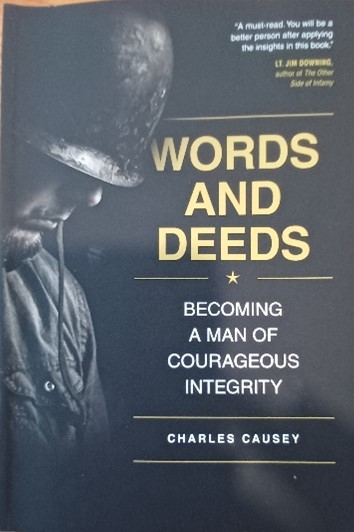
Words and Deeds: Becoming a Man of Courageous Integrity – by Charles Causey

As the title declares, Charles Causey is writing about how our words and actions need to line up. We need to speak up about things that matter, and we need to act on things that matter. He does a good job illustrating the power of words at the right time to challenge and to encourage others. The book includes a diagnostic quiz to determine where you fit as one of his four categories of Sentry, Salesman, Scout, and Statesman. While I didn’t find the quiz all that helpful, I do appreciate how he points out that some are good with words, others with deeds, while we need to be good at both. An encouraging read for any man desiring to live with integrity.

The Birth of Jesus! The Story of Christmas.

Luke 2

In those days Caesar Augustus issued a decree that a census should be taken of the entire Roman world. (This was the first census that took place while[a] Quirinius was governor of Syria.) And everyone went to their own town to register.

So Joseph also went up from the town of Nazareth in Galilee to Judea, to Bethlehem the town of David, because he belonged to the house and line of David. He went there to register with Mary, who was pledged to be married to him and was expecting a child. While they were there, the time came for the baby to be born, and she gave birth to her firstborn, a son. She wrapped him in cloths and placed him in a manger, because there was no guest room available for them.

And there were shepherds living out in the fields nearby, keeping watch over their flocks at night. An angel of the Lord appeared to them, and the glory of the Lord shone around them, and they were terrified. 10 But the angel said to them, “Do not be afraid. I bring you good news that will cause great joy for all the people. 11 Today in the town of David a Savior has been born to you; he is the Messiah, the Lord. 12 This will be a sign to you: You will find a baby wrapped in cloths and lying in a manger.”

13 Suddenly a great company of the heavenly host appeared with the angel, praising God and saying,

14 “Glory to God in the highest heaven,
    and on earth peace to those on whom his favor rests.”

15 When the angels had left them and gone into heaven, the shepherds said to one another, “Let’s go to Bethlehem and see this thing that has happened, which the Lord has told us about.”

16 So they hurried off and found Mary and Joseph, and the baby, who was lying in the manger. 17 When they had seen him, they spread the word concerning what had been told them about this child, 18 and all who heard it were amazed at what the shepherds said to them. 19 But Mary treasured up all these things and pondered them in her heart. 20 The shepherds returned, glorifying and praising God for all the things they had heard and seen, which were just as they had been told.

21 On the eighth day, when it was time to circumcise the child, he was named Jesus, the name the angel had given him before he was conceived.

Leading Without Accolades

I remember a leader telling me that she was discouraged because she never heard from people if they appreciated what she was doing. We all long for approval and acknowledgement. We want validation because it feeds our desire for people to like us and like what we do. We need to keep leading even when the accolades are not freely given.

The general population is not good at giving approval for something they expect. If we lead well in church, we will rarely get feedback because we are doing exactly what we signed up to do. We are leading in the way we agreed to when we took on the responsibility. Sometimes, when the verbal accolades are not given, we may be able to read the body language of the crowd to recognize their approval. If people laugh at a joke you shared in a speech, take that as an accolade. If they respond with clapping or raised hands during worship you lead, receive that as a sign you are leading well as they are responding physically.

It is also important to recognize that people are more likely to give negative feedback than positive feedback. If there is absence of negative feedback, take that as a good sign. No feedback may mean that people are okay with how things are going.

As leaders, we also need to learn to get our affirmation elsewhere. We cannot depend on the people we lead to be a gauge of how well we are leading. Instead, we need to be clear about what our role is and do it to our best ability. Yes, we love and need feedback, but we must learn to lead without it coming from the ones we lead. And then when we do receive positive feedback, accept it as a bonus rather than an expectation.

Sometimes we can look at the success of our leadership and receive positive encouragement from that, but sometimes our leadership is not met with the success we long for. We may be doing it all right, but still have no success to point to.

Am I now trying to win the approval of human beings, or of God? Or am I trying to please people? If I were still trying to please people, I would not be a servant of Christ.

Galatians 1:10

In Galatians 1: 10 Paul points out that our goal should be to please God rather than look for the approval of men. Yes, it feels really good and is affirming to hear the “well done” of people, but it is even more encouraging to know that God approves of us and our leadership. Some years ago, my leadership was challenged to the point that I ended up losing my position. This affected me deeply. It was incredibly encouraging when I was at a pastor’s retreat, and God used others to affirm His love for me. Three different times in those couple of days, God said to me, “You are beloved Son in whom I am pleased.” Once it was a strong impression in my mind and twice it was as different people prayed over me. The approval of God was worth much more than that of men.

It is also valuable to recognize that anything good is done only through the work of Christ in us. 1 Corinthians 3: 7 points out, “So neither the one who plants nor the one who waters is anything, but only God, who makes things grow”. God equips us and invites us into leadership roles. Our first responsibility is to Him! As we serve in leadership, we ought to serve with a desire to please God first.

When the accolades do not come, continue to lead as God has called you. Do your job well and do it for the Master who called you to that role in the first place.

Keep looking up,

Andy Wiebe

Book Reviews: Andy’s 2023 Reading Experience

I will be sharing a brief review of every book I read this year. Hope you enjoy and hope it encourages you to keep reading.


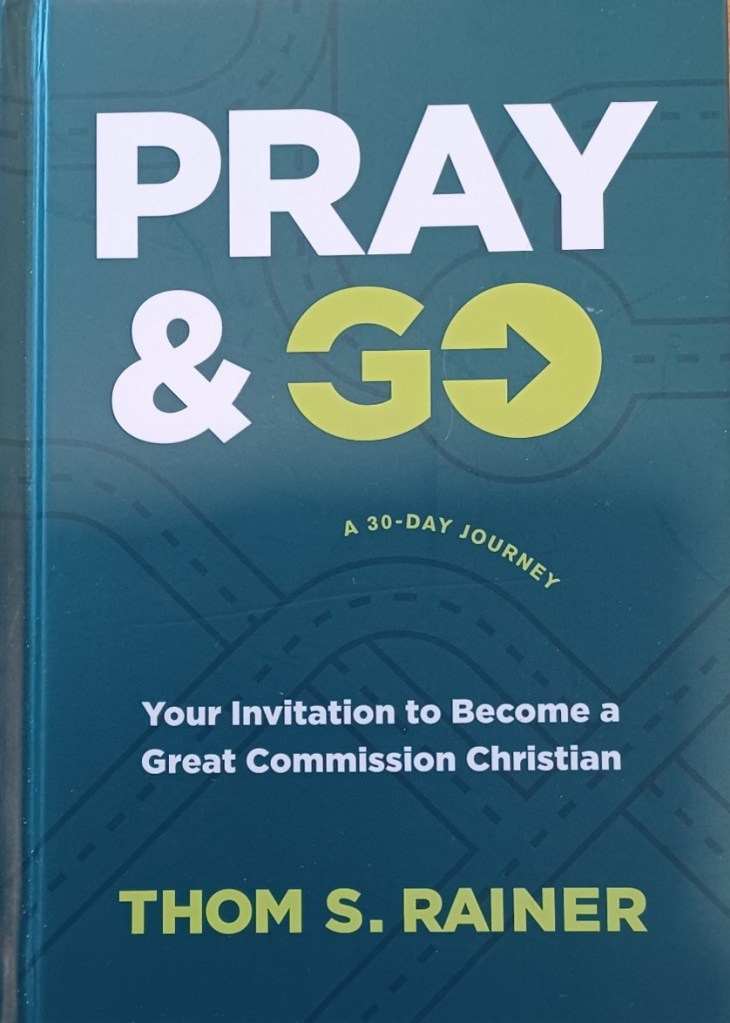
PRAY & GO: Your Invitation to Become a Great Commission Christian – by Thom S. Rainer.

Thom Rainer has written a great book that is used for Church Answer’s Hope Initiative, a 30-day journey that can be done as a group or individually. When you sign up for the Hope Initiative you also get other supporting resources and video encouragement in you 30-day journey. The intent of the book is to help you become more active in sharing your faith as you pursue the fulfillment of the Great Commission of introducing others to Jesus. A great book to help you grow as a disciple of Jesus.

Book Reviews: Andy’s 2023 Reading Experience

I will be sharing a brief review of every book I read this year. Hope you enjoy and hope it encourages you to keep reading.


A TREASURY OF A. W. TOZER by A. W. Tozer

If you have never read A. W. Tozer, this might be the book to get. It is a collection of Tozer’s writings from a few different books he has published. Tozer is an older author who speaks with a directness to his audience and a reverence for our Holy God. Much of his writing focuses on the indwelling of the Holy Spirit and the pursuit of holy living. The short chapters make it a great devotional read.

Church Leadership Series: Part 8: A Church Leader Must Not Be A New Christian

A church leader must not be a new believer, because he might become proud, and the devil would cause him to fall.

1 Timothy 3: 6 (NLT)

It is a great joy to welcome new believers into the church! But Paul gives a warning: “A church leader must not be a new believer.” We should look to those who are spiritually mature to lead us.

Paul doesn’t give us a length of time to wait, just that we are to wait. This is good, because some new believers mature faster than others. There are some who could take years to be ready while others might be ready in a year. The important thing is to give the new believer time to learn and grow in their faith in Christ.

What might be some problems with new believers in church leadership? Paul, in his letter to Timothy cautions that a new believer put into leadership too soon may become proud. The new believer may see this leadership role as a position of elevation in the eyes of others and think of themselves as something special, rather than as a servant. And Paul is concerned that this new believer, in their pride, may fall. The NIV puts it like this: He must not be a recent convert, or he may become conceited and fall under the same judgment as the devil. The devil fell because of his pride. He wanted to be higher than Jesus. Paul is concerned that a new believer will fall prey to the same sin and hurt his walk with God.

Other concerns may be tied to some of the earlier instructions given to church leaders. A leader needs to have a good reputation and live a goldy life. The new believer may not have that to begin with. He may need to have time to mature and become more like Jesus, and to gain that good reputation with others around him.

Another concern may be that a new believer will not be able to teach in the same way that a mature believer can. If a new believer is good at research, they may be able to put together a good lesson, but their teaching would generally be theory because they have not yet had time to put into practice what they are learning as a new follower of Jesus.

A new believer may also still carry sinful habits. He needs to learn to set those aside before stepping into leadership. While it is great to desire leadership, there should first be a strong desire to live in right relationship with Jesus by the power of the Spirit.

Churches often talk about discipleship when referring to the process of maturing as a believer, where over time the new believer becomes more and more like Jesus. A new believer would benefit from some discipleship first, whether formal or by spending time in the activities and teachings of the church. Part of that discipleship could include observing and learning from the leadership board or shadowing a leader as they go about their duties.

The official church leaders should be people who have already shown their leadership in the church as maturing believers. Asking them to serve on a board or a committee is a natural next step, affirming that they are already one of the people that others naturally look up to and learn from. Ongoing discipleship prepares maturing believers for the next steps in church leadership, taking on smaller roles to begin with and then being asked to higher levels of leadership as they prove themselves.

Church leaders should be mature and passionate about Christ and His church. They should learn and develop and grow until they are among the best in the church and well prepared for leadership. If you are that new believer, then do your part to continue to grow and be discipled as opportunities allow. God will build you up to the time when others recognize you have already become a leader. When that happens, step into leadership with a confident faith in God and a desire to serve.

Keep looking up,

Andy Wiebe

Church Leadership Series: Part 5: A Leader Must Teach

he must be able to teach

1 Timothy 3: 2 (NLT)

He must have a strong belief in the trustworthy message he was taught; then he will be able to encourage others with wholesome teaching and show those who oppose it where they are wrong.

Titus 1: 9 (NLT)

I love to teach. I love preparing a lesson and then teaching it to a group of people, small or large. I love to see learners understanding a new idea or learning how to apply a truth they have just understood. To be a leader is to instill new ideas and ways of doing things in others who are coming after you. A church leader must be able to teach. This is one of the main ways to instill new ideas and practices in those whom you are leading. My automatic reaction to this verse is to think of teaching thoughts and ideas, of preaching and teaching scripture and discipling others through teaching in a class or sermon. But we all know that teaching is also about hands-on and practical learning.

Apprentices are always learning, but only part of their training is in the classroom. Much of the teaching they receive is active hands-on learning. Leaders in the church may be good classroom teachers, or they may not, but if they are teaching others in practical ways, then they are still teaching.

I find it interesting that in Titus we are told that the leader must have been taught first and must believe what he was taught. A teacher cannot teach what they do not know.

The key teaching in the church is the “trustworthy message” of the gospel. We have heard and now teach the gospel of Jesus Christ to others. As leaders we continue to encourage others to get to know the Jesus of the gospel, and to receive His life-giving forgiveness of sins as we put our faith in Him.

Church leaders are responsible to teach many things in the church, but it always needs to come back to the gospel message. Whether we are teaching others how to be an usher or how to do run the sound board, all of that is to help others continue to hear the gospel message.

Part of a leader’s responsibility is to “show those who oppose it where they are  wrong.” (Titus 1:9) It is not unusual to come across people that have not understood something correctly. Misunderstanding may be as serious as not understanding the forgiveness that Jesus offers to all who believe in Him, or something as simple as not following through on a certain responsibility they accepted. In either case, the leader’s job is to correct when correcting is necessary, and this is done by teaching and showing what the correct understanding is.

It is pretty much impossible to be a leader and not be able to teach. To lead is to be ahead of people in information or practices that somehow need to be passed on to those following. In the process of doing that, you are teaching. Yes, some are more gifted in teaching than others, but a leader will always be able to teach to some level.

Keep looking up,

Andy Wiebe

Book Reviews: Andy’s 2023 Reading Experience

I will be sharing a brief review of every book I read this year. Hope you enjoy and hope it encourages you to keep reading.


EXPERIENCING THE RESURRECTION – By Henry & Melvin Blackaby

Henry and Melvin Blackaby do a great job walking through the importance and value of the resurrection of Jesus Christ in every believer’s life. While they take time to discuss God’s purpose in the resurrection as well as Jesus’ experience of the resurrection, the value of the book is found in the third part of the book where they apply the resurrection to the believer’s experience. They write, “And as a result of what the Father has done, the resurrection is something believers can experience in daily life…as well as something they will experience for all of eternity.” To experience the resurrection in ourselves is to die to self, and to live in the power of the Spirit, dead to sin and alive to Christ living in and through us.

A great book on the resurrection!

Church Leadership Series – Part 1: An Honourable Position

Introduction To Series:

There are many leaders in the church, from volunteers to paid staff to elders and pastors. While the Bible seems to speak most directly to elders and pastors in Timothy and Titus, Paul speaks to anyone who is in leadership in the church and in Christian ministry as a whole. I believe it is valuable to explore what the Bibl3 says about church leadership and these various roles, and want to give good time and space to do so. As such, this is the first post of a series on this subject.

An Honourable Position

You may have heard the perspective that no one should be too quick to jump into a leadership position at church. They say things like: “If you were reluctant to become a pastor, that is better than someone who has desired it for a long time.” They seem to think that it is a good display of humility to drag our feet a little in becoming a pastor. Yet when we look at 1 Timothy 3: 1 we read, “If someone aspires to be a church leader, he desires an honourable position.” Not only is it an honourable or noble role in the church, it is honourable to desire to fulfill that role.

Church leadership is a position of great responsibility and great privilege.

Some translations of scripture describe the position referred to above as “overseer” or “bishop.” This person takes on a role of leading people in a certain direction. Paul is an example of this when he writes  “And you should imitate me, just as I imitate Christ.” (1 Corinthians 11: 1). While a church leader might teach a class or lead a program, a large part of their leadership is leading by example. People who spend time with a church leader will likely become a little like the leader they follow.

There are many different aspects of the leader’s role, but I specifically want to remind us that it is a role that is an honourable position because it helps point others to Christ and a relationship with Him. The honourable part is that the leader has chosen to move past being a disciple to being a disciple-maker. They are now pouring into others in the same way that others have given to their spiritual growth.

In the Old Testament, prophets spoke God’s words to the people and priests went before God on behalf of the people. While church leaders today do not fulfill those specific roles, leaders do have the honourable position of speaking God’s words to those they lead and to bring those who follow before God in prayer. In a small way, a church leader acts like a bridge between God and His people, introducing them to Jesus Christ, the one “true bridge” who made it possible to have a relationship with God in the first place. This is the great privilege of leadership, that we get to help others grow in their relationship with God through a growing faith in Jesus Christ!

How is it an honourable pursuit?

To desire to be a leader, specifically a church leader, is to desire to help others to grow. What better pursuit is there than to help people grow in their faith in God and their relationship with Jesus Christ? We should long for many more individuals to step into church leadership, as both volunteers and paid full-time servants. We should pray for others in our own churches and Christian circles to recognize God’s call on their lives and step up to what that call may be. It is important to recognize that not every leader is called to lead in the church – godly leaders are needed in the business or political world as well, but it is an honourable position to pursue in the church.

As leaders who are already serving and leading, we need to look for ways to continually invite others into this honourable position. Let’s give others opportunities to try to learn and grow as leaders. And let’s thank God for how He chooses to use church leaders to impact so many others for Christ.

Keep looking up,

Andy Wiebe

Book Reviews: Andy’s 2023 Reading Experience

I will be sharing a brief review of every book I read this year. Hope you enjoy and hope it encourages you to keep reading.


EMBODIED: Transgender Identities, the Church and what the Bible has to say – by Preston Sprinkle

Sprinkle asks the question: If someone experiences incongruence between their biological self and their internal sense of self, which one determines who they are – and why?

He then walks through a thoughtful and biblical journey of defining the transgender issue, understanding what the real issues are, and looking at how the bible speaks to this struggle many people face. He finishes by addressing some of the realities of how to love transgender people in a way that is kind and reflects Jesus. A great book for one of today’s tough struggles.