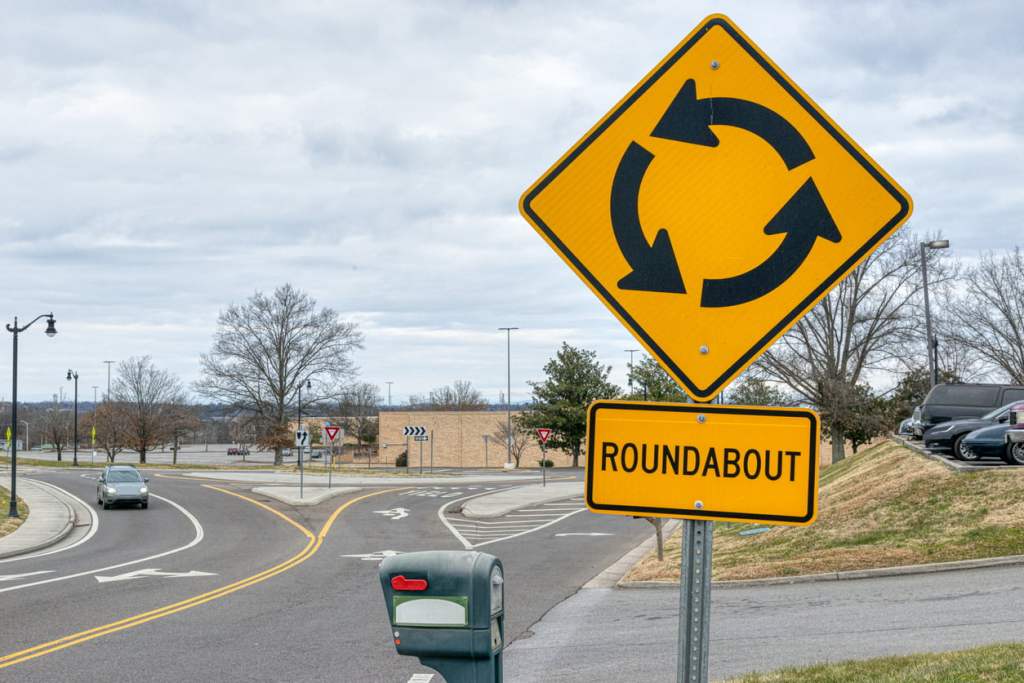
Summer Road Signs Series #3: Watch for Wild Animals

On any road trip you take, you will pass signs warning about wildlife in the area – especially if you are in a rural area. These signs are intended to make you aware of the local wildlife because of the potential dangers you may face if you and your vehicle encounter them. These signs are used to keep you safe – both you and the wildlife. For me, these signs notify me of the possibilities of seeing some of the animals common in that area.

In many areas of Canada the danger comes in the form of deer or moose. Deer are dangerous because they move fast and can come across the road in front of you when you least expect them. I know. I have had an encounter with one that stopped us on the side of the highway and made us wait hours for a tow truck to haul us and our car home in the middle of the night. Moose are dangerous because they are so big. Hitting a moose might not just damage your vehicle but cause you injury as well.

I recently made a trip up to Yellowknife, Northwest Territories. There were many signs alerting us to the possibility of meeting bison on the highway. We did see some. Again, very big animals that would do a lot of damage to a car and its passengers if you were to hit one at highway speed. Majestic animals to watch, but not one you would want to hit.

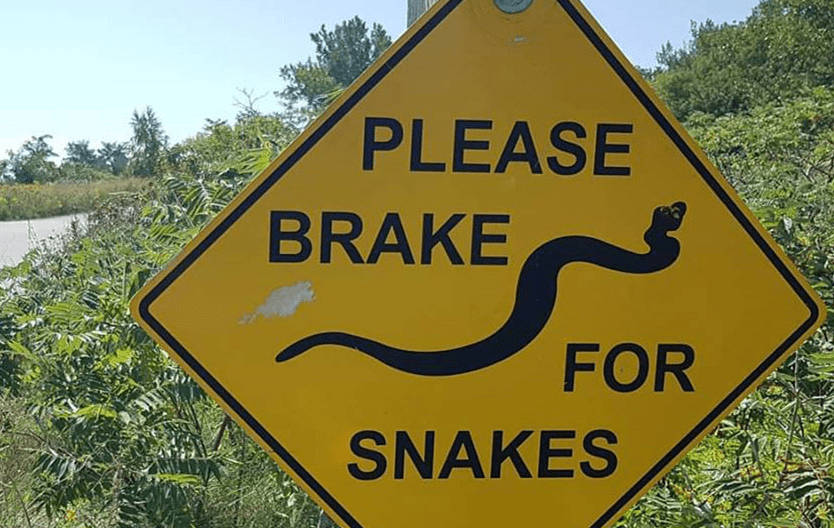
Some signs are more unusual. There are signs near Lethbridge, in southern Alberta, warning of snakes crossing the road. I don’t think there would be much danger to a car if you hit one, but these signs are also to protect the snakes.

Speaking of protecting vulnerable animals, I like the signs that warn of ducks and geese crossing a road. Mama ducks and geese and their babies are very vulnerable. They have nothing to protect themselves with, and they are not very fast. The adults just head across the road and the little ones follow in a neat straight line. I remember recently just barely maneuvering around a mama leading her ducks.

So what might these road signs teach us?

They remind us of how unpredictable things can be. If you come around a corner, or pop over a hill, you have no idea what may be on the road. I have seen moose, elk, deer, antelope, bison, ducks and geese, coyotes, even a cow. I narrowly missed a horse on the road once driving late at night.

Life, and what we encounter, can be quite unpredictable. We don’t know when we may get a health scare. Even healthy people can have heart attacks or fall and break a bone. We often go through life as if we are in full control. We make plans. We dream and strategize. We have expectations. We think that if we work hard, it will all work out. Unless we have been surprised too many times.

Too many encounters with “wildlife” can make us paranoid. We are scared to drive at night, or too nervous to drive the speed limit. Instead of moving ahead with excitement and anticipation, we fear every next move, wondering when the next shoe will drop.

These wildlife warning signs can remind us that we are not in control of all that happens. There are always potential dangers lurking around every corner. But we do not need to be afraid.

We can be reminded that God is in charge. God is sovereign over all things. Nothing happens that God does not orchestrate, or allow. As we place our trust in him, we can move ahead with confidence. Not confident in our efforts or that everything will go exactly as we want, but that it will go exactly as God wants. Our confidence is in God. No matter what happens, he will walk with us. No matter what surprises we encounter in life or in business or as leaders in the church, we can trust that God is in charge, and he will direct our paths.

Trust in the Lord with all your heart
    and lean not on your own understanding;
in all your ways submit to him,
    and he will make your paths straight.

Proverbs 3:5-6 New International Version

Keep looking up,

Andy Wiebe
Summer Road Signs Series – #2: Stop Signs

We began the Summer Road Signs Series with speed signs. Now we’ll go to the opposite: stop signs. While moving forward and heading toward new adventures and new goals is exciting, there are times when we must stop. Eventually we have to take our foot off the gas, apply the brakes, and stop.

Stop signs remind us of a few things. Sometimes we need to stop because we are coming to an intersection, and other traffic may be coming through. If we don’t stop, we may be hit by other traffic. There are times when we need to slow down and stop in life. We have all kinds of distractions and frustrations and even opportunities coming our way all the time.

Sometimes we need to stop to just reset ourselves, to get our bearings. We need to remember to watch out for what is going on around us. Are there dangers we have been ignoring? Are there opportunities we have missed because we have been going forward with such passion and determination, we never recognized them? Slow seasons can give opportunity for us to stop and assess where we have been, where we are, and where we are going.

For ourselves and our families, stopping to spend time reconnecting is valuable. Summer can be busy chauffeuring kids to camp or swimming lessons or tutoring. It can fill up with family gatherings and other expectations. But take time to spend with your family doing very little except being together. Instead of working on another project or chasing another busy thing, slow down and just listen to each other and talk about each other’s dreams and desires, hurts and frustrations. Pause to listen to each other.

In our desire to move ahead, have we left people behind? Do we need to give time for our team to catch up with us? As pastors, we set vision and direction for our churches. Are we giving time for our teams and churches to capture that vision and move with us? As leaders, our jobs include thinking about our goals and our vision all the time, but the reality is that those lead have other things on their minds too. They are not necessarily prioritizing moving towards these goals at the pace we are. A stop sign may remind us to give time for those we lead to catch up.

A stop sign could be at a T-intersection where we need to choose right or left. In our desire to move ahead, there are times we need to stop to figure out our next direction. What’s next? Just blindly choosing a direction in order to keep going may take us in the opposite direction of where we should be heading. Even if you are confronted with two equally good options, the stop will give space to allow you decide which one to take.

A stop sign may also be a reminder to just pause. We all need, in biblical terms, an occasional sabbatical. When God created the world, the seventh day, the final day, was a day of rest. It was a time to recognize that the work that had been done was enough. It’s okay to stop. To rest from busyness and take a break. A sabbatical is a reminder that our worth is not found in what we produce or what we do. When the work stops, you are still loved by God and valued as a person, a child of His.

There is also value in having other “sabbath” times. Taking a vacation can be a sabbath as we stop doing and pursing and producing and enjoy the people around us and take pleasure in the world God has created.

Yes, it is fun to move ahead at full speed, but it is important to recognize the stop signs and take the important breaks that refresh and reorient us for the next part of our journey.

Enjoy the stops signs!

Keep looking up,

Andy Wiebe

P.S. Next week’s road signs: Watch for Wild Animals

Continually Collect More Tools of the Trade

If you have ever worked on a car or built a deck, you know the value of a good tool. With the right tool the work becomes easier and you see better results. The same is true for a pastor. We benefit from having good tools to help us.

Some of you may immediately think of tools like a good commentary or online study tools. These are great and we need those, but I’m thinking more along the lines of the ideas and questions we come across in our reading and study.

Sermon Tools

Over the years I have gathered many questions that I use regularly to help me better dig into the scripture I am preparing to preach. Referring to my pates of collected questions and processes has enhanced my sermon preparation. These are questions like:

  1. What does it say?
  2. What does it not say?
  3. Could it mean what it says?

Sometimes I move through these three questions quickly, other times, if it is a difficult or controversial section of scripture, I tend to slow down and make sure these questions help clarify what God’s Word is truly saying.

One question that I have found helpful to me, especially because I am usually preaching to a congregation of all ages is:

4. “How will this sermon engage with a 12 – year – old boy?”

I want to preach to everyone, but if I can get a pre-teen boy to be engaged, I will most likely I will engage with the rest of the congregation as well.

Here are a sample of a few more questions:

  1. How does this speak to unbelievers?
  2. What is the audience’s thoughts, feelings, emotions, struggles, needs – relating to the big idea of this teaching segment or message?
  3. What are some practical steps the listener can take?

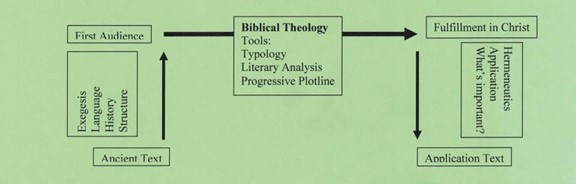
One process I use is a diagram that helps me to move through a scripture passage in a way that moves my study from the text, to historical context, through the Biblical theology, to how it is fulfilled in Christ, and then to how we need to apply the scripture today. Following this process keeps me from taking a shortcut and miss an important step in clearly understanding what the scripture text is saying.

Prayer Tools

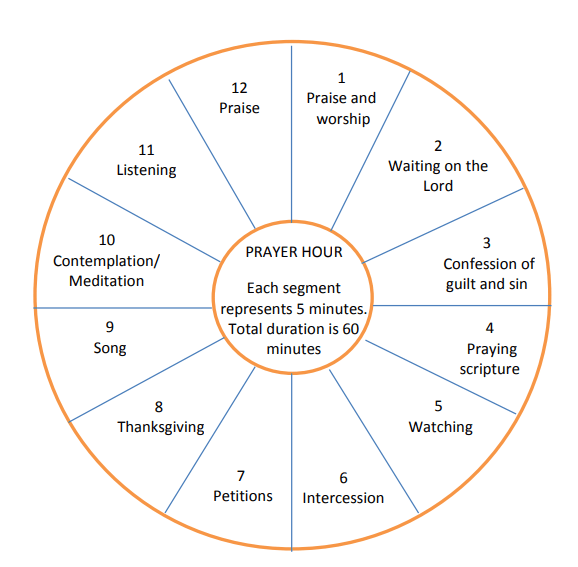
I have come across some great ideas for prayer, whether personal or corporate. In his book, The Hour that Changes the World, Dick Eastman suggests praying for an hour i12 periods of 5 minutes. I try to use this prayer plan about twice a week. The forms of prayer are: 1. Praise and worship 2. Waiting on the Lord 3. Confession 4. Praying scripture 5. Watching 6. Intercession 7. Petitions 8. Thanksgiving 9. Song 10. Meditation 11. Listening 12. Praise

I have used this one-hour prayer plan many times for myself as well as for a prayer group.

Pastoral Tools

One of the “tools” I need to remind myself of occasionally is to “move slowly through the crowd.” It is easy for me to have things on my mind and things to do, but there is benefit of moving slowly through the crowd prior to or after the Sunday morning service because it gives me opportunities to connect with people, or for them to stop me with a question or comment. It helps me to be more present in the moment and available to people.

I don’t know what tools you have gathered over the years that have helped equip you to improve your ministry and leadership, but I hope you have many. I would love to hear from you about the tools that help you. Send me an email to share some of your tools with me.

Keep looking up,

Andy Wiebe

The Privilege of Being a Pastor #3: Making Disciples of Jesus.

One of the unique opportunities of a pastor is to walk with people as they take significant steps in their journey with Jesus. It is humbling to think that God allows me to be part of these times when people are making decisions that will impact their eternity. Let me share a few stories.

I remember a teenage girl who was searching for answers. She came from a difficult home situation and loved the acceptance she was experiencing in the youth group and church. Her friend brought her to me and together we introduced her to Jesus! She knew there was something better than what she was experiencing at home.

One young man had gone through many hard things. You could tell, just by looking at him, that life had been hard on him. I got to know him and tried to help answer his questions until the day that he asked to be baptised. Just as we headed to the washrooms to change for the baptism, he pulled out a cigar and handed it to me. What a fitting gift! He was so excited about what was about to happen and wanted to celebrate it with a gift for me.

I love the excitement of those preparing for baptism. One teenage girl was determined we would have an outdoor baptism in the river near the church even though it was fall already. The special day arrived, and there was already a skiff of snow on the ground, but she was not backing down. We made sure to have plenty of extra towels to wrap up after and went down into the cold river for the baptism. It was one of the quickest baptisms I ever did!

I remember reading the Bible with a new friend. He didn’t know the Bible but wanted to just read it together. This was not a Bible Study or in-depth lesson. We just started by taking turns reading in the Gospels. As we read the stories of Jesus, we stopped when he had a question or clarification was needed, and then kept going. I loved seeing his responses to a story that I was so used to but was brand new for him!

I have preached many sermons in my life. There are many I have forgotten, but others stick in my mind because of how people responded. One Sunday, I preached on receiving the Holy Spirit from the book of Acts. I pointed out that sometimes people had leaders lay their hands on them and pray for them to receive the Holy Spirit. I made it clear that there was nothing special about me, but if there were any who wanted to have me lay hands on them and pray for them, to come on up as I closed. One man actually ran to the front! Then others started coming up. There were so many  people who wanted to receive more of the Holy Spirit, that I had to recruit a couple of elders to lay hands on and pray for people with me. What a joy to see people respond to God’s word!

Working on vision with church leaders is one of the things I get excited about as I serve as a Transitional Pastor. I love seeing leaders begin to hear God together and get a sense of how God is leading their church. I served one church where leaders put in two planning and dreaming sessions of five and six hours each, working together to hear from God on His direction for the church. It was amazing to watch as they listened and heard from God together, coming up with the right words to describe who the church was and where the leaders felt God calling them as a church. The time of prayer and listening and discussing together brought a clear sense of direction that guided the church moving forward. What a privilege to coach the leaders through this process of listening to God.

Walking with people as they make decisions to follow and honour Jesus has given me opportunities to develop some great friendships. One friend and I spent many hours together in the church and serving in the community and just doing life together. It was a joy to eventually baptise him as he said yes to Jesus. Another friend was struggling with a desire to be holy and feeling he was far from it. As we walked through this time together, not only was I able to encourage him to continue to follow Jesus and go deeper with him, I also found a great friend.

I hope these stories show you what a gift it is to walk with people as they make big spiritual decisions and take steps in spiritual growth.

Keep looking up,

Andy Wiebe
Fruitful Leadership #9: Self-control

We conclude our look at fruitful leadership with the fruit of the Spirit called “self-control.” Galatians 5: 22-23 gives us a list of nine fruits that should be evident in every believer. As a Christian leader, these fruits should be portrayed in the leadership of our church or organization.

Self-control is about mastering one’s self, controling one’s self. It could be used to mean self-mastery, or self-restraint.

When someone is overwhelmed and expressing their emotions, whether in anger or in sadness, we might say, “get ahold of yourself.” Someone who does not know how to control their anger may be describes as “flying off the handle.” These phrases describe the need for the person to gain some control over themselves. Self-control is needed when our emotions take over and we act in ways that we would not if our intellect was in charge.

People who give in to addictions are described as lacking self-control. They seem to be controlled by outside forces that make them act in ways that they themselves say they do not want to act. Others may say they just couldn’t control themselves. They are lacking self-control.

It is interesting to find this characteristic in a list of spiritual fruit. Self-control implies that each person needs to take personal responsibility for their actions and master their body. Yet, when we understand the fruit of the Spirit, we recognize that each of these fruits are evident in one who has given up control to God. It is God’s Spirit, working in and through a believer, who enables them to have these spiritual fruits. So, self-control begins by letting go of control of ourselves and handing the reigns of our life over to God.

Self-control is more about giving God control than about willing ourselves to gain the strength to overpower our emotions and desires. Yes, we need self-control in our lives. Good leaders will be self-controlled. But that self-control only becomes stronger as you trust in God more.

Leaders need self-control when in a situation where they are tempted to get angry at a team member or someone they serve. As we ask God to help us gain control over our anger, we trust him to help us.

Leaders need self-control when they are tempted to take shortcuts. These might be ethical shortcuts when a leaders is tempted to do something wrong because it is easier. These shortcuts will damage your integrity. Self-control, under God’s control, will help leaders remember that sinful and harmful shortcuts will only hurt them and their organization in the long run.

Christian leaders need self-control when they attempt to go ahead of God or beyond what God has asked of them. Our ultimate goal as a Christian is to honor and obey God, not to build the biggest organization at the fastest pace or make the most money or grow the largest church. Those things may happen, but we need to check in with God regularly, looking to him for what is next for us and the people we serve. Business solutions may work and may be good, but make sure that you check in with God about his plans for your first.

We need to display self-control as we lead, and with God’s help we can.

Keep looking up,

Andy Wiebe
Fruitful Leadership #4: Patience

This is the fourth blog in a series about leading with the fruit of the Spirit. The fourth fruit listed in Galatians 5: 22 is patience. A few versions use “forbearance” or “longsuffering,” but patience is the word we would most likely use today.

There is an old joke about praying to God, “God, give me patience, and give it to me now.” Patience takes time. Patience is needed when there is an ongoing situation that requires waiting or enduring. No one needs patience for something that happens in the moment.

Patience is the ability to wait, or to continue doing something despite difficulties, or to suffer without complaining or becoming annoyed (Cambridge Dictionary).

So first, to demonstrate a character of patience, we need to learn to wait. As Christians, there are many times where, by faith, we wait for God to act. This is often the case when we have a need we have prayed about for a long period of time, and we trust in God and know that He will act in His timing and according to His will. So we wait. I had to do this for a couple of years. I had concluded my time at a church and was waiting for the next pastoral position to open up for me. And it was not happening. As I sent out resumes and prayed and waited – sometimes very impatiently – I sensed God was telling me to wait because He was setting up a new opportunity for me. Some days I felt very patient, others I did not. It took about three years for me to finally see this new opportunity that God was preparing for me. In the waiting, I kept doing what I could to be faithful and wait. Waiting takes patience. Patience means waiting.

An example of patience is found in the story of Abraham and Sarah. God had promised them a son, yet they had no children. No son was born. They waited for years and years. Abraham was 100 years old when Sarah finally gave birth to the son God had promised. Patience takes time.

Patience is also visible in a person when they are continuing to persevere despite difficulties. There are times when we, as Christian leaders, believe God is calling us to move the church or organization in a certain direction and not everyone agrees. Patience may mean continuing to push ahead slowly and steadily even though there is opposition. A Christian leader may see the need to be patient as they look to pursue a vision God has given them, yet they do not see it becoming a reality yet. Patience is pushing ahead even when facing opposition.

There are times when Christian leaders see the frustrating situations around them and would much rather complain and show their annoyance, yet as we allow the Spirit to encourage us, we can respond in a joyful and peaceful manner. Combining joy and peace with the act of patience will make the waiting experience more enjoyable.

Patience is called a fruit of the Spirit. This means we will produce this fruit more naturally if we continue to depend on the Holy Spirit than if we think it depends on our determination alone. We can bring all our concerns to God in prayer, and then depend on Him to give us patience when we would rather give up or respond with criticism and frustration.

May God give you patience as you continue to trust in Him.

Keep looking up,

Andy Wiebe

Fruitful Leadership #2: Joy

Would you include the word joy in your description of your workplace, or to define your leadership? In Galatians 5: 22 -23 we read a list of nine fruits of the Spirit. These are characteristics that should be evident in anyone who is a follower of Jesus. In this second post on fruitful leadership we will focus on how joy can be evident in your leadership.

Joy. Somehow the word just makes me smile. It elicits happiness even in those three letters. Its funny how a smile on your face can take a load off your shoulders. Just try it. Smile. Doesn’t that simple act make you feel a little happier already?

Joy is not often a word used to describe one’s workplace. More common would be words like boring or duty or frustration or feeling useless. 

Joy is defined in the Miriam Webster dictionary as “the emotion evoked by well-being, success, or good fortune or by the prospect of possessing what one desires.” It is about delight. Maybe that is why joy is not often present in a workplace because we always want more. We do not often possess our desires or even accomplish the goals of the company. There is always a push for more. It is more common to experience a sense of frustration than joy because there is always another goal to push for. As a leader, we can get so caught up in climbing that next hill that we don’t take time to enjoy the accomplishments of today.

Now, if we want to be a Christian leader who is radiating the Holy Spirit’s fruit, our joy cannot be dependent on our accomplishments or about having everything we desire. Our joy has to come from our relationship with Jesus and the experience of His Spirit in our lives. Our joy is then not based on our work and the level of success we experience but in our relationship with Jesus. Being in a state of is not dependent on outside influences or accomplishments but primarily on the fact that we have a God who loves us and cares for us. Our joy comes from knowing that we are in God’s hands, and He will look after us whether business is going well or not.

When I first became a pastor, I was told by a few people that I looked mad all the time. I did not realize this. It may have been my nervousness or my determination to focus and do a good job, but my expression on my face communicated that I was mad. I think I am smiling more. I have not had that comment for many years, and I am glad. Yet we do need to realize that people read our expressions and make assumptions. As leaders, we need to be aware of what we communicate – intentionally and unintentionally – and how this reflects the fruit of the Spirit.

For a two-year period, I worked at a job I did not love. I dreaded going to work every day. So, I began praying that God would give me joy at work. A few days later, as I was busy loading deliveries onto my truck, I suddenly paused. I had been whistling as I was moving pallets around! God was giving me a joy that I was not finding in my work. I was feeling lighter and not carrying the weight of the world on my shoulders. It may be that we need to pray diligently that the Holy Spirit would fill us with His joy so that we can produce the fruit of joy as we lead people.

Joy in the workplace lifts people’s spirits. As leaders, we have a large role to play in creating the atmosphere in which work takes place. Let’s make sure that we are doing all we can to contribute to a joy-filled environment.

Keep looking up,

Andy Wiebe

A Good Team Produces Good Work

Two are better than one,
    because they have a good return for their labor:
 If either of them falls down,
    one can help the other up.
But pity anyone who falls
    and has no one to help them up.

Ecclesiastes 4: 9-10

As a pastor, much of my work is a solitary effort. I work on my sermon on my own. While I consult resources such as commentaries and word studies, I am responsible for creating the sermon myself. When I teach a Sunday School class, I generally work on it on my own. I am co-teaching a class on Acts right now. Though we spend some time discussing the scriptures together, we take turns preparing the lessons on our own. When I teach and lead, I build on all I have read and seminars I have attended, learning from the authors and presenters. Yet much of my job as a pastor I do on my own.

This last week I was reminded of the value of working with a team. Our church is in the middle of a Three-Week Prayer Focus. We will conclude with a Solemn Assembly on a Saturday, a Prayer Vigil where people will sign up to pray for an hour or more through the night, and then a Celebration Service on the Sunday morning. This has become a much better event than I first envisioned because others have helped think through how to make it the best event it can be.

When I presented the idea to the chairman of the church board, he instantly saw my vision and began to dream with me as to what we should plan and how to roll it out to the congregation. As we, together, dreamed about how the event might work for our church, we got more and more excited. We could see how to invite people to participate and even how to get them to step into some new experiences of prayer in the process. I had not thought of a prayer vigil through the night, but he suggested it.

This chairman suggested we shoot a promo video with interviews of people from our congregation telling us what they thought of prayer. He knew of someone who could create the video. He asked someone to round up people to participate, and several people did, resulting in a very effective promotional video.

He suggested that we make some promotional posters. Again, he knew of someone who would do a good job with this. Now we have some great posters for the event, and even a prayer guide for the event that people are now using to guide their prayer times. Other board members were willing to sign up to help coordinate and lead the prayer vigil. They have also volunteered to make announcements and lead group prayer times.

If I had only depended on my own dreams and skills, we would still have had an event, but it would not have become the great experience it now is. I needed the Board Chair, the other board members, the promotional materials designer, and video producer to make the event that much better.

We need others to team up with if we want to do a good job on many things. Inviting others into the process makes it better because we get to dream with others and bounce ideas off each other that make the result that much better. Working together ensures no one is left carrying the load, and everyone can use their skills and abilities to expand the capabilities of the leader. Sharing the work with others prevents your project from being a lonely experience; instead, the process becomes a shared collaboration with others who have the same convictions and ideas.

I hope you have a good team around you. If not, then I pray that God will help you to find the right people to join your team.

Keep looking up,

Andy Wiebe

Book Reviews: Andy’s 2024 Reading Experience

I will be sharing a brief review of every book I read this year. Hope you enjoy and hope it encourages you to keep reading.


GO: Returning Discipleship to the Front Lines of Faith – by Preston Sprinkle

As Preston Sprinkle’s books usually do, this one also pushes the boundaries of what believers are comfortable with and used to.  He does a great job of biblically suggesting there is more to discipleship than just teaching and more to church than just Sunday morning worship. He points out that discipleship is about living out a relationship with Christ, and living it out in real and practical ways as we connect with others in our world. Chapter 9 is worth the cost of the whole book as he challenges believers to consider how much of our efforts and money is wrapped up in putting on nice Sunday services instead of helping people with their real needs. A challenging and encouraging read!

Looking Ahead With Clarity Part 3: Where We Want To Be

This is the final of a three part series on looking ahead with clarity. Part 1 was about recognizing where we have come from. I discussed the value of reflecting on how God had used us in the past and what God has been teaching us that may give us a sense of what is next for us. In Part 2 we looked at assessing our present reality, where we are, and now in Part 3 we will discuss where we are going.

Knowing where we have been and where we are helps us identify a solid starting point from which to begin moving forward. Now we need to clarify where we are going. What is the goal we are shooting for? When that is clear, we can set appropriate steps to get us there.

There are two kinds of goals: achievement goals and habit goals. Achievement goals are goals we work towards to accomplish at some point down the road. Examples could be losing 20 pounds or running a marathon. These are specific points we can look forward to and measure clearly when accomplished. Habit goals are goals we want to work on regularly. A habit goal for me is to read my Bible every day. Habit goals can help us accomplish achievement goals. My daily reading goals help me work toward reading the whole Bible in a year, an achievement goal.

Goals help us determine where we wish to be. There is a 2005 Fountain Tire commercial where a man is buckling himself into his seat on a plane, excited to be going to Hawaii, only to find out he used the wrong gate and got on the wrong airplane. “Ok, goin’ to Winnipeg,” he declares to himself. We need to be clear on our goal and then figure out the right steps that will get us to that goal. If we don’t, we may find ourselves “going to Winnipeg” when we were geared up for a holiday in Hawaii.

While goals give us a point to work toward, it is the steps we take along the way that make a difference to where we end up.

Goals without an appropriate plan to achieve those goals are only wishes. When we create a plan with clear steps to take, we are better able to move toward the goals we have set.

Let’s work through an example. If I want to read the Bible in a year, I can break the goal down into smaller steps:

First, I need to determine which Bible I will read from. I like to choose a version I have not usually read, just to change things up a bit.

Second, I need to decide how much I will read every day. This is made simpler by all the reading options available to purchase or download online.

Third, I need to decide when I will read. Personally, I like to read first thing in the morning, right after my shower. This helps me be awake as I read, and is a perfect time to focus uninterrupted as I’m usually up before my family.

Fourth, I need to decide what I will do if I miss a day. Sometimes I miss a day. I have decided to catch up the next time I read. I do not want to skip any parts and I don’t want to fall too far behind. And I will track my progress by following a Bible laid out in daily readings, keeping a bookmark in place to remind me where I left off.

Whatever goal we are working towards, we can set achievable goals that keep moving us forward. We can develop a plan that gives us small enough steps to achieve in the short term but big enough steps that lead us to the goal.

We need to know where we are going and then make a clear plan to get there.

In part one of this series we looked back to see where we have been and if God has been leading us or preparing us in a certain direction. In part two we looked at how to get clarity on our present reality and so we have a clear starting point to move forward from. Now as we set clear goals and steps to get there, we will be moving ahead with a clear plan.

May God help you accomplish the plans He has given you.

Keep looking up,

Andy Wiebe