Church Leadership Series – Part 1: An Honourable Position

Introduction To Series:

There are many leaders in the church, from volunteers to paid staff to elders and pastors. While the Bible seems to speak most directly to elders and pastors in Timothy and Titus, Paul speaks to anyone who is in leadership in the church and in Christian ministry as a whole. I believe it is valuable to explore what the Bibl3 says about church leadership and these various roles, and want to give good time and space to do so. As such, this is the first post of a series on this subject.

An Honourable Position

You may have heard the perspective that no one should be too quick to jump into a leadership position at church. They say things like: “If you were reluctant to become a pastor, that is better than someone who has desired it for a long time.” They seem to think that it is a good display of humility to drag our feet a little in becoming a pastor. Yet when we look at 1 Timothy 3: 1 we read, “If someone aspires to be a church leader, he desires an honourable position.” Not only is it an honourable or noble role in the church, it is honourable to desire to fulfill that role.

Church leadership is a position of great responsibility and great privilege.

Some translations of scripture describe the position referred to above as “overseer” or “bishop.” This person takes on a role of leading people in a certain direction. Paul is an example of this when he writes  “And you should imitate me, just as I imitate Christ.” (1 Corinthians 11: 1). While a church leader might teach a class or lead a program, a large part of their leadership is leading by example. People who spend time with a church leader will likely become a little like the leader they follow.

There are many different aspects of the leader’s role, but I specifically want to remind us that it is a role that is an honourable position because it helps point others to Christ and a relationship with Him. The honourable part is that the leader has chosen to move past being a disciple to being a disciple-maker. They are now pouring into others in the same way that others have given to their spiritual growth.

In the Old Testament, prophets spoke God’s words to the people and priests went before God on behalf of the people. While church leaders today do not fulfill those specific roles, leaders do have the honourable position of speaking God’s words to those they lead and to bring those who follow before God in prayer. In a small way, a church leader acts like a bridge between God and His people, introducing them to Jesus Christ, the one “true bridge” who made it possible to have a relationship with God in the first place. This is the great privilege of leadership, that we get to help others grow in their relationship with God through a growing faith in Jesus Christ!

How is it an honourable pursuit?

To desire to be a leader, specifically a church leader, is to desire to help others to grow. What better pursuit is there than to help people grow in their faith in God and their relationship with Jesus Christ? We should long for many more individuals to step into church leadership, as both volunteers and paid full-time servants. We should pray for others in our own churches and Christian circles to recognize God’s call on their lives and step up to what that call may be. It is important to recognize that not every leader is called to lead in the church – godly leaders are needed in the business or political world as well, but it is an honourable position to pursue in the church.

As leaders who are already serving and leading, we need to look for ways to continually invite others into this honourable position. Let’s give others opportunities to try to learn and grow as leaders. And let’s thank God for how He chooses to use church leaders to impact so many others for Christ.

Keep looking up,

Andy Wiebe

Allowing The Bible To Guide Our Leadership

Many issues arise in our world today because of our search for the answer to the question: What is the truth? Theological issues may come about when we search for answers in teachings we have not heard before. Political issues can begin when we as Christians question what our place is in politics or responding to decisions our governments make. Moral and lifestyle issues are often found when the church is unsure how to respond to what is becoming acceptable in the world around us and even in the church that has historically not been accepted. What is the truth?

While there are many today who pretend we can have different truths to guide us, truth doesn’t work that way. If I am driving down the highway and decide that my truth is that I am in England so I will drive on the left-hand side of the yellow line, my truth will be quickly confronted by another truth when the traffic in that lane comes hurtling towards me. That is a silly simple example, but the fact is, what we believe about things makes a difference, and impacts our relationship with others. Truth, as God has laid it out, affects all of us.

As people of God, and as leaders of churches, we need to recognize that our answers need to be found in God’s Word. His Truth must be upheld in our churches. I do understand that sometimes we need to do some work to determine how God’s truth impacts the questions we face. But our answers should be informed by God’s Word – the Bible.

How might we find answers in the Bible?

Read the Bible.

The first priority to actually read the Bible. Read it regularly and search it for answers to your questions.

As you read, ask God, through the Holy Spirit, to give you correct understanding of what you are reading. We recognize that the Bible is more than a story book, though it contains many stories. Whether we are reading biblical stories, or a teaching section, or even some of the poetic books like Psalms and Proverbs, we want God to help us understand what the truth is and how it applies to my life and to the church where I serve as a leader.

Consult with others on difficult passages or topics.

We are blessed to have the results of many experts at our fingertips. We can find commentaries where others have worked through scripture and give their expert opinions. We can make use of tools that help with word studies and guide us through some of the definitions of the original language. We can read books by people who are struggling through some of the same questions we are. We cannot interpret scripture completely on our own, there is importance in reading scripture in community. Whether we agree or disagree, there is benefit in seeing how others have processed biblical truth in light of this topic. I’m presently reading a great book on how to respond biblically to those living a gay lifestyle. There are many other topics that others have been able to work through in more detail than we have so we can learn from them. Just make sure their teaching is arrived at by careful study of scripture.

And one of the simplest ways to consult others is to have conversations with others in your church as you work through scripture to find the answers you need. Find some other believers and read the Bible together. Work through scripture as a leadership team and ask God to guide you to the correct understanding and application.

Do what it says.

The hardest part of allowing the Bible to guide our leadership, is to then do something about what it says. If it means leadership needs to confront false teachers or people living contrary to truth in your church, then do it. If it means changing policies on how volunteers are screened, then change the policies. If it means teaching the church what it means to live out truth and love in light of Gods Word, then teach your church that.

If we are going to allow the Bible a prominent role in church leadership, then we need to make sure we read it regularly. We need to do the work of understanding it clearly, and then we need to follow through on what God is asking us to do as a result.

If we are Christian leaders, whether in the church or elsewhere, our leadership must be informed by the truth of God’s Word.

Keep looking up,

Andy Wiebe

Elements of A Spiritual Checkup

I visited the dentist this week for what most people would call a regular checkup and teeth cleaning. Though since it had been seven years since my last checkup, it was not very “regular”. But as I was sitting in the chair, I began counting how many people were involved in my checkup. There was someone at the front desk, another taking my forms, someone doing the x-rays of my teeth, someone else to clean my teeth, and one or two others supervising. And that was all before I even saw the dentist! And then after, someone else fitted my teeth for a guard.  Each person had a specific role to play in making sure I received a full checkup and a thorough cleaning, and proper advice for caring for my teeth.

As I was lying in the chair, I began thinking of how this might compare to a thorough spiritual checkup. I would venture to say that we don’t take our spiritual checkups as seriously as this dentist and his team. Yes, many of us regularly read the scriptures and pray. We attend church regularly, and even examine our hearts before receiving communion, but might we benefit from more. If we were to have a thorough spiritual checkup, what might it look like? And would we be better served by having someone else walk us through it, or could we do an accurate enough checkup on our own?

Determing the present reality.

I don’t know if we need five of six specialized individuals to guide us, but we would benefit from a similar experience spiritually. We could have a trusted friend or a counselor or pastor walk through this process with us, or we could try it on our own. We could begin by looking at our spiritual condition.

Take inventory of reality. What does your spiritual life look like right now? In the same way a dental checkup begins with x-rays to identify the current situation, checking our spiritual life should start with an initial evaluation of what the situation is. Do we need some x-rays of our soul? With the psalmist we could ask God to examine us:

Search me, O God, and know my heart;

    test me and know my anxious thoughts.

Point out anything in me that offends you,

    and lead me along the path of everlasting life. (Psalm 139:23-24)

It’s rare that we can accurately identify our own state (otherwise, why would I need the x-ray in the first place?), so it can help to ask others in our lives who know us well. We could ask the people around us  what areas in our spiritual lives they see us perhaps needing improvement?

Ask God to guide the process of taking serious inventory of your spiritual condition.

A thorough cleaning.

Though I brush my teeth (probably not as often as I should), I still benefit from a professional to do a cleaning. In the same way, I can’t do a thorough cleaning of my own soul on my own. Instead, ask God to do a thorough cleaning of your soul. The initial evaluation shows you habits you need to remove, or sins you need to confess. Next, ask God to forgive. Wash me clean from my guilt. Purify me from my sin. (Psalm 51: 2)

After the regular cleaning, where God purifies your soul again and again, you can celebrate: our guilty consciences have been sprinkled with Christ’s blood to make us clean, and our bodies have been washed with pure water. (Hebrews 10: 22)

Maintaining spiritual health.

The dentist pointed out where some issues were occurring in my teeth and suggested some methods of caring for my teeth. He also suggested a teeth guard to wear at night. Going to the dentist isn’t very helpful if I stop caring for my teeth once I leave the clinic. In the same way, after reviewing your spiritual health and asking God to forgive those sins you have allowed to creep in, don’t continue in those old ways.

Instead, consider: what are some things I will do differently going forward, to protect my spiritual condition and even to make it better? This might be recommitting to reading the Bible regularly, maybe choosing a plan to follow. It might include reading books to help you grow. Decide what will help you be more spiritually healthy as you go on with life.

While there could be many more elements of a spiritual checkup, these are the key ones. If you aren’t sure how to start, you might want to talk to a pastor or work through this with a trusted friend.

May you be spiritually renewed going forward.

Keep looking up,

Andy Wiebe

Book Reviews: Andy’s 2023 Reading Experience

I will be sharing a brief review of every book I read this year. Hope you enjoy and hope it encourages you to keep reading.


UNSTUCK: A Nine-Step Journey to Change that Lasts – by Tim Lane

Tim Lane walks through a 9-step process to deal with lasting personal change. If there is an issue or a habit you are dealing with and would like to change, he believes his 9 steps will help you work your way through and overcome. He uses some examples from his own life and people he has helped to show how to work the process. If you are looking to make personal change, check out this book.

The Privilege of Dreaming

I like to help people to discover what God is asking of them and how they can do it. We have the privilege of dreaming today, maybe much more so than the average person a few centuries ago. Life has become so much easier for many of us and we don’t often consider how people used to work hard from dawn to dusk just to put food on the table and keep a roof over their family. Today, many of us have the privilege of time for entertainment, and time to get bored, but we also have time to dream. We have time and energy to dream about what we could do with our lives.

As someone who has put my faith in God, my starting point for dreaming is God and His desires for me.  While a bucket list of things we might like to do or see or experience is fun, I find it gives me greater purpose in my life to know that I am responsible to God and He knows best for my life. As a child of God, I can trust that my Father knows best.

What a privilege –  to dream about what could be.

When students graduate from high school, well-meaning parents and teachers tell them a lie. “You can be anything you want to be.” That is absolutely not true. Yes, you can dream big and pursue many different options, but we all have certain limitations. If you can’t carry a tune you will not be a backup singer for Taylor Swift. If you have poor eyesight, you will not be flying fighter jets. There are many things that limit our ability to choose to do anything we want. But if you are listening to God, you can do anything that God wants you to do. When we reorient ourselves to the will of God, He opens the doors to possibilities that we may not have imagined.

I have seen God give me opportunities that I never expected. He has opened doors I would never have tried to open. As Ephesians 3:20 says, I have experienced God doing more than I can ask or imagine. For example, I have gone on trips that I would never have thought possible, and serve rural churches and pastors beyond my local church.

We have the privilege of asking God for His dreams, so when we dream, our imagination is guided and informed by God Himself. Now our dreams flow from a heart surrendered to Him rather than focused on us and what we can do or experience.

In the Bible, the letter from James warns about dreaming and planning for tomorrow. In James 4:15 we are cautioned, “Instead, you ought to say, ‘If it is the Lord’s will, we will live or do this or that.’” Our dreams should be God-given dreams where we listen for the Lord’s will and then work toward fulfilling it.

I believe that we need to look forward with hope and excitement. We need to see that God has put opportunities in our path. He has called us to certain responsibilities and wants to help us do our best with them.

Right now, God has called me to serve as a Transition Pastor, serving different churches for about a year or so, helping them to be as healthy as possible as they prepare to welcome their next full-time lead pastor. I believe God gave me this dream even before I knew exactly what it looked like. I believed I was to help churches, so I started taking some courses and reading books on coaching and consulting with churches. As I was doing that, God opened doors for my first Transitional Pastor position. As God gave me a dream, He opened doors to fulfill that dream.

Rather than focusing on our own hopes and desires, I believe that we need to ask God to direct our dreams and give each of us a vision for the future. We need to pray and ask God to speak to us and help us to hear clearly as we choose what to focus our life on.

In my experience, dreaming God-given dreams is not static, but ongoing as I continually come back to what God wants. Over the years He has adjusted the dreams for me and redirected me to other opportunities that I had not anticipated.

Keep on dreaming. Keep on listening to the voice of God. Keep on obeying and pursuing His dreams for you.

Keep looking up,

Andy Wiebe

Book Reviews: Andy’s 2023 Reading Experience

I will be sharing a brief review of every book I read this year. Hope you enjoy and hope it encourages you to keep reading.


7 FRIENDSHIPS EVERY MAN NEEDS – by Justin Erickson

Erickson suggests that every man needs these 7 friends in their life to live a full life. Here are his seven friends: a mentor to disciple you, a Peter to encourage you, a best friend to uphold you, a courageous brother to confront you, a faithful disciple to follow you, a lost seeker to hear you, and a gracious Savior to befriend you. He presents some well though out chapters on the value of each one, comparing them to the value of a pit crew to a Nascar driver. While I do agree that most of us men could use more friends, I think it is highly unlikely that any man will have seven solid friendships in their life at the same time. Some of those roles may be played by the same person, or at times we may have a friend in a certain role for a season, yet his premise holds true: Men need to find more good friends to walk through life with.

The Inadequate Leader

If anyone is following you, then you are a leader.

Some of us are natural leaders. Our personality and character attracted others who willingly followed us even as a child.

Some of us are reluctant leaders. We have been pushed into positions that we were not looking for. Maybe we were just a little more qualified than others, or the only one who said yes. But all of us are “inadequate leaders”.

Inadequate leaders are those who recognize that they don’t have all the answers, or all the skills needed for their position.

Many leaders lack experience. You only get experience by doing something. That means there is always a first time, a time when you have no experience, but you lead anyway. You may have experience in similar situations or in a similar role with less responsibility, but all of us at some point will be moving beyond the experience we have. If you never get to that place, then you are never growing as a leader. Maybe you are okay with that, but you still had to do something for the first time to even get to the level you are at.

If you lack experience, that means you may be inadequate for the task. So, what can you do? If you are an analytical person, you can try to come up with a perfect way to move even if you haven’t been in that situation before. You could ask for advice from others who have experience where you are lacking. Invite them to speak into your situation, and even though their experience isn’t yours, find some ideas to try in your own case. Gather your team and invite them to collaborate with you to find the right way ahead, and build on the experience you – and those around you – already have.

What if you realize you don’t have the skills you need to lead? Not only do you not have the experience to lead in this situation, you also lack the skills needed. There may be some ways to learn and develop those skills. Education is always an option. Find a seminar or a book or a class that will train you in this new skill. Again, as in the situation of lacking experience, invite someone who has the skills to train you. Ask for time with them to talk through how the skill works and spend time observing and learning from their example. Another option may be to bring in someone on a short-term contract or invite someone to join your team who can fill in the areas you lack. There may be times you step away from a situation to allow someone more suited to lead.

You may feel like an inadequate leader because you are responsible for more than you can accomplish in the time you have. First, make sure you are not carrying responsibilities that are not yours and hand them off to the appropriate people on your team. Second, find someone to work with you. May leaders have strong assistants who may be good leaders in their own right, but who love supporting you in your leadership role. You need someone who will respond to delegation, and who gets to know you well enough to do things the way you would if you had the time.

Sometimes we feel inadequate because of what people say to us or about us. There are times to listen to others and times to recognize if they are an authority in your life or not. No one can please everyone all the time. Be clear on what your role is, your job description, the vision you are pursuing, and don’t be distracted by those who want to speak into your life but truly have no right to.

Every leader will feel inadequate at times. If not, then you are no longer growing, and if you are no longer growing, you are quite possibly falling behind. Others will come along who will bypass your leadership because they are continuing to grow and learn and develop. While we cheer on those who are excelling next to us, we want to continue to be the best that we can be. The value of recognizing when and where we are inadequate is that we recognize where we need to grow to continue to lead well.

If you are an inadequate leader, that’s okay. Just look for ways to grow.

Keep looking up,

Andy Wiebe
Book Reviews: Andy’s 2023 Reading Experience

I will be sharing a brief review of every book I read this year. Hope you enjoy and hope it encourages you to keep reading.


GETTING NAKED – by Patrick Lencioni

Getting Naked: a Business Fable, by Patrick Lencioni is exactly that. It is a well written story of a businessman sent to check out a smaller company that has just been acquired by the company he works for. He expects that, because it is a small company, it will not have anything to teach him. He is surprised by the things he discovers. He learns that they have a much better way of handling clients and doing their work than what he is used to. Lencioni concludes the book with a few key points that are already clearly shown at work in the story. A great book on how to benefit from being vulnerable in business.

7 Steps to Becoming a Disciplined Leader

Last week I wrote about what it is like to be a disciplined leader. Today I want to continue focusing on that topic by showing how you can develop that discipline in your own life.

Step One: Determine where you lack discipline.

Know your strengths and your weaknesses. If you have no problem showing up to work on time, count that as a strength. If you are always struggling to meet deadlines, that is a weakness. Choose only one or two weaknesses to work on at a time. If you are really brave, you may ask a colleague what some of your weaknesses as a leader are and work on those.

Step Two: Clarify your motivation.

As you consider the weakness you want to work on, what is your motivation? Why do you want to become more disciplined in this area? Is because someone else told you improvement was necessary? Or do you recognize the value discipline could bring to this area? If you are struggling to meet deadlines, your motivation for more discipline may be to have less anxiety or to have time to do a review of the project before the deadline so you do better work. Make sure you are convinced this is an are where you actually want to improve. Then your possibility for success will increase greatly.

Step Three: Sort out the problem.

Why is this an area of weakness? For example, why are you not meeting your deadlines? Are you procrastinating and putting in little effort until just before the deadline? Is it because of an inability to accurately estimate the the amount of time it will take you to work on the project? Once you figure out what the problem is then you can develop steps to improve.

Step Four: Develop a plan.

Let’s say you struggle to meet your deadline because you procrastinate. Develop a plan that gets you working on the project as soon as you take it on. Work back from the deadline and establish your own deadlines. You could also create your own deadline a week before it’s needed to give you time to review it. When reviewing your deadline, you can also break the job into smaller steps and set personal deadlines along the way that get you working on it sooner and keeps you going. These dates can lead up to your personal deadline and help you stay on track.

Another strategy is to actively develop better habits and create rituals that keep you on task. This could be creating more shorter deadlines for smaller parts of your projects. Maybe it could be working on your task first thing in the morning and checking emails or engaging in other tasks only at noon or at the end of the day.

Step Five: Remove distractions or temptations.

Why are you procrastinating? Are you always on you phone? Are you taking too many coffee breaks or constantly chatting with co-workers? Maybe set an alarm on your phone that reminds you to get back to work after a coffee break. Or leave your phone in your coat. Don’t check personal emails at work. Turn off notifications on your phone that continually remind you to check I through the day. Sometimes, it may be beneficial to close the door and pull the blinds so that you are not distracted by others who are walking by your office or chatting with each other. Find ways to remove distractions.

Step Six: Find an accountability partner, coach or mentor.

It helps to know that someone will be checking in on you. Ask someone on your team to check in with you occasionally to see how you are coming along. If you are the one in charge, maybe you have a secretary or personal assistant who can check in and remind you of deadlines you have set. Or hire a coach to check in with regularly.

Step Seven: Just keep on keeping on.

One who wants to learn discipline will continue to push through an try again and again even if they fail occasionally. Keep reminding yourself of your goals. And as you make progress, remind yourself of how far you have come. Did you meet that last deadline? Then celebrate it. If not, then figure out if some adjustment is needed and get back to the next task at hand. Don’t get down on yourself if you fall short. Forgive yourself and recommit to the plan.

Becoming a disciplined leader takes hard work, but you can do it as you work on one or two weaknesses at a time. As you do, you will become the disciplined leader you want to be.

Keep looking up,

Andy Wiebe

Book Reviews: Andy’s 2023 Reading Experience

I will be sharing a brief review of every book I read this year. Hope you enjoy and hope it encourages you to keep reading.


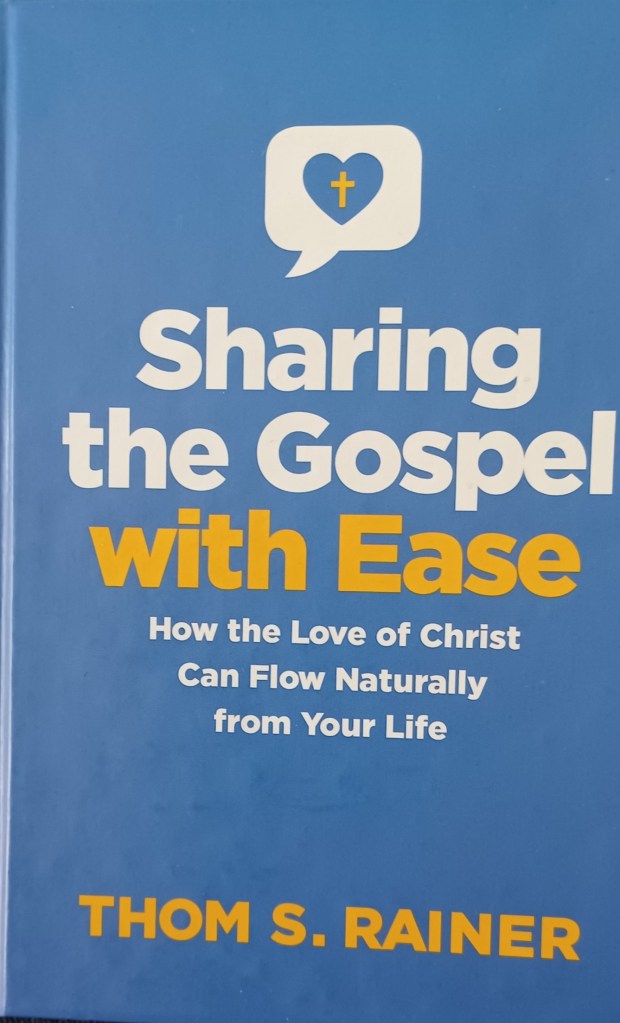
SHARING THE GOSPEL WITH EASE: How the love of Christ can flow naturally from your life – by Thom Rainer

In Sharing the Gospel with Ease, Thom Rainer explains how sharing the gospel should be a natural experience for a follower of Christ. He reminds us of our calling in the Great Commission from Matthew 28 and our encouragement and empowerment in Acts 1. Thom points out that many of us use excuses for not sharing the gospel. We complain about having no time. But the average Christian is also apathetic about the gospel. We say that we realize unbelievers will miss out on heaven and end up in hell, but we don’t seem to care enough to do it. Thom Rainer encourages us to allow it to be a natural part of our life. And to pray that God would guide us and open doors for us to share. A good little book.