Develop the Leadership Character of Discipline

Discipline is something you develop in yourself by deliberate and consistent decisions. It is not something a person automatically has but is a characteristic that must be learned and developed. Discipline is what helps maintain what is good in life and build on it to improve even more. It is developed by regularly choosing to make the necessary decisions and take the correct actions. A disciplined person may live by a rule or system of rules governing their conduct or activity. As you live by these good choices, you become a disciplined person.

A disciplined leader gets more done.

Many people put in the expected hours at work. Some get much more done in those hours than others. One reason is that the disciplined person knows how to keep breaks short and focus back on the task at hand.

A disciplined person starts on time, but also ends on time. Whether it is the start of your day or running a meeting, a disciplined person is prepared, ready to start when it is time, and focused enough to accomplish what is needed in the necessary time.

A disciplined leader develops good habits.

Self-discipline is the ability to control your behavior in a way that leads you to be more productive or have better habits. Systems or rituals can help you organize the activities you regularly do into an orderly fashion that eliminates time spent deciding what to do next or how to do it. These rituals can be as simple as cleaning off your desk before going home at night so it is not cluttered when you return in the morning. A ritual could include taking 10 minutes to plan the next day so you are ready when you arrive in the office the next day.

Systems are the habits that are packaged together, like a series of procedures.  An example may be a system for tracking meeting decisions and action items. This might include transferring all dates discussed in the meeting onto their calendar, and adding your responsibilities to your to-do list, and adding time to work on these items to your daily schedule. In this way, within minutes of your meeting, you have all the pertinent information on the right calendars and to -do lists.

A disciplined leader excels at self-management.

A disciplined person is a self-starter. They don’t need someone else to regularly check in to remind them of the next job to do. They know how to determine what needs to be done and what can wait. They know where to go to get answers or expertise they don’t have. A disciplined person sets their own direction for the day rather than waiting for the supervisor to give them their jobs. A disciplined leader manages their time in such a way that everything gets done and they still have time to dream and plan for the future.

A disciplined leader keeps going when things get tough.

Being a leader is not always easy. Pushback can come from many angles, including some of your own staff or even those you serve. Financial issues can become a big concern when money isn’t coming in as expected. A time crunch can also be tough, when the amount that needs to be done seems to be greater than the time available. Things can get tough too, when a leader feel like they are leading beyond their limits. In all the different ways that things can get tough, the disciplined leader will never give up. They will push through. They may arrange for deadline extensions or make some financial adjustments. They may get outside help, whether personal coaching, or more staff, to push ahead when they feel they are in new territory and unsure how to proceed.

Discipline is a valuable characteristic of anybody, but especially a leader. This characteristic will help a leader get through many situations when an undisciplined person may give up or just panic and do a poor job. Work at becoming a disciplined leader, one good decision, one good habit, after another. If you want to lead well, develop the character of discipline.

If you are looking to become more disciplined, checkout next week’s post on how to develop discipline as a leader.

Keep looking up,

Andy Wiebe

Is Living Longer Really the Goal?

At a recent family gathering I was joking with my family that I expected to live longer than 100 years old. Why not? From organizations to businesses to human life, mankind always looks for ways to prolong what is good. We celebrate 100 years of farms owned by the same family. We celebrate people who live to 100 years of age, and often ask these individuals what their answer is to long life.

The life expectancy for Canada in 2023 is 82.96 years. If you break it down between males and females, life expectancy for men I around 80 years while female life expectancy is around 84 years. Most people love to point out that this number is slowly climbing. We are making progress, we think, by keeping people healthier longer. Scientific studies have been done to determine how to help people live longer.

People have attempted all kinds of things to prolong their life. Some have used magic potions, others have chosen to drink mercury, or played around with DNA manipulation. One pope from the 1400’s asked three young boys to give him their blood. According to the story, all four of them died as a result of this blood transfusion and attempt to lengthen one man’s life.

Is living longer the goal? Is long life the best thing we can hope for or dream of?

What all these people who have dedicated their lives to living longer don’t understand is that longer life is not the goal. Living again is the goal!

We just celebrated Easter. Easter is the celebration of resurrection – life again – specifically the resurrection of Jesus Christ. We celebrate this resurrection because the Bible clearly states that all who put their faith in Him for eternal life will live again. While human death will still happen, we will live forever in a new body with God Himself in a renewed version of the original Garden of Eden. Living longer is not the answer – living again is!

The Bible tells us that Jesus of Nazareth was crucified on a cross, and then buried in a tomb. On Easter morning, first some women and then others, saw Jesus alive. We are told that many people saw Him alive after that. He defeated death. It looked like the grave had claimed him until he rose again, alive, as attested by many people.

That, in itself, is amazing! For someone to die and then rise from the dead is amazing. Some of us may think this was only possible for Jesus because he was the Son of God. He was God. He could do what humans can’t, except that is not the full story.

Jesus said that resurrection was possible if only we believe in him. In John 11: 25, 26, just before Jesus raised Lazarus from the dead, Jesus said this to Lazarus’ sister:

Jesus told her, “I am the resurrection and the life. Anyone who believes in me will live, even after dying. Everyone who lives in me and believes in me will never ever die. Do you believe this, Martha?”

Later in the Bible, after Jesus went back to heaven, the Apostle Paul writes that resurrection is possible for us if we believe in Christ.

So you see, just as death came into the world through a man, now the resurrection from the dead has begun through another man. Just as everyone dies because we all belong to Adam, everyone who belongs to Christ will be given new life. (1 Corinthians 15: 25, 26)

I like to write about the church and about leadership and how to do things well, but all of that is in service of this message that by faith in Jesus Christ, we can have new life. New life that begins now, and continues after we die. Resurrection comes after death. So living longer is not the answer. Living again is. When we live again, we will live forever and do not need to fear death ever again.

Living longer is not the goal – living again is!

Keep looking up,

Andy Wiebe

Boor Reviews: Andy’s 2023 Reading Experience

I will be sharing a brief review of every book I read this year. Hope you enjoy and hope it encourages you to keep reading.


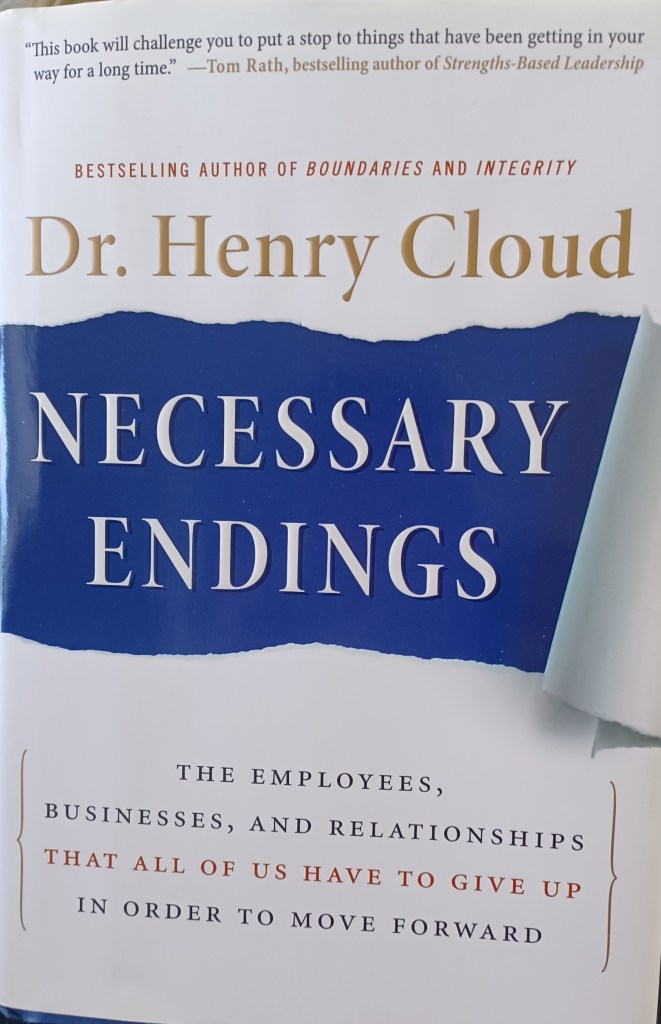
NECESSARY ENDINGS – by Dr. Henry Cloud

In Necessary Endings: The employees, businesses, and relationships that all of us have to give up in order to move forward, Dr. Henry Cloud explains why good endings are needed for good beginnings. He uses a number of great examples to show how appropriate endings at the right time can be very positive for you personally and for the organization you are part of or leading. Some endings are forced on us, and some are ones we choose, in either case we can determine how we will use that ending as an opportunity for something new. When you end something, you have room for that next thing that can be even better than what you just ended. A very helpful book!

Can God Really Be Heard?

As people who love God and want to serve Him, can we actually hear him? Can we have clear direction as we make decisions and lead a church?

God spoke with people in the stories of the Bible. In Genesis 3 the Bible describes a conversation between Adam and Eve and God. It tells us that God came and spent time with them in the Garden of Eden. Many times, prophets in the Bible spoke what they knew were the words of God. And others accepted their words as from God. People like Abraham and God had conversations about how many children he would have. God spoke to Moses from the burning bush. Sometimes God sent his angels as messengers, as seen when Gabriel visited Mary. God spoke through dreams and visions, as he did when warning the Magi not to return to King Herod after visiting Jesus. When people in the Bible heard God speak to them, they were confident that it was Him and clear about what He was saying to them.

God clearly spoke through His Son. John 1 tells us that Jesus was and is the Word from God. He is the expression of all God is. But Jesus also spoke with his disciples about many things. He taught with authority – so much so that people wondered where he got his authority. Jesus’ disciples had intimate conversations with Jesus dealing with everyday life like paying taxes, or dealing with the fact that he would have to die and rise again. He spoke to the two on the road to Emmaus, in Luke 24. Even though those who heard from Jesus were sometimes unsure what Jesus meant when he spoke, they clearly heard him, and had the privilege of asking questions to clarify what He meant.

God spoke in and still speaks through scripture. 1 Peter 1: 20-21 says, “Above all, you must realize that no prophecy in Scripture ever came from the prophet’s own understanding, or from human initiative. No, those prophets were moved by the Holy Spirit, and they spoke from God.” The scriptures are God’s words to us. 2 Timothy 3: 16-17 record Paul’s words to Timothy on the value and purpose of the Scriptures in people’s lives: all Scripture is inspired by God and is useful to teach us what is true and learn what is wrong in our lives. It corrects us when we are wrong and teaches us to do right. God uses it to prepare and equip his people to do every good work.” The scriptures are God’s words of guidance in our lives so we know how to live a life that honours Him. As God speaks in Scripture, we can clearly hear his direction for how to live our lives.

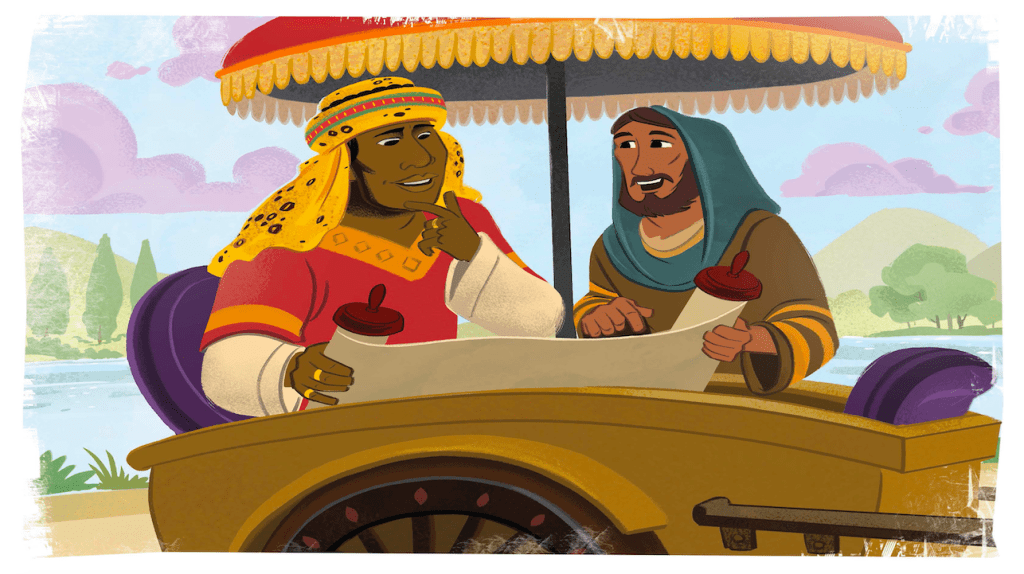
Sometimes God combines a few ways of speaking to give clear direction. A good example is the story of Philip leading the Ethiopian eunuch to Christ in Acts 8. First, an angel told Philip in verse 26, ‘” Go south down the desert road that runs from Jerusalem to Gaza.” So, he did. He started travelling down the road until he came upon this man sitting in his carriage. Verse 29 says, “The Holy Spirit said to Philip, “Go over and walk along beside the carriage.’” Philip did. He heard the man reading scripture so he asked, “Do you understand what you are reading?” The man did not and invited Philip into the carriage to sit with him and explain it. In the end, the man wanted to be baptized as he accepted he Good News of Jesus.

In this case, God spoke through an angel, through the Holy Spirit, through Philips willingness to enter into a conversation with the man, and through the scriptures – all to get the right person to talk with this man and explain salvation to him!

Philip clearly heard he was to go on that road, then clearly heard he was to go up to the chariot. But then, no one told him to enter into a conversation. He saw this as the next right thing to do. As the man asked questions, Philip explained scripture for him to understand and respond to.

I believe we serve the same God who will speak to us and direct us as we listen to him, though it doesn’t always seem as clear as we wish. God can and still occasionally speaks through angels. God can and does speak through the Holy Spirit. This may be an “out loud” voice or it may be strong sense that you need to do something. Sometimes we get this sense we are to call someone or visit someone and perhaps after responding, we see that God was setting that up. God can, and still does, speak through scripture. There are times when a certain verse jumps out at you as you are reading, and you know that was God’s encouragement for you. Sometimes, God will use a verse to clearly direct you.

God continues to speak in various ways. I have had God clearly direct me through seeing certain signs on trucks. He used these signs as a reminder of something I had written in my prayer journal, and he showed me the answer. I have had God speak through thoughts or feelings I was supposed to do something. I have heard God through the words others spoke. I have “heard” God speak through pictures he has given me in my mind. And many times God has spoken to me as I read the Bible, His Word to us.

God wants to speak to us. I am convinced of that. I also believe that God does not want us to be confused. We need to expect God to speak, and then respond as we believe we should. And if it is not clear, then ask him for clarity. Look to scripture to speak. Even ask God to speak through other wise people around you. Believe that God is interested in you and wants to speak. Keep listening.

And keep looking up,

Andy Wiebe

Make Your Sermons More Engaging

I love preaching. I love opening a passage of scripture, expounding on it, and seeing eyes opened and hearts encouraged. The natural tendency is to make the sermon a monologue. Often this serves just fine, but I think it can be enhanced visually.

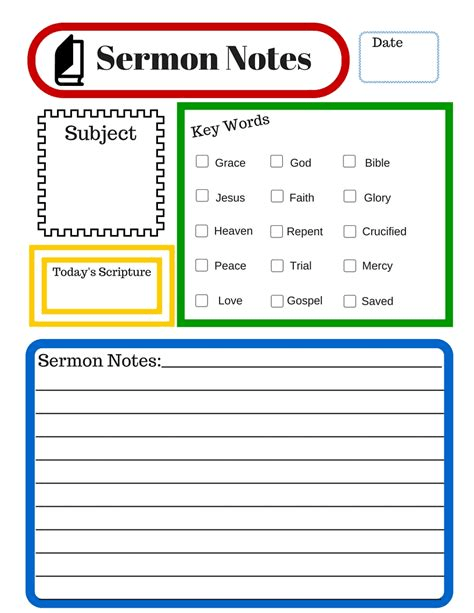
Personal Sermon Notes

Sermon outlines or notes pages can be included in bulletins or handouts that each person receives as they arrive at church. Adding visual aids in these notes can provide an additional way the congregation follows along with the sermon.

Slides accompanying the sermon

In addition to outlines for each person, slides can be used to highlight a point you are making or a scripture you are referring to.

As a visual person, I appreciate seeing slides that go beyond the text that the pastor is saying, and include relevant images or other visual aids. For example, when quoting a person, include their photo. A sermon illustration could be accompanied by a picture of what is being referenced. If you are speaking on the Lord being our shepherd you could have a picture or brief video clip of a shepherd working with his sheep.

Props

While pictures are useful, the real thing can be even better. Some sermons make it easy to bring in a prop. An easy example could be pointing to a cross  already in your church when you are preaching about Christ’s death. Communion includes props which Jesus instituted: the bread and juice. A sermon from Matthew 7:3-5 about the person with a log in their eye pointing out a speck in another’s eye would be a great time to bring in a 2 X 4 and a little sliver and visually show people the absurdity of that action. A sermon on reaching the world for Christ might be a time to bring in a large world map or globe to point out some of the least reached areas of the world.

Models

This past Sunday I asked my wife, and she agreed, to be a model for me. I am preaching through Colossians, and we were in chapter 3 where Paul writes to the church in Colossae about how to dress as a believer. He specifically talks about “getting rid”, and “putting off”, and “stripping away” certain things. Then he twice says “clothe yourself with” something.

I had my wife put on an old T-shirt over her clothes. Then, after reading the scripture, invited people from the congregation to shout out all the things that were of the old life and were to be put off. As they listed the items from the scripture, I had preprinted words and phrases that I taped to this T-shirt. When they were all taped onto her T-shirt I reminded them that verse 5 talks about “putting to death” the things of the old life. So I picked up a pair of scissors and cut the shirt off of her and through it on the ground. That has now been put to death.

Then I had her put on a suit jacket of mine. Now we continued in the scripture and as they called out the things that we are to “clothe” ourselves with, I taped those words and phrases onto the suit jacket. Once she was wearing all the good things, I had her walk around as if she was a runway model, displaying all the things Paul was telling us to “put on”. I concluded by pointing out how Paul finishes that section by telling us to do all we do for the glory of God. The New Living Translation says we are to be good representatives of Christ in all we do. We are like a model, continually displaying what a Christian should be like. I pointed out that this was not “Dress to Impress”, but “Dress to Express”. We are to put on the things of Christ to show the world what Christ is like.

Look for ways to occasionally bring in a visual to aid your sermon. There will definitely be some who appreciate your efforts.

Keep looking up,

Andy Wiebe

Book Reviews: Andy’s 2023 Reading Experience

I will be sharing a brief review of every book I read this year. Hope you enjoy and hope it encourages you to keep reading.


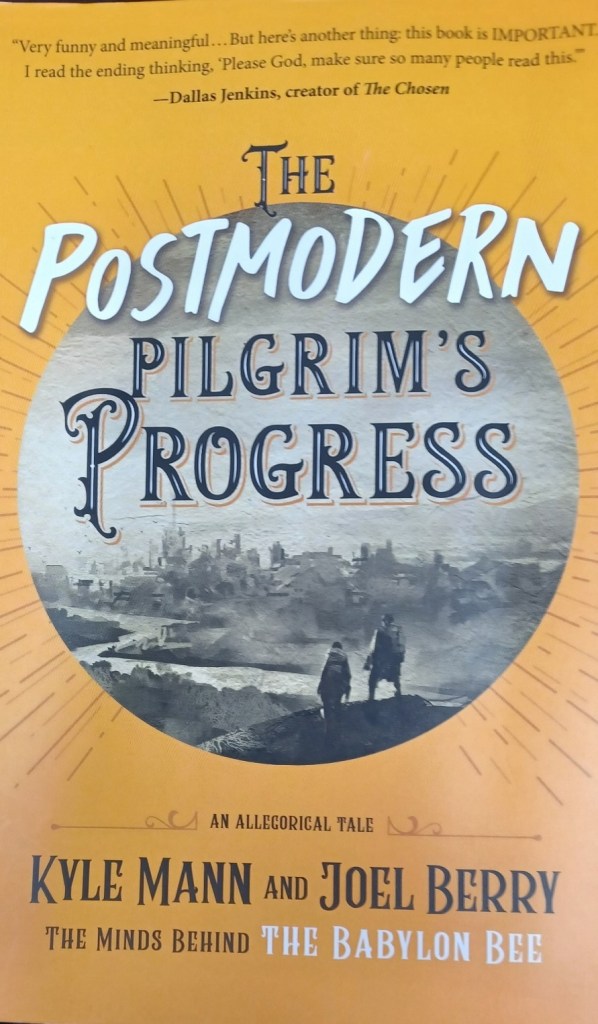
THE POSTMODERN PILGRIM’S PROGRESS by Kyle Mann and Joel Berry

Mann and Berry write a funny and entertaining allegory of the Christian life. It is a light read with a powerful reminder of how we get sidetracked with many varieties of ways we live our Christian lives. They do a good job reminding us of the main purpose of the Christian life, to keep on going forward in the journey toward a true relationship with the King!

Book Reviews: Andy’s 2023 Reading Experience

I will be sharing a brief review of every book I read this year. Hope you enjoy and hope it encourages you to keep reading.


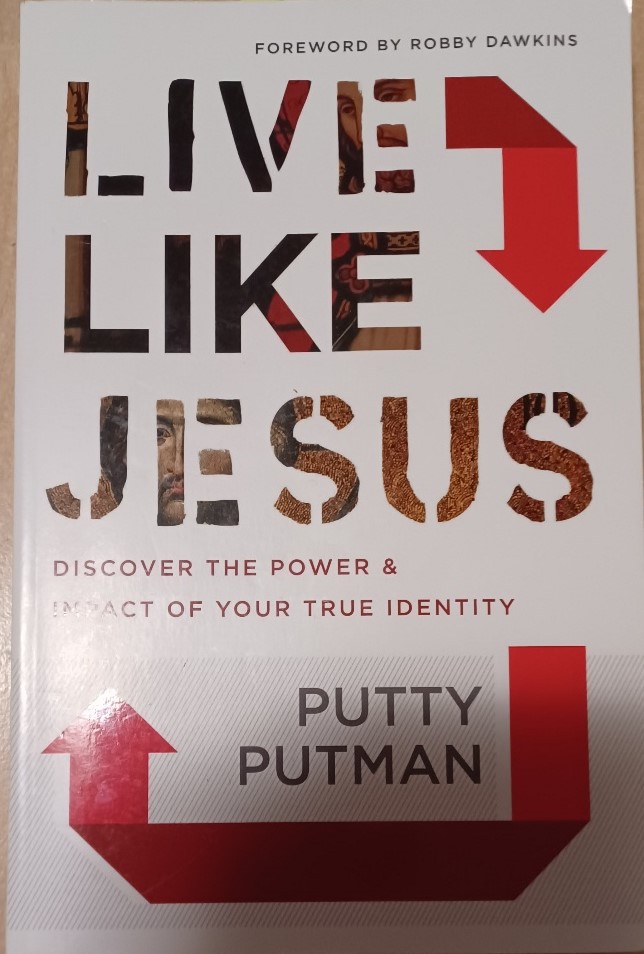
LIVE LIKE JESUS: Discover the power and impact of your true identity – by Putty Putman

Live Like Jesus: Discover the power & impact of your true identity, by Putty Putman

This is one of the best books I have read on the reality of our life in Christ. Putman asks questions and looks for answers that many Christians are afraid to ask. He does a good job asking questions that make a person think, and thus find answers that the average person is not looking for. If you want to be challenged in your walk with Jesus, this is the book you need to read.

Book Reviews: Andy’s 2023 Reading Experience

I will be sharing a brief review of every book I read this year. Hope you enjoy and hope it encourages you to keep reading.


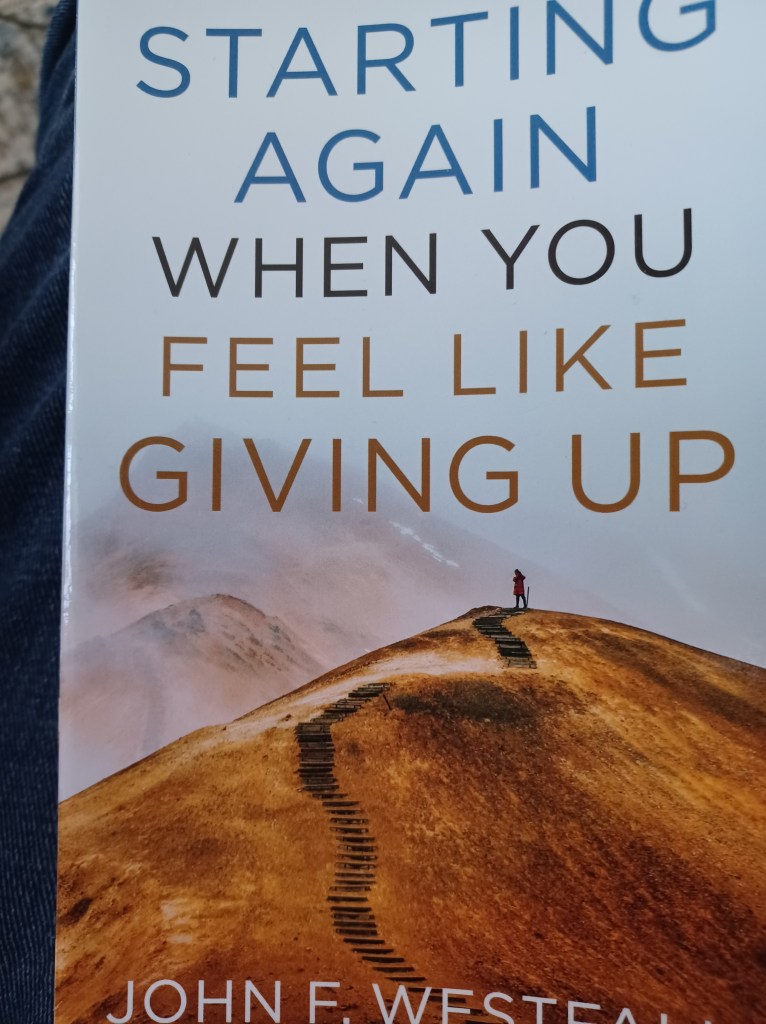
STARTING AGAIN WHEN YOU FEEL LIKE GIVING UP – by John F. Westfall

In Starting Again When You Feel Like Giving Up, John F. Westfall addresses the issue of feeling life has gone in such a terrible direction that it is sometimes hard to get back up. Life can be disappointing and disheartening when things go wrong and our goals are not achieved. I appreciate how, as he encourages the ones trying to get up, he addresses risk. Here are a healthy risks he thinks are worth taking. He expounds on the following:

  1. Risk getting turned down.
  2. Risk failing.
  3. Risk being misunderstood.
  4. Risk saying, “I love you”.
  5. Risk being yourself.
  6. Risk not being good enough.
  7. Risk being good enough.
  8. Risk getting hurt.

This might be just the book if you are struggling and trying to get back up again.

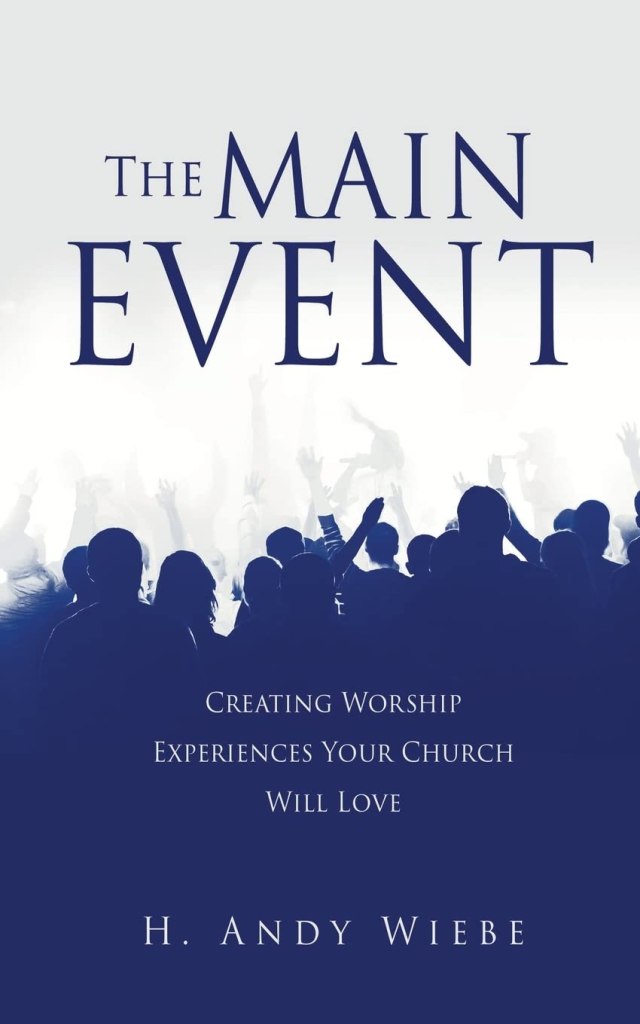
The Main Event: Creating Worship Experiences Your Church Will Love

I usually write about leadership or spiritual issues. I also do book reviews on books I have read. Today is different – I will give you part of the introduction to a book I recently published. Here it is.

CRAFTING A WORSHIP EXPERIENCE

It is possible to create worship services that your church will hate to miss. Every week pastors and church leaders around the world prepare for the Main Event at their church, hoping it will impact their congregation in some way. Whatever it is called locally, and whatever day it takes place, every church has a Main Event where the whole congregation comes together to worship Jesus and to encourage each other. This is often the key means through which a church disciples their people. Most have other programs as well, but this is the one event that most people attend and engage with. We need to make it the best event it can be. I believe this requires creativity to help the congregation feel more involved and connected to what happens during the service. Churches need to find ways of making their Main Event less of a performance and more of an experience.

Each church has their own expression of worship. These vary greatly from one church to another. Each church has a certain expectation of what will take place and how it will be done. Some are quite somber; some are extremely exuberant. Some are very strict about the time; others are very flexible. Some have a clearly laid out agenda that rarely changes, while others change formats frequently. Some churches have services that are fine-tuned performances, where everything is practiced or even performed by professionals, and the agenda is planned out to the precise minute. In other churches, the agenda is loosely put together. They may start late and run late, but no one minds. In others, congregations have expectations of when the service has to conclude. In one church I served there was an older couple who just got up and walked out at 12:00, whether the service was done or not.

Though much of a service varies from church to church, most churches share some common characteristics when it comes to their Main Event. Typically, the experience of the congregation is more like that of an audience with very little participation. The congregation is invited to sing along with the worship songs, or maybe participate in responsive readings or prayers when prompted, but in many cases the congregation does little more than sit and watch the performance at the front.

When I was a young pastor in the 90’s, the big push was to have “seeker sensitive” worship services, and it was very effective for some. Seeker services often were designed and performed with a high level of excellence. Some churches hired professional musicians. Others made sure they had only the best speakers. The seeker service was something that people attended to enjoy, a little like going to the opera or even a sporting event, where the audience is there to watch, and maybe cheer occasionally. They may be invited to sing along to some songs but not many, as the emphasis was more on a great performance, than on participatory worship. This was appropriate for the time as there were still many people who had a bit of a church background and were just looking for something “better,” or more “real.” They were truly “seeking.” While many people came to know Jesus through this style of worship service, times have changed where people are looking for an experience and not just a performance.

Experiential Worship

I believe the time has come for us to move to a more experiential worship event. Churches need to find ways to invite people to participate in the worship service. This may mean including more volunteers in the actual creation and leadership of the event instead of just staff, or it may mean finding ways to invite the congregation to participate more during the event.

Those who are entrusted with the task of creating meaningful worship experiences need to realize that the next generation wants to be more involved in the service. Gary Collins, shares some research about the values of the younger emerging generation, and I believe what he says has great impact for churches and pastors as they craft the weekly Main Event in a way that will reach the next generation. Here are a few of his key concepts to consider:

  • Values and experiences are more important than vision casting and reaching goals;
  • Images and stories are more valued than words and facts;
  • Active participation and ownership are preferred over passive submission to authority and professional expertise; and
  • Spirituality is valued, religion is not.[i]

It is time to evaluate why we create our worship services the way we do. It is time we determine to find ways of inviting people to enter into the whole worship experience from start to finish. Young people are less impressed with excellence than previous generations were. They would rather see authenticity and be invited to participate in the experience. I want to help you create participatory and multisensory worship experiences.

If you are looking for ways to invite your congregation into an experience every worship service, then you are in the right place. This book will encourage you to create your service in such a way that those in attendance feel they are part of what is going on instead of watching a performance. Each chapter will look at one specific aspect of a worship service. We will look at how to invite more participation where those in attendance are invited to an experience they can engage with.

When I arrived as a new pastor at one church, I discovered that the church had used the same general service agenda for the last five years with little or no change. I, personally, have a hard time with that. While there may be something comforting about knowing exactly what to expect and when, I love to be creative, and as their pastor, wanted to give them some variety. This desire to be creative impacts my leadership style so much so, that at a different church, a senior commented, “Andy, I never know what to expect when I show up on Sunday.” He meant it as a compliment. He liked the variety. It wasn’t that every Sunday was extremely different, but no two Sundays were the same. I changed the order of service most Sundays. Sometimes the sermon would be earlier in the service, or we would change the number of worship songs. My goal was to allow the theme of the sermon to guide how best to create each service. The idea was to craft each Sunday’s service around a specific text and theme, and to communicate that theme in creative and interactive ways.

I remember taking our two daughters to a creative and interactive experience when they were young; it was a football game. The team ownership had realized that even a football game had to have a larger experience. Our girls were thrilled to watch the mascot. If you were fortunate, you could catch one of the plush footballs they threw up into the stands when the team scored. Cheerleaders were dancing and jumping, some being thrown in the air. Young men and women were running up and down the stairs offering all kinds of drinks, food, and candy. This was an experience beyond just the football game. If you were not a true fan and were just there with family members who were, you could still have an enjoyable experience…

To purchase The Main Event, click here.


[i] Gary R. Collins, Christian Coaching: Helping Others Turn Potential into Reality (Colorado Springs, CO.: Navpress, 2002), 323.

Book Reviews: Andy’s 2023 Reading Experience


BREATHE: The New Science of a Lost Art – by James Nestor

If you have read my reviews you know that most of the books I read are on Christian Growth, or Leadership, or Change. This book is in a different category, but I sure enjoyed it.

Breathe: The New Science of a Lost Art is very interesting book about something we all do, automatically. Unfortunately, according to James Nestor, and his research, many of us are doing it wrong. Nestor describes a number of different breathing techniques that he personally experienced in order to understand them clearly. Many (there are many) of the breathing techniques have origins in Asia and India, from thousands of years ago. The techniques are believed to give more energy and even heal certain illnesses. He concludes the book with a helpful summary of how a number of techniques can be practiced and how they benefit a person. Very interesting book.