Ready to Preach, Pray, or Die

There’s an old saying describing how a pastor should be ready for anything at anytime. A pastor should always be ready to preach, pray, or die. I thought of this saying the other day because of a situation I found myself in.

A friend asked me to join him in praying for a friend of his. We were going to meet in my office at the church with the plan of entering into a time of spiritual warfare. His friend did not know Jesus and was facing some torment in his life. His prayers to the god of his religion had not accomplished anything. He was desperate and was now willing to have us pray to our God for him.

One of my first thoughts was, I’m glad I am ready for this. This is going to be a spiritually significant encounter, and I am glad there is no unconfessed sin in my life. I am right with God and feel empowered to be his servant in this situation. It reminded me of the saying to be ready to preach, pray, or die. I wanted nothing in the way if I was going to ask God to fight on behalf of this friend. I was ready.

 As I contemplated this, I realized how absurd this thought was. As followers of Jesus, we should always be ready to serve God in any capacity He invites us into; not just on the occasion when we “feel” ready. Not only pastors, but all Christians should strive to be right with God at all times, ready to serve Him in any way He asks. We should not be afraid to enter into spiritual warfare, as if we had reason to think that we had to do something to prepare first. If we are in right relationship with God, through faith in His Son Jesus, then we are always ready to serve God, no matter what He asks of us.

We should always live our lives free of sin. All sin should be confessed as early and as quickly as we recognize it. We should never carry sin in our life, waiting for a specific moment to deal with it. Deal with it immediately and makes sure you are right with God. Like David, in Psalm 51, desire to live a forgiven life where we are always ready to teach others. We should never harbor sin of any kind. We should always be clean and ready for service to our God.

We need to pray regularly. We need to be in daily communication with God. We need to read Scripture to learn and hear from God, but we also need to be talking with Him all the time. I paused for more prayer as I knew this encounter was coming up in a few hours, but I already had a prayed-up life as I have regular times of prayer with God.

We should continue to build up our faith. We need to remind ourselves regularly of the goodness and faithfulness of God. He provides all we need. He answers prayer. He is with us all the time in all things we face. As we continue to remind ourselves of the great God we serve, we are also equipping ourselves to serve Him when the serving may be difficult. I was not quite sure what to expect but I knew whatever the situation was going to be, God is bigger than anyone or anything else. I had faith in God to handle the situation.

I encourage you to live your life always read to “preach, pray, or die,” always ready to serve Him in whatever situation He may place in front of you.

Keep looking up,

Andy Wiebe

Getting it All Done!

Life and ministry can be busy times. Maybe you have taken on too many commitments. Maybe someone else piled responsibilities on you that you can’t ignore. Maybe you thought you had time for everything until an unexpected demand popped up. This happened to me recently. I had accepted a number of responsibilities and thought I could manage them until I found a leak in my shower. Now I had the added work of dealing with house repairs that I am not skilled at and do not love doing. I was beginning to feel quite overwhelmed and wondered how I would get everything done.

As my anxiety started to rise, I paused my day to spend some time with God. As I was praying, I began to get some clarity and peace, trusting God to help me get done what had to be done by the appropriate deadlines while also dealing with my house. Here are some of the steps I took to focus on one thing at a time:

Pause the “doing” to be with God

    I took on the various responsibilities because I believed God was guiding me in accepting them. With that in mind, I handed it all over to Him and asked him to give me the time necessary to get it all done on time. I was reminded too, that God was not surprised by my house issues. So if God put these responsibilities in my lap, then he will give me the capacity to get them done.

    Remove anything from your to do list that is not important for now

    Sometimes we feel a duty to do something that we don’t really need to do. I had to reevaluate some of my goals and responsibilities and either eliminate some, or push them to next week.

    Plan my day and week.

    With God’s help, I began plotting all my responsibilities, along with their deadlines, onto my calendar. I tried to spread out the different requirements across the whole week. Then I considered all that I felt I had to accomplish for today. As I looked at the list, I started listing them in order of priority. If I could not complete all the tasks, at least the ones that had to get done today would get done.

    Focus on one thing at a time.

    When we get loaded down with responsibilities, we can get overwhelmed because we see it all in front of us. If we can break it down to what must be done this week, and this day, and this morning, we begin to narrow our focus. And if we tackle one thing at a time, giving it our full attention, we can begin to whittle away at the pile.

    It doesn’t matter how big the pile is, you can only deal with one thing at a time, so choose one thing and give it your best. You could even tell yourself you are focusing on this for a certain amount of time, and when that time is up, you will tackle something else before coming back to the first task.

    Celebrate your accomplishments

    I find it quite exhilarating to be able to check off the items on my calendar as I complete them. It feels good to see the momentum beginning to build toward completion of all the different tasks.

    Yes, life can be very busy at times, busier than we had planned, but God can help us grow in capacity so that we can get things done faster than we thought and can complete our list one task at a time. If God wants us to do it, he will help us to get it done.

    Keep looking up,

    Andy Wiebe

    Summer Road Signs Series: #1 Speed Signs

    Many of us will be taking road trips over the summer. Maybe you already have. There are many signs along the road that guide our driving, so over the next two months, I will use these familiar signs as reminders of how we can live our lives and honour Jesus along the way.

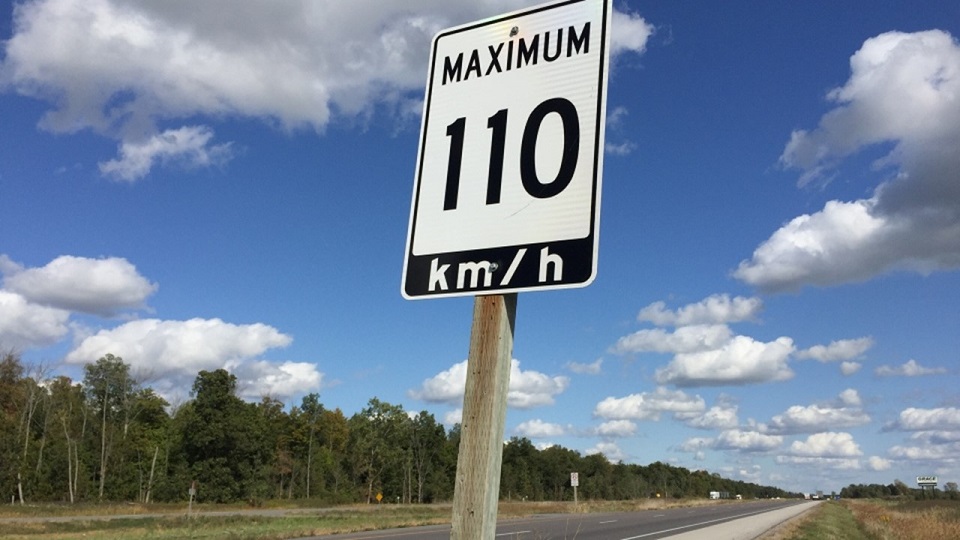
    I want to start with the sign that I think I like the most: speed signs. In Canada, these signs often show a maximum speed of 100km/h on the highway. I recently enjoyed a drive up to Yellowknife, Northwest Territories. While I enjoyed the trip, I did not enjoy one large section of highway that was limited to 90 Km/h. When we are fortunate to travel on divided highways, we are allowed to drive 110 km/h. I like travelling in the U.S. because often the speed limit is even higher.

    I like this sign because it is all about getting to where you want to go as fast as you can. This is not about taking a leisurely drive for no reason. The focus is on what is ahead. You don’t need your rearview mirror for this sign!

    One of the joys of my job is to help churches look ahead with clarity and purpose. Yes, we do take time to look at the past and understand the present, but we do this to clarify vision, and ultimately look at where we are headed and how best to get there. It is forward thinking and forward planning. We have a destination in mind and develop a map to get us there in the best way possible. No matter what speed you are travelling at, it is all about moving ahead.

    While we recognize the importance of brakes, we love using the gas pedal more. The goal is to keep moving forward as quickly as possible in order to get to the preferred future we have in mind.

    We set the destination. We map out the route. Maybe, if it is a longer trip, we even plan where we will stop for meals or gas, or even an overnight stay in a hotel or with friends. With a church, this means setting some short-term goals that will help us move along to the final destination, while giving us a way to measure progress along the way. If we trust God for 10 new believers this year, it is helpful to set some goals as to how we will help friends and family become new believers in Jesus first. We need to set some more immediate goals that will help us share Jesus with people regularly, praying along the way that some of those we share with will come to know Jesus.

    In our personal lives, these same reminders from speed signs might direct our thoughts to pursuing personal growth. Keep moving ahead looking for new experiences and new encounters with learning opportunities. Set personal goals that will move you in the right direction.

    In my own life, this forward momentum is evident in my love for learning. When I finished high school, I attended a Bible College. I wanted to learn what I could to become equipped for Christian ministry. I thought I would be involved in fulltime camp work or some kind of Christian education. Halfway through my Christian Education degree, God spoke through a few people and adjusted my destination to be pastoral ministry specifically. I added an extra year of education so I could get my Pastoral Degree as well. As I began ministry, I wanted to keep learning. I began taking courses at a seminary level. I was in no rush to complete the degree, wanting only to keep learning, so it took me over 20 years to get my Masters of Arts in Leadership and Ministry. Presently I am applying for the opportunity to pursue a Doctorate of Ministry.  I desire to keep moving forward, to keep growing as a person and as a pastor.

    Speed signs are about moving ahead at the highest speed allowed. I encourage you to consider where you have been going slower than you should. Maybe God is asking you to pick up the pace and keep moving forward to what is next. Trust God to guide you as you look to him for the right destination to pursue.

    And enjoy the journey!

    Keep looking up,

    Andy Wiebe

    P.S. Watch for next week’s Road Sign: Stop Sign

    Perfect Public Prayers?

    Public prayers can have great significance or be almost meaningless.

    Years ago, I knew an older man whose mind was starting to deteriorate. It wasn’t easy carrying on a conversation with him, yet when asked to pray, he would pray these great prayers. They were not necessarily eloquent or filled with theology, but you could sense the love for God and the sense of friendship with Him.

    When I refer to public prayers, I mean those usually prayed in our Sunday services at church. Here’s why I think some are more significant than others. Sometimes it seems a prayer is prayed strictly out of tradition or routine. The service always opens in prayer, so the pastor needs to pray something. Or the pastor prays before he begins his sermon just because that his is routine. Sometimes it even seems like it is just filler or used as a transition. We’ll pray now so the musicians can sneak onto the stage and magically appear at their instruments.

    Some public prayers seem like the ramblings of someone who has no idea what they want to pray about, so they just stumble into their prayer. In some cases, you know exactly what a person will pray because they always pray the same prayer. It seems that the one leading in prayer sometimes just says a few nice words, but has forgotten they are addressing the Lord God Almighty, the Creator of the Universe!

    On the other hand, there are some prayers that are well thought through and prayed with heartfelt words like the older gentleman above. So how can we improve our public prayers?

    First, remember whom you are addressing. When you are praying in a public service, you are not praying to the congregation. You are praying to the God of the universe. You are praying to the One who deserves all our praise. You might even want to begin your prayer with the lines of the Lord’s Prayer, “Our Father who art in heaven,” or a similar address to the Creator of the world. As you lead in public prayer, you are functioning in a priestly role, bringing the congregation before the Father and connecting with Him.

    Do not pray to teach someone something. Some public prayers seem as if the person praying is using that platform to try to tell the congregation something, rather than leading the congregation into the throne room of God. A prayer is not a time to teach a theological truth, though it is definitely a time to give thanks to God for that truth and what it means to us as believers. (And please don’t pray the announcements: “Thank you, God, that we can have a Valentines Banquet for our married couples next Friday at 7 and that we can get free tickets for the event.” Keep the prayer a prayer.)

    When you are asked to pray publicly, do some preparing. Musicians practice their music. The pastor probably writes out his sermon. He might practice it out loud. Why would we not prepare, maybe even practice, what we want to say to God in our prayer?

    I’m not sure where I got the impression, but when I was younger, I looked down on people who used written prayer. In my mind, you were less spiritual if you didn’t just “pray from your heart.” In my church we never used prayers of old or that others had written. Yet I have learned the value of writing out what I wanted to say. Sometimes I write out the complete prayer, other times I have a point form list to refer to. Taking time to do this means I have put some thought into what I will say.

    If we write it out, we will be less likely to forget something we wanted to include. In a pastoral prayer you may want to have a reminder of the various needs of the congregation, including names of individuals needing prayer. In an opening prayer you may want to thank God for something related to the theme of the morning, or of the sermon coming later. It can be a time thank God for being the great and awesome God we have come to worship.

    Writing out a prayer can help us avoid some of the annoying habits we get into without realizing it. We can cut down on the “umms” or stop repeating the same phrase. For some reason, a common word I often hear in prayer is “just.” We just want to thank you, we just want to ask you to help, we just…. Our words mean something. Saying “just” trivializes what we are asking God for or thanking him for.

    It is a privilege and honour to lead in public prayer. Let’s treat it as the privilege and honour it is to approach our Heavenly Father on behalf of those gathered to worship.

    Keep looking up,

    Andy Wiebe

    Pushing Past Nervousness!

    I remember the first time I had to speak publicly to a large crowd. It was only to make an announcement, but I was shaking so bad I didn’t know if I would be able to get the words out. Most of us will be nervous at some point, but if we want to lead, we need to push past the nervousness. Instead of just avoiding leadership, we need to find a way through. Too many people are willing to ignore their interest in leadership rather than learn how to get through it.

    I’ve been in roles that require public speaking for 30 years, and still experience nervousness – though not quite like that first announcement I made years ago. Let me share some of the things I do to help me push through.

    Prepare Well

    I still get nervous from time to time, especially if I am leading something new or if it is a special event that we have worked towards for a while. My first step in dealing with my nervousness is to make sure that I know what my role is. If it is to make a speech, I write it out. If it is to lead an activity of some kind, I make sure I have all the directions written out step by step. Sometimes it is helpful to consider what questions others may ask as I lead, so I can address those in my write-up.

    If I need any resources or props, I gather them ahead of time, and place them where I will have access to them as needed. If I am depending on others for assistance, like someone running the presentation slides for me, I make sure the presentation is easy to follow with a clear guide on how they can follow along.

    Create a Step by Step Plan.

    While this may be part of preparing, I want to make sure I point out that a clear plan helps calm my nerves. If I am preaching or making a speech, I need my script or outline. When leading a meeting I want to be clear on what will happen when, and make sure that my supporting documents are in the order of the agenda. I want to have my documents ready to go, and be ready to call for decisions to be made or actions to be created.

    The clearer I am in my head as well as on paper, the less nervous I am.

    Do a “Walk-through” Practice.

    I like to physically enact the event if possible. This means talking through the talk or reading over the agenda to make sure everything makes sense. It’s a little like the basketball player who shoots 100 baskets every morning. The more we have already “experienced” an event, the more likely we will be more comfortable when the real things comes and execute it better. The practice allows time for correction if you realize something needs changing.

    Prayer

    As a Christian leader, prayer needs to be part of every aspect of our leadership. I probably should have put this higher up in the article! I pray through every event or talk I lead. I want to be clear that I am doing what God is asking of me. I want His guidance in preparing. I want to hear His voice as I practice to discern if changes are necessary. I want to make sure He gets the glory, and that everything I do gives Him honour.

    And as I place myself and my endeavours in his hands, I can relax a bit, knowing that I am not on my own.

    Just Do It.

    After all the prayer and preparation and practice, there comes a point where I just have to do the event and trust that God will help me do it as well as possible. One of the ways to push through nervousness is to just do it. I’ve found the more often I do it, the less nervous I am. Just this past Sunday, as I was waiting for my time to go up and preach, I realized that I was not nervous at all. God has helped me to push through again and again so that my nerves do not hold me back like they used to.

    It’s okay to be nervous, just continue to push through and see how God will help you to do your best for Him.

    Keep looking up,

    Andy Wiebe

    A Decision Making Guide

    The following guide is created to help boards and committees move beyond discussion and questions to the point of decision. The goal is a well thought-out and God-honouring decision.

    1. Clarify the decision:

    • Do I have all the information I need to consider this decision? Collect and disperse needed information to all involved in the decision-making process.
    • Review all related information. (read, watch, listen, etc.)
    • Does this decision have to be made right now, or can we wait a bit to pray and gather all pertinent information?
    • Determine who will be affected by this decision, and how.

    2. Write the motion:

    • WRITE OUT THE QUESTION BEING DEBATED. Write out a motion that clearly defines the decision being made and asks for a “yes” or “no” answer. Either you vote for or against the motion.
    • One person makes a motion: I move that _______________________________________.
    • The chair calls for a seconder. If someone seconds the motion, you can go on and have the necessary discussion leading to a decision on that motion. If there is no seconder, then the motion does not stand and you move on to the next order of business.

    After walking through the steps below, the chair then calls the board to declare their “Yes” or “No” to the motion. A simple majority wins, yet you want to strive for a unanimous vote if at all possible.

    Good motions include:

    • The precise decision being made
    • Any related deadlines
    • Who is responsible for the action in the motion

    3. Biblically informed:

    • Does Scripture say anything that speaks to this decision? Read appropriate scriptures.

    4. Vision directed:

    • How will our decision help move our Vision forward? Some decisions may not directly relate to the vision, but any that work against it should be avoided.

    5. Guiding Documents:

    • Guiding documents need to inform a board’s actions and decisions. These may not always need to be consulted but you need to be aware of them enough to make sure you only make decisions that uphold them and are consistent with them.

    Possible guiding documents

    • Policies and Procedures
    • Constitution
    • Statement of Faith
    • Job Descriptions
    • Etc.

    6. Prayer:

    • Pray about decisions that are coming up prior to the meeting.
    • Pray during the meeting. Ask God to speak to you through this whole process.
    • Listen to God and ask Him to give you direction on how to vote on the issue.
    • Pause for prayer before the decision is made.

    7. Board unity:

    • Discuss the issue together. And then decide together. Strive for unanimity. It should be a rare decision that gets passed by a vote where even one board member is opposed.
    • The board speaks as one voice – Once the decision is made, whether you were in favor or not, you abide by and support the decision that was made.

    8. Anything else to consider?

    • Consider any other aspects of the decision.

    Download GUIDE here.

    Keep Looking up,

    Andy Wiebe

    Share Your God Stories

    When I was in Grade Four, my Dad felt called to attend Bible School. I remember one time in his third year, where he came to me and my brother, now about 12 and 13 years old. He told us that we had no food left in the cupboards and we needed to pray together that God would provide for us. Money that was supposed to come in had not. So, we prayed. Then, a little later, I remember hearing a sound at the front door. We

    opened the door to find four big paper grocery bags full of food. Whoever dropped it off was long gone, but God had put it on their hearts to bring it to us at just the right time! I will never forget that feeling of knowing without a doubt that God had provided!

    Just four days ago I was driving early. It was still dark and there was quite a bit of traffic. I was a little wary because we hit a deer a few months ago and I did not want that to happen again. With all the traffic I couldn’t see well. There were headlights shining in my eyes and my low beams didn’t reach into the ditches like I wished. Finally, I managed to get some space between me and other traffic and could turn on my high beams. As I did, it felt as if God was saying “Okay, now you can see. I’m looking after you.” Within seconds there were a couple of deer on the opposite shoulder of the road. I saw them in time and slowed down. As I got closer, they turned and headed back away from the road. And then within minutes I saw a couple of elk on the opposite shoulder of the road, coming steadily onto the highway. Because of my high beams I saw them clearly and came to a stop as two of them made their way onto the road and stopped to look around. Slowly the two of them started walking again and cleared the road. And then, again, because of my high beams, I noticed some more movement just as I was about to drive – a third elk. Where I needed to see, I could have my high beams on and God kept me safe!

    When God does these kinds of things, we need to remember them. We need to tell others and pass them on to our families and friends.

    There are many stories in the Old Testament that are repeated again and again. Many psalms celebrate significant stories of the people of Israel and God at work. They even had special holiday festivals dedicated to reminding people of God at work. One significant festival was the Passover, a yearly reminder of God freeing the Israelites from slavery in Egypt when the death angel passed over the homes of the Israelites who had painted the blood of goats on the doorposts.

    Many of us have had unique experiences with God where we know God intervened in our lives in a way that was much more than coincidence. Unfortunately, even though the event was significant to us, we tend to keep it to ourselves. We need to tell the stories. We need to share them at our Thanksgiving suppers. We need to pass them on to our children and grand children, reminding them that God is still at work in our world.

    The problem is that we too quickly forget. We don’t write songs about these significant events like bards of old might do. We don’t write the stories down. Unlike the Israelites, we don’t set up stone altars as reminders of God’s work.

    God is still at work in our world. Let’s remember when he works in our lives and lets share the stories with others so we can celebrate God and his goodness together.

    Keep looking up,

    Andy Wiebe

    A Leader is a Self-Starter

    A leader must be a self-starter who is ahead of the people he leads.

    A Christian leader must know their role and how to do it without requiring external instruction. Leaders do not wait to receive direction.

    If you have a job description, make sure you understand it and know it so well that you continually look for ways to fulfill it. If you did not receive a job description or are running your own organization, develop a description of your role so you have guidance in how you will spend your time.

    This often requires an understanding of the mission and vision of the church or organization you lead. You need to know where you are to be leading others toward, and how you will measure success as you work toward it.

    With the job description and vision in mind, prayerfully set the course for how you will spend your time. Identify your responsibilities and areas to delegate. I constantly check in with God for wisdom and discernment on what is important for each day and what needs to be left for another day.

    A self-starter knows what is needed and how to determine what activities they should pursue for the day. This means knowing the daily and weekly requirements that can not be missed.

    A self-starting leader schedules their efforts. I have found it helpful to occasionally set time aside to determine what needs to be done in the next year, next six months, next 30 days, and the next week. A self-starter knows that you cannot stumble into each day with no idea what needs to be done in the near future. Planning is a key characteristic of a self-starter.

    For example, in my role, I preach a sermon each Sunday. At the beginning of each week, I know that this is something I need to prepare without putting it off for later. There are also some recurring meetings that I can anticipate and prepare for in advance according to my role in these meetings and my expected contributions. A self-starting leader knows how to schedule and then do what is required.

    Being a self-starter means you do what needs to be done. Be clear what is required, and then you do it. Don’t wait for others to direct your activities. If you do, then you are definitely not a leader but are following the leading of someone else.

    Planning and preparation is arriving to commitments on time, if not early. A self-starter is an achiever because they do the work required to get the job done.

    The self-starting leader is courageous, pushing beyond comfort zones. This includes trying new things, not taking unnecessary risks, but open to taking risks to move beyond what is to what could be. This leader is the visionary who is willing to look out and pursue a new future or new direction because he sees what others don’t. While he tries to get others on board, he does not wait for everyone to agree with him before he takes necessary steps to what could be.

    A driven leader is a self-starter. This leader is ambitious and passionate about moving the people and organization forward. This leader is not content to only do what has been done, or just doing enough to make people happy, but eagerly seeks opportunities for positive change.

    A Christian leader asks God to continually guide as they move ahead to get things done and move people to the future God has for them.

    Keep looking up,

    Andy Wiebe

    The Protecting Role of the Leader

    Few leadership books address the protecting role of a leader. Yet, if you are a leader, you a responsibility to protect those who are following you from distractions that will stop them from following you or moving toward your vision. Business leaders, too, must ensure that they are aware of outside forces that might derail those under their leadership from pursuing their purpose and vision. This might happen in various ways, such as someone speaking negatively about you and the goal you are pursuing or the distractions of life that keep your team from being fully focused on the task at hand.

    Church leaders – pastors and elders – need to understand their protective role too. Even as they are looking to help people grow in their knowledge of and love for God, they need to be aware of the influences that can undermine their leadership. Let’s consider a few influences that a church leader may need to protect their congregation from.

    False teaching

    Much of the church leader’s role teaching. The church needs to be taught about who God is, how to love and obey Him, and how to communicate with Him in prayer. Leaders use the Bible as their main teaching tool and the basis for all they believe.

    False teaching is ideas and teachings that conflict with scripture. If a church is begins to follow false teachings, church leadership should steer them back to the truth of scripture. Church leaders need to recognize when someone within the church is misleading people and needs to be corrected or even removed.

    False teaching can also creep in from the world. Our culture influences us all as we live in it. In the same way the early church lived within a culture that often opposed Jesus’ teachings, there are some things being taught and accepted in our culture that are in direct opposition to God and His Word. For example, it is not okay to end a pregnancy just because it is seen as an inconvenience. God is clear that all life is precious and He is the only one who can determine the end of someone’s life. Similarly, euthanasia is becoming common in Canada, where you can choose to end your life medically, for a number of reasons. Again, life is precious and only God can determine the end of someone’s life. Church leaders need to remind their church of what God teaches in the Bible so they can recognize when what they hear or see does not match up to God’s Word.

    Attempts to derail the vision

    The church exists to help people love God and love others. To do this, many churches have an agreed-upon vision that guides them. They have spent time praying and talking together and gaining an understanding of the needs of their community. As a result, they have come up with a vision that is their response to the needs around them. It is important for churches to adhere to this vision. For example, if you are a church that believes your main role is to reach out to the poor in your community, then protect your church from those who are pushing for you to do more to reach the professionals in your town. No matter what your vision is, there will be some who do not agree or fully buy in. There may also be some who deliberately try to derail that vision and cause confusion in your midst. You need to protect your congregation from that confusing voice. Questions and debate have their place, but you want to make sure that people have a clear understanding where you are going and why.

    Busy people

    Churches often fall into the habit of making people busy in the church with all kinds of activities. Church leadership needs to recognize when some of the good things going on need to be removed. Leadership needs to protect people from busyness that prevents them from being able to participate in pursuing the church’s vision.

    There are times church leaders need to make some very difficult decisions about what ministries need to be cut so people have time to do what is more important.

    Satan

    Of course, the one who truly wants to mess with the church, with the followers of Jesus who make up that church, is the evil one – Satan. He has messed with people right from the time of Adam and Eve until now, trying to confuse us and doing all he can to make us wander away and deny God. Church leaders need to protect their people from Satan’s attacks. They need to regularly pray a covering over their church. They need to remind people that we do not fight against flesh and blood but against principalities and powers of the unsee world. Even when people are doing wrong and causing disruption in the church, it is Satan who is behind their actions.

    Church leaders, you have a role of protecting your people, even as you lead them. Be aware of what is going on and when you need to confront or speak up about where people are being misled. Ask God for wisdom and discernment in the process so you can recognize when danger arises and how to combat it.

    Keep looking up,

    Andy Wiebe

    Book Reviews: Andy’s 2023 Reading Experience

    I will be sharing a brief review of every book I read this year. Hope you enjoy and hope it encourages you to keep reading.


    SHARING THE GOSPEL WITH EASE: How the love of Christ can flow naturally from your life – by Thom Rainer

    In Sharing the Gospel with Ease, Thom Rainer explains how sharing the gospel should be a natural experience for a follower of Christ. He reminds us of our calling in the Great Commission from Matthew 28 and our encouragement and empowerment in Acts 1. Thom points out that many of us use excuses for not sharing the gospel. We complain about having no time. But the average Christian is also apathetic about the gospel. We say that we realize unbelievers will miss out on heaven and end up in hell, but we don’t seem to care enough to do it. Thom Rainer encourages us to allow it to be a natural part of our life. And to pray that God would guide us and open doors for us to share. A good little book.