I will be sharing a brief review of every book I read this year. Hope you enjoy and hope it encourages you to keep reading.
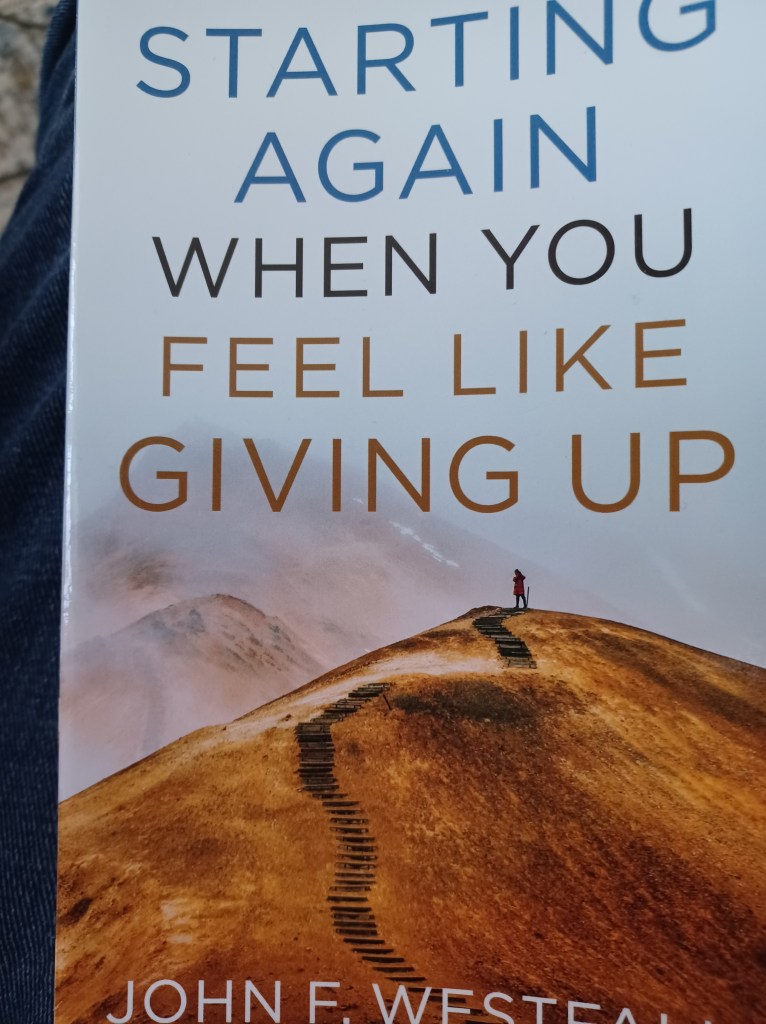
STARTING AGAIN WHEN YOU FEEL LIKE GIVING UP – by John F. Westfall
In Starting Again When You Feel Like Giving Up, John F. Westfall addresses the issue of feeling life has gone in such a terrible direction that it is sometimes hard to get back up. Life can be disappointing and disheartening when things go wrong and our goals are not achieved. I appreciate how, as he encourages the ones trying to get up, he addresses risk. Here are a healthy risks he thinks are worth taking. He expounds on the following:
Risk getting turned down.
Risk failing.
Risk being misunderstood.
Risk saying, “I love you”.
Risk being yourself.
Risk not being good enough.
Risk being good enough.
Risk getting hurt.
This might be just the book if you are struggling and trying to get back up again.
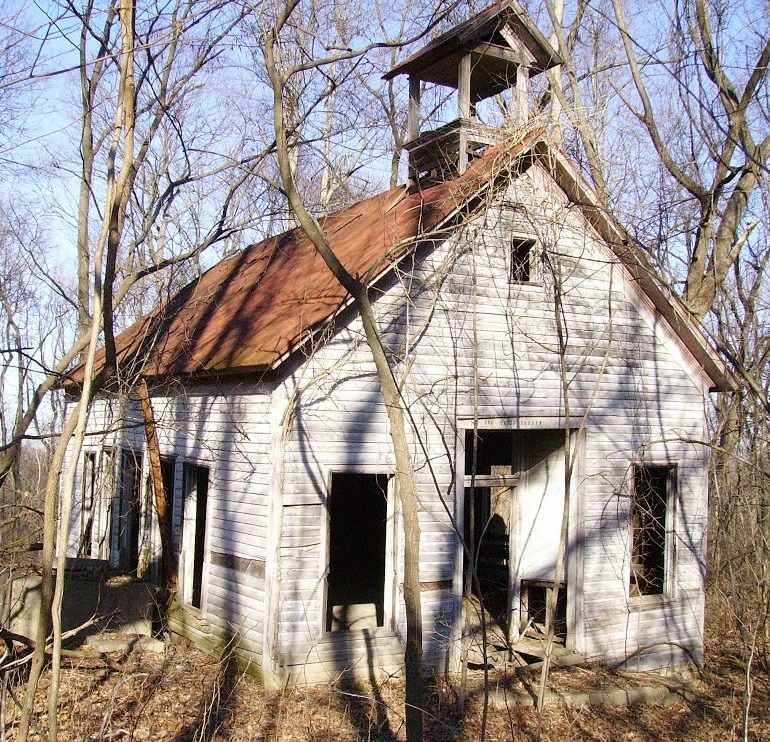
There’s a church I drive by occasionally. Each time I do, it makes me sad. I drove by it just the other day and noticed how dilapidated it was. You see, I attended that church a few times many years ago. I remember how excited the people were. The building was new, and still in the process of being completed. The congregation was already meeting there in the fellowship hall even though the sanctuary was not yet completed. They were looking ahead with excitement and anticipation. There was laughter and the noise of young children. While I was only a visitor, I could tell there was a sense of expectation as they had raised enough money to get to where they were now. They had outgrown a smaller, older building and were in good spirits.
Now, as I drive by and remember that excitement, instead of giving me a sense of hope, I feel sad. The building looks run down. The gravel parking lot now has twelve-foot-tall trees growing in it. I didn’t see a cross on the building anywhere. And I wondered what happened. What happened to the excitement of that forward-looking congregation? Did they finish the building? Did people move away? Why did they not continue to grow?
I think back to the church where I first started as a young pastor. I was on staff as the youth pastor. That church no longer exists either, and it makes me sad. I know some of what happened there, but that doesn’t make it any better. I know the great history they had of sending and supporting missionaries. They were part of planting other churches, but they lost their way. Over time, more and more people left. Eventually the denomination shut down the church. While that church experienced a lot of loss, one good thing is that the building is still being used for ministry purposes, but that church of people no longer exists. What a sad ending for a church that had prospered over the years.
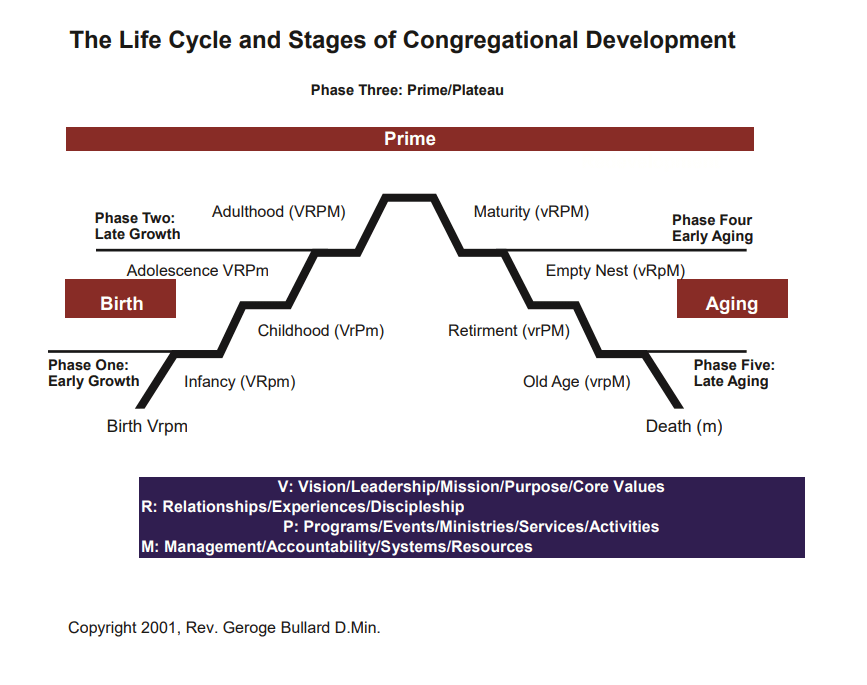
Just this week, as part of a class I am taking, we were given a handout by George Bullard entitled: Will Your Congregation Still Exist Ten Years From Now? His research has led him to this list of 25 Factors That May Impact Your Survivability, Vitality, and Vibrancy. Bullard invites churches and church leaders to evaluate their church by a set of 25 categories such as: vision, true relationships, high expectations of members, and a well-maintained facility . His research has concluded that there are at least 25 different things that can impact a church’s life expectancy.
Most of us never consider that our church may die. We just go on with our activities as if it will go on forever. But we need to do some serious evaluation from time to time. We need to look at the church with critical eyes – not to criticize but to evaluate boldly. And then we need to decide to correct what needs correcting. When this is done regularly and early in your church’s life, the changes made to correct occasionally may be small, but if your leadership has not evaluated your church and made adjustments over the years, there will come a time when you will need to make drastic changes. Some pruning will be required as you prayerfully cut out what is diseased and a distraction from what God has called your church to be.
If the evaluation and correction process is not something you are familiar with or equipped to handle, then call in someone who can. There may be resources available through your denomination, or call in a church coach or consultant. We are trained to walk a church through this process in a meaningful way. Whichever path you choose, do not just give up and hope the church will correct itself without the necessary work needed.
Churches and organizations need regular evaluation and appropriate action to correct where things are not going as they should. Don’t be scared to tackle this important yet painful process. Be more afraid that not doing anything will lead to the death of your church!
So call in someone to help. Contact someone like me to help you.
We can all do a pretty good job of getting along when everything is going our way. We can enjoy time with people and think they are pretty good friends. Life is good when no one challenges me or my ideas. But what do we do when someone we thought we were on good terms with ends up on the opposite side of an issue?
The church I am presently serving is facing an issue that is fairly divisive. I won’t tell you what the issue is. You can insert your own issue as I address how we are attempting to maintain unity even as we deal with a divisive issue.
Clarify the Issue
Whatever the issue is that you as a church or organization or team are facing, make sure that you clarify the issue. We thought we had been quite clear on the issue, but we realized that even after weeks of talking about it, people were confused. Do everything you can to make sure everyone knows exactly what you are talking about.
I remember a story of three men going into business together. They had rented a building and were setting up their restaurant. And then a problem arose. One of the men started talking about where he wanted the buffet area. A second interrupted him and told him clearly that a buffet was not part of the plan. They were going to have people come to the counter to order and pick up their meals. By now the third man was getting a little agitated. “I thought this was a fish and chips place!” We have to clarify the issue, and sometimes it means talking about it again and again to get down to what the real issue is so effective communication can take place.
2. Gather Supporting Information
For us, this was a decision that would affect some of our bylaws, so we had to make sure people understood what the bylaw was that was affected by the decision we were about to make. It was an issue that we believed had spiritual connotations, so we made sure to provide documents to our membership with scripture verses and explanations of how they spoke into the question at hand. We did some historical checking to see how this situation had been handled in the past. We even contacted our denominational office to get their input.
3. Prayer
We made sure to pray about this event. We encouraged people to pray on their own, we prayed about it in our services, and we prayed about it at leadership meetings. We prayed about it at discussion meetings we had regarding this question. We asked God to give us clarity and unity in the process.
4. Discussion Events
We hosted one formal evening of discussion on the topic. We recognized that there were people on either side of the question. Each side felt they had scriptural backing to why they believed what they believed. We determined not to enter into a debate. We did not want to set up a situation where we caused people to publicly take sides against each other. So we arranged for a time to carefully look at both sides of the issue. We invited people to speak up, but only in a positive way. No one was allowed to speak against an issue, they could only speak for their side. In this way, everyone was given opportunity to speak into the issue without it being against an individual.
As an aside, it was very encouraging to me as we ended that Discussion Evening, that many present stated their commitment to the unity of the church even if the vote did not go their way when decision time came. They were more concerned about protecting unity as one family or body, than about fighting for their point of view!
5. Make a Decision
At some point you have to decide how you will answer the question at hand. Like us, you may want to have a formal vote by the membership. You will need to decide at which level of authority in your church or organization that decision needs to be made. We encouraged our people to vote as their conscience directed after all the discussion and prayer we had. And then, whatever way the vote went, we trusted that God spoke into our situation and moved ahead according to the results of the vote.
Once a decision has been made, it is important to recognize that not everyone will agree with the decision as you move forward. Be alert to situations where people are having a hard time accepting the decision and take time to walk them as they process the results. You may need to meet with some individuals who are slow in processing the results so that you can help them move forward, encouraging them to trust God will continue to walk with us even as we trusted him to guide our decision process.
May God guide you with divisive issues you face. Too often, we become so closely tied to the issue that we would rather cause disunity than lose out on a vote. May God guide you and help you maintain unity as you too work through issues that could divide.
I would love to hear how you have worked through divisive issues and what worked for you. Let me know. Comment or email me.
This is going to be a busy week for me. It is jam-packed with responsibilities and deadlines. I will be attending a funeral in another province, which will take about three days including travel. On the way home I need to make arrangements to pick up a car my daughter bought from an online auction. Then in the four days remaining this week I will preach at a Christian School chapel, plan and lead an Elders Board meeting at the church. Saturday I am to lead the Elders and their wives through a 6-hour Visioning Retreat. On Sunday I am beginning a sermon series in Colossians as well as leading the church in a communion celebration. Besides that, I already have one coffee meeting and a Men’s breakfast. And this list doesn’t include those little interruptions that come up regularly, or the fact that I am also writing a blog and posting another this morning.
So how do we handle the busy times of life?
Use the slower times to prepare and plan ahead
My weeks are not always this full. I hope yours aren’t either. So when you have a little more time on your hands, think ahead. I usually plan my sermon series weeks if not months in advance. I often take time at the beginning of the year to plan a whole year of sermons, figuring out when to preach certain topics or themes or books of the Bible.
I have already been working on the Colossians sermon series so I have a pretty good idea of how I will introduce the series on Sunday. It’s not completed, but it shouldn’t take too much more time to finish my introduction sermon.
I have known I was speaking in chapel for about eight weeks. I have a sermon I preached a few weeks ago that I think will adapt well for this purpose. I need to adjust the sermon to make it interesting and applicable to 5- 15 year olds, but at least I have an idea of what I will be doing.
So when you have slower times, think ahead. Plan what you will be doing in the future. The more you think ahead, the more likely you will have at least some of the work done for the events of those busy seasons.
Use your experience to help you in the busy times
I have had little time to specifically focus on the Vision Retreat I lead on Saturday. Fortunately, I have experience leading similar events. I have old files of other vision processes I have led and can adapt those to specific needs of this church, giving me a great starting point.
I heard of one pastor who threw away every sermon he preached. He wanted each sermon to be fresh and not a repeat of something before. While I appreciate the desire to be fresh for each teaching, there is great benefit in having old files to go to when you need to work on something you have already done at some point earlier in your life. Use your experience. Build on it. Don’t waste it by throwing it all away.
Pray
We love the story of Jesus multiplying the loaves and fishes. He prays and the little boy’s lunch becomes a buffet for a crowd! Some of us have stories of God multiplying meals we have served when we did not think we would have enough.
In the same manner, why not pray and ask God to multiply your time? Ask God to stretch out your time so you will have adequate time to do what is required in your busy seasons. Or alternately, ask God to help you work more efficiently and accomplish more than you usually do in a certain period of time. Ask God to stretch your time and abilities to you can do your best, even in busy times.
Number one priority marked with red circle on math notebook
Focus
Sometimes in busy times we cause more problems for ourselves by getting caught up in all that needs to be done rather than focusing on one thing at a time. I don’t have to do the Visioning Retreat until Saturday, so I should focus on the other events that I need to prepare first. Work on one deadline at a time.
Focus in on one thing at a time so you can give it your best. Ask God to help you with your focus. He can help you work on one thing at a time rather than being overwhelmed with everything at once.
Do your best in the time you have
If you are good at what you do, you will want to do your best with your responsibilities. That is a good thing. But sometimes we have to let go of perfection and just do our best with the time and energy we have. This is not an excuse to do a poor job or not put in the effort, but there are times when our plate is just too full for us to make everything perfect. Do your best all the time, but also be realistic about the time you have.
Busy weeks will happen. Sometimes you will have multiple deadlines to meet at the same time. Ask God to help you and do the best you can, working on one thing at a time.
I will be sharing a brief review of every book I read this year. Hope you enjoy and hope it encourages you to keep reading.
WHAT TO DO NEXT – By Jeff Henderson
I highly recommend What to do NEXT: Taking Your Best Step When Life is Uncertain to anyone who is contemplating a possible move to a different position at work or a change in career or even just a change out of something when you are not sure what is next. Jeff Henderson reflects on his own recent journey of change of career, along with a number of helpful stories, to provide a helpful guide to anyone wishing they were somewhere else or doing something else. Many of us have faced transition in the last couple of years. This book may help make sense of transition you had to make and are now trying to cope with as well. A very helpful book.
I will be sharing a brief review of every book I read this year. Hope you enjoy and hope it encourages you to keep reading.
HINGE MOMENTS – by D. Michael Lindsay
Hinge Moments: Making the Most of Life’s Transitions is a powerful guide to anyone facing a transition, and in today’s world that is just about all of us. Transitions will happen, whether we choose them or not. Lindsay builds off interviews of hundreds of leaders looking at their transitions and lessons they learned in the process. He builds his book around a diagram of seven stages of transition. Discernment, Anticipation, Intersection, Landing, Integration, Inspiration, and Realization. He uses the example of a door to show how a “hinge moments” are the opportunities to open (or close) doors to various pathways of our lives. A helpful book for anyone facing or anticipating a transition in their life.
I will be sharing a brief review of every book I read this year. Hope you enjoy and hope it encourages you to keep reading.
SWEPT AWAY BY HIS PRESENCE – by Ron Auch
The subtitle of the book is: Refreshing the Church with the Power of Prayer. Ron Auch is calling the church back to prayer. He writes from a Pentecostal background, reminding the reader of the early revivals such as the Asuza Street Revival. In chapter 3 Auch points out how the first generations who experience God have a much different faith experience than the second, and how the third generation often has lost any experience of God. He calls the present generation back to prayer and a real and alive relationship with God. And he says prayer is the way to get that real relationship again. While the book is a little older (1997), the call to prayer is needed just as much today as it was back then.
A Christian leader faces the same challenges that any other leader does. And a Christian leader can help himself to any of the tools other leaders use to help them lead well. But the Christian leader has one powerful tool that others do not. Prayer.
Like any tool, it may take some practice and some skill to access this tool’s full potential. Often when we think of prayer, we think of asking God to do something for us. We come to him with a request. But that is only one aspect of prayer.
Another way to use prayer is to learn to listen to God. We are so used to telling God our problems and asking him to do something about them, and that is often where a Christian leader stops. Yet if we learn to listen, God will do much more for us through prayer than just respond to our grocery list of requests.
Here are some of the ways that I have benefited from this great tool we have.
God encourages through prayer.
Every leader faces opposition from time to time in their leadership, and Christian leaders are not exempt. As a pastor, I have faced opposition many times, both from inside and outside the church I have been asked to lead. People have called me names, accused me of being controlling, demanded I be removed from my position, and more. People have not liked what I stood for and deliberately chosen to walk in a different direction. I have faced opposition from within myself. There are times I have been disappointed in what my leadership accomplished. I have been disappointed in goals not met. I have been discouraged and depressed.
These are not uncommon problems for leaders to face. There are times we need encouragement. We might find some of it in books or in encouraging words from other leaders or supporters of ours. But I have found that some of the most powerful encouragement has come directly from God.
God has encouraged me as I listened to him. One time he told me: “you are my beloved son in whom I am well pleased.” This was powerful for me as I had just come through one of the most difficult times in my ministry. Another time, God affirmed that I was on the right track. I was a little unsure of the direction to lead the church and in a conversation with Him, I heard (or felt) Him say, “You are on the right track. Just keep going.”
God encourages the Christian leader through listening prayer where we actually hear God or sense God speaking words of encouragement to us.
God directs through prayer.
Every leader needs to know where they are going. They need to know where they are trying to take their organization. They need to know the priorities of the day. Sometimes we get caught up in the urgent needs of the moment and begin to veer off track from our intended goals. I love the fact that I can talk with God about my day and ask Him for direction for the day. I am serving as a Transition Pastor right now and have a limited time to work with the church through the various exercises. There are times when I have had to readjust my schedule because it just was not working. As I talked with God about it, I was able to patiently let him give me the priorities of the week.
God instructs through prayer.
One of the roles of the Holy Spirit is to instruct and remind the believer of God’s truth. When we pray, we are able to hear God speaking to us through the Holy Spirit. There are times we will be reminded of certain scriptures that speak into a situation that we are facing. There will be times when we will be given an idea or a concept to put into practice that clearly did not come from our own wisdom but from God.
If we pray and read scripture together, God uses those scriptures we are reading to give us insight into how and what we should be learning and doing in our leadership.
There are many tools available to leaders today. One of the best and most powerful tools the Christian leader can access is prayer and hearing God speak directly into their leadership. Pray, not just with a list of requests for God, but with a listening attitude and God will direct your paths.
I will be sharing a brief review of every book I read this year. Hope you enjoy and hope it encourages you to keep reading.
IS GOD SPEAKING TO ME? – by Lysa Terkeurst
Is God Speaking to me is written by a woman (Lysa Terkeurst) to women, yet I found it very encouraging and a good little read for me too. This 57 page booklet is an excerpt from Lysa’s book, What Happens When Women Say Yes to God. Lysa writes, “I am amazed and saddened by the number of people missing out on the most exciting part of being a Christian – experiencing God.” This booklet is a great encouragement to listen and hear from God. Check it out.
As a leader, you live in the future. While you have to be grounded to the present, and build on the past, much of your time is spent looking at the future and how to best prepare for it.
Vision
A leader, and his team, need a clear vision of where they want to go. A vision is your expectation of what the future could look like. You need to be able to see the reality of the future clearly enough to know what you must do to get there. This takes some creative and well-informed imagination. You need to know the realities of the present well enough to know what can be reality in the future. If you understand the present clearly enough, you know what must happen to make your dreams come true.
The average person doesn’t have the capacity to dream. Some are so loaded down with life that dreaming seems impossible. I recently talked with a lady who had been a single mom, just barely surviving day to day. She said she had not had any energy to think beyond the present day for a long time.
To think beyond that was impossible. Others do not have the time or ability to dream a better future.
The average person doesn’t have the capacity to dream. Some are so loaded down with life that dreaming seems impossible. I recently talked with a lady who had been a single mom, just barely surviving day to day. She said she had not had any energy to think beyond the present day for a long time. To think beyond that was impossible. Others do not have the time or ability to dream a better future.
Leaders need to be able to see a better future and take the responsibility of helping others see that better future.
Growth
As a leader you should anticipate growth, and desire that more people come to church. This requires future thinking to anticipate what this growth will look like and how you will get there. Will you outgrow your space in the next couple of years? Will you need to expand space or start multiple services? Will you have to hire more staff or equip more volunteers? Consider what a larger congregation will look like and the realities that will be associated with that welcomed growth. As you see that future, you need to be able to begin to prepare for it.
Meetings
When you plan a meeting, you are living in the future. You need to have a clear understanding of what is most important for that meeting.
If you are planning a staff meeting next week, you need to be clear about the priorities of that day. Not the priorities of today, or tomorrow, but at that time. You need to know how to deal with the issues of the moment of that day, even though you are not there yet. In that way you can set an appropriate agenda that will guide that meeting and help everyone present know how to keep moving toward the vision. Yes, a staff meeting does need to look back a bit, and recognize the realities of the day, but the leader needs to inspire hope for the future in those he is leading.
Staffing
When considering your staffing needs, it is important that you hire employees who will help your organization do more than you are presently doing. You need to anticipate what each person or role will contribute towards your vision. You can’t just hire for the moment, because you are already handling the issue of the moment. You want someone who will help you move ahead. This requires a plan for what your organization will need in the future and how a new hire will not only help you get there, but also help once you’ve reached those goals in a way the present team can’t yet do. Hire for growth. If you only hire to accomplish what is already being done, you are adding staff for maintenance, not growth.
Programming and Events
As a leader, you recognize that there are times when a certain program or event can help your church move toward your vision. There may be studies that you want your church to go through because they will better equip your members to do what you believe God has called your church to. You are living in the future as you see what you hope will be the results of this study.
I am presently preaching a series on hearing God. I want the congregation to get a better understanding of the truth that God still speaks to us and we can hear him guiding us in our daily lives. I anticipate a future where the members are more aligned with Jesus and truly hear him speak into their daily lives.
I am a Transition Pastor so there are certain meetings I have with the congregation that I hope will resolve any issues of the past and encourage the church to look forward with anticipation to what God will do. I am living in the future when I see a church that has dealt with issues, where repentance and forgiveness has taken place, and where there is greater unity around their common vision for the future.
Challenges
You don’t have to be a leader very long before you encounter challenges. Some of these can be completely unexpected, like the covid challenge. But others can be anticipated and prepared for. For example, if half your congregation loses their jobs because a local mill shuts down, a pastor who is leading well will see how this will impact the financial aspects of the church in the near future. Leaders can see challenges coming if they look ahead.
If you are going to lead your church or organization through those challenges, you need to be able to see what your church will look like when you get to the other side. You need to know how to lead them through these challenges. No one ever knows what the other side of a challenge will really look like, but a leader can prayerfully dream the better future and then lead toward it.
Leaders are not prophets, yet they need to read the “signs of the times.” Some farmers say that if you have a period of heavy fog, there will be rain in 90 days. “Red sky at night, sailor’s delight” says that a red sky at night will bring a pleasant morning. Leaders need to learn how to read their situations to understand their future, and leaders need to constantly consider the future as they lead in the present.