I will be sharing a brief review of every book I read this year. Hope you enjoy and hope it encourages you to keep reading.
GO: Returning Discipleship to the Front Lines of Faith – by Preston Sprinkle
As Preston Sprinkle’s books usually do, this one also pushes the boundaries of what believers are comfortable with and used to. He does a great job of biblically suggesting there is more to discipleship than just teaching and more to church than just Sunday morning worship. He points out that discipleship is about living out a relationship with Christ, and living it out in real and practical ways as we connect with others in our world. Chapter 9 is worth the cost of the whole book as he challenges believers to consider how much of our efforts and money is wrapped up in putting on nice Sunday services instead of helping people with their real needs. A challenging and encouraging read!
I will be sharing a brief review of every book I read this year. Hope you enjoy and hope it encourages you to keep reading.
The Family God Uses: Leaving a Legacy of Influence – by Tom & Kim Blackaby
There are many parenting and family themed books out there, but this is the first I have seen that focuses outside the family. Instead of focusing on how to improve one’s family, the Blackaby’s write about how the family can unit around being on mission for God. They write about the value of the family to the church and to God’s work in the world. A number of examples from them personally and others, are included to show how families can serve God together and be used for His glory in His Kingdom. An excellent book for any parents who want their children to grow up with a desire to serve God. Your family can be used by God!
I will be sharing a brief review of every book I read this year. Hope you enjoy and hope it encourages you to keep reading.
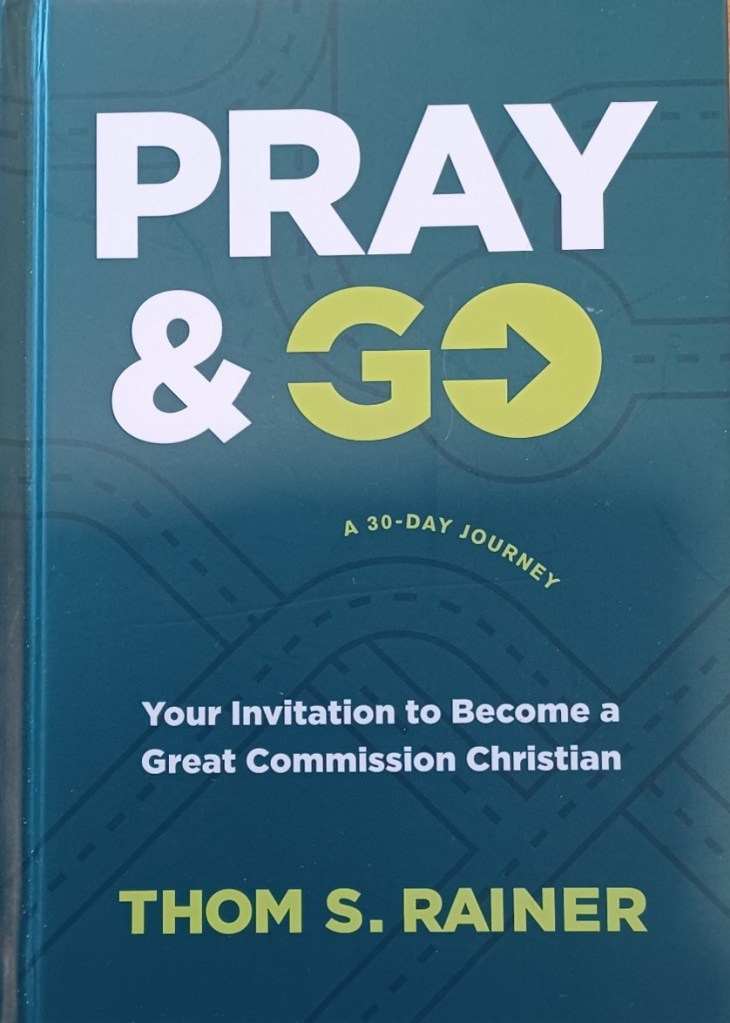
PRAY & GO: Your Invitation to Become a Great Commission Christian – by Thom S. Rainer.
Thom Rainer has written a great book that is used for Church Answer’s Hope Initiative, a 30-day journey that can be done as a group or individually. When you sign up for the Hope Initiative you also get other supporting resources and video encouragement in you 30-day journey. The intent of the book is to help you become more active in sharing your faith as you pursue the fulfillment of the Great Commission of introducing others to Jesus. A great book to help you grow as a disciple of Jesus.
Now the Berean Jews were of more noble character than those in Thessalonica, for they received the message with great eagerness and examined the Scriptures every day to see if what Paul said was true.
Acts 17:11
There are times when we need to critically assess certain things. The Bereans in the verse above were carefully assessing the good news the Apostle Paul shared with them in order to determine if what he said was true or false. Rather than writing him off, as some other towns did, the Bereans understood the value of examining the situation carefully and responding appropriately.
There are many times in the work of the church or an organization where critical examination is beneficial. Hare some examples of areas that require careful assessment.
Programs
Churches often begin a new program with excitement and a hope that it will be meaningful and accomplish a certain purpose. The program may succeed and serve the church well, but there may come a time when the program no longer serves the same purpose, or something else might serve the church better. If you do not assess the program critically, you may be holding on to something that no longer has value. Instead, ask these questions regularly:
What is the goal of this program, and is it achieving that goal?
Is this the best program to achieve that goal?
Would the church be best served if this program was dissolved, or replaced?
Budgets
In my years of serving the church I have been part of many budget-setting meetings. It is surprising how often a budget line is approved or denied without real assessment of its value.
Sometimes budget amounts are simply left as is, or increased slightly because of overspending the previous year. This lacks critical thought process about why each amount is designated for each area.
In my years of serving the church I have been part of many budget-setting meetings. It is surprising how often a budget line is approved or denied without real assessment of its value. Sometimes budget amounts are simply left as is, or increased slightly because of overspending the previous year. This lacks critical thought process about why each amount is designated for each area.
Some churches invite program or ministry leaders to submit budget requests. This might require that some assessment take place if those leaders prayerfully determine what their plans and expenses are for the next year, while keeping the vision in mind. The following questions could be helpful:
What is our ministry plan for the next year?
What expenses will we ask the church to fund, and why?
New Hires
As a Transition Pastor, I am continually working with churches who are looking for a new pastor. I am hired to help them make a wise choice. This includes asking the leadership questions to help them assess each candidate carefully. When a church has been without a full-time pastor for a period of time, there is a desire to find their next one quickly. As they receive resumes, it is easy to fall in love with a candidate without being critical enough. While it seems harsh to the average church leader, you must evaluate your candidate according to some strict expectations. You want the right person, not just someone who seems nice. Here are some questions to ask regarding the candidate:
How closely does this candidate match your job description?
Are the candidate’s beliefs and philosophies closely aligned with the church’s?
Will this person be the best one to lead your church toward its goals?
There are many other areas a church leader needs to assess critically, and there are many other questions to ask in the evaluation process, but most importantly, do the critical assessment necessary to ensure you have the best results moving forward.
A church leader must not be a new believer, because he might become proud, and the devil would cause him to fall.
1 Timothy 3: 6 (NLT)
It is a great joy to welcome new believers into the church! But Paul gives a warning: “A church leader must not be a new believer.” We should look to those who are spiritually mature to lead us.
Paul doesn’t give us a length of time to wait, just that we are to wait. This is good, because some new believers mature faster than others. There are some who could take years to be ready while others might be ready in a year. The important thing is to give the new believer time to learn and grow in their faith in Christ.
What might be some problems with new believers in church leadership? Paul, in his letter to Timothy cautions that a new believer put into leadership too soon may become proud. The new believer may see this leadership role as a position of elevation in the eyes of others and think of themselves as something special, rather than as a servant. And Paul is concerned that this new believer, in their pride, may fall. The NIV puts it like this: He must not be a recent convert, or he may become conceited and fall under the same judgment as the devil. The devil fell because of his pride. He wanted to be higher than Jesus. Paul is concerned that a new believer will fall prey to the same sin and hurt his walk with God.
Other concerns may be tied to some of the earlier instructions given to church leaders. A leader needs to have a good reputation and live a goldy life. The new believer may not have that to begin with. He may need to have time to mature and become more like Jesus, and to gain that good reputation with others around him.
Another concern may be that a new believer will not be able to teach in the same way that a mature believer can. If a new believer is good at research, they may be able to put together a good lesson, but their teaching would generally be theory because they have not yet had time to put into practice what they are learning as a new follower of Jesus.
A new believer may also still carry sinful habits. He needs to learn to set those aside before stepping into leadership. While it is great to desire leadership, there should first be a strong desire to live in right relationship with Jesus by the power of the Spirit.
Churches often talk about discipleship when referring to the process of maturing as a believer, where over time the new believer becomes more and more like Jesus. A new believer would benefit from some discipleship first, whether formal or by spending time in the activities and teachings of the church. Part of that discipleship could include observing and learning from the leadership board or shadowing a leader as they go about their duties.
The official church leaders should be people who have already shown their leadership in the church as maturing believers. Asking them to serve on a board or a committee is a natural next step, affirming that they are already one of the people that others naturally look up to and learn from. Ongoing discipleship prepares maturing believers for the next steps in church leadership, taking on smaller roles to begin with and then being asked to higher levels of leadership as they prove themselves.
Church leaders should be mature and passionate about Christ and His church. They should learn and develop and grow until they are among the best in the church and well prepared for leadership. If you are that new believer, then do your part to continue to grow and be discipled as opportunities allow. God will build you up to the time when others recognize you have already become a leader. When that happens, step into leadership with a confident faith in God and a desire to serve.
He must not be a heavy drinker or be violent. He must be gentle, not quarrelsome, and not love money.
1 Timothy 3: 3 (NLT)
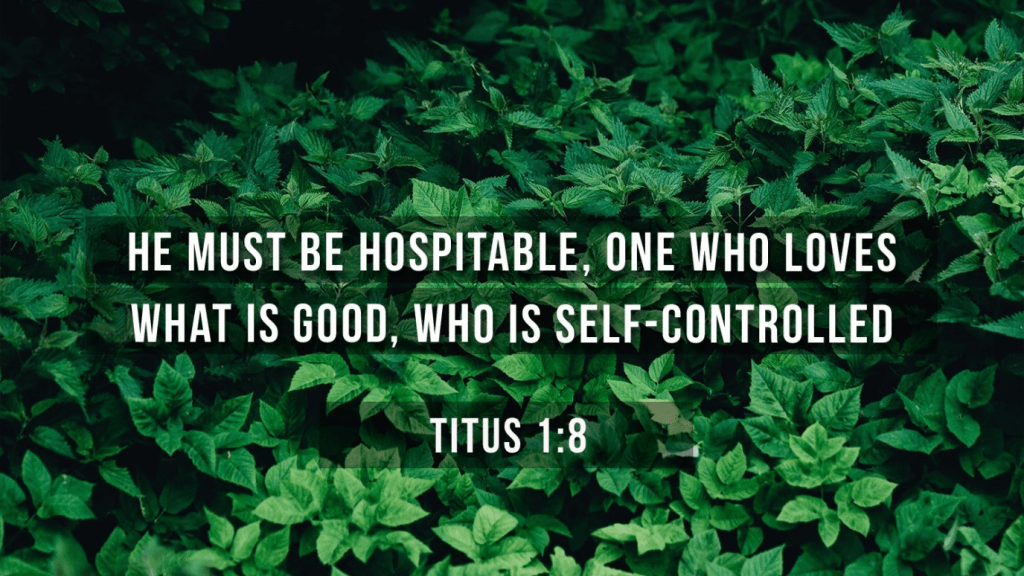
A church leader is a manager of God’s household, so he must live a blameless life. He must not be arrogant or quick-tempered; he must not be a heavy drinker, violent, or dishonest with money. …and he must love what is good. He must live wisely and be just. He must live a devout and disciplined life.
Titus 1: 7, 8 (NLT)
Not everyone leads a self-disciplined life, but leaders must be able to do so. Leaders need to have the ability to assess themselves against the expectations laid out for them. A Christian leader assesses themselves regularly against what the scriptures teach about leadership.
When I was a kid, my church circles strongly opposed drinking alcohol of any kind. Today, many Christians have decided abstinence is not a requirement in scripture. Paul, while not teaching abstinence, clearly prohibits church leaders from being “a heavy drinker”. He doesn’t say that they need to avoid getting drunk, but not be a heavy drinker. So the warning is actually about drawing a line earlier than getting drunk. It’s not hard to understand why. Drinking to excess will severely limit a person’s self-control.
In both Titus and Timothy, Paul speaks against being violent immediately after warning about drinking too much. This may be because for some, drinking may lead to violence (perhaps related to lack of self-control mentioned above). In any case, violence should not be part of a Christian leader’s character in any way. Instead, there should be gentleness. There should be a kindness in every leader. And they should not be known a someone who quarrels. They should be disciplined, controlling their anger.
A church leader should not be arrogant. Sometimes people in leadership think that everyone else should look up to them, expecting, even demanding, a certain amount of respect from people rather than choosing to serve others. Some church leaders, some pastors, act like little kings rather than servants of those they are tasked to lead.
A church leader must not be dishonest with money, or even love money! There have been many scandals in the news over the years bringing to light leaders who have used their position to build their own personal wealth at a cost to the organization they were entrusted to lead. That should not be.
When a Christian leader lives rightly, they will love what is good, live wisely, and be just. They will be more concerned about the people they serve and the organization they lead that they will be good and kind and wise in their actions. They will be more concerned about honouring God than trying to make themselves look good.
“He must live a devout and disciplined life.” A Christian leader will desire God first. There will be a constant desire to give God the glory and take none for themselves. There will be a longing to know Jesus in a deeper and more personal way. The Christian leader will spend regular time in God’s Word, not just for their next teaching responsibility but for personal growth and connection with God. There will be a desire to live out what they are reading, to honour God with their abilities and their position, whether in the church or in business.
A disciplined life is one that is careful to remove and stay away from characteristics that do not reflect a relationship with God, while also working hard to reflect the character of God in all they do. Discipline means you put some effort in. You evaluate yourself regularly against what you believe God wants of you. A disciplined person knows where to draw lines in life, knowing how to avoid extremes of one way or another so as to reflect Jesus in all they do. A Christian leader will live a disciplined life.
I will be sharing a brief review of every book I read this year. Hope you enjoy and hope it encourages you to keep reading.
GETTING NAKED – by Patrick Lencioni
Getting Naked: a Business Fable, by Patrick Lencioni is exactly that. It is a well written story of a businessman sent to check out a smaller company that has just been acquired by the company he works for. He expects that, because it is a small company, it will not have anything to teach him. He is surprised by the things he discovers. He learns that they have a much better way of handling clients and doing their work than what he is used to. Lencioni concludes the book with a few key points that are already clearly shown at work in the story. A great book on how to benefit from being vulnerable in business.
I love to work on vision. I’m a dreamer. It’s not hard for me to come up with new ideas, and I do it often. Not everyone has that mindset. I also think quickly and I realize not everyone does. In my present role, I work with a different church each year, and lead them through a process of vision setting. This means I’m engaging with a wider range of individuals, some who are excited about and comfortable with working on vision setting, and some who are not.
Here’s the big question: how can you make sure that everyone is able to fully engage in the process of setting vision for your church or organization?
Follow a written plan.
When you lead a team through the process of setting vision for your organization, make sure you first identify a written plan. Whether you use something developed by another, or like me, pick and choose exercises from a variety of sources, make sure that everyone has access to the plan before starting the process. Then each person – not just the leaders – can see where the process is heading.
I provide everyone with a booklet they can follow. One of my team has a difficulty hearing, so the booklet helps him know where we are even when he misses some of what is said in the discussion.
In addition to the overall plan document, for each meeting, I also provide a clear agenda, complete with breaks, and times listed for each exercise so everyone can see if we are falling behind. I try to be a little flexible with the time, and even skip some pages in the workbook if we are running behind schedule. The participants can check those out later if they want.
Use Variety
I like to do more than just a question-and-answer format. Some of the exercises I like to use for vision setting sessions are multiple choice or circle the best answer. Some are fill in the blank. I provide examples from other organizations that can spark ideas. I do a little leading but prefer to get the team to do most of the talking, especially since I am the consultant and will not be with the church as they move to implement the plan. My job is to make sure they can arrive at a common vision that is truly theirs. This means that I invite a lot of discussion. I do some work on a white board when trying to bring their ideas together so everyone can see any common threads. I even included a few colour charts to help visualize some exercises. I also like to add a few cartoons! Make sure to include times where people can get up and move around a bit. Sitting for too long will slow people’s thought processes down.
Go Slow
When leading a vision process, go slower than you think you should. There are always a few who think slowly and need time to think about things. Some ideas may be brand new and might need some mulling over. Some participants will read and process the directions for the next exercise slower so you can’t rush the process. Too much information too fast will not work. Instead, give time to process to keep everyone’s thinking clear.
Circle Back
I have found that it is helpful to present exercises that to get the team to see the present reality and the future possibilities from a number of different angles.
As I recently led our team through a visioning process, it was interesting to see some of the same ideas coming up throughout the session, and ideas coming up later that built on what was previously discussed. As these topics came up multiple times, it resulted in more clarity.
Highlight Recurring Themes
When you are working through a vision process, note these recurring ideas so that everyone is aware of them. It’s obvious that these are the themes that will be a major contributor to the final vision statement and vision picture. Listen to how their answers to different questions tie together and form a common theme. As the leader of the session, you are in position to observe these connections and identify them for the group.
Listen to God
In the recent process I led, there were a few times where we just stopped and prayed, both talking to God and listening to Him as well. There were a few times where different members of the team felt God was saying something we needed to pay attention to. When there were others that concurred, we took those thoughts seriously and integrated them into the values and vision that were taking shape.
It was very encouraging to me to see our team fully engaged through a 6-hour vision marathon! Everyone contributed to the conversation and was involved in the process right from the beginning to the end.
What are some ways you have found helpful to keep people engaged in process of developing a vision or strategy?
Uniquely You: Transform Your Organization by Becoming the Leader Only You Can Be is an encouraging book for any leader. Ron Kitchen builds off his own experience and the many lessons he has learned along the way. Ron shares many stories as he highlights the value of building a great team. He gives a number of great ideas on how to build that team. I like how he puts family first, and makes that an important part of his business, so that everyone on the team has that same priority. His ideas have a great track record as his teams don’t have alot of turnover because they love working together.
This books has short chapters which will be appreciated by those who don’t like reading but still want to learn.
The moments of our life are filled with little decisions. A mother in Zambia stirs her nshima. A farmer in Peru harvests his coffee. A businessman in Japan exits an elevator. Life is going on in every corner of the world. Insignificant moments? Insignificant people?
A kind word encourages a friend. A “thank you” lifts the spirits of the barista who prepared your coffee. A word of encouragement helps a young person decide on a career. Small moments that make a difference.
A secretary phones in sick, and a temp gets a new job. A student calls for prayer and a movement takes shape A neighbor introduces himself to another neighbor – and introduces him to the Lord three years later.
A woman pours perfume on a man’s dirty feet and wipes them with her hair – and Jesus makes sure it is recorded in history. An impatient soldier shoves a spear into Jesus’ side to make sure he is dead – and fulfills prophecy. Small, seemingly insignificant moments, with significant effects.
John Maxwell is famous for his writing and speaking on leadership. I was amazed at his ability to find good quotes and the right facts – until I heard he has a crew of people who do much of that work for him. Those who have made significant contributions to the world require the support of people in the background. Unknown people are in the background of all who seem to have made significant contributions to the world.
A friend is recognized for his act of bravery by the Canadian government for helping a fellow passenger to safety when their small plane crashed. He’s seen as a hero now, but in the moment simply decided to act. And it turned out to be a significant decision. A choice made in the moment, but a lasting impact and recognition.
There are no insignificant moments. All the seemingly insignificant decisions of seemingly insignificant moments shape who you become. Everything we do, as insignificant as it may seem, has significance. Those small decisions that we make in a moment accumulate in your character. They shape you and determine who you become.
So whether you eat or drink or whatever you do, do it all for the glory of God.”
the Apostle Paul
“So whether you eat or drink or whatever you do, do it all for the glory of God” writes the Apostle Paul in 1 Corinthians 10: 31. Brush your teeth for the glory of God? Share your testimony for the glory of God? Every moment that feels insignificant can glorify God. God is at work using the moments, the words, and the actions, of each person. God uses the average, unimportant people to bring Him glory.
Every moment can make a difference. Every word can be powerful. Every person has value and purpose.
May you live a life of significance as you surrender your life to the pursuit of the glory of God. Invite him into every aspect of your life, every decision you make, and you will live a life of significance in His eyes.
May you be a leader who recognizes the value of the insignificant moments and insignificant people.