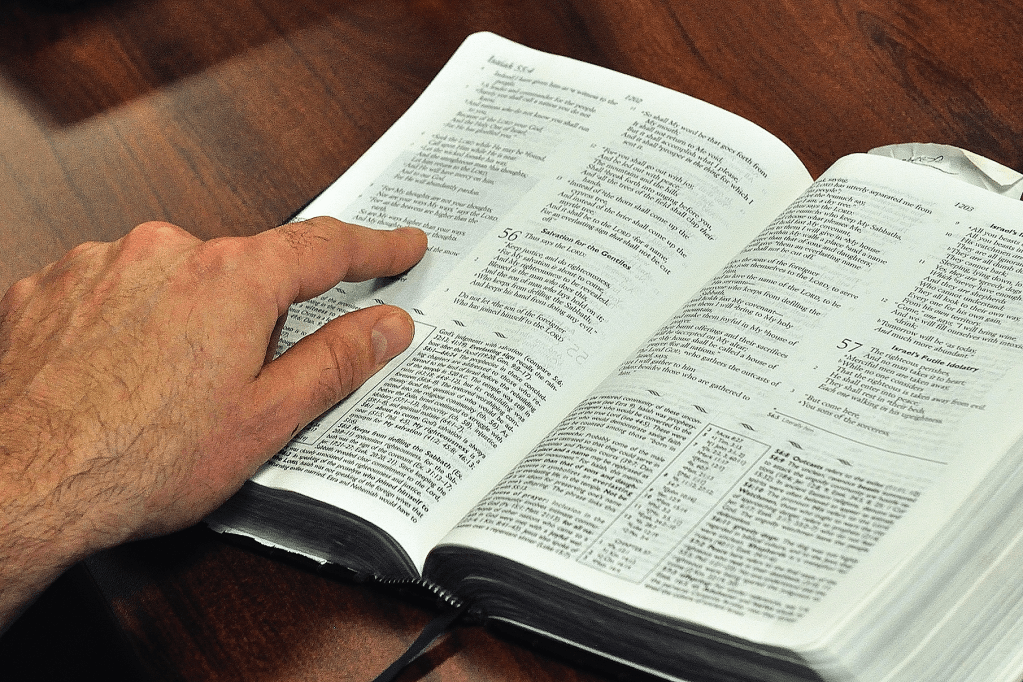
Preaching With Boldness

All Scripture is God-breathed and is useful for teaching, rebuking, correcting and training in righteousness, so that the servant of God may be thoroughly equipped for every good work.

2 Timothy 3: 16-17

Recently, I began a sermon with this statement: “I am going to talk to you about something this morning, that is very hard for us.”

I was preaching through 1 Peter. This morning we were looking at 1 Peter 2: 13 – 3: 7, which is all about submission. Not submission to God, but submitting to governing authorities, to masters, to husbands and wives. This is not a topic I would have chosen to preach about, except that it was in the middle of the book of the Bible that I was preaching through. Submitting to the government is not a popular topic among many church people, yet that was exactly what God’s Word was talking to us about in that scripture. Because it was God’s Word, and not my own ideas, I could preach it with confidence.

If 2 Timothy 3: 16-17 above is right, then we know that there will be scriptures that rebuke and correct, not just encourage us or make us feel good. When the preacher makes sure to preach what God’s Word says, then the preacher can speak with confidence and boldness.

I remember a person commenting after a sermon I preached that they thought I was brave to preach what I did. It actually surprised me a bit. I had preached on money, teaching what scripture said. I didn’t consider it brave. I was just preaching what God said, but this comment revealed the reality that there are certain scriptural truths that people do not want to hear. There will be people who are upset with you when you preach biblical sermons that challenge their personal beliefs, or even the beliefs and practices of their church.

Scripture occasionally points out where we come up short and need to make corrections. As a preacher, I can preach boldly as long as I clearly say what scripture says. It is God’s Word. If the Bible says it, God says it. I should have no problem teaching it with confidence.

At the same time, we need to preach with gentleness. When we teach about how God created people male and female, and only male and female with no other options, we can teach with gentleness in light of those who are personally struggling with this or have family who are.

We can preach about money and giving to the church, but also recognize that some are struggling to make ends meet.

We can preach on the importance of forgiveness even as we recognize that some people have been hurt deeply and personally in a way that is hard to move on from.

God calls us preachers to preach the whole truth of His Word. We cannot pick and choose only the things that people want to hear. This is one of the benefits of preaching through a book of the Bible. We come across passages that we might not have chosen to preach about.

If we are careful to preach what scripture says we can preach with confidence. We don’t need to be embarrassed to preach counter-cultural truths. We don’t need to be afraid that people won’t want to hear what the scripture says.

If we are preaching something that scripture never said, then we better hesitate to say it. Yet we can preach with confidence when we know that we are saying what God said. Let’s continue to declare God’s truth with clarity and confidence.

Keep looking up,

Andy Wiebe

Half a Century of God’s Faithfulness!!

I just realized the other day that I have been a follower of Jesus for 50 years – and God has sure proven His faithfulness! I was about seven years old when my dad prayed with me, and I surrendered my life to Jesus. Next month I turn 57. And God has never failed me over all those years. I have experienced what Deuteronomy 7:9 declares, “Know therefore that the Lord your God is God; he is the faithful God.”

God has proven his faithfulness in always being there for me, in good times and bad. He has been there when I was so disappointed in Him that I deliberately tried to ignore Him for a period of time. I was frustrated how my life was going and began to wonder if God would ever intervene. That attempt to give God the cold shoulder didn’t last for too many days, because no matter what, God has always been there. He was never far from me. Romans 3:3-4 declares God’s faithfulness even when we are not. “What if some were unfaithful? Will their unfaithfulness nullify God’s faithfulness? Not at all!” And God has shown His faithfulness as I have learned to get to know Him better over the years. When I think back to the simple faith of seven-year-old me and the way God has proven His love in ever deepening ways, I am so thankful that faithfulness is one of God’s attributes!

I have experienced God’s faithfulness in his forgiveness. As scripture declares in Romans 5: 8, “But God demonstrates his own love for us in this: While we were still sinners, Christ died for us.” He loved me while I was a sinner, and he loves me as I continue to struggle with sin. And like the patriarchs of the Old Testament, God has used me in meaningful ways even as I fall short of His best for me. God working in and through me has allowed us to be part of some unique experiences like helping a church grow in a school and then move into its own building, and putting on Easter events for the community that drew three times as many people as we usually saw on a Sunday.

God has been faithful in giving me a great family! I have a beautiful wife, who is clearly a gift from God. We have two beautiful and competent daughters! Again, clearly gifts from God! And He has helped us through many difficult things. We have had family health scares but known God’s peace in those as He walked with us. We have had times of financial strain, without a house, without a job, and unsure about what was next. God arranged for a job that provided us with enough finances to buy a house after two years. We have experienced answers to prayer, from finding skates for a great deal to healing when we needed it.

The faithfulness of God is evident as I look back over the years to how God directed us to certain churches and communities to live and serve in for awhile. While there were a few disappointments along the way, it was clear that God directed us to the places where we could fit and serve Him well. He has given us many great memories from the different places we served.

God loves people. He loves to welcome them into His family. And He loves to walk with them for the rest of their lives! I have experienced that in many personal ways. It is so good to never have to worry if He will still love us if we do something wrong, or if He might ignore us or no longer respond in love. “Know therefore that the Lord your God is God; he is the faithful God.”

Keep looking up,

Andy

Book Reviews: Andy’s 2024 Reading Experience.

I will be sharing a brief review of every book I read this year. Hope you enjoy and hope it encourages you to keep reading.


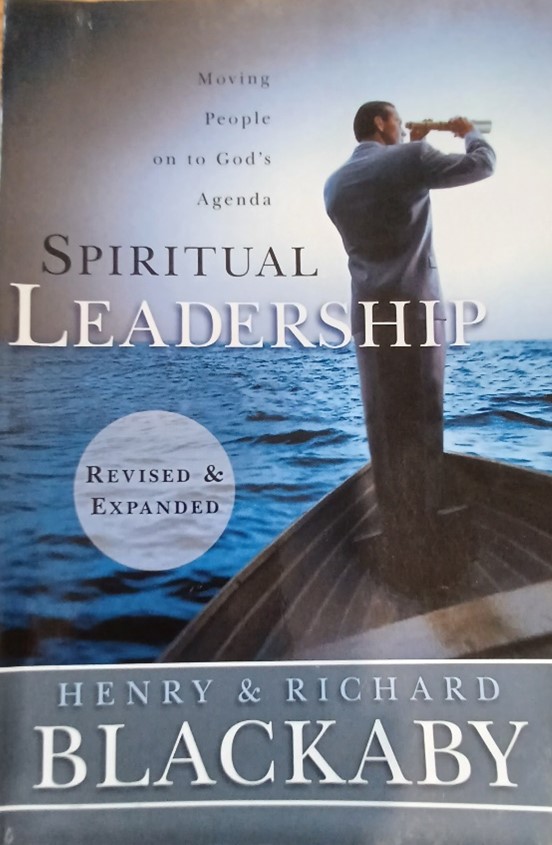
SPIRITUAL LEADERSHIP: Moving People on to God’s Agenda – by Henry & Richard Blackaby

Spiritual Leadership is one of the better leadership books I have read. The authors highlight that spiritual leadership is all about God. It is about moving people in the direction God wants them to go, about listening to God for how to lead well, and listening to God about what direction to lead. I appreciate how they point out that spiritual leadership is not the same as leadership in general. In fact, they begin the book with this statement: Spiritual leadership is not an occupation: it is a calling. Christians in any area of leadership should be spiritual leaders. This is a great book for any Christian who wants to lead well.

The Birth of Jesus! The Story of Christmas.

Luke 2

In those days Caesar Augustus issued a decree that a census should be taken of the entire Roman world. (This was the first census that took place while[a] Quirinius was governor of Syria.) And everyone went to their own town to register.

So Joseph also went up from the town of Nazareth in Galilee to Judea, to Bethlehem the town of David, because he belonged to the house and line of David. He went there to register with Mary, who was pledged to be married to him and was expecting a child. While they were there, the time came for the baby to be born, and she gave birth to her firstborn, a son. She wrapped him in cloths and placed him in a manger, because there was no guest room available for them.

And there were shepherds living out in the fields nearby, keeping watch over their flocks at night. An angel of the Lord appeared to them, and the glory of the Lord shone around them, and they were terrified. 10 But the angel said to them, “Do not be afraid. I bring you good news that will cause great joy for all the people. 11 Today in the town of David a Savior has been born to you; he is the Messiah, the Lord. 12 This will be a sign to you: You will find a baby wrapped in cloths and lying in a manger.”

13 Suddenly a great company of the heavenly host appeared with the angel, praising God and saying,

14 “Glory to God in the highest heaven,
    and on earth peace to those on whom his favor rests.”

15 When the angels had left them and gone into heaven, the shepherds said to one another, “Let’s go to Bethlehem and see this thing that has happened, which the Lord has told us about.”

16 So they hurried off and found Mary and Joseph, and the baby, who was lying in the manger. 17 When they had seen him, they spread the word concerning what had been told them about this child, 18 and all who heard it were amazed at what the shepherds said to them. 19 But Mary treasured up all these things and pondered them in her heart. 20 The shepherds returned, glorifying and praising God for all the things they had heard and seen, which were just as they had been told.

21 On the eighth day, when it was time to circumcise the child, he was named Jesus, the name the angel had given him before he was conceived.

Allowing The Bible To Guide Our Leadership

Many issues arise in our world today because of our search for the answer to the question: What is the truth? Theological issues may come about when we search for answers in teachings we have not heard before. Political issues can begin when we as Christians question what our place is in politics or responding to decisions our governments make. Moral and lifestyle issues are often found when the church is unsure how to respond to what is becoming acceptable in the world around us and even in the church that has historically not been accepted. What is the truth?

While there are many today who pretend we can have different truths to guide us, truth doesn’t work that way. If I am driving down the highway and decide that my truth is that I am in England so I will drive on the left-hand side of the yellow line, my truth will be quickly confronted by another truth when the traffic in that lane comes hurtling towards me. That is a silly simple example, but the fact is, what we believe about things makes a difference, and impacts our relationship with others. Truth, as God has laid it out, affects all of us.

As people of God, and as leaders of churches, we need to recognize that our answers need to be found in God’s Word. His Truth must be upheld in our churches. I do understand that sometimes we need to do some work to determine how God’s truth impacts the questions we face. But our answers should be informed by God’s Word – the Bible.

How might we find answers in the Bible?

Read the Bible.

The first priority to actually read the Bible. Read it regularly and search it for answers to your questions.

As you read, ask God, through the Holy Spirit, to give you correct understanding of what you are reading. We recognize that the Bible is more than a story book, though it contains many stories. Whether we are reading biblical stories, or a teaching section, or even some of the poetic books like Psalms and Proverbs, we want God to help us understand what the truth is and how it applies to my life and to the church where I serve as a leader.

Consult with others on difficult passages or topics.

We are blessed to have the results of many experts at our fingertips. We can find commentaries where others have worked through scripture and give their expert opinions. We can make use of tools that help with word studies and guide us through some of the definitions of the original language. We can read books by people who are struggling through some of the same questions we are. We cannot interpret scripture completely on our own, there is importance in reading scripture in community. Whether we agree or disagree, there is benefit in seeing how others have processed biblical truth in light of this topic. I’m presently reading a great book on how to respond biblically to those living a gay lifestyle. There are many other topics that others have been able to work through in more detail than we have so we can learn from them. Just make sure their teaching is arrived at by careful study of scripture.

And one of the simplest ways to consult others is to have conversations with others in your church as you work through scripture to find the answers you need. Find some other believers and read the Bible together. Work through scripture as a leadership team and ask God to guide you to the correct understanding and application.

Do what it says.

The hardest part of allowing the Bible to guide our leadership, is to then do something about what it says. If it means leadership needs to confront false teachers or people living contrary to truth in your church, then do it. If it means changing policies on how volunteers are screened, then change the policies. If it means teaching the church what it means to live out truth and love in light of Gods Word, then teach your church that.

If we are going to allow the Bible a prominent role in church leadership, then we need to make sure we read it regularly. We need to do the work of understanding it clearly, and then we need to follow through on what God is asking us to do as a result.

If we are Christian leaders, whether in the church or elsewhere, our leadership must be informed by the truth of God’s Word.

Keep looking up,

Andy Wiebe

Can God Really Be Heard?

As people who love God and want to serve Him, can we actually hear him? Can we have clear direction as we make decisions and lead a church?

God spoke with people in the stories of the Bible. In Genesis 3 the Bible describes a conversation between Adam and Eve and God. It tells us that God came and spent time with them in the Garden of Eden. Many times, prophets in the Bible spoke what they knew were the words of God. And others accepted their words as from God. People like Abraham and God had conversations about how many children he would have. God spoke to Moses from the burning bush. Sometimes God sent his angels as messengers, as seen when Gabriel visited Mary. God spoke through dreams and visions, as he did when warning the Magi not to return to King Herod after visiting Jesus. When people in the Bible heard God speak to them, they were confident that it was Him and clear about what He was saying to them.

God clearly spoke through His Son. John 1 tells us that Jesus was and is the Word from God. He is the expression of all God is. But Jesus also spoke with his disciples about many things. He taught with authority – so much so that people wondered where he got his authority. Jesus’ disciples had intimate conversations with Jesus dealing with everyday life like paying taxes, or dealing with the fact that he would have to die and rise again. He spoke to the two on the road to Emmaus, in Luke 24. Even though those who heard from Jesus were sometimes unsure what Jesus meant when he spoke, they clearly heard him, and had the privilege of asking questions to clarify what He meant.

God spoke in and still speaks through scripture. 1 Peter 1: 20-21 says, “Above all, you must realize that no prophecy in Scripture ever came from the prophet’s own understanding, or from human initiative. No, those prophets were moved by the Holy Spirit, and they spoke from God.” The scriptures are God’s words to us. 2 Timothy 3: 16-17 record Paul’s words to Timothy on the value and purpose of the Scriptures in people’s lives: all Scripture is inspired by God and is useful to teach us what is true and learn what is wrong in our lives. It corrects us when we are wrong and teaches us to do right. God uses it to prepare and equip his people to do every good work.” The scriptures are God’s words of guidance in our lives so we know how to live a life that honours Him. As God speaks in Scripture, we can clearly hear his direction for how to live our lives.

Sometimes God combines a few ways of speaking to give clear direction. A good example is the story of Philip leading the Ethiopian eunuch to Christ in Acts 8. First, an angel told Philip in verse 26, ‘” Go south down the desert road that runs from Jerusalem to Gaza.” So, he did. He started travelling down the road until he came upon this man sitting in his carriage. Verse 29 says, “The Holy Spirit said to Philip, “Go over and walk along beside the carriage.’” Philip did. He heard the man reading scripture so he asked, “Do you understand what you are reading?” The man did not and invited Philip into the carriage to sit with him and explain it. In the end, the man wanted to be baptized as he accepted he Good News of Jesus.

In this case, God spoke through an angel, through the Holy Spirit, through Philips willingness to enter into a conversation with the man, and through the scriptures – all to get the right person to talk with this man and explain salvation to him!

Philip clearly heard he was to go on that road, then clearly heard he was to go up to the chariot. But then, no one told him to enter into a conversation. He saw this as the next right thing to do. As the man asked questions, Philip explained scripture for him to understand and respond to.

I believe we serve the same God who will speak to us and direct us as we listen to him, though it doesn’t always seem as clear as we wish. God can and still occasionally speaks through angels. God can and does speak through the Holy Spirit. This may be an “out loud” voice or it may be strong sense that you need to do something. Sometimes we get this sense we are to call someone or visit someone and perhaps after responding, we see that God was setting that up. God can, and still does, speak through scripture. There are times when a certain verse jumps out at you as you are reading, and you know that was God’s encouragement for you. Sometimes, God will use a verse to clearly direct you.

God continues to speak in various ways. I have had God clearly direct me through seeing certain signs on trucks. He used these signs as a reminder of something I had written in my prayer journal, and he showed me the answer. I have had God speak through thoughts or feelings I was supposed to do something. I have heard God through the words others spoke. I have “heard” God speak through pictures he has given me in my mind. And many times God has spoken to me as I read the Bible, His Word to us.

God wants to speak to us. I am convinced of that. I also believe that God does not want us to be confused. We need to expect God to speak, and then respond as we believe we should. And if it is not clear, then ask him for clarity. Look to scripture to speak. Even ask God to speak through other wise people around you. Believe that God is interested in you and wants to speak. Keep listening.

And keep looking up,

Andy Wiebe

Ancient Leadership Lessons

Many of you would have great suggestions for books on leadership from your own reading and study. And the list would be quite varied as there are all kinds of books on leadership from many different aspects. I love to check out the latest leadership books, but I want to remind you of some ancient leadership lessons from an old book.

If you were to read the Bible with an ear for leadership concepts you would find many aspects to put into practice and learn from. While it is not a leadership book, the stories of different leaders in history can speak powerfully into our present leadership situations.

Nehemiah has been an example as he had a clear vision for how to repair the wall around Jerusalem, how he was able to recruit and delegate, and persevere through opposition. Ezra is an example of a leader as he rebuilt the temple in Jerusalem. These are some good examples for us.

Leaders, I would encourage you to read the Bible and look to the Bible to speak into and shape your leadership. Some of it is personal. We have examples of the faith of Abraham over a long period of time, continuing to trust God to be faithful to his promises. Had God given you a vision? Trust God to do his work through you to accomplish that vision. Continue to push ahead faithfully.

Joseph is an example of someone who persisted faithfully no matter the circumstances around him. All leaders face difficult situations from time to time, but we can continue to faithfully serve God even in those difficult times.

I like the desperation of Moses, begging God to go with him and the people. Moses said to God, “if you don’t personally go with us, don’t make us leave this place.” (Exodus 33:15) We need to have that kind of desperation for God to go with us too. As children of God, we know that we can accomplish little of value unless He goes with us. Christian leaders need to have that desperation of Moses that God go ahead and with you in all your endeavors.

We can learn from some of the negative examples as well. We can learn the devastation of listening to the crowd, as Aaron did, when he allowed the people to make a golden calf because Moses was gone to long. We can learn from the bad example of Eli who did not correct his sons when they disobeyed God. We can learn the importance of leading and not letting the crowd mislead us. We can learn the importance of following through and even discipling those under us when they do wrong.

We can learn from the example of the twelve spies the Israelites sent into the land God had promised them. They came back with stories, but there were two very different stories. Ten of them saw danger everywhere. They even exaggerated their stories – talking of giants who made us look like grasshoppers. But there were two others, Joshua and Caleb, who spoke of the wonderful fruit of the land and that it was flowing with “milk and honey”. It is a great place, and we can trust God to go ahead of us and give us the land. We can learn how the different views and the different stories we tell influence the people we lead in powerful ways. The Israelites listened to the majority and accepted the negative picture. They chose fear instead of trust because they listened to frightened leaders. God made them wander the wilderness until all that generation was dead and gone. Only then, were Joshua and Caleb able to enter the land with the next generation. What story are you telling? Are you pointing people to the problems or to the God who helps us through the problems?

And of course, we can look at how Jesus led his group of twelve. There are many leadership skills we can learn in how he led that small group. We can see how he loved and cared for those under his leadership, we can see examples he set when he washed their feet, we can learn from how he exhorted Peter when he misunderstood what Jesus’ plan was. We can learn from his commitment to the plan, never wavering.

Yes, learn from the great leadership books and seminars, but do not forget the ancient leadership wisdom from God’s word that still speaks into our leadership roles today.

Keep looking up,

Andy Wiebe