I Can’t Do What God Can Do

I can’t do what God can do. God can do what I can’t do.

As a pastor, as a leader, I have come to realize that there are not many things that I can actually do to make people come to know Jesus, grow in their faith, learn to serve, or continue to pursue Jesus.

I can’t make a seeker surrender their life to Jesus.

I want people to come to know Jesus and put their faith in Him for forgiveness and salvation, but I cannot make them surrender their lives to Jesus; however, God can. John 6:44 is clear, “No one can come to me unless the Father who sent me draws them, and I will raise them up at the last day.” God can draw people to Himself. He can soften the sinner’s heart and create a longing in them for a relationship with God through faith in Jesus.

I can’t make anyone fall in love with God.

Many Christians possess extensive knowledge about God and Jesus and could pass a test on the Bible and their understanding of who God is and what Jesus did to provide salvation. Unfortunately, I am realizing many of these same people do not have a real, alive relationship with God.  I can’t make anyone fall in love with Jesus or with the Heavenly Father, but God can draw them and open their hearts and spiritual minds to get to know him personally and learn to love Him. God can reveal Himself to them in personal ways that deepen their love for Him.

I can’t disciple people on my own.

I can teach people and do my best to lead them by example. I can try to disciple them in the way that Matthew 28:19-20 calls us to. But it is only God who can work in their hearts, and it is the Spirit at work in them that helps Christians continue to grow in their faith.

I can’t make people serve.

I can try to guilt people into serving, I can push people, but ultimately, for them to serve with God’s love, God must show them the need to serve and use their gifts and passions and skills for Him.

I can’t make a Bible lesson change someone’s life.

I enjoy teaching, but I have recognized that the impact of a lesson on the hearts of the students really depends on what God chooses to do in their hearts in that moment. God is the one who can use the words of the teacher in ways that He chooses.

I can’t make a church grow.

I love to see new people added to the church. I love to hear stories of churches that are running out of room because so many people are attending. I can try to use various church growth techniques, but I have realized over the years that growth depends on what God does in the hearts of people.

I can invite people to do something, I can try to inspire them in a certain direction, but I cannot make people do anything they do not want to do. Yet as I trust God to work, He does. He works in me, and through me, and in others, as I faithfully do what God asks of me. I need to serve Him faithfully, and I need to recognize the results have little do with me and are all about how God is at work in people’s lives.

Yes, we need to work hard and do our best, recognizing that we need God to work. There are many things we can’t do, but if God is the one who does the work in people’s lives, we can pray urgently for God to work in our church and the people we serve.

Keep looking up,

Andy Wiebe

PREPARING FOR CHANGE #1: Presenting the Case.

Change is a scary word for many people. Yet change is necessary if we want to continue to grow and respond to the world around us. Change gives the opportunity to improve with the hope of better results. Recognizing the value of change and helping others to do the same is an essential part of being an effective leader, as such, the next three blogs will be about leading change.

When we are leaders of change, we often assume people are following right behind us. We forget that, because of our role to lead initiatives and implement adjustments in order to see improvements, we often spend a lot of time thinking through changes before we introduce them to others, so what is familiar to us is brand new information to those we lead. We are prepared for it, but they are not. We need to be intentional and clear about what changes we are introducing, the reason for it, how it will look, and how we will evaluate it.

We want to invite people to change, not force them. It helps to give a clear idea of why each change is appropriate. Among the reasons for change may be a desire for creativity, a response to Biblical direction, or a reaction to statistical information.

Change and Creativity

I like trying new things, so I sometimes introduce change simply for creativity’s sake. I think there is a place for that.

Some churches have exactly the same order of service every Sunday. Everyone knows the order of announcements, prayers, singing, preaching, and so on. I like to rearrange the order of service because I think people respond to creativity. The same thing every time puts people to sleep. One member, who appreciated the creativity and variety told me, “I like coming to this church because I never know what to expect from Sunday to Sunday.”

I also like to arrange the service in different ways in order to highlight the theme of the morning in a unique and creative way. Celebrating communion is often done at the end of the worship service in the churches I serve. Sometimes, I move it to the beginning of the worship service so the rest of the service is a celebration of Jesus’ death and resurrection as we were just reminded of in taking communion.

Change and Biblical Reasons

Sometimes churches need to make changes because they recognize they are not fulfilling a Biblical direction as best they could.

A church may respond to a sermon series on prayer with a renewed emphasis on prayer. They may ask Bible Study groups to pray. A church may make a prayer room available for after-service prayer. They may cancel all programs for a week to invite everyone to come to special prayer events.

A church may ask all their small groups to put a greater emphasis on outreach and inviting unbelievers because they recognized they weren’t doing well in reaching unbelievers. This is one way they are hoping to fulfill the Biblical mandate to share the good news with those who have never heard. Sometimes churches need to make changes that they believe God is inviting them into because of Biblical reasons.

Change and Statistics

Some reasons for change include statistics. We measure many aspects of life, including how we do ministry, by certain numbers.

A Sunday School class that has only two attendees may need to be canceled to give that teacher the option of serving in an area with greater need.. Giving to ministries or missions outside of the church may need to be stopped or postponed when the church is in financial difficulty. If the income does not match the budget, the necessary reductions need to be made. A church that does a demographic study of their community may recognize that there is a large number of people of a certain ethnic group in their community that has no church or church reaching out to them, so they develop a specific ministry effort to share Jesus with that group of people.

Whatever your reason for the change, whether one of the above or something else, be clear about it so that those who are affected may understand why this change is good and needed. May God guide you as you lead change.

Keep looking up,

Andy Wiebe

Curiosity Opens Your Eyes

When our girls were little, I loved seeing the world through their eyes. They were curious about things that I had long become accustomed to and never noticed anymore. They noticed the little bugs crawling on a windowpane. They were excited about the colours of flowers – and weeds. Their little fingers loved to touch the dirt and play in water.

As Christian leaders, we need to reignite our curiosity. We need to be comfortable asking questions, even when we have no answers. It seems that somewhere in our growing up we decided we should be more concerned about answers than questions. Yet questions help us to learn more than answers. They open new ideas and new angles on answers we thought we had sorted out. We need to be more curious.

We should be curious about the people we work with whether on our team or those we serve. We assume many things about each other, and don’t know how little we know until we start asking questions. Ask people about their families, or their pets. Ask people about their dreams and experiences. Be curious enough about people for them to believe you truly care about them. I love learning about people. I love to hear stories of how couples met, or what their families are up to. I love to hear how they started a business and it grew.

Curiosity can benefit us as we give leadership to programs and ministries. It is when we are curious that we ask the questions that no one else is asking. We ask about how the program is really working. We want to know how the leaders are doing. Are they feeling adequate or is more training necessary. Are they feeling they have an impact on those they connect with? Do they have ideas to improve how they run the program and are waiting for someone to give them the courage to try them? When you are curious, you may discover great things happening that you can share with others to encourage them. I enjoy finding people who are serving in an area of their expertise. Some people serve because someone is needed in that role, while others serve because they are uniquely equipped to excel in that role. While willing volunteers are greatly appreciated, I love finding those who are serving in exactly the role they were created for.

Curiosity helps us to learn. As long as we stay curious, we will continue learning. We will search out new books or learn new skills. We will sign up for classes. Curiosity can draw us into new areas of growth as we willingly pursue new interests and new skills. My curiosity has helped me to try new things. When I was a youth pastor, I decided I needed to learn to play guitar so I could lead the youth in singing. I loved it. Some years later I tried my hand at songwriting. I wasn’t good at it but had fun trying. At one point, I learned how to create balloon animals. It was fun learning how to shape balloons into recognizable creations, and then to even use them to tell children’s stories.

Our eyes can be opened to new experiences – and so can our tastes. Just this past week my wife, Lynnette, and I tried a new restaurant, the Cozy Pierogi. I had driven by the place a few times and was curious about their menu. It turned out to be pretty good! As we try something new, we often discover new favourites. Curiosity introduces new experiences into our lives as we are willing to step into something foreign but interesting.

Last week I wrote about the courage to risk. I believe curiosity can pay a part in our courage to risk. Curiosity invites us to courageously try something new to see if it may be better than what we were doing in a program we were running.

We would all benefit from becoming like a little child occasionally, to be curious about things that we believe we have completely figured out. And as your curiosity opens your eyes, you may discover new and wonderful ways of interacting with our world and the people around us.

Keep looking up,

Andy Wiebe

Courage to Risk

It is common to seek out safety and security. We want to know that we, and those in our care, are not in danger or lacking in anything. But progress is only made as someone has the courage to step out and try something new. If safety is our number one priority, we will never try anything new.

To be a good leader one must be willing to try something new, at least occasionally. We recognize that what we are doing may not be enough, that there might be other options out there that are better than what we are doing right now. The problem is, we don’t know if there are better options unless we try. Trying something new is a risk. When we step out of the safety of our comfort zone and the familiar, we move into uncharted territory for us and the church or organization we lead.

A pastor may need courage to try something new in a worship service – something a little unusual. I risked a change last Sunday. We had completed a sermon series I was working through and didn’t want to start a Christmas series just yet. As I thought about the service, I got an idea I felt may have been from God, but it was different. I am still a new pastor at this church, having only served them for about three months. I wasn’t sure if I was trying something they might respond to or not.

Here’s what I did: I introduced the Sunday as a Scripture Sunday. At the beginning of the service, I gave the congregation a heads up, that I would ask them to read or quote their favorite scripture. I made sure we had mics for people to go to so everyone could hear them read. I introduced the morning with a brief look at 2 Timothy 3: 16-17 which highlights the value and importance of scripture. I referenced 1 Timothy 4: 13 where the Apostle Paul encourages Timothy to include public reading of scripture in their worship services. When I opened up the floor for people to read their verses, I was pleasantly surprised at how many people came up to quote or read verses.

I had no idea how that morning would turn out, but I risked it and was pleasantly surprised. And I was encouraged to see how scripture was obviously an important part of many people’s lives.

There are many areas in a church or an organization that could benefit from a change. Have the courage to try. Though it can be tough to introduce a big change, it may help to approach it as a trial and see how it goes. Sometimes people are willing to try something new if they know it is not forever and will be evaluated later. If after a trial period it turns out to be less than ideal, then put it aside and move on, but if it is a good idea, now you can evaluate and improve it and keep going!

Courage is also required when reorganizing responsibilities, and letting someone else take over a responsibility you previously held. As much as you can prepare someone else, training and equipping them for that role, there is still the risk that they may do a terrible job and you will have to deal with problems after. Yet, if you have done your part to prepare the person taking over, they may even do a better job than you, though likely not exactly as you would had done.

Courage is necessary when you have to speak truth into a difficult situation. When you have to confront someone about their actions, you never know how they might respond. You may be risking a friendship breakdown. But sometimes you have to courageously speak up for the best for the larger organization.

Courage is required when leading a church toward a new vision. Even when many people from the church contributed to developing the vision, you do not know what the end result will be. You are moving toward a new vision, trusting that you have carefully sought out the best route. The risk is you don’t know exactly what it will look like until you get there. But take courage and move forward.

Courage is vital for any leader, vital for any pastor who is concerned about leading their church well. Prayerfully assess the risks and ask God to guide you as you courageously move in the direction you believe God is leading. Take courage and lead on.

Keep looking up,

Andy Wiebe

3 Ideas to Renew Your Passion

A while back I realized that my passion for my job was fading. When I started the job, I was excited and could see new opportunities. I loved the vision and purpose of the group I was leading. I loved working with these people because of their heart for the church and their desire to grow in their relationship with Jesus.

There are times in my life as a pastor that I have had to renew and restore my passion for my role. I always want to give my best and be excited about what I am working on, but I realized that initial excitement had faded. So I decided I needed to work on renewing my passion for that role, and here is what I did.

Add Variety

One reason I tend to lose passion is because I get bored with routine. I long for some creativity and variety.

I add variety in my preaching. This is an area that I have control over, so may be one of the first places I can work at renewing my passion. For example, I might use a video or story to help people connect with the sermon. I might use an object lesson and provide those items to each person when they arrive at church. Beyond Sunday sermons, I might identify a project that I could initiate with others to help us work toward our vision.

Celebrate something.

Sometimes the boring monotony can be awakened to new passion when I take a moment to reflect on the exciting things happening. Good things are happening. God is at work. People are being changed. Programs are reaching people. People are responding to sermons and applying what they learn. When I get stuck in feelings of boredom, I can identify reasons to celebrate. I might celebrate by myself, or with my family, or my coworkers or church. It’s amazing what praising and thanking God can do in lift my spirits and reawakening that passion for my role.

Talk to God about it.

There are times I have taken a mini-retreat – maybe even just an afternoon away from my office – where I can stop everything and talk with God. I talk with Him about what is going on and how my passion is fading. I ask him to show me where I need to focus. I ask Him to give direction. Often this time with God reaffirms my calling, renews excitement in me about what God is doing and inviting me into. Sometimes I come away with new ideas, other times it is a re-enforcing of what I already knew I was to do. But the time with God reminds me of my role and what I need to be doing.

There is often an ebb and flow in the intensity of our passion for the work we are doing. Don’t let it fade too long. Choose to renew your passion again and again so that you will enjoy your role and will continue to contribute well to the vision you and your team or church are pursuing.

What are some ways you have renewed your passion? Let me know.

Keep looking up,

Andy

Boor Reviews: Andy’s 2023 Reading Experience

I will be sharing a brief review of every book I read this year. Hope you enjoy and hope it encourages you to keep reading.


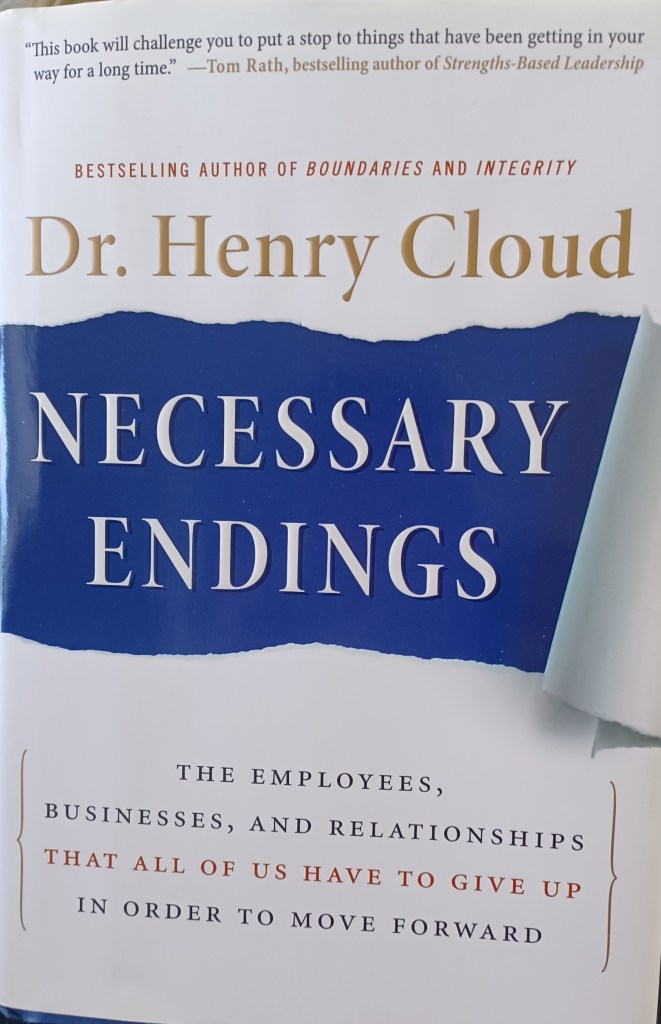
NECESSARY ENDINGS – by Dr. Henry Cloud

In Necessary Endings: The employees, businesses, and relationships that all of us have to give up in order to move forward, Dr. Henry Cloud explains why good endings are needed for good beginnings. He uses a number of great examples to show how appropriate endings at the right time can be very positive for you personally and for the organization you are part of or leading. Some endings are forced on us, and some are ones we choose, in either case we can determine how we will use that ending as an opportunity for something new. When you end something, you have room for that next thing that can be even better than what you just ended. A very helpful book!

Book Reviews: Andy’s 2022 Reading Experience

I will be sharing a brief review of every book I read this year. Hope you enjoy and hope it encourages you to keep reading.


KEEP CHRISTIANITY WEIRD – by Michael Frost

Frost is encouraging the church to return to its counter-cultural beginnings. Instead of trying to blend in under the guise of being relevant, he encourages believers to be different. This is not about being strange to be noticed, but to do things differently than people expect. This is about actually caring for the needy, and being okay with doing things that the average person thinks is strange, if it means being more like Jesus. Frost writes, “Just as business and education is fostering greater creativity and innovation, the church is in a phase of rewarding compliance and conservatism and suppressing eccentricity.” (p. 16) We need to reward creativity, not “toeing the line”. We need out of the box thinkers and leaders.

Frost wants believers to come back to being different in a way that points people to Jesus and a proper understanding of God. “In a world of Moralistic Therapeutic Deism, keeping Christianity weird involves recovering our strange belief in a scary God who can’t ever be fully known, who doesn’t need us, whose face we can’t look upon, and whose name we can’t utter.” (p. 158)

This is a great book for anyone who wants their mediocre Christianity challenged!

Book Reviews: Andy’s 2022 Reading Experience

I will be sharing a brief review of every book I read this year. Hope you enjoy and hope it encourages you to keep reading.


AQUACHURCH 2.0by Leonard Sweet

AQUACHURCH 2.0: Piloting Your Church in Today’s Fluid Culture uses the metaphor of water to teach on the church and it’s role in today’s culture. He addresses many aspects of church ministry, even chapters on “Risk Taking” and “Intuition” which most other church leadership books do not include. He is encouraging churches to be more aware of the culture we live in and minister in so we can understand how best to differentiate between places we join in and times we act counter-culturally. He makes a point of saying, “For leaders, not having a Web ministry is more than being without a calling card, not using a Web site as a communications and community-building tool is to have fumbled the future.” That is an appropriate message to the many churches who went to online service through Covid but have not chosen to have a meaningful online presence going forward. This book is a great resource for any church leader.

Church Has to be Different -But How?

A number of church leaders are declaring: Church has to be different now. Church has to change. While Covid has been an accelerator of this, leaders were already declaring this earlier.

I understand. As culture and society change, we need to adapt how we do the work of the church in order to connect with people today. But what changes?

I don’t feel I have the answers to what that change looks like. Instead, I will share my questions with you who follow me and hope you have some ideas to respond with. I would love to hear your comments.

Worship Service Changes

Do we need to change how we lead the worship service? I believe many churches need to plan for more audience participation and less performance at the front. I am passionate about creating interactive and transformational worship services – so much so, that I am in the process of writing a book about it!

Do we need to change from a monolog preaching style to more discussion? I know of one church that is attempting to do exactly that. People come to the service, gather around tables, and a table host leads the discussion. What else needs to change in the worship service?

Program Changes

What might be some beneficial changes to the type of programs we offer? Do we need to reduce the number of programs we offer? Should we plan more opportunities for people to interact with each other? Do we need to have more Biblical learning opportunities because people are biblically illiterate today?

Online Changes?

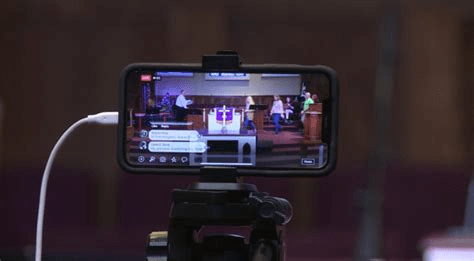
One positive outcome of covid restrictions was more churches provided an online worship service option. The church I presently serve is continuing this option, and usually have a number of people tuning in to watch. How might we improve in how we deliver those? Do we need to have people who can interact with those who are tuning in online? Maybe we need to hire staff to be the online church pastor in the same way multi-site churches hire a campus pastor?

How can we have a better online presence beyond just a one-hour worship service? Does this mean creating a presence on social media?

Discipleship Changes

How can we improve how we disciple new believers? In the past the emphasis was on teaching them “how to do” the Christian life. Should we move to an emphasis of “how to be” a Christian living in the world? While Bible teaching remains essential, especially for those coming to church with no prior Bible knowledge, I wonder if we need to help people move beyond living right to really connecting with Jesus, to actually listen and hear God?

Children and Youth Ministry Changes

Could we move beyond entertaining children and youth toward teaching them, even at a young age, how to live a life that is totally dependent on a relationship with God through faith in Jesus Christ, and tuned in to the guidance of the Holy Spirit? Do we need to challenge youth with opportunities to serve both in the church and in the community and world? Do we need to add in more digital content, or do we deliberately reduce screen time in our programs to counteract all the time they spend online in their day? Would it be wise to help youth focus more on getting to know God rather on avoiding sin? I came across a great quote a while back that went something like this: “Sin does not repel God, God repels sin.” We often see it as the less we sin, the closer we can get to God, when it is probably better to grow deeper in our relationship with God and then sin will be repelled.

Philosophy of Ministry Changes

Should we refocus our energies on helping people to grow in relationship with Jesus and not just in information about God? Do we need to remind ourselves that God came to be “with” us (Emmanuel)? Jesus sent the Holy Spirit to come live “in” us. It is about growing in relationship, not about growing in knowledge.

Outreach and Community Involvement Changes

As we think about introducing people to Jesus, our first realization should be that the mission field is not overseas, but right at our doorstep. There are many people living right next to us, who are just like us, who have never heard the message of salvation. And rather than thinking we need to go overseas, realize the world has come to us. Instead of taking a mission’s team to Mexico, maybe we need to reach out to the growing Mexican population down the street. Maybe instead of going to Africa, reach out to the many Africans from many different countries that now live in our cities? Even many small towns are seeing an influx of foreign workers and new immigrants. We need to reach out to them, welcoming them to Canada and sharing Jesus’ love with them.

As we reach out to those around us, this often requires an improved sense of community involvement and community connections. Some churches do well at this. Some churches offer English classes or homework help. The church I serve has an annual free Clothing Bonanza, clothing many children as they head off to school. They also give away free Bibles, so many that one year they started grabbing the church’s pew Bible to give away. Unfortunately, other churches are so caught up in their own church they hardly even know any people who don’t already know Jesus.

Let’s help people practically, and ensure we share the gospel as well. What else needs to change in how we reach out?

Facility Changes

What needs to change about how we build and set up the places where we meet? Many churches have done a good job equipping their facilities to be more accessible for those physical limitations, for example, by building ramps and elevators. We also have screens with the words on them so people don’t have to flip through hymn books. Additionally, many churches have recognized the needs of their communities, and replaced pews with chairs to allow their spaces to serve in varying purposes throughout the week. Are there other changes? Do we need to add more coffee bars?

Other Changes?

What else needs to change in how we do church? How do we update and adjust our ministries to have a greater impact for God’s kingdom? What “sacred cows” need to be chucked in order to head in a more effective direction?

I’m guessing that many changes will be different from church to church. Every church needs to mull over this issue of how to change to be the best they can be in reaching out and discipling people in their walk with Jesus.

What else needs to change?

Keep looking up,

Andy Wiebe
Book Reviews: Andy’s 2022 Reading Experience

I will be sharing a brief review of every book I read this year. Hope you enjoy and hope it encourages you to keep reading.


LEADING IN A CULTURE OF CHANGE – by Michael Fullan

This book is an older book but the principles are still helpful today, and maybe even more needed than back in 2001. Change is happening quickly around us, and many are suggesting they have answers. Often those requiring change to happen, look for a charismatic strong leader or a program that has worked somewhere else. Michael Fullan suggests, I believe correctly, that we need to realize that no one program is the answer to every situation. He also says that the change a charismatic leader brings may only last as long as he is leader. So Fullan suggests that change needs to be worked at slowly, with many of the people impacted participating in the transformation. As well, instead of using a cookie cutter approach, look for what might be appropriate to use at certain locations and at certain time periods of the change. He concludes the book like this: “Ultimately, your leadership in a culture of change will be judged effective or ineffective not by who you are as a leader but by what leadership you produce in others.”