Summer Road Signs Series: #1 Speed Signs

Many of us will be taking road trips over the summer. Maybe you already have. There are many signs along the road that guide our driving, so over the next two months, I will use these familiar signs as reminders of how we can live our lives and honour Jesus along the way.

I want to start with the sign that I think I like the most: speed signs. In Canada, these signs often show a maximum speed of 100km/h on the highway. I recently enjoyed a drive up to Yellowknife, Northwest Territories. While I enjoyed the trip, I did not enjoy one large section of highway that was limited to 90 Km/h. When we are fortunate to travel on divided highways, we are allowed to drive 110 km/h. I like travelling in the U.S. because often the speed limit is even higher.

I like this sign because it is all about getting to where you want to go as fast as you can. This is not about taking a leisurely drive for no reason. The focus is on what is ahead. You don’t need your rearview mirror for this sign!

One of the joys of my job is to help churches look ahead with clarity and purpose. Yes, we do take time to look at the past and understand the present, but we do this to clarify vision, and ultimately look at where we are headed and how best to get there. It is forward thinking and forward planning. We have a destination in mind and develop a map to get us there in the best way possible. No matter what speed you are travelling at, it is all about moving ahead.

While we recognize the importance of brakes, we love using the gas pedal more. The goal is to keep moving forward as quickly as possible in order to get to the preferred future we have in mind.

We set the destination. We map out the route. Maybe, if it is a longer trip, we even plan where we will stop for meals or gas, or even an overnight stay in a hotel or with friends. With a church, this means setting some short-term goals that will help us move along to the final destination, while giving us a way to measure progress along the way. If we trust God for 10 new believers this year, it is helpful to set some goals as to how we will help friends and family become new believers in Jesus first. We need to set some more immediate goals that will help us share Jesus with people regularly, praying along the way that some of those we share with will come to know Jesus.

In our personal lives, these same reminders from speed signs might direct our thoughts to pursuing personal growth. Keep moving ahead looking for new experiences and new encounters with learning opportunities. Set personal goals that will move you in the right direction.

In my own life, this forward momentum is evident in my love for learning. When I finished high school, I attended a Bible College. I wanted to learn what I could to become equipped for Christian ministry. I thought I would be involved in fulltime camp work or some kind of Christian education. Halfway through my Christian Education degree, God spoke through a few people and adjusted my destination to be pastoral ministry specifically. I added an extra year of education so I could get my Pastoral Degree as well. As I began ministry, I wanted to keep learning. I began taking courses at a seminary level. I was in no rush to complete the degree, wanting only to keep learning, so it took me over 20 years to get my Masters of Arts in Leadership and Ministry. Presently I am applying for the opportunity to pursue a Doctorate of Ministry.  I desire to keep moving forward, to keep growing as a person and as a pastor.

Speed signs are about moving ahead at the highest speed allowed. I encourage you to consider where you have been going slower than you should. Maybe God is asking you to pick up the pace and keep moving forward to what is next. Trust God to guide you as you look to him for the right destination to pursue.

And enjoy the journey!

Keep looking up,

Andy Wiebe

P.S. Watch for next week’s Road Sign: Stop Sign

Responding To An Audience That Doesn’t Like Your Sermon

What do you do when you receive negative feedback on a sermon?

First, do not feel personally attacked. It may be that the sermon was clear and accurate to scripture but the hearer didn’t like what God’s Word was saying. When I hear a negative reaction to a sermon – or to even decisions I make – I ask myself some questions to clarify the situation. Was I at fault? Or is the negative reaction in response to scripture says?

Is it true and accurate to scripture?

As preachers of God’s word, we need to be careful to say what scripture says. We need to be careful that we don’t misrepresent what God is says or misuse scripture to make it say what we want it to say. This means doing good research and study to ensure you are clear on what scripture says.

Did I present it correctly?

As we preach what scripture says, we also need to make sure we present this truth correctly. This could be ensuring we do not omit sections or aspects of scripture that we disagree with or do not like. We also need to remind ourselves that all of scripture speaks into the sermon of the day. Is there another side to the issue? Are there other scriptures that give a fuller view? Is there another scripture that needs to be referenced in order to give a complete picture of what is taught?

Did I explain the situation it was addressing?

There are times when it is helpful to give the background to the context of the scripture we are preaching on. It can help the listener first understand the message correctly, and secondly, figure out how to apply it to his or her own situations correctly. The historical background can give some meaning to why the author is addressing what he is addressing.

Was I wrong?

I ask myself this question sometimes because I want to make sure that I did not say something that was wrong or even hurtful. Yes, I need to present scripture accurately in a sermon, but I can choose what I say about it, or how I say it. If I did say something wrong, then I need to admit it. If I misrepresented God’s Word then I need to correct it.

Is a follow-up or clarification needed?

One sermon I preached brought a lot of response from the church members. Some who responded to me were thankful that I had said what I said. The sermon clarified something that they had been wondering about. The same sermon also brought responses from some who were pushing back against what I said. They did not like how I had interpreted what the verses said. Others were wondering how what I said fit with the rest of scripture. I began to realize, from both the negative and positive responses, that this was a topic that needed some more clarification. I decided to use the next Sunday to spend more time on the same scripture and the same topic, digging in a little deeper to explain how this fit with the rest of scripture and how I had come up with the interpretation and application of the verses that I did.

I was serving this church as a Transition Pastor, so it was a great opportunity to remind the church that their next Lead Pastor may occasionally teach something they disagree with and understand scripture differently than what each member personally thought. I tried to use this situation to encourage the church that their new pastor would likely have different opinions on some things and that was okay.

As preachers, we will occasionally say things that our audience doesn’t like. If their push back is against what God’s Word says, then it is an issue between them and God. If it is about something I said, then I need to make sure I was saying what was correct, and if not, apologize and correct myself.

Preaching God’s Word is a privilege. We want to handle it correctly.

Keep looking up,

Andy Wiebe
Preaching With Boldness

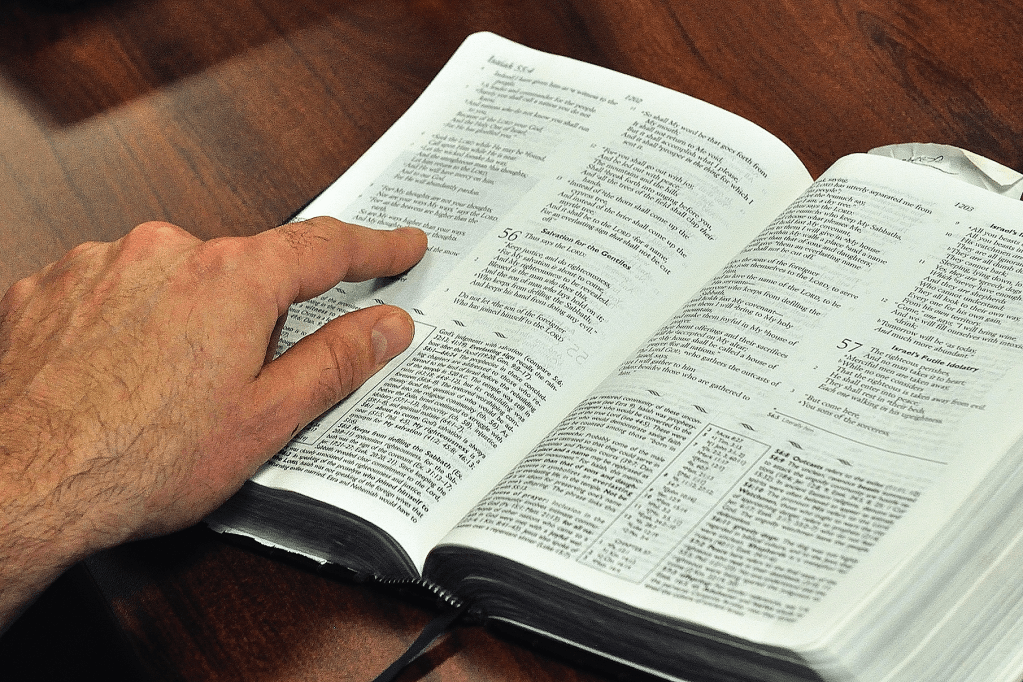
All Scripture is God-breathed and is useful for teaching, rebuking, correcting and training in righteousness, so that the servant of God may be thoroughly equipped for every good work.

2 Timothy 3: 16-17

Recently, I began a sermon with this statement: “I am going to talk to you about something this morning, that is very hard for us.”

I was preaching through 1 Peter. This morning we were looking at 1 Peter 2: 13 – 3: 7, which is all about submission. Not submission to God, but submitting to governing authorities, to masters, to husbands and wives. This is not a topic I would have chosen to preach about, except that it was in the middle of the book of the Bible that I was preaching through. Submitting to the government is not a popular topic among many church people, yet that was exactly what God’s Word was talking to us about in that scripture. Because it was God’s Word, and not my own ideas, I could preach it with confidence.

If 2 Timothy 3: 16-17 above is right, then we know that there will be scriptures that rebuke and correct, not just encourage us or make us feel good. When the preacher makes sure to preach what God’s Word says, then the preacher can speak with confidence and boldness.

I remember a person commenting after a sermon I preached that they thought I was brave to preach what I did. It actually surprised me a bit. I had preached on money, teaching what scripture said. I didn’t consider it brave. I was just preaching what God said, but this comment revealed the reality that there are certain scriptural truths that people do not want to hear. There will be people who are upset with you when you preach biblical sermons that challenge their personal beliefs, or even the beliefs and practices of their church.

Scripture occasionally points out where we come up short and need to make corrections. As a preacher, I can preach boldly as long as I clearly say what scripture says. It is God’s Word. If the Bible says it, God says it. I should have no problem teaching it with confidence.

At the same time, we need to preach with gentleness. When we teach about how God created people male and female, and only male and female with no other options, we can teach with gentleness in light of those who are personally struggling with this or have family who are.

We can preach about money and giving to the church, but also recognize that some are struggling to make ends meet.

We can preach on the importance of forgiveness even as we recognize that some people have been hurt deeply and personally in a way that is hard to move on from.

God calls us preachers to preach the whole truth of His Word. We cannot pick and choose only the things that people want to hear. This is one of the benefits of preaching through a book of the Bible. We come across passages that we might not have chosen to preach about.

If we are careful to preach what scripture says we can preach with confidence. We don’t need to be embarrassed to preach counter-cultural truths. We don’t need to be afraid that people won’t want to hear what the scripture says.

If we are preaching something that scripture never said, then we better hesitate to say it. Yet we can preach with confidence when we know that we are saying what God said. Let’s continue to declare God’s truth with clarity and confidence.

Keep looking up,

Andy Wiebe

The Privilege of Being a Pastor #1: My Personal Joys!

I have enjoyed and still do, this wonderful role of being a pastor serving a local church. I want to share a few posts about the privilege of being in this role. Some will be more practical, others more spiritual, but I hope these couple of posts encourage pastors or potential pastors.

As I work with churches during their transition times from one lead pastor to the next, I am very aware that there are not as many people out there looking to serve a local church as there used to be. Less young people are pursuing a role as pastor, and many pastors are leaving the position.

While there have been some very difficult times in my pastoring career, overall, it has been a good life for me and my family.

  1. I have received respect and love as the person in this role.

      Some pastors no longer want to be called by the title of “Pastor,” yet there are still many churches and members out there who respect the role and want to honour you in it. For them, it is a term or respect for your calling and you as a person. People value your input into their lives because they see you as a professional called by God to serve as their leader and teacher.

      2. I have experienced kindness from church and community members because of my role.

        My family has experienced many acts of kindness from our different churches. One church asked for a specific Christmas list for my wife and I and our two daughters. Because they asked, we gave them a list with options. They didn’t choose, they got us everything! Others have given us financial love offerings at Christmas.

        People want to pay for my lunch. Just the other day, a member walked past my table in a restaurant as I was finishing my lunch and grabbed the bill the waitress had left on the table. And I hardly know him! I recognized him but don’t remember his name because I haven’t spent any time with him yet.

        We have been blessed with many gifts, including a grocery shower, a side of beef, a portion of a pig someone just butchered, and all kinds of garden produce. Many people have invited us to their home to share a meal with them.

        3. The role has given me freedom.

        The flexibility of my schedule has allowed me to coach my daughter’s soccer team. Most men couldn’t take time off work to coach a 3:30 pm practice or game, but I could.

        4. I have travelled, often with expenses paid.

        I know not everyone gets to experience this, but I have been able to travel a bit because of my role as a pastor. When I was a Youth Pastor, I got to go to the Philippines to scout out a possible missions opportunity for my youth. I was asked to officiate a destination wedding in Mexico for my niece, at no cost to me. I worked with a few other pastors to establish a Rural Church Pastors Network. As the leaders, we had an opportunity to go to North Carolina to check out a rural ministry program that ran out of Duke University serving United Methodist churches. Again, no cost to me.

        I have attended many Pastors Retreats with our denomination in Banff and Lake Louise! What a privilege to enjoy retreats in these great settings.

        5. Working with my wife is a joy.

        As a pastor, I have had many opportunities to work together with my wife as we have served churches. Lynnette and I have been able to work together in ministry in ways that many other jobs do not allow. We have worked on projects for the church together, led many worship services together, and enjoyed many visits with church members together as a team.

        The joys of pastoral ministry have outweighed the difficulties. God has given me wonderful opportunities to serve him and an enjoyable life in the process. If you are considering pastoral ministry, realize that it can give you great joy.

        Keep looking up,

        Andy Wiebe

        Fruitful Leadership #3: Peace

        Peace is not a common commodity in our world today. There are conflicts between countries, in business, in families, and in our workplaces.

        When I think of a picture of peace, I remember the lake at the camp I spent a number of summers at. It was a fairly large lake, so it was a rare morning where the lake was completely calm. Yet once in awhile, the winds died down completely and turned the surface of the lake into a sheet of glace. Not a ripple to ruin the effect.

        It’s a rare day when the wind isn’t blowing in our lives. It’s not easy to experience complete peace.

        As a Christian leader who wants to allow the Holy Spirit to work in and through us, we do want to bear the fruit of the Spirit as described in Galatians 5: 22 . We want peace.

        Yes, we want peace in our workplace. I’m primarily thinking of peace as the absence of conflict in the workplace. We want peace on our teams as they work together. We recognize the need to not let conflict simmer but to address it and work through it before it boils over.

        Peace takes constant monitoring of the situations we are in. It takes discernment to know when something is eating away at peace and needs to be resolved. But if you are a leader who desires a peaceful workplace you will need to ensure you are at peace inside first.

        Peace begins inside you – if you don’t have peace, you will have a hard time being peaceful in your relationships. Peace begins with a relationship with the Prince of Peace. We want Jesus to continue to help shape us to become like Himself. And we invite the Holy Spirit to work in our lives to make us more Christ-like. We need to pray that God will help us forgive others and not continue to carry personal hurts. We need God to fill us with His peace. Knowing that we are right with our creator, the God of the Universe, is a great place to start with peace.

        To live out peace as a leader, we need to be at peace with our relationships at home. If we are in conflict in one area of our life, it is bound to create cracks in our peace with others. We cannot separate our private life from our public life. Keep short accounts at home before you even step into your leadership role. Peace is evident in harmonious relationships.

        It is in the heat of the moment that what is inside comes out. When that mistake is made, or someone falls short of your expectations – what is your first response? If it is anger and shouting and judgement – you may need to work on peace in yourself first. Peace begins in us.

        Peace has to be worked for. There are times when our Canadian troops have been sent into countries where there has been conflict, and they are called Peacekeepers. Jesus asks us to be peacemakers and says, “Blessed are the peacemakers, for they will be called children of God.” (Matthew 5:9) As Christian leaders, we need to be people of peace. This spiritual fruit should be produced continually in our lives in our relationships and in our leadership.

        Peace may cost us something. There may be times where we need to apologize and make things right. There may be times where we will need to address issues with those on our team that won’t make us popular. Peace means addressing the issues that are causing conflict. Those in conflict may not always want to resolve that conflict. As leaders, we can ask God to give us great wisdom in how we lead through conflict and bring peace.

        But let’s remember, peace, as a spiritual fruit, can only be produced in our lives as we continually are at peace with our God. If this is fruit of the Spirit, then we need to surrender to the Spirit’s work in our lives. And then we will bear the fruit of peace.

        May you experience peace and excel at peacemaking!

        Keep looking up,

        Andy Wiebe

        Half a Century of God’s Faithfulness!!

        I just realized the other day that I have been a follower of Jesus for 50 years – and God has sure proven His faithfulness! I was about seven years old when my dad prayed with me, and I surrendered my life to Jesus. Next month I turn 57. And God has never failed me over all those years. I have experienced what Deuteronomy 7:9 declares, “Know therefore that the Lord your God is God; he is the faithful God.”

        God has proven his faithfulness in always being there for me, in good times and bad. He has been there when I was so disappointed in Him that I deliberately tried to ignore Him for a period of time. I was frustrated how my life was going and began to wonder if God would ever intervene. That attempt to give God the cold shoulder didn’t last for too many days, because no matter what, God has always been there. He was never far from me. Romans 3:3-4 declares God’s faithfulness even when we are not. “What if some were unfaithful? Will their unfaithfulness nullify God’s faithfulness? Not at all!” And God has shown His faithfulness as I have learned to get to know Him better over the years. When I think back to the simple faith of seven-year-old me and the way God has proven His love in ever deepening ways, I am so thankful that faithfulness is one of God’s attributes!

        I have experienced God’s faithfulness in his forgiveness. As scripture declares in Romans 5: 8, “But God demonstrates his own love for us in this: While we were still sinners, Christ died for us.” He loved me while I was a sinner, and he loves me as I continue to struggle with sin. And like the patriarchs of the Old Testament, God has used me in meaningful ways even as I fall short of His best for me. God working in and through me has allowed us to be part of some unique experiences like helping a church grow in a school and then move into its own building, and putting on Easter events for the community that drew three times as many people as we usually saw on a Sunday.

        God has been faithful in giving me a great family! I have a beautiful wife, who is clearly a gift from God. We have two beautiful and competent daughters! Again, clearly gifts from God! And He has helped us through many difficult things. We have had family health scares but known God’s peace in those as He walked with us. We have had times of financial strain, without a house, without a job, and unsure about what was next. God arranged for a job that provided us with enough finances to buy a house after two years. We have experienced answers to prayer, from finding skates for a great deal to healing when we needed it.

        The faithfulness of God is evident as I look back over the years to how God directed us to certain churches and communities to live and serve in for awhile. While there were a few disappointments along the way, it was clear that God directed us to the places where we could fit and serve Him well. He has given us many great memories from the different places we served.

        God loves people. He loves to welcome them into His family. And He loves to walk with them for the rest of their lives! I have experienced that in many personal ways. It is so good to never have to worry if He will still love us if we do something wrong, or if He might ignore us or no longer respond in love. “Know therefore that the Lord your God is God; he is the faithful God.”

        Keep looking up,

        Andy

        Book Reviews: Andy’s 2024 Reading Experience.

        I will be sharing a brief review of every book I read this year. Hope you enjoy and hope it encourages you to keep reading.


        SPIRITUAL LEADERSHIP: Moving People on to God’s Agenda – by Henry & Richard Blackaby

        Spiritual Leadership is one of the better leadership books I have read. The authors highlight that spiritual leadership is all about God. It is about moving people in the direction God wants them to go, about listening to God for how to lead well, and listening to God about what direction to lead. I appreciate how they point out that spiritual leadership is not the same as leadership in general. In fact, they begin the book with this statement: Spiritual leadership is not an occupation: it is a calling. Christians in any area of leadership should be spiritual leaders. This is a great book for any Christian who wants to lead well.

        Book Reviews: Andy’s 2022 Reading Experience

        I will be sharing a brief review of every book I read this year. Hope you enjoy and hope it encourages you to keep reading.

        BROKEN SIGNPOSTS – by N. T. Wright

        N. T. Wright always makes you think. In this book, he works through themes found in the Gospel of John. He focuses in on seven themes: Justice, Love, Spirituality, Beauty, Freedom, Truth, and Power. He shows how each was to be a signpost pointing to what the effect of Christ’s coming in this world should be. He concludes, “By the power of the Spirit of Jesus the Messiah, crucified and risen from the dead, they can become genuine signposts, mended signals, missional marker posts.” He is portraying what effect Christianity should have in this world.