I will be sharing a brief review of every book I read this year. Hope you enjoy and hope it encourages you to keep reading.
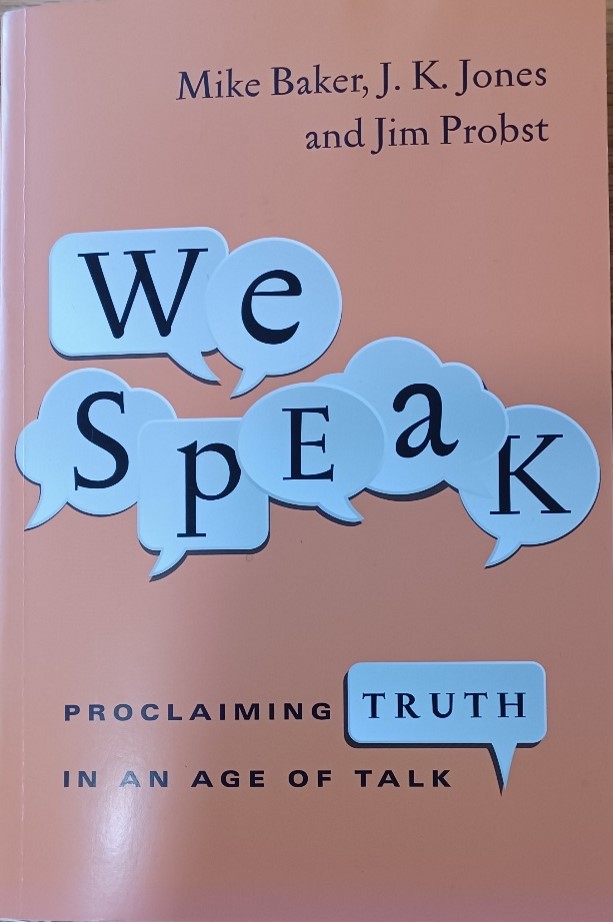
WE SPEAK: Proclaiming Truth in an Age of Talk – by Mike Baker, J.K. Jones, and Jim Probst
We Speak is laid out as a teaching chapter followed by five daily readings to keep the content in your mind over the week. The Discussion Guide at the back makes a book one could use for a small group or class setting. The authors remind us that “our message all these years later is still the death, burial and resurrection of Jesus.” (p. 19) As followers of Jesus, we can say many things and talk about all of who God is and what Jesus has done, but the basic message comes down to what Jesus did in bringing us salvation. This is the message we have for others. We need to recognize the urgency of speaking the message, and the responsibility that is place by God on us to share that message. We may not feel qualified to speak, but we can all talk about the hope that we have. Let’s continue to speak.
Many of us will be taking road trips over the summer. Maybe you already have. There are many signs along the road that guide our driving, so over the next two months, I will use these familiar signs as reminders of how we can live our lives and honour Jesus along the way.
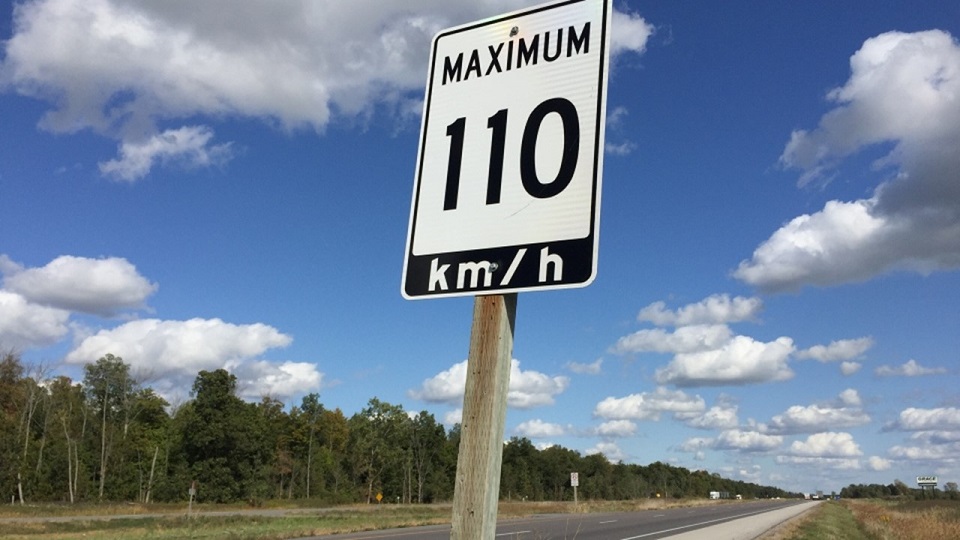
I want to start with the sign that I think I like the most: speed signs. In Canada, these signs often show a maximum speed of 100km/h on the highway. I recently enjoyed a drive up to Yellowknife, Northwest Territories. While I enjoyed the trip, I did not enjoy one large section of highway that was limited to 90 Km/h. When we are fortunate to travel on divided highways, we are allowed to drive 110 km/h. I like travelling in the U.S. because often the speed limit is even higher.
I like this sign because it is all about getting to where you want to go as fast as you can. This is not about taking a leisurely drive for no reason. The focus is on what is ahead. You don’t need your rearview mirror for this sign!
One of the joys of my job is to help churches look ahead with clarity and purpose. Yes, we do take time to look at the past and understand the present, but we do this to clarify vision, and ultimately look at where we are headed and how best to get there. It is forward thinking and forward planning. We have a destination in mind and develop a map to get us there in the best way possible. No matter what speed you are travelling at, it is all about moving ahead.
While we recognize the importance of brakes, we love using the gas pedal more. The goal is to keep moving forward as quickly as possible in order to get to the preferred future we have in mind.
We set the destination. We map out the route. Maybe, if it is a longer trip, we even plan where we will stop for meals or gas, or even an overnight stay in a hotel or with friends. With a church, this means setting some short-term goals that will help us move along to the final destination, while giving us a way to measure progress along the way. If we trust God for 10 new believers this year, it is helpful to set some goals as to how we will help friends and family become new believers in Jesus first. We need to set some more immediate goals that will help us share Jesus with people regularly, praying along the way that some of those we share with will come to know Jesus.
In our personal lives, these same reminders from speed signs might direct our thoughts to pursuing personal growth. Keep moving ahead looking for new experiences and new encounters with learning opportunities. Set personal goals that will move you in the right direction.
In my own life, this forward momentum is evident in my love for learning. When I finished high school, I attended a Bible College. I wanted to learn what I could to become equipped for Christian ministry. I thought I would be involved in fulltime camp work or some kind of Christian education. Halfway through my Christian Education degree, God spoke through a few people and adjusted my destination to be pastoral ministry specifically. I added an extra year of education so I could get my Pastoral Degree as well. As I began ministry, I wanted to keep learning. I began taking courses at a seminary level. I was in no rush to complete the degree, wanting only to keep learning, so it took me over 20 years to get my Masters of Arts in Leadership and Ministry. Presently I am applying for the opportunity to pursue a Doctorate of Ministry. I desire to keep moving forward, to keep growing as a person and as a pastor.
Speed signs are about moving ahead at the highest speed allowed. I encourage you to consider where you have been going slower than you should. Maybe God is asking you to pick up the pace and keep moving forward to what is next. Trust God to guide you as you look to him for the right destination to pursue.
If you have ever worked on a car or built a deck, you know the value of a good tool. With the right tool the work becomes easier and you see better results. The same is true for a pastor. We benefit from having good tools to help us.
Some of you may immediately think of tools like a good commentary or online study tools. These are great and we need those, but I’m thinking more along the lines of the ideas and questions we come across in our reading and study.
Sermon Tools
Over the years I have gathered many questions that I use regularly to help me better dig into the scripture I am preparing to preach. Referring to my pates of collected questions and processes has enhanced my sermon preparation. These are questions like:
What does it say?
What does it not say?
Could it mean what it says?
Sometimes I move through these three questions quickly, other times, if it is a difficult or controversial section of scripture, I tend to slow down and make sure these questions help clarify what God’s Word is truly saying.
One question that I have found helpful to me, especially because I am usually preaching to a congregation of all ages is:
4. “How will this sermon engage with a 12 – year – old boy?”
I want to preach to everyone, but if I can get a pre-teen boy to be engaged, I will most likely I will engage with the rest of the congregation as well.
Here are a sample of a few more questions:
How does this speak to unbelievers?
What is the audience’s thoughts, feelings, emotions, struggles, needs – relating to the big idea of this teaching segment or message?
What are some practical steps the listener can take?
One process I use is a diagram that helps me to move through a scripture passage in a way that moves my study from the text, to historical context, through the Biblical theology, to how it is fulfilled in Christ, and then to how we need to apply the scripture today. Following this process keeps me from taking a shortcut and miss an important step in clearly understanding what the scripture text is saying.
Prayer Tools
I have come across some great ideas for prayer, whether personal or corporate. In his book, The Hour that Changes the World, Dick Eastman suggests praying for an hour i12 periods of 5 minutes. I try to use this prayer plan about twice a week. The forms of prayer are: 1. Praise and worship 2. Waiting on the Lord 3. Confession 4. Praying scripture 5. Watching 6. Intercession 7. Petitions 8. Thanksgiving 9. Song 10. Meditation 11. Listening 12. Praise
I have used this one-hour prayer plan many times for myself as well as for a prayer group.
Pastoral Tools
One of the “tools” I need to remind myself of occasionally is to “move slowly through the crowd.” It is easy for me to have things on my mind and things to do, but there is benefit of moving slowly through the crowd prior to or after the Sunday morning service because it gives me opportunities to connect with people, or for them to stop me with a question or comment. It helps me to be more present in the moment and available to people.
I don’t know what tools you have gathered over the years that have helped equip you to improve your ministry and leadership, but I hope you have many. I would love to hear from you about the tools that help you. Send me an email to share some of your tools with me.
One of the joys of being a pastor is getting to know the people in your congregation. Often, this happens during very personal and intimate moments as you walk with them through these significant milestones.
Babies and Child Dedications
In my experience, it is not unusual for the pastor to be one of the first ones outside the family to be welcomed to the home of new parents. Sometimes my wife and I have even visited the new parents and baby at the hospital to meet the baby and pray for the family before they are sent home. What a special privilege!
Often families arrange with the pastor for a Child Dedication Ceremony. I love being able to hold the child and offer a prayer of blessing on the child and the parents. What a profound moment as we ask God’s blessing on the young life – and I get to do that!
Conversion and Baptisms
Many parents have been excited to share with me that their child prayed to surrender their life to Jesus. Then later, I get to walk them through a baptism class and baptism. Often the family invites me and my family to join them for a celebration with their family and friends after the baptism. They want us to participate in the celebration!
Weddings
This is a fun one! I love to walk with young couples as they prepare for their wedding. I enjoy the conversations my wife and I can have with the couple as we teach and encourage them and help them prepare for this new journey they are beginning. It is a lot of fun to celebrate with them and their families on that special day.
Sickness
While this is not a fun one, there are times when families face serious illness and long hospital stays. It is a privilege to visit them in the hospital, to be there as a friend and a representative of God. It is good to be present with them, and to pray with them. And it exciting when we see God give them restoration and new health.
Funerals
One of the hardest things to do as a pastor is to walk with a family I have known for a long time as they cope with the death of a family member. I may be able to give a hug or an encouraging word, but most of all, I get to point them back to God and to scripture.
Some pastors have been at the same church long enough to walk through a few of these, or all of these special moments with the families they serve. Now they are marrying the same adult they dedicated as a child years ago.
As a pastor, I get the privilege, very often with my wife, to be part of some significant moments in other families lives because they love us and want us to be part of their family celebrations. What a joy to walk with people during some of their best and their worst times in their lives!
It is a privilege to rejoice with those who rejoice and weep with those who weep.
This is the fourth blog in a series about leading with the fruit of the Spirit. The fourth fruit listed in Galatians 5: 22 is patience. A few versions use “forbearance” or “longsuffering,” but patience is the word we would most likely use today.
There is an old joke about praying to God, “God, give me patience, and give it to me now.” Patience takes time. Patience is needed when there is an ongoing situation that requires waiting or enduring. No one needs patience for something that happens in the moment.
Patience is the ability to wait, or to continue doing something despite difficulties, or to suffer without complaining or becoming annoyed (Cambridge Dictionary).
So first, to demonstrate a character of patience, we need to learn to wait. As Christians, there are many times where, by faith, we wait for God to act. This is often the case when we have a need we have prayed about for a long period of time, and we trust in God and know that He will act in His timing and according to His will. So we wait. I had to do this for a couple of years. I had concluded my time at a church and was waiting for the next pastoral position to open up for me. And it was not happening. As I sent out resumes and prayed and waited – sometimes very impatiently – I sensed God was telling me to wait because He was setting up a new opportunity for me. Some days I felt very patient, others I did not. It took about three years for me to finally see this new opportunity that God was preparing for me. In the waiting, I kept doing what I could to be faithful and wait. Waiting takes patience. Patience means waiting.
An example of patience is found in the story of Abraham and Sarah. God had promised them a son, yet they had no children. No son was born. They waited for years and years. Abraham was 100 years old when Sarah finally gave birth to the son God had promised. Patience takes time.
Patience is also visible in a person when they are continuing to persevere despite difficulties. There are times when we, as Christian leaders, believe God is calling us to move the church or organization in a certain direction and not everyone agrees. Patience may mean continuing to push ahead slowly and steadily even though there is opposition. A Christian leader may see the need to be patient as they look to pursue a vision God has given them, yet they do not see it becoming a reality yet. Patience is pushing ahead even when facing opposition.
There are times when Christian leaders see the frustrating situations around them and would much rather complain and show their annoyance, yet as we allow the Spirit to encourage us, we can respond in a joyful and peaceful manner. Combining joy and peace with the act of patience will make the waiting experience more enjoyable.
Patience is called a fruit of the Spirit. This means we will produce this fruit more naturally if we continue to depend on the Holy Spirit than if we think it depends on our determination alone. We can bring all our concerns to God in prayer, and then depend on Him to give us patience when we would rather give up or respond with criticism and frustration.
May God give you patience as you continue to trust in Him.
I just realized the other day that I have been a follower of Jesus for 50 years – and God has sure proven His faithfulness! I was about seven years old when my dad prayed with me, and I surrendered my life to Jesus. Next month I turn 57. And God has never failed me over all those years. I have experienced what Deuteronomy 7:9 declares, “Know therefore that the Lord your God is God; he is the faithful God.”
God has proven his faithfulness in always being there for me, in good times and bad. He has been there when I was so disappointed in Him that I deliberately tried to ignore Him for a period of time. I was frustrated how my life was going and began to wonder if God would ever intervene. That attempt to give God the cold shoulder didn’t last for too many days, because no matter what, God has always been there. He was never far from me. Romans 3:3-4 declares God’s faithfulness even when we are not. “What if some were unfaithful? Will their unfaithfulness nullify God’s faithfulness? Not at all!” And God has shown His faithfulness as I have learned to get to know Him better over the years. When I think back to the simple faith of seven-year-old me and the way God has proven His love in ever deepening ways, I am so thankful that faithfulness is one of God’s attributes!
I have experienced God’s faithfulness in his forgiveness. As scripture declares in Romans 5: 8, “But God demonstrates his own love for us in this: While we were still sinners, Christ died for us.” He loved me while I was a sinner, and he loves me as I continue to struggle with sin. And like the patriarchs of the Old Testament, God has used me in meaningful ways even as I fall short of His best for me. God working in and through me has allowed us to be part of some unique experiences like helping a church grow in a school and then move into its own building, and putting on Easter events for the community that drew three times as many people as we usually saw on a Sunday.
God has been faithful in giving me a great family! I have a beautiful wife, who is clearly a gift from God. We have two beautiful and competent daughters! Again, clearly gifts from God! And He has helped us through many difficult things. We have had family health scares but known God’s peace in those as He walked with us. We have had times of financial strain, without a house, without a job, and unsure about what was next. God arranged for a job that provided us with enough finances to buy a house after two years. We have experienced answers to prayer, from finding skates for a great deal to healing when we needed it.
The faithfulness of God is evident as I look back over the years to how God directed us to certain churches and communities to live and serve in for awhile. While there were a few disappointments along the way, it was clear that God directed us to the places where we could fit and serve Him well. He has given us many great memories from the different places we served.
God loves people. He loves to welcome them into His family. And He loves to walk with them for the rest of their lives! I have experienced that in many personal ways. It is so good to never have to worry if He will still love us if we do something wrong, or if He might ignore us or no longer respond in love. “Know therefore that the Lord your God is God; he is the faithful God.”
A friend of mine is going through a difficult stage in life. His job is not what he would like and leaves him exhausted at the end of the day when he wants to spend time with his family. He has a large debt that he is working to clean up among other issues that stress him out. When I asked him what fills him up, he answered, “Right now, I have no clue.” He is so overwhelmed with life that trying to think of something that would help energize him seems impossible.
What fills up your tank? There is value in finding something that energizes you.
Being in nature fills me up. I love driving through the mountains, enjoying the scenery and watching for wildlife. My wife and I stopped at a little heart-shaped lake in the Pine Pass in northern British Columbia this fall. Heart Lake is nestled at the foot of some mountains, surrounded by towering pines and spruce. When you walk out on the little dock, the water is so clear you can see right to the bottom of the lake. We enjoyed sitting at a picnic table, reading, then pausing to take in the scenery, and repeating that process. It filled me up.
Sometimes spending time with the right person fills me up. We all know there are certain people who drain you. They draw energy from you. But there are others who make you feel good. There have been times when my wife has told me, “You should really talk to so and so.” Or “you should have lunch with your friend.” There are a few men in my life, who, when I spend a little time with them, leaves me encouraged and energized.
Some of you might get energized by reading a good book. I love to read. It might be a novel or a book that challenges me spiritually. I love to learn, and reading helps me to do that. And it can fill up my tank.
I’m also a project person. I love working on a project where there is a clear goal in mind that I can work toward. I get filled up when I can contribute to something meaningful that cumulates in a well-done finished project.
What fills you up? If you are not sure, maybe you need to ask someone close to you. They may have seen where you shine and where you seem to act happier. As I said earlier, my wife sometimes reminds me to take time to be with one of my energizing friends.
If you feel you have no idea what energizes you it may be time to try new things. Even though it sometimes doesn’t seem like it, you are in charge of your calendar, and your time. I know that we all have demands on us from work and family and other commitments we are tied to, but we should all have even a few minutes here or there to spend on our own well-being.
Identifying what fills you up, and then spending time doing that activity is an important way to fill us up amid the stresses of life. When we get hungry, we eat. When we have been giving and giving too long, we begin to lose ambition and get short-tempered. We need to “eat” something that will restore joy and inner peace.
Some pastors take a sabbatical for a period of weeks and months. While time off is good, even in that scenario, the true value comes not just from taking time off to rest but spending time in our “tank filling” activities. If you are married, you might want to help each other enjoy your energizing activities. This could look like covering for each other in the home for half an hour or so occasionally so the other person can have a few moments to spend on themselves.
Let me finish with one more suggestion, probably the one we should have started with, and one that should remind us that any “tank filling” attempts fall short if we are not right with the One who created us and wants to walk through life with us. A key “tank filling” experience is to have some quiet time to spend with just you and God. You could read scripture. The Psalms may encourage you as the psalmist cries out to God with the same emotions you are feeling. Or you can read the Old Testament stores and be encouraged that God uses even the busy and messed up people for his purposes. You could spend some time talking with God. Think of it as a conversation. Ask him for encouragement and joy. You might want to sing songs of praise, or one of the old hymns. Taking time to be with God can fill a person up.
Remember that God created us all unique, with unique ways of being re-energized and filled up for the next day.
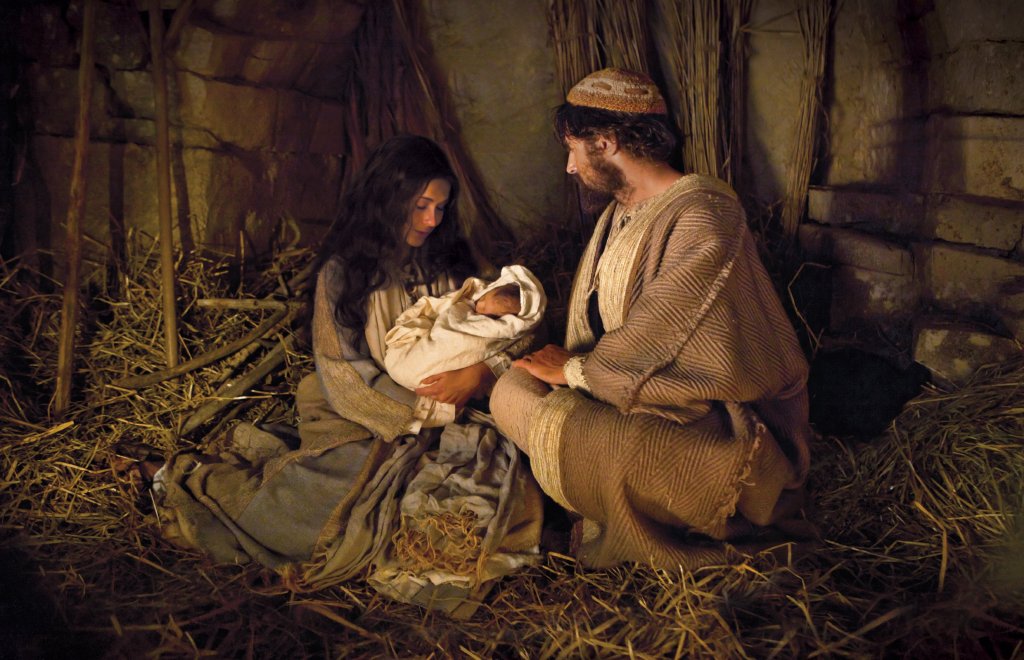
2 In those days Caesar Augustus issued a decree that a census should be taken of the entire Roman world. 2 (This was the first census that took place while[a] Quirinius was governor of Syria.) 3 And everyone went to their own town to register.
4 So Joseph also went up from the town of Nazareth in Galilee to Judea, to Bethlehem the town of David, because he belonged to the house and line of David. 5 He went there to register with Mary, who was pledged to be married to him and was expecting a child. 6 While they were there, the time came for the baby to be born, 7 and she gave birth to her firstborn, a son. She wrapped him in cloths and placed him in a manger, because there was no guest room available for them.

8 And there were shepherds living out in the fields nearby, keeping watch over their flocks at night. 9 An angel of the Lord appeared to them, and the glory of the Lord shone around them, and they were terrified. 10 But the angel said to them, “Do not be afraid. I bring you good news that will cause great joy for all the people. 11 Today in the town of David a Savior has been born to you; he is the Messiah, the Lord. 12 This will be a sign to you: You will find a baby wrapped in cloths and lying in a manger.”
13 Suddenly a great company of the heavenly host appeared with the angel, praising God and saying,
14 “Glory to God in the highest heaven, and on earth peace to those on whom his favor rests.”
15 When the angels had left them and gone into heaven, the shepherds said to one another, “Let’s go to Bethlehem and see this thing that has happened, which the Lord has told us about.”
16 So they hurried off and found Mary and Joseph, and the baby, who was lying in the manger. 17 When they had seen him, they spread the word concerning what had been told them about this child, 18 and all who heard it were amazed at what the shepherds said to them. 19 But Mary treasured up all these things and pondered them in her heart. 20 The shepherds returned, glorifying and praising God for all the things they had heard and seen, which were just as they had been told.
21 On the eighth day, when it was time to circumcise the child, he was named Jesus, the name the angel had given him before he was conceived.
More than three-quarters of adults report symptoms of stress, including headache, tiredness, or sleeping problems.
American Psychological Association, 2019
Everyone knows what stress is, and many people experience it often. We feel we are facing more than we can handle. The expectations on us are too much, or we are in uncomfortable situations without a way to gain control or get out of it. It affects our mind, our emotions, and our bodies. Some of our medical issues are even caused by stress. And just because you attend church does not mean you immune to stress. Many of us even experience stress as we serve in the church.
At a recent visit to the doctor I saw this poster on the wall: Stress Coping Skills for Everyday Life.
There are a number of great ideas to put into practice when we are experiencing stress. Some of them are physical exercises such as “go outside” or “stretch”. Others are mental exercises such as “be positive”. There are social exercises and suggestions for eating better and drinking enough water.
These might all be good ideas. They cover most aspects of a person’s life – social, physical, emotional, and mental. But I couldn’t help noticing that there was something missing. Where is the spiritual aspect?
As people who know God, we should recognize the value of going to God in our times of stress. In fact, if we have put our faith in Christ for salvation, then we have also received His Spirit that lives within us. He is God within us. He wants us to have life and have it to the full. (John 10:10)
Like the psalmist David, we can cry out to God in our times of need.
When my spirit grows faint within me, it is you who watch over my way. (Psalm 142: 3)
Lord, you are the God who saves me; day and night I cry out to you. May my prayer come before you; turn your ear to my cry.
I am overwhelmed with troubles and my life draws near to death. (Psalm 88: 1-3)
Yes, there are many different things we can do to try to alleviate the feelings of stress, but why not call on God to help?
Call out to God for help. Pray. Spend time reading scripture. Allow God to speak. Meditate on passages of scripture or dwell on God’s attributes. Spend time in worship. Sing songs of praise. Listen to songs of praise. Ask God to calm your spirit and empower you by His Spirit to tackle the day with confidence.
When stressed, do what you can to trust God to walk you through it.