Pastors Are Doing Too Much!

Pastors do a large part of what is required in the work of most churches; after all, that is their role. And pastors are quick to take on duties that are not part of their responsibility. Pastors face the temptation to do too much. They often do more than their job description asks of them, doing things that others in the church could do.

As time passes, pastors slowly add more tasks to their plate thinking it’s easier to take on one more duty than to find someone else to do the job, especially if they need to be trained to do it. Rather than train a volunteer to design and print the weekly bulletin, the pastor takes it on. After all, “it’s only going to take about an hour.” Rather than finding someone else to look after locking up on Sunday, the pastor just does it. Slowly, the pastor does more and more of what someone else in the church could be doing. And, in a sense, without realizing it, pastors are hoarding the work of the ministry.

A few churches that I have heard from that saw value in the time they had between pastors alluded to this tendency. They found the transition period was good for their church because when the pastor left, more people in the congregation felt the freedom to step up and serve.

Churches in transition may see new opportunities for people to serve in those extra duties that the pastor took on that were outside of his role. As they look for people to serve, new people are stepping up and getting involved. The work is shared with more people, and there is a greater sense of everyone playing a part.

Pastors, we need to delegate. This is discipleship. This is mentoring. This is equipping. When we show a volunteer how to lock up or do the bulletin, we are equipping them with information and skills they did not have and were not using before. When we train a volunteer to manage the prayer chain, we disciple them, helping them to be part of the prayer ministry. When we train others to lead small groups, we are discipling.

And the things you have heard me say in the presence of many witnesses entrust to reliable people who will also be qualified to teach others.

2 Timothy 2:2 (NIV)

It is too easy for pastors to think that discipleship is only about spiritual things or helping people learn to share their faith. Pastors need to recognize that discipleship is about other parts of the Christian life too, the practical ways that people can learn to contribute to the work of the church and the expansion of God’s kingdom. Discipleship includes training someone to be an usher or training a new sound person. It includes training people to be good greeters.

Pastors have the responsibility of equipping their members for acts of service. In Ephesians 4:11-13, the Apostle Paul stated the roles of church leadership: “to equip his people for works of service, so that the body of Christ may be built up.” Pastors must equip members to serve, so hand off some of the responsibilities you have been carrying.

Pastors, let’s not take on roles in the church that the Holy Spirit has gifted others to do. The Holy Spirit gives spiritual gifts to every believer in the church. Help each member find their areas of gifting and release them to serve, even if it means a little extra effort on our part to equip and disciple them.

Keep looking up,

Andy Wiebe

When Pastoral Care is Unnatural for You

I get excited about many parts of church leadership. I love to work on vision and strategy and even bylaws, and the constitution. I enjoy preparing and preaching sermons or teaching lessons, but I am not naturally aware of people’s needs. I don’t mind spending time with people, in fact, I enjoy it when I do, but caring for people is not readily on my mind. My mind is quick to look at how to plan, lead, and direct, but I need help and reminders to slow down and be with people. Maybe some of you can relate? If so, some of the following ideas might help both you and me.

Listen for the needs people express.

This is so straightforward that it hardly seems worth mentioning, yet I don’t always do this well. When people have conversations with me, I may stop and pray for them right there if they mention a need, but I often forget to check in later to see how things went.

Sometimes you hear people raising a prayer request in a group. The other day I heard someone ask for prayer for a test she had to undergo. That was a great opportunity for me to make a note somewhere to check in on her later. If someone makes a worry known, they likely want people to be aware and take notice. This might be a great time to arrange a coffee or make an appointment to meet with them and care for them.

Follow up on cues others notice.

Recently, I was meeting with a Transition Team at a church, going through the church’s Health and Vision Assessment we had just completed together. There were many encouraging and helpful responses from the congregation, but there was one person who consistently answered negatively. I didn’t pay too much attention. I thought he may just be a more thorough person and generally critical, yet a few on the team suggested he may need a visit from me. I hadn’t even considered that but agreed to their suggestion. I met with him and he seemed glad and was very willing to talk. He even indicated that he signed his name to the assessment in hopes someone would meet with him. We had a great conversation. I’m not sure we resolved anything, but he did appreciate the opportunity to be heard. Be alert to other cues that a person needs some attention.

Pause and evaluate the day in light of people.

It might be helpful to stop at one point in your day to think and pray through your interactions of the day, asking God to point out anyone who needs a call, a text, or a visit. You could do this at the beginning of your day, asking God to point out who from yesterday needs your care today. Or you might choose to do this at the end of your day, reflecting on the day that was, and planning how you might connect with people who come to mind.

If this is difficult, it can be helpful to keep a checklist on your desk with questions to prompt you to reflect on your daily interactions. Some questions could include:

  • Who has medical needs that are weighing on them?
  • Who expressed a specific need today?
  • Who is dealing with concerns in their marriage or family?
  • Who is leading or serving in a ministry and needs encouragement?
  • Who is dealing with depression and could use a personal connection?
  • Who has someone else suggested needs care?
  • Who has been absent from church for a while?
  • Who has the potential for greater leadership responsibilities and could use a conversation to discuss the possibilities of this?
  • Who has exciting news personally or in their family that you could celebrate with them?

Pastoral care is an important aspect of effective leadership, but it doesn’t always come naturaly. If you are like me in this way, I hope this post encourages you to adopt some of my suggestions or find methods of your own to help you notice ways you can better care for those you lead.

May your ability to notice people who need care expand as you are intentional about it.

Keep looking up,

Andy Wiebe

The Fun of Getting to Know People

The church is people. Being a church leader and pastor means being a leader of people. Every leader needs to recognize the value of getting to know the people they lead in a personal way. I enjoy getting to know people because as you get to know people you find out what they are passionate about and how they contribute to their community. Many people have unique skills they are using to help others that you wouldn’t know unless you get to know them.

Personal Connections

Some of the fun of getting to know people is finding you share common friends or have similar origins. When I meet someone for the first time, if I learn that we know the same people or are familiar with the same places, it immediately gives us something to talk about even though we just met.

Unique Skills

Last night, over supper with friends, I learned that the one friend translates children’s songs from English or Spanish into Low German. There are not many Low German children’s songs so she finds good songs in other languages, translates them to Low German as best she can, records herself singing them, and uploads the recording and song for Low German speaking parents to use for their children. I think that is fantastic! I would never have known about her unique contribution to other parents if I had not had opportunity to be in a conversation with her.

Personal Pain

I recently had a conversation with a young couple who are hurting because of an illness in their family. They have had to go through many difficult adjustments as they deal with a family member who lost their memory and the ability to function on their own. As a pastor, hearing the pain in their voices as they shared the story gives me a fuller picture of the realities of their life and and how they are trying to manage life. This informed perspective will also help me be a bit more forgiving when he doesn’t make it to every board meeting because he has unexpected responsibilities to deal with at home. Gaining a fuller understanding of people on our team and people we serve reminds us to view people as humans with complicated lives.

Passions

As we get to know people, we get to know what makes them tick, and what they are passionate about. Some are passionate about people, others about projects. Many people have certain values that they regard with extra importance. For example, knowing which people are passionate about youth or the poor can guide you when recruiting volunteers for youth or the food bank ministries.

Potential Friends

Some people warn pastors not to become friends with people in their church. Others say pastors need to be friends with everyone. Pastors need friends too, and as they get to know people they discover new friends. Its natural that we become better friends with some people in the church than others, so don’t be afraid to get to know people as friends.

I encourage every pastor and church leader to go out of their way to get to know the people they lead. You will gain personally, as will your church, if you get to know them.

Keep looking up,

Andy Wiebe

Continually Collect More Tools of the Trade

If you have ever worked on a car or built a deck, you know the value of a good tool. With the right tool the work becomes easier and you see better results. The same is true for a pastor. We benefit from having good tools to help us.

Some of you may immediately think of tools like a good commentary or online study tools. These are great and we need those, but I’m thinking more along the lines of the ideas and questions we come across in our reading and study.

Sermon Tools

Over the years I have gathered many questions that I use regularly to help me better dig into the scripture I am preparing to preach. Referring to my pates of collected questions and processes has enhanced my sermon preparation. These are questions like:

  1. What does it say?
  2. What does it not say?
  3. Could it mean what it says?

Sometimes I move through these three questions quickly, other times, if it is a difficult or controversial section of scripture, I tend to slow down and make sure these questions help clarify what God’s Word is truly saying.

One question that I have found helpful to me, especially because I am usually preaching to a congregation of all ages is:

4. “How will this sermon engage with a 12 – year – old boy?”

I want to preach to everyone, but if I can get a pre-teen boy to be engaged, I will most likely I will engage with the rest of the congregation as well.

Here are a sample of a few more questions:

  1. How does this speak to unbelievers?
  2. What is the audience’s thoughts, feelings, emotions, struggles, needs – relating to the big idea of this teaching segment or message?
  3. What are some practical steps the listener can take?

One process I use is a diagram that helps me to move through a scripture passage in a way that moves my study from the text, to historical context, through the Biblical theology, to how it is fulfilled in Christ, and then to how we need to apply the scripture today. Following this process keeps me from taking a shortcut and miss an important step in clearly understanding what the scripture text is saying.

Prayer Tools

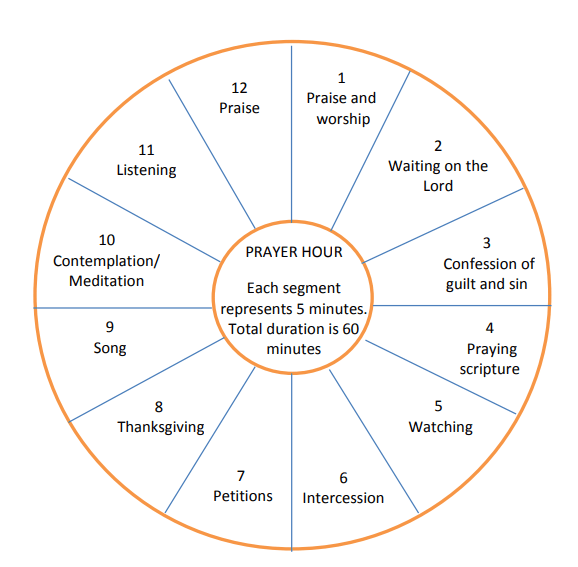
I have come across some great ideas for prayer, whether personal or corporate. In his book, The Hour that Changes the World, Dick Eastman suggests praying for an hour i12 periods of 5 minutes. I try to use this prayer plan about twice a week. The forms of prayer are: 1. Praise and worship 2. Waiting on the Lord 3. Confession 4. Praying scripture 5. Watching 6. Intercession 7. Petitions 8. Thanksgiving 9. Song 10. Meditation 11. Listening 12. Praise

I have used this one-hour prayer plan many times for myself as well as for a prayer group.

Pastoral Tools

One of the “tools” I need to remind myself of occasionally is to “move slowly through the crowd.” It is easy for me to have things on my mind and things to do, but there is benefit of moving slowly through the crowd prior to or after the Sunday morning service because it gives me opportunities to connect with people, or for them to stop me with a question or comment. It helps me to be more present in the moment and available to people.

I don’t know what tools you have gathered over the years that have helped equip you to improve your ministry and leadership, but I hope you have many. I would love to hear from you about the tools that help you. Send me an email to share some of your tools with me.

Keep looking up,

Andy Wiebe
Preaching With Boldness

All Scripture is God-breathed and is useful for teaching, rebuking, correcting and training in righteousness, so that the servant of God may be thoroughly equipped for every good work.

2 Timothy 3: 16-17

Recently, I began a sermon with this statement: “I am going to talk to you about something this morning, that is very hard for us.”

I was preaching through 1 Peter. This morning we were looking at 1 Peter 2: 13 – 3: 7, which is all about submission. Not submission to God, but submitting to governing authorities, to masters, to husbands and wives. This is not a topic I would have chosen to preach about, except that it was in the middle of the book of the Bible that I was preaching through. Submitting to the government is not a popular topic among many church people, yet that was exactly what God’s Word was talking to us about in that scripture. Because it was God’s Word, and not my own ideas, I could preach it with confidence.

If 2 Timothy 3: 16-17 above is right, then we know that there will be scriptures that rebuke and correct, not just encourage us or make us feel good. When the preacher makes sure to preach what God’s Word says, then the preacher can speak with confidence and boldness.

I remember a person commenting after a sermon I preached that they thought I was brave to preach what I did. It actually surprised me a bit. I had preached on money, teaching what scripture said. I didn’t consider it brave. I was just preaching what God said, but this comment revealed the reality that there are certain scriptural truths that people do not want to hear. There will be people who are upset with you when you preach biblical sermons that challenge their personal beliefs, or even the beliefs and practices of their church.

Scripture occasionally points out where we come up short and need to make corrections. As a preacher, I can preach boldly as long as I clearly say what scripture says. It is God’s Word. If the Bible says it, God says it. I should have no problem teaching it with confidence.

At the same time, we need to preach with gentleness. When we teach about how God created people male and female, and only male and female with no other options, we can teach with gentleness in light of those who are personally struggling with this or have family who are.

We can preach about money and giving to the church, but also recognize that some are struggling to make ends meet.

We can preach on the importance of forgiveness even as we recognize that some people have been hurt deeply and personally in a way that is hard to move on from.

God calls us preachers to preach the whole truth of His Word. We cannot pick and choose only the things that people want to hear. This is one of the benefits of preaching through a book of the Bible. We come across passages that we might not have chosen to preach about.

If we are careful to preach what scripture says we can preach with confidence. We don’t need to be embarrassed to preach counter-cultural truths. We don’t need to be afraid that people won’t want to hear what the scripture says.

If we are preaching something that scripture never said, then we better hesitate to say it. Yet we can preach with confidence when we know that we are saying what God said. Let’s continue to declare God’s truth with clarity and confidence.

Keep looking up,

Andy Wiebe
The Privilege of Being a Pastor #1: My Personal Joys!

I have enjoyed and still do, this wonderful role of being a pastor serving a local church. I want to share a few posts about the privilege of being in this role. Some will be more practical, others more spiritual, but I hope these couple of posts encourage pastors or potential pastors.

As I work with churches during their transition times from one lead pastor to the next, I am very aware that there are not as many people out there looking to serve a local church as there used to be. Less young people are pursuing a role as pastor, and many pastors are leaving the position.

While there have been some very difficult times in my pastoring career, overall, it has been a good life for me and my family.

  1. I have received respect and love as the person in this role.

      Some pastors no longer want to be called by the title of “Pastor,” yet there are still many churches and members out there who respect the role and want to honour you in it. For them, it is a term or respect for your calling and you as a person. People value your input into their lives because they see you as a professional called by God to serve as their leader and teacher.

      2. I have experienced kindness from church and community members because of my role.

        My family has experienced many acts of kindness from our different churches. One church asked for a specific Christmas list for my wife and I and our two daughters. Because they asked, we gave them a list with options. They didn’t choose, they got us everything! Others have given us financial love offerings at Christmas.

        People want to pay for my lunch. Just the other day, a member walked past my table in a restaurant as I was finishing my lunch and grabbed the bill the waitress had left on the table. And I hardly know him! I recognized him but don’t remember his name because I haven’t spent any time with him yet.

        We have been blessed with many gifts, including a grocery shower, a side of beef, a portion of a pig someone just butchered, and all kinds of garden produce. Many people have invited us to their home to share a meal with them.

        3. The role has given me freedom.

        The flexibility of my schedule has allowed me to coach my daughter’s soccer team. Most men couldn’t take time off work to coach a 3:30 pm practice or game, but I could.

        4. I have travelled, often with expenses paid.

        I know not everyone gets to experience this, but I have been able to travel a bit because of my role as a pastor. When I was a Youth Pastor, I got to go to the Philippines to scout out a possible missions opportunity for my youth. I was asked to officiate a destination wedding in Mexico for my niece, at no cost to me. I worked with a few other pastors to establish a Rural Church Pastors Network. As the leaders, we had an opportunity to go to North Carolina to check out a rural ministry program that ran out of Duke University serving United Methodist churches. Again, no cost to me.

        I have attended many Pastors Retreats with our denomination in Banff and Lake Louise! What a privilege to enjoy retreats in these great settings.

        5. Working with my wife is a joy.

        As a pastor, I have had many opportunities to work together with my wife as we have served churches. Lynnette and I have been able to work together in ministry in ways that many other jobs do not allow. We have worked on projects for the church together, led many worship services together, and enjoyed many visits with church members together as a team.

        The joys of pastoral ministry have outweighed the difficulties. God has given me wonderful opportunities to serve him and an enjoyable life in the process. If you are considering pastoral ministry, realize that it can give you great joy.

        Keep looking up,

        Andy Wiebe

        We All Need Someone to Lean On

        Many pastors are lonely. Many don’t have a team of staff to talk things through with. Recently I have again recognized the value of having other pastors to talk with and connect with. I have the privilege of being part of a few groups of pastors, but it has been a while since the one group has met and I realize I miss those get togethers.

        In 2023 Barna.com shared a poll that highlighted the loneliness and isolation of pastors. Their poll shows “these feelings have increased significantly since 2015 when 42 percent of pastors shared they either frequently (14%) or sometimes (28%) felt this way. Now, 65 percent of pastors report feelings of loneliness and isolation, with 18 admitting these feelings occur frequently.” (7-Year Trends: Pastors Feel More Loneliness & Less Support)

        As pastors, we need to take initiative to connect with others who understand what it its like being a pastor. Pastors can relate to us and pray for us in a way that others can’t. We all need good friends, and many of us have very supportive and encouraging families, but we do need to have other pastors in our circles too.

        Many denominations have regular gatherings for local pastors. Take advantage of those. These are people who are in your circles and understand your church dynamics. In some places, there may not be others in the same denomination nearby; instead, connect with other pastors in your community. I have benefited greatly from connections with pastors from other denominations. We have different theological stands on some issues, but we all deal with the same day-to-day struggles of working with people and trying to have the answers our congregation needs.

        One of the benefits of connecting with other pastors is that we can have people in our corner who understand us. Like any profession, it can be difficult to explain some aspects of being a pastor to others who are not. It is easier to celebrate and commiserate with people in the same field.

        Other pastors may also be able to speak into our lives, offer words of encouragement, or ideas on how to handle certain situations we face. This is valuable support that requires you to open up to others.

        Sometimes other pastors can help us develop our creativity as we hear of unique ministries or programs they run. We can help each other become better. Proverbs 27: 17 applies here:

        As iron sharpens iron,
            so one person sharpens another.

        Do not be satisfied with your loneliness. Find other pastors to connect with, and encourage them as they encourage you.

        Keep looking up,

        Andy Wiebe

        Book Reviews: Andy’s 2024 Reading Experience.

        I will be sharing a brief review of every book I read this year. Hope you enjoy and hope it encourages you to keep reading.


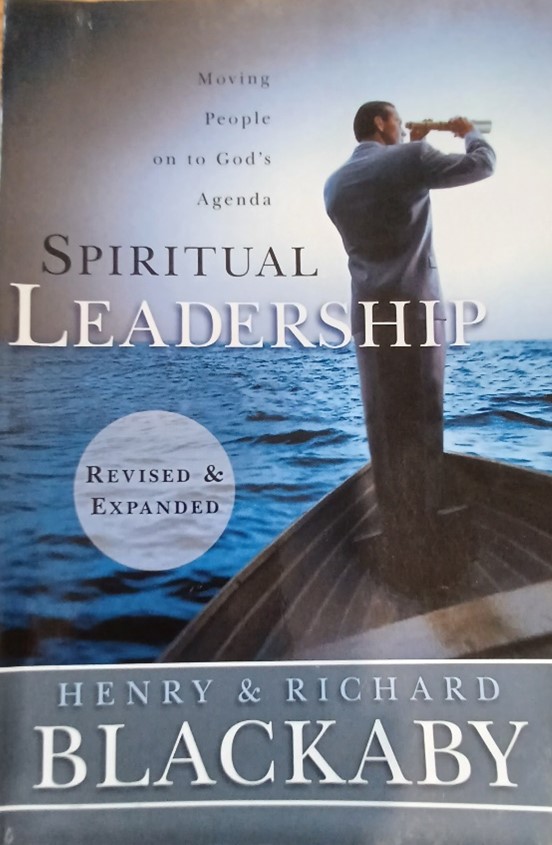
        SPIRITUAL LEADERSHIP: Moving People on to God’s Agenda – by Henry & Richard Blackaby

        Spiritual Leadership is one of the better leadership books I have read. The authors highlight that spiritual leadership is all about God. It is about moving people in the direction God wants them to go, about listening to God for how to lead well, and listening to God about what direction to lead. I appreciate how they point out that spiritual leadership is not the same as leadership in general. In fact, they begin the book with this statement: Spiritual leadership is not an occupation: it is a calling. Christians in any area of leadership should be spiritual leaders. This is a great book for any Christian who wants to lead well.

        Book Reviews: Andy’s 2023 Reading Experience

        I will be sharing a brief review of every book I read this year. Hope you enjoy and hope it encourages you to keep reading.


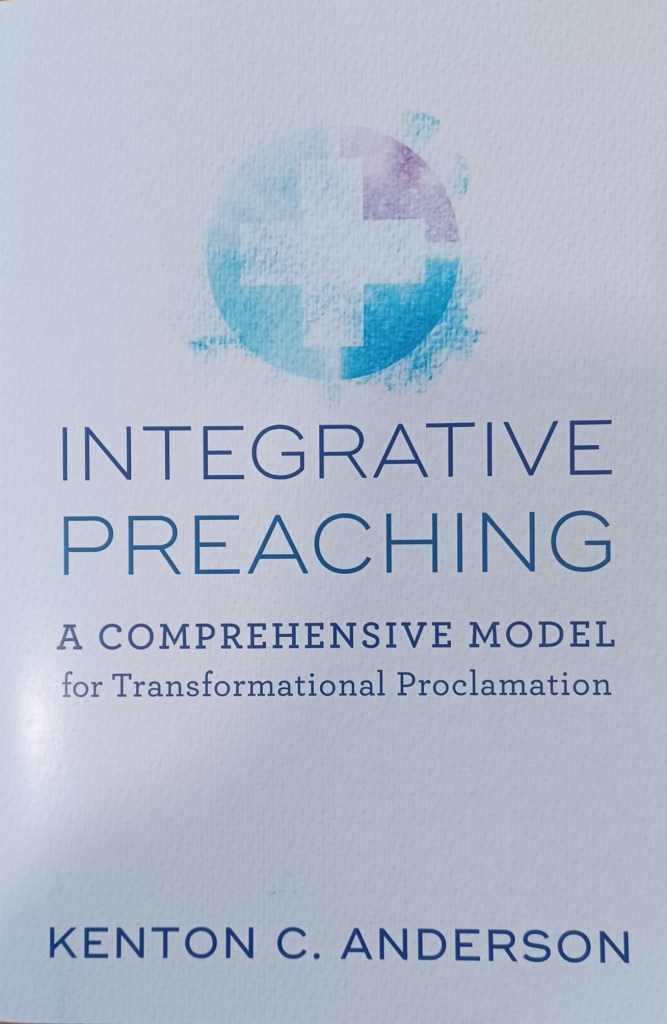
        INTEGRATIVE PREACHING – by Kenton C. Anderson

        Integrative Preaching: A Comprehensive Model for Transformational Proclamation – by Kenton C. Anderson

        Integrative Preaching is one of the best books on preaching I have read lately. Kenton Anderson diagrams a model that intends for sermon to reach both the mind and the heart. He describes this method in a number of ways. I especially like how he names each of the four steps of the sermon in ways that connect to the heart of a person: Engage, Instruct, Convict, and Inspire. I personally was most challenged to do a better job of Inspiring my listeners when I preach, not being satisfied with information alone, but driving home how the information should affect us and be lived out. An excellent book on how to build and deliver sermons that change lives.

        Church Leadership Series: Part 4: A Leader is Faithful to His Wife

        He must be faithful to his wife

        1 Timothy 3: 2 (NLT) and Titus 1: 6 (NLT)

        A church leader must be faithful to his wife – or her husband. Paul advises church leaders to remember their priorities. Yes, serving in the church is a good thing – a great thing even – but he warns them not to forget their responsibilities to their spouse as well. Many church leaders work full time jobs outside the church and serve the church with the left-over time they may have. Others work full time in the church as pastoral staff. It is easy to see the church work as being so important that you begin to neglect the person most important to you.

        I am serving as a Transition Pastor which means I serve a church for about a year or so in preparation for their next full-time pastor. One of the things I like to do is work with the church to make a plan for the first 90 days of the new pastor’s ministry. I want to help them see the importance for balance in the pastor’s ministry. That same balance needs to be there for any church staff or volunteer. Remember that you need to consider your spouse and make time for them to.

        Part of “faithfulness” to your spouse is giving them time too so you do not make them feel they are fighting the church for attention from you. Faithfulness involves giving them priority in your life.

        Some versions of 1 Timothy 3: 2 are: “husband of one wife,” or even “man of one woman.” If you want to be a God-honouring church leader, you will protect your marriage. You will be committed to your spouse. You will protect that relationship and not let anyone else into that place that you hold for them.

        It is the nature of church work that volunteers work closely with other volunteers. You pour your heart into what you are working on. You are dealing with spiritual issues, which sometimes become emotional issues. In the process, some leaders have begun to transfer feelings and thoughts they had for their spouse to the person they are working so closely with. Guard yourself against sharing too intimate details with someone who is not your spouse, especially if you are working with people from the opposite sex.

        You can protect yourself from some of the dangers by doing a few simple things.

        • Never spend time alone with a person of the opposite sex

        If you need to meet with someone in your office who is of the opposite sex, make sure your office is set up with windows that anyone walking by can see what is going on inside. Keep the door open. If that does not work, ask if you can have another person sit in on the conversation.

        Don’t spend time working on projects with a person of the opposite sex. Invite others to work with you, or make sure that the work being done is out in the open where people are coming and going.  Protect yourself from any problems or perceived problems.

        Never drive anywhere with only one person of the opposite sex in your car. Either take separate cars or invite another person to join you.

        • Tell your spouse everything.

        Tell your spouse about what you are doing. When you are ever in a situation that may cause an issue, let your spouse know as soon as you can. The more open you are with your spouse the less you will be tempted in the wrong direction. Hiding things lets temptation grow, bringing them out in the open takes the power of that temptation away. And the more you share with your spouse, the more they will trust you as well.

        •  Set guidelines and policies.

        The more that is made clear at the beginning, the easier it is to stay on track and protect your relationship with your spouse. Develop clear guidelines for your staff and volunteers to make sure you all understand your desire to protect relationships and marriages.

        Church leaders, do everything you can to protect your marriage as you serve the church.

        Keep looking up,

        Andy Wiebe