Summer Road Signs Series: #1 Speed Signs

Many of us will be taking road trips over the summer. Maybe you already have. There are many signs along the road that guide our driving, so over the next two months, I will use these familiar signs as reminders of how we can live our lives and honour Jesus along the way.

I want to start with the sign that I think I like the most: speed signs. In Canada, these signs often show a maximum speed of 100km/h on the highway. I recently enjoyed a drive up to Yellowknife, Northwest Territories. While I enjoyed the trip, I did not enjoy one large section of highway that was limited to 90 Km/h. When we are fortunate to travel on divided highways, we are allowed to drive 110 km/h. I like travelling in the U.S. because often the speed limit is even higher.
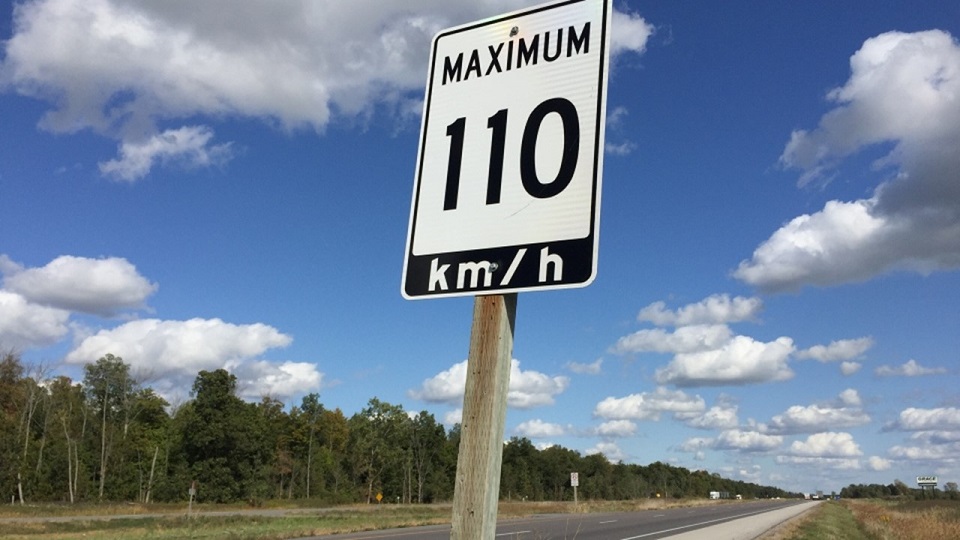
I like this sign because it is all about getting to where you want to go as fast as you can. This is not about taking a leisurely drive for no reason. The focus is on what is ahead. You don’t need your rearview mirror for this sign!

One of the joys of my job is to help churches look ahead with clarity and purpose. Yes, we do take time to look at the past and understand the present, but we do this to clarify vision, and ultimately look at where we are headed and how best to get there. It is forward thinking and forward planning. We have a destination in mind and develop a map to get us there in the best way possible. No matter what speed you are travelling at, it is all about moving ahead.

While we recognize the importance of brakes, we love using the gas pedal more. The goal is to keep moving forward as quickly as possible in order to get to the preferred future we have in mind.

We set the destination. We map out the route. Maybe, if it is a longer trip, we even plan where we will stop for meals or gas, or even an overnight stay in a hotel or with friends. With a church, this means setting some short-term goals that will help us move along to the final destination, while giving us a way to measure progress along the way. If we trust God for 10 new believers this year, it is helpful to set some goals as to how we will help friends and family become new believers in Jesus first. We need to set some more immediate goals that will help us share Jesus with people regularly, praying along the way that some of those we share with will come to know Jesus.

In our personal lives, these same reminders from speed signs might direct our thoughts to pursuing personal growth. Keep moving ahead looking for new experiences and new encounters with learning opportunities. Set personal goals that will move you in the right direction.
In my own life, this forward momentum is evident in my love for learning. When I finished high school, I attended a Bible College. I wanted to learn what I could to become equipped for Christian ministry. I thought I would be involved in fulltime camp work or some kind of Christian education. Halfway through my Christian Education degree, God spoke through a few people and adjusted my destination to be pastoral ministry specifically. I added an extra year of education so I could get my Pastoral Degree as well. As I began ministry, I wanted to keep learning. I began taking courses at a seminary level. I was in no rush to complete the degree, wanting only to keep learning, so it took me over 20 years to get my Masters of Arts in Leadership and Ministry. Presently I am applying for the opportunity to pursue a Doctorate of Ministry.  I desire to keep moving forward, to keep growing as a person and as a pastor.

Speed signs are about moving ahead at the highest speed allowed. I encourage you to consider where you have been going slower than you should. Maybe God is asking you to pick up the pace and keep moving forward to what is next. Trust God to guide you as you look to him for the right destination to pursue.

And enjoy the journey!

Keep looking up,

Andy Wiebe

P.S. Watch for next week’s Road Sign: Stop Sign

5 Ways to Personally Leverage Slow Seasons

Most churches experience seasons in their ministry. There are times that are slow, times that are steady, and times that are extremely busy. Summer is often a slow season for many churches. The church I’m serving right now has Vacation Bible School at the beginning of July, and then only a monthly prayer meeting and Sunday morning services for the rest of July and August. How can we use the slow times in a beneficial way?

  1.  Slow down yourself.

Maybe you can adjust your vacation time to have shorter days in the office and spend extra time with your family. Maybe you can take an extra day off to enjoy a long weekend doing something fun with your kids. Or just take some time to focus on a personal hobby. Allow yourself time to slow down a bit. I’m not sure that taking vacation in the summer is the best plan. Sometimes we need to save that break for in the middle or just after a busy season. Enjoy the time at home with your family without a bunch of commitments for you or them, to distract you from each other.

2. Take a personal retreat.

    Maybe you can go camping by yourself or go to a local retreat center for a day or two to spend time with God. Talk with God about what has been happening in the last year and ask God for direction for what is next. I have benefited from even a half day retreat out of the office to just spend time with God.

    You might want to ask God to help you plan your next preaching year. Pray through what God is asking you to preach on. Start by choosing which books of the Bible to preach on, or consider if there is a topic that your church needs to address scripturally. Do a rough summary of the texts that you identify and how many sermons you might need to fully preach through the topic or book so you can start plotting them on a calendar for the year ahead. These opportunities to plan a preaching year have been of great benefit to me when I have been in the middle of busy seasons. It has been very helpful to have a plan in place already.

    3. Read a book or two.

    I have been greatly encouraged through reading good books. You probably have a list of books, maybe even a pile of books, that you have been meaning to read. This is the time. Or maybe there is a topic you would like to know more about. Maybe there are certain trends or cultural issues that are affecting your church and ministry.

    Look for a book that addresses that issue. Ask around for recommendations from others for a book that speaks to your church’s needs. I recently enjoyed some great books by Preston Sprinkle on issues of sexuality and gender.

    4. Connect with friends.

    Summer may be a time to connect with leaders or members in your church, but it may also be a time to connect with friends who are not involved your ministry. It may be a pastor down the road, or a friend in another part of the country. Good friends can be very encouraging and may be worth a trip to meet up with. Do a road trip with your family that includes the opportunity to connect face to face with your friend.

    5. Enjoy nature.

    Our slow time for many is summer. Summer is a great time to enjoy God’s creation. Go for a walk with your spouse. Go camping if that is your thing. Take a day trip to nearby waterfalls or into the mountains. Enjoy a picnic by a lake. Maybe catch a fish and fry it up for supper. Allow yourself to breathe some fresh air and slow down in God’s creation.

    We all have busy times. Sometimes we feel like we are running to just keep up. So take the time to slow down during the slow times. Your health will benefit, and so will your relationship with your spouse, with your family, and with God.

    Keep looking up,

    Andy Wiebe

    Looking Ahead With Clarity Part 3: Where We Want To Be

    This is the final of a three part series on looking ahead with clarity. Part 1 was about recognizing where we have come from. I discussed the value of reflecting on how God had used us in the past and what God has been teaching us that may give us a sense of what is next for us. In Part 2 we looked at assessing our present reality, where we are, and now in Part 3 we will discuss where we are going.

    Knowing where we have been and where we are helps us identify a solid starting point from which to begin moving forward. Now we need to clarify where we are going. What is the goal we are shooting for? When that is clear, we can set appropriate steps to get us there.

    There are two kinds of goals: achievement goals and habit goals. Achievement goals are goals we work towards to accomplish at some point down the road. Examples could be losing 20 pounds or running a marathon. These are specific points we can look forward to and measure clearly when accomplished. Habit goals are goals we want to work on regularly. A habit goal for me is to read my Bible every day. Habit goals can help us accomplish achievement goals. My daily reading goals help me work toward reading the whole Bible in a year, an achievement goal.

    Goals help us determine where we wish to be. There is a 2005 Fountain Tire commercial where a man is buckling himself into his seat on a plane, excited to be going to Hawaii, only to find out he used the wrong gate and got on the wrong airplane. “Ok, goin’ to Winnipeg,” he declares to himself. We need to be clear on our goal and then figure out the right steps that will get us to that goal. If we don’t, we may find ourselves “going to Winnipeg” when we were geared up for a holiday in Hawaii.

    While goals give us a point to work toward, it is the steps we take along the way that make a difference to where we end up.

    Goals without an appropriate plan to achieve those goals are only wishes. When we create a plan with clear steps to take, we are better able to move toward the goals we have set.

    Let’s work through an example. If I want to read the Bible in a year, I can break the goal down into smaller steps:

    First, I need to determine which Bible I will read from. I like to choose a version I have not usually read, just to change things up a bit.

    Second, I need to decide how much I will read every day. This is made simpler by all the reading options available to purchase or download online.

    Third, I need to decide when I will read. Personally, I like to read first thing in the morning, right after my shower. This helps me be awake as I read, and is a perfect time to focus uninterrupted as I’m usually up before my family.

    Fourth, I need to decide what I will do if I miss a day. Sometimes I miss a day. I have decided to catch up the next time I read. I do not want to skip any parts and I don’t want to fall too far behind. And I will track my progress by following a Bible laid out in daily readings, keeping a bookmark in place to remind me where I left off.

    Whatever goal we are working towards, we can set achievable goals that keep moving us forward. We can develop a plan that gives us small enough steps to achieve in the short term but big enough steps that lead us to the goal.

    We need to know where we are going and then make a clear plan to get there.

    In part one of this series we looked back to see where we have been and if God has been leading us or preparing us in a certain direction. In part two we looked at how to get clarity on our present reality and so we have a clear starting point to move forward from. Now as we set clear goals and steps to get there, we will be moving ahead with a clear plan.

    May God help you accomplish the plans He has given you.

    Keep looking up,

    Andy Wiebe

    Pursuing Excellence: Plan Your Year

    Pursuing excellence involves a number of different aspects. One of those is to plan ahead. The difference between mediocrity and excellence may come down to how well you plan.

    Planning ahead gives you time to work on your project or event. When you start planning earlier, you have more time to think it through, prepare and determine the best way to complete the project. Giving yourself this extra time to think about your project means that you have longer to think about it and come up with ideas than if you are scrambling to get everything together last minute.

    Pastors and church leadership teams, plan your upcoming year. While many people plan their years from January to December (I tend to plan my personal goals to begin in January), when it comes to working with churches, I suggest thinking of the year as starting in September and finishing in August. This is because church activities usually follow the school year, starting and ending about the same time the local schools do. In order to be ready for September, I suggest you actually do your planning in May.

    Benefits of Planning Ahead

    Planning ahead helps you improve whatever you are planning, because the earlier attention to the project results in more time given to consider it. This extra time can be used in numerous ways:

    1. You can gather the best team.
    2. You can train and equip your volunteers ahead of time.
    3. You can let life enhance your creativity – your reading and TV watching and living of life will give you ideas you did not have when you first began planning.
    4. You can find great ideas, not just good ones. Instead of settling for the first idea your team comes up with, consider how to improve on that idea. Your programs will go from good to great because of the time to percolate in the minds of the creative teams.
    5. You can build better resources and materials required for the project.
    6. You can spend more time in prayer, asking God to guide every aspect of your planning as well as the final implementation.

    Plan Your Year – Start with the Big Events

    Begin planning for your main programs of the year. Work with program leaders to determine the start and end times for their programs. If your programs start in September, leaders should be determined by the end of May, so they can start planning their programs and find their volunteers from June through August.

    Are there a few big events or weekends your church celebrates? This could be a church camp or a family weekend, as well as Easter, Christmas, and a Fall Kickoff. Set the dates and work on developing themes. Decide who should lead each event and who should be on each team. Make sure that everyone involved knows the pertinent information, such as dates and themes, as early as possible. Plan when to do baptism and membership classes, as well as when to have the baptism and when to receive new members. Plan when and what you will do for evangelism and outreach activities throughout the year.

    Once the basics of the big events are planned, start filling in the other Sundays and other activities. Pastors can work on sermon plans for the year ahead. (I’ll share more about how I plan my preaching year next week). Knowing in advance what you will focus on, give additional time to improve the sermons with good illustrations and pertinent information. By creating a year-long plan in advance, you not only give yourself more time for sermon preparation, but you also provide your worship and service planning teams that same additional time to create the best services they can.

    The themes for each Sunday will come from the pastor after he plans out his sermons for the year. With a plan for both large events and sermon themes, add other activities to your plan. For example, identify when you should hold leadership meetings or training and discipleship events throughout the year.

    After your yearly calendar has been filled, build in further detailed planning every quarter or so. Planning ahead involves a few stages: 1) Planning the year, 2) Planning 3-4 months ahead, and 3) Planning the week ahead. For example, begin developing detailed plans for Christmas by the end of September. Plan for Easter in January. Plan for September program starts in May.

    As you plan ahead, the goal is not just to put on a great event or program, but that whatever we plan in the church will transform lives and bring us closer to Jesus. Pursuing excellence is not about performing flawlessly, but doing our best to help everyone involved become more like Jesus.

    Have fun in you planning, pray for God to guide every aspect, and then rejoice as you see people impacted by God through events and activities you planned.

    Keep looking up,

    Andy Wiebe