Train Yourself to Be Godly #3: Spiritual Practices of Scripture Memorization, Meditation, and Studying

*Training yourself to be godly includes memorizing, meditating on, and studying scripture.

Last week I introduced Scripture Reading as a spiritual practice to train ourselves to become more godly and become friends of Jesus. Many people read the Bible, at least to some extent. This may be reading a few verses a day or reading through the Bible in a year. While there is great value in reading scripture, there is great benefit in going beyond reading alone.

So, yes, have a plan for reading the Bible regularly, but also think of going beyond just reading to memorizing, meditating on, and studying scripture. Reading can help us get the big picture of scripture and help us understand what God has written and what Jesus has said. I would like to encourage you to find a way of intentionally internalizing what you read.

Scripture Memorization

Psalm 119:11 says,

“I have hidden your word in my heart

that I might not sin against you.”

Memorization is to hide God’s word in your heart. By spending the time in scripture it becomes embedded in your memory.

At a recent worship service, the pastor started quoting Psalm 23. As he did, he coached the congregation to quote it with him. It was impressive to have many in the congregation reciting Psalm 23 from memory. The congregation had hidden Psalm 23 in their hearts.
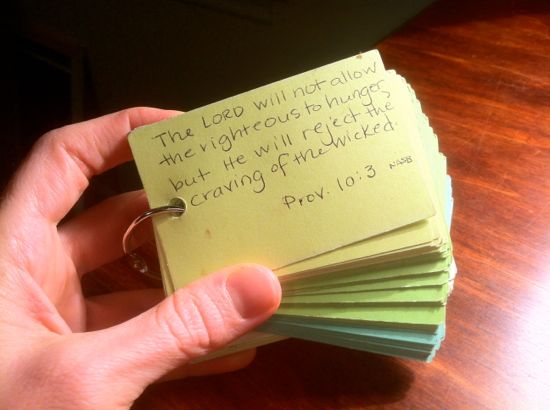
I want to encourage you to begin memorizing. You don’t have to start with long scripture passages, but start by memorizing a verse a week. You could start with Psalm 23 or a passage from Paul’s letters like Philippians 2:1-11 which describes the humility of Jesus in coming to earth.

Scripture Meditation

Meditation is to think on a verse over a longer period of time. If you are memorizing a verse and mulling it over in your mind, you are also meditating on it as you continue to let it speak to you.

Psalm 119:15 reads: I meditate on your precepts and consider your ways.

To practice meditation is to spend time thinking and praying and talking to God about one thing, one verse or one statement about God.

Meditation slows us down as we focus on one idea for a period of time. It may be one verse or one phrase that describes God or a theological or doctrinal statement that we can think over as allow God to speak to us over time.

Scripture Study

Maybe you have read the Bible a lot, but you realize you haven’t really stopped to study it – to take time to understand certain passages of scripture or a certain book. You can use different online helps (Biblehub.com) or commentaries to dig a little deeper.

In 2 Timothy 3:16-17 we read:

All Scripture is God-breathed and is useful for teaching, rebuking, correcting and training in righteousness, so that the servant of God may be thoroughly equipped for every good work.

If we long to be more godly and want to train ourselves to be so, studying moves beyond reading, memorizing, and meditating, to dig into what words and phrases and verses mean.

I encourage you to move beyond devotional booklets like the Daily Bread, and others. While they have good stories and good scriptural thoughts, learn to study the Bible for yourself. Take time to “chew” on the word of God, not just taking in what others have “chewed” in their study. Study it for yourself without just relying on the work others have done. There is value in us processing the study instead of just receiving someone else’s answers from their study.

Train yourself to be godly by spending intentional time in scripture, getting to know God, getting to know Jesus, and allowing scripture to equip you and train you to be the woman or man of God He longs for you to be.

Keep looking up,

Andy Wiebe
Responding To An Audience That Doesn’t Like Your Sermon

What do you do when you receive negative feedback on a sermon?

First, do not feel personally attacked. It may be that the sermon was clear and accurate to scripture but the hearer didn’t like what God’s Word was saying. When I hear a negative reaction to a sermon – or to even decisions I make – I ask myself some questions to clarify the situation. Was I at fault? Or is the negative reaction in response to scripture says?

Is it true and accurate to scripture?

As preachers of God’s word, we need to be careful to say what scripture says. We need to be careful that we don’t misrepresent what God is says or misuse scripture to make it say what we want it to say. This means doing good research and study to ensure you are clear on what scripture says.

Did I present it correctly?

As we preach what scripture says, we also need to make sure we present this truth correctly. This could be ensuring we do not omit sections or aspects of scripture that we disagree with or do not like. We also need to remind ourselves that all of scripture speaks into the sermon of the day. Is there another side to the issue? Are there other scriptures that give a fuller view? Is there another scripture that needs to be referenced in order to give a complete picture of what is taught?

Did I explain the situation it was addressing?

There are times when it is helpful to give the background to the context of the scripture we are preaching on. It can help the listener first understand the message correctly, and secondly, figure out how to apply it to his or her own situations correctly. The historical background can give some meaning to why the author is addressing what he is addressing.

Was I wrong?

I ask myself this question sometimes because I want to make sure that I did not say something that was wrong or even hurtful. Yes, I need to present scripture accurately in a sermon, but I can choose what I say about it, or how I say it. If I did say something wrong, then I need to admit it. If I misrepresented God’s Word then I need to correct it.

Is a follow-up or clarification needed?

One sermon I preached brought a lot of response from the church members. Some who responded to me were thankful that I had said what I said. The sermon clarified something that they had been wondering about. The same sermon also brought responses from some who were pushing back against what I said. They did not like how I had interpreted what the verses said. Others were wondering how what I said fit with the rest of scripture. I began to realize, from both the negative and positive responses, that this was a topic that needed some more clarification. I decided to use the next Sunday to spend more time on the same scripture and the same topic, digging in a little deeper to explain how this fit with the rest of scripture and how I had come up with the interpretation and application of the verses that I did.

I was serving this church as a Transition Pastor, so it was a great opportunity to remind the church that their next Lead Pastor may occasionally teach something they disagree with and understand scripture differently than what each member personally thought. I tried to use this situation to encourage the church that their new pastor would likely have different opinions on some things and that was okay.

As preachers, we will occasionally say things that our audience doesn’t like. If their push back is against what God’s Word says, then it is an issue between them and God. If it is about something I said, then I need to make sure I was saying what was correct, and if not, apologize and correct myself.

Preaching God’s Word is a privilege. We want to handle it correctly.

Keep looking up,

Andy Wiebe

Can God Really Be Heard?

As people who love God and want to serve Him, can we actually hear him? Can we have clear direction as we make decisions and lead a church?

God spoke with people in the stories of the Bible. In Genesis 3 the Bible describes a conversation between Adam and Eve and God. It tells us that God came and spent time with them in the Garden of Eden. Many times, prophets in the Bible spoke what they knew were the words of God. And others accepted their words as from God. People like Abraham and God had conversations about how many children he would have. God spoke to Moses from the burning bush. Sometimes God sent his angels as messengers, as seen when Gabriel visited Mary. God spoke through dreams and visions, as he did when warning the Magi not to return to King Herod after visiting Jesus. When people in the Bible heard God speak to them, they were confident that it was Him and clear about what He was saying to them.

God clearly spoke through His Son. John 1 tells us that Jesus was and is the Word from God. He is the expression of all God is. But Jesus also spoke with his disciples about many things. He taught with authority – so much so that people wondered where he got his authority. Jesus’ disciples had intimate conversations with Jesus dealing with everyday life like paying taxes, or dealing with the fact that he would have to die and rise again. He spoke to the two on the road to Emmaus, in Luke 24. Even though those who heard from Jesus were sometimes unsure what Jesus meant when he spoke, they clearly heard him, and had the privilege of asking questions to clarify what He meant.

God spoke in and still speaks through scripture. 1 Peter 1: 20-21 says, “Above all, you must realize that no prophecy in Scripture ever came from the prophet’s own understanding, or from human initiative. No, those prophets were moved by the Holy Spirit, and they spoke from God.” The scriptures are God’s words to us. 2 Timothy 3: 16-17 record Paul’s words to Timothy on the value and purpose of the Scriptures in people’s lives: all Scripture is inspired by God and is useful to teach us what is true and learn what is wrong in our lives. It corrects us when we are wrong and teaches us to do right. God uses it to prepare and equip his people to do every good work.” The scriptures are God’s words of guidance in our lives so we know how to live a life that honours Him. As God speaks in Scripture, we can clearly hear his direction for how to live our lives.

Sometimes God combines a few ways of speaking to give clear direction. A good example is the story of Philip leading the Ethiopian eunuch to Christ in Acts 8. First, an angel told Philip in verse 26, ‘” Go south down the desert road that runs from Jerusalem to Gaza.” So, he did. He started travelling down the road until he came upon this man sitting in his carriage. Verse 29 says, “The Holy Spirit said to Philip, “Go over and walk along beside the carriage.’” Philip did. He heard the man reading scripture so he asked, “Do you understand what you are reading?” The man did not and invited Philip into the carriage to sit with him and explain it. In the end, the man wanted to be baptized as he accepted he Good News of Jesus.

In this case, God spoke through an angel, through the Holy Spirit, through Philips willingness to enter into a conversation with the man, and through the scriptures – all to get the right person to talk with this man and explain salvation to him!

Philip clearly heard he was to go on that road, then clearly heard he was to go up to the chariot. But then, no one told him to enter into a conversation. He saw this as the next right thing to do. As the man asked questions, Philip explained scripture for him to understand and respond to.

I believe we serve the same God who will speak to us and direct us as we listen to him, though it doesn’t always seem as clear as we wish. God can and still occasionally speaks through angels. God can and does speak through the Holy Spirit. This may be an “out loud” voice or it may be strong sense that you need to do something. Sometimes we get this sense we are to call someone or visit someone and perhaps after responding, we see that God was setting that up. God can, and still does, speak through scripture. There are times when a certain verse jumps out at you as you are reading, and you know that was God’s encouragement for you. Sometimes, God will use a verse to clearly direct you.

God continues to speak in various ways. I have had God clearly direct me through seeing certain signs on trucks. He used these signs as a reminder of something I had written in my prayer journal, and he showed me the answer. I have had God speak through thoughts or feelings I was supposed to do something. I have heard God through the words others spoke. I have “heard” God speak through pictures he has given me in my mind. And many times God has spoken to me as I read the Bible, His Word to us.

God wants to speak to us. I am convinced of that. I also believe that God does not want us to be confused. We need to expect God to speak, and then respond as we believe we should. And if it is not clear, then ask him for clarity. Look to scripture to speak. Even ask God to speak through other wise people around you. Believe that God is interested in you and wants to speak. Keep listening.

And keep looking up,

Andy Wiebe

The Hard Work of Thinking

A while back I was trying to find a church to attend. We were new to the area and had no specific ties to any church, so we tried a few. There was one church that I really liked. They had a number values and practices similar to my own. This church seemed like a great option for us, but there was one aspect of their theology in practice that I did not agree with.

So what could I do?

I decided to spend time thinking and praying about it. For the next few weeks, maybe even months, every time I prayed and every time I read the Bible, I had this one question on my mind. I needed clarity from God. I wanted to have an answer that would change my thinking so I could feel comfortable attending this church. I thought about it throughout the day. Finally, I just couldn’t find peace about attending that church, but at least I had spent some time seriously thinking through what was right for me and my wife.

Praise generally goes to the “doer,” while the “thinker” is often considered lazy. We have been taught from a young age that there is great value in getting things done. We are told, “Quit daydreaming! Get back to work.” What if thinking about something for a long time was getting things done? Is it possible that thinking about something for a long time can be beneficial?

My desire is to help people pursue their God-given dreams. Some of this involves taking time to think, to meditate or contemplate.

Most definitions for both words include something like this: “thinking seriously about something for a long time.” Whether you are meditating, or contemplating, there are times when it is of great value to slow down, and just think.

Do you know what God wants you to do with your life? Do you know what the next step of the journey is? Before you make a big decision, take some time to think. Seriously consider your situation and what God might have in mind next. Allow God to interrupt your thinking time. Read scripture. Pray. And think.

You may need to block out some time just for thinking. Maybe stay up after everyone else has gone to bed, so you can focus on your thinking, or get up before everyone else does so you can think in peace and quiet.

Have you ever read a scripture and just couldn’t get it out of your mind? I mean, it just kept ringing around in your mind. It may be that God was teaching you something, and he didn’t want you to forget what you had read. You thought about it all day. You thought about it in the shower, and when you were commuting, and when you were supposed to be working. Sure, you did your job like usual, but in the back of your mind you were still thinking about that verse.

We would all benefit from taking time to think on scripture more often. I read my Bible almost every day, but I don’t often stop to just think about what I read, or what God wanted me to hear from Him that day.

It’s too easy to see Bible Reading and Prayer as part of a to-do list to conquer and check off, rather than time to slow down and allow God to soak His words into our minds.

When is the last time you actually just stopped everything to think? To think about something for an extended period of time? Is there an issue in your life that needs to be resolved? Is there a question you would like answered? Why not book off some time, and take a mini-retreat for yourself to purposefully think? Find a place or time where you can have peace and quiet, where all distractions are removed if possible, and think on the issues facing you. You might want to begin with reading some scripture, with a time of prayer, and then just think. If you are like me, and benefit from writing thing down, then write it down. If you are someone who has to think out loud, then think out loud.

You may be meditating, or you may be contemplating, either way, take time to seriously think about something for an extended period of time. See if that doesn’t help you get some perspective on your present issue. Do the hard work of thinking.

Keep looking up

Andy