Train Yourself to Be Godly #3: Spiritual Practices of Scripture Memorization, Meditation, and Studying

*Training yourself to be godly includes memorizing, meditating on, and studying scripture.

Last week I introduced Scripture Reading as a spiritual practice to train ourselves to become more godly and become friends of Jesus. Many people read the Bible, at least to some extent. This may be reading a few verses a day or reading through the Bible in a year. While there is great value in reading scripture, there is great benefit in going beyond reading alone.

So, yes, have a plan for reading the Bible regularly, but also think of going beyond just reading to memorizing, meditating on, and studying scripture. Reading can help us get the big picture of scripture and help us understand what God has written and what Jesus has said. I would like to encourage you to find a way of intentionally internalizing what you read.

Scripture Memorization

Psalm 119:11 says,

“I have hidden your word in my heart

that I might not sin against you.”

Memorization is to hide God’s word in your heart. By spending the time in scripture it becomes embedded in your memory.

At a recent worship service, the pastor started quoting Psalm 23. As he did, he coached the congregation to quote it with him. It was impressive to have many in the congregation reciting Psalm 23 from memory. The congregation had hidden Psalm 23 in their hearts.

I want to encourage you to begin memorizing. You don’t have to start with long scripture passages, but start by memorizing a verse a week. You could start with Psalm 23 or a passage from Paul’s letters like Philippians 2:1-11 which describes the humility of Jesus in coming to earth.

Scripture Meditation

Meditation is to think on a verse over a longer period of time. If you are memorizing a verse and mulling it over in your mind, you are also meditating on it as you continue to let it speak to you.

Psalm 119:15 reads: I meditate on your precepts and consider your ways.

To practice meditation is to spend time thinking and praying and talking to God about one thing, one verse or one statement about God.

Meditation slows us down as we focus on one idea for a period of time. It may be one verse or one phrase that describes God or a theological or doctrinal statement that we can think over as allow God to speak to us over time.

Scripture Study

Maybe you have read the Bible a lot, but you realize you haven’t really stopped to study it – to take time to understand certain passages of scripture or a certain book. You can use different online helps (Biblehub.com) or commentaries to dig a little deeper.

In 2 Timothy 3:16-17 we read:

All Scripture is God-breathed and is useful for teaching, rebuking, correcting and training in righteousness, so that the servant of God may be thoroughly equipped for every good work.

If we long to be more godly and want to train ourselves to be so, studying moves beyond reading, memorizing, and meditating, to dig into what words and phrases and verses mean.

I encourage you to move beyond devotional booklets like the Daily Bread, and others. While they have good stories and good scriptural thoughts, learn to study the Bible for yourself. Take time to “chew” on the word of God, not just taking in what others have “chewed” in their study. Study it for yourself without just relying on the work others have done. There is value in us processing the study instead of just receiving someone else’s answers from their study.

Train yourself to be godly by spending intentional time in scripture, getting to know God, getting to know Jesus, and allowing scripture to equip you and train you to be the woman or man of God He longs for you to be.

Keep looking up,

Andy Wiebe

Spiritual Training Series #2: The Spiritual Practice of Reading Scripture

*Training yourself to be godly will include reading scripture.

Anne of Green Gables described the type of friend she longed to meet: “A bosom friend. A kindred spirit. I’ve dreamt of meeting her all my life.” We all desire a good friend, a bosom friend who understands us, wants to spend time with us, and shares our interests.

But did you know that you can become a friend of Jesus? Or that Jesus wants to call you his friend?

In John 15:14,15, Jesus says, “You are my friends if you do what I command. I no longer call you slaves, because a master doesn’t confide in his slaves. Now you are my friends, since I have told you everything the Father told me.”

Jesus calls YOU a friend if you do what he commands.

This is not just for the disciples – Jesus is inviting you and me – as his present-day disciples, to become his friends!

Verse 15 declares there is a change of status for Jesus’ disciples – there are no longer slaves (or servants) but friends!

But there needs to be obedience on the part of the friends.

And for the friends to be obedient to those commands – they need to know what those commands are!

Yes, Jesus is Lord, but he invites us into friendship. Jesus invites us into friendship, not as ones who must do everything Jesus said – or God said – but as ones who know the heart of Jesus and want to do the things that honor and show respect to our Lord – and friend!

You are my friends if… If what? If you do what I command.

How do we know what Jesus (or the Father) has commanded? We need to read the Bible.

If you want to be a friend of Jesus you need to spend time in Scripture getting to know Jesus, reading it like a letter from a friend rather than a textbook.

This is about getting to know the heart of God, the heart of Jesus. It’s about getting to know him and love him and desire to please him so that it is not obedience out of obligation, but because of a desire to please the one you love!

If you want to train yourself to be godly, to become a friend of Jesus and be more like him, you will want to include a regimen of Scripture reading (memorization, meditation, study, etc.), which will help you to get to know Jesus better.

First, get your own Bible, and then make a plan for reading the Bible. There are various Bible Reading Plans available, including some that take you through the entire Bible in a year. Just search the internet and you can download or order from a variety of plans, but make sure you have a plan so you can train yourself to be godly!

Read the Bible regularly so you can learn what Jesus has commanded, can do what he has taught, and be his friend, and become more godly in the process.

We are to train ourselves to be godly. It begins with reading the Bible regularly.

Keep looking up,

Andy Wiebe

Persevering Through Leadership Challenges

Leadership is not for the faint of heart. Leaders can expect to face challenges from those they lead. Church leaders are not exempt from this reality.

I recently met with a church board who were facing these kinds of challenges. Some of the congregation were complaining that the board wasn’t leading well, others said they would never submit to the board’s leadership, and others said they didn’t even know who the leaders on their board were. Leaders can expect to face condemnation from every angle, facing criticism for being both too controlling and at the same time not leading strongly enough.

The Apostle Paul writes in 1 Timothy 3:1: “Here is a trustworthy saying: Whoever aspires to be an overseer desires a noble task.” It is a good thing to desire to be a leader, but Paul immediately follows up that statement with a list of qualifications a godly leader should measure up to. Not just anyone can be a leader.

Once you are a leader, you are entrusted with the care of those you are called to lead. It doesn’t matter how you came to your position; you have to believe that you are there because God wanted you there. Whatever system your church uses to select leaders, the assumption is that the church trusts God to guide that process. That means you are not just there because some people in the church wanted you there; you are there because God wanted you there. This is important as you face challenges from those you are called to lead. If you believe God put you in that position, then you can persevere with His strength, no matter the challenges.

How can you face these challenges and continue to lead?

Believe you are called to your leadership position by God.

When you are called by God, you can trust Him to help you persevere through tough leadership challenges because He will empower and equip you to do so.

Pray and read scripture.

As a church leader, you need to be in tune with God and to hear from Him as you navigate the hard seasons. Take time to talk to God about your challenges. Ask God to help you understand those who criticize you. Listen for God’s direction, either directly to you in prayer or through scripture.

Read the Bible with the desire to find answers to your challenges. This could be through examples of good leadership in scripture. It may be that you are encouraged by Paul’s letters to churches and leaders. Read so you can be encouraged by the Word of God.

Learn and grow in leadership.

I have found that reading leadership books, attending seminars or conferences, and listening to podcasts has encouraged me and helped to equip me to tackle various challenges I have faced as a leader in the church. We can learn from the stories of others. We can gain knowledge, skills, and encouragement from others who have faced similar situations.

Leadership can be exciting when everyone is working well together, but it can be difficult when people you are called to lead do not trust you and question every step. I hope you can find encouragement in your calling, find direction in God’s Word, and hear from God in prayer. Continue to persevere as you face challenges.

Keep looking up,

Andy Wiebe
Is Your Church Declining or Growing?

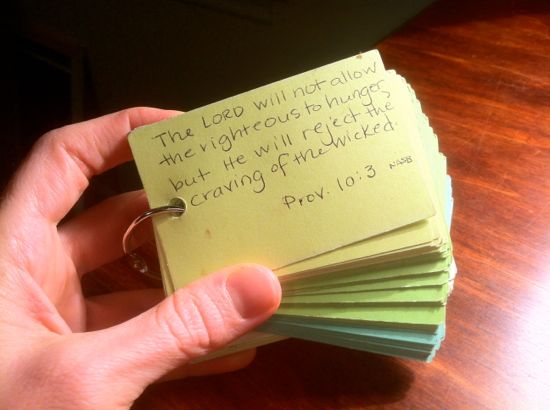
You may have heard some of the discouraging statements about church closures recently. A study by the National Trust of Canada “predicted that one-third of Canada’s 27,000 faith buildings, most of which are Christian, would likely close permanently in the next 10 years.”[i] The narrative around church closures includes conversations about the decline of religious affiliation in Canada. A January 8, 2022 Global News Report stated: “Religiosity in Canada is at an all-time low, with recently released data from Statistics Canada showing only 68 per cent of Canadians 15 or older now report having a religious affiliation. It’s the lowest it’s been since they first started tracking this statistic in 1985.[ii] The Canadian Institute for Empirical Church Research, in a 2024 article, stated an opposing view, saying “overall the Canadian Christian Church had only 2% fewer net congregations in 2019 (23,675) than they did in 2009 (24,138).”[iii] While pointing out that there are only a few fewer churches, the article acknowledged that religious affiliation is indeed down.

I understand that churches do sometimes close. The church I started in as a youth pastor no longer exists. At the same time, I am very encouraged as I think of the churches I have served as a transitional pastor over the last 5 years.

I have served seven churches, of which three were growing even during their transition, and all the rest were stable. Not one of the churches was in continual decline.

So what might this mean for us as pastors and church leaders?

There may be times when a church should close. Some of our rural communities are declining as people move away for school and jobs, which may mean a church closes for lack of people. Some churches may need to close because they have lost their mission and are no longer serving as a church, but a Christian club for a few dedicated members.

So what does this mean for church leaders?

We need to remind ourselves that we are serving God’s church. It is His church. While we can definitely do our part, we need to ask God to step in and bring revival where necessary and grow the church. We need to remind the church of our mission to make disciples who make other disciples. We need to give people hope and joy in their relationship with Jesus. We need to look for ways to bring spiritual renewal and transformation into our congregations, beginning with us.

We cannot lead people where we aren’t going first. Are you hungry for God? Are you digging into His Word, hungry for more of Him? Are you reading books on spiritual renewal? Are you praying and inviting others to pray with you? Are you loving your neighbours and those in the community around the church building?

Pastors, God wants us to use our gifting and calling to draw people ever closer to Jesus. I am convinced that when people fall in love with Jesus again, they will come alive. They will experience Him at work in their lives. As we ask for a fresh filling of the Holy Spirit, He will fill us and empower us for holy living and bold sharing of the gospel.

Quit preaching “self-help” sermons. Preach Jesus from the Gospels. Preach about the filling of the Holy Spirit. Introduce spiritual disciplines and invite your church to practice them. Show your members the full life that can be theirs.

God is still at work. He is still drawing new people to Himself. New believers are asking to be baptized. Some of your members are hungry and searching for more of Jesus. Encourage those who are already searching and ask God to open the hearts of others.

Are churches closing? Yes, some are, but yours does not need to be one of them. Be proactive. Do not assume the decline of your church is inevitable. God is still at work, renewing believers and reviving churches. May yours be one of those.

Keep looking up,

Andy Wiebe


[i] New report suggests opening churches to the masses as attendance dwindles

By The Canadian Press

Published: June 22, 2025 at 7:43AM EDT https://www.ctvnews.ca/canada/article/new-report-suggests-opening-churches-to-the-masses-as-attendance-dwindles/

[ii] [1] ‘Gone by 2040’: Why some religions are declining in Canada faster than ever

By Ashleigh Stewart  Global News

Posted January 8, 2022 5:00 am

 Updated January 17, 2022 3:21 pm https://globalnews.ca/news/8471086/religion-decline-canada/

[iii] Hope For the Future: The 2021 Canadian Census

Rev. Dr. Lee Beachhttps://flourishingcongregations.org/hope-for-the-future-the-2021-canadian-census/

Remembering the Priorities of a Church Board

For something to be a priority, it must be most important. When I see a company proudly displaying a slogan on their work trucks declaring, “Safety is our number one priority,” I know they don’t really mean it. It’s not true. If safety was their top priority, they would leave their work trucks at the shop and ask their work force not to leave the building. Their top priority is their business, but they do want to be safe in doing it.

Number one priority marked with red circle on math notebook

When I think of church boards, I wonder if we too have lost an understanding of what is truly priority? Board meetings begin with a welcome, maybe a devotional and a quick prayer, and then it’s on with the business of running a church. Much time is spent on financial discussions, reports, and budget. There is talk about the facilities and what maintenance is needed. There may be reports from different ministries highlighting their recent accomplishments. The board discusses, debates, and makes decisions. And then, after three hours of discussion, the meeting ends and everyone goes home.

The question is: did the board members focus on the priorities?

Too many church boards model themselves after a corporate board of a business. Yes, there are certain “business” aspects church boards need to handle such as managing insurance, paying bills, and ensuring the church functions in an organized way. But could it be that there are priorities that get shoved to the end of the meeting so they get less time than required?

There are a few items that I have noticed are not receiving the attention I believe should be given to them as priorities.

  1. Connect with God

Central to engaging with God is time spent in prayer. A church board is not first responsible to it’s “shareholders” (congregation) but is first responsible to God. It is God’s church, so the board needs to check in with Him to ensure that they are hearing His voice and being led by Him. Board decisions cannot be dependent on consensus alone but need to be guided by God. Along with asking God for direction, the board should talk to God about the people they are called to shepherd. A church board needs to pray for people’s health and life situations, but more importantly, pray for them to grow spiritually. A board has the privilege of interceding for their congregation.

2. Emphasize Discipleship

A church board is called, with the pastor, to lead a church in “making disciples.” (Matthew 28:20) This requires church leadership to regularly review their discipleship process to ensure people are coming to know Jesus and growing in their relationship with Him. Discipleship is about ensuring appropriate ministries are available to those who want to grow in their faith. When discipleship is a priority, it will influence other discussions during the board meeting. For example, if a board recognizes that their budget is falling short, they may want to encourage the pastor to preach about how God wants us to handle finances. The Board may want to plan a study on financial stewardship, not just to meet the budget, but to help their members to honour Jesus in their finances. Boards are easily caught up in many other decisions that it is easy to forget their role in making sure people are growing in their relationship with Jesus.

3. Pursue their God-given Vision

God has called every church to a unique role in the setting they find themselves in. Their vision needs to come from time with God. This may seem like a daunting task, but once the vision is clarified they can move ahead with purpose and clarity. Once they have determined their vision, church boards need to do everything they can to align all aspects of their church services and ministries to the vision God has called them to. This is about being responsible to what God has called them to

While there may be other priorities, these are three that every board needs to remember. A board that remembers these will do well.

Keep looking up,

Andy Wiebe

Kenotic Leadership: Leading with the Humility of Christ

The following is an excerpt from work I had to complete for a course on Kenotic Leadership as part of my work towards a Doctor of Ministry I am taking at Asbury Theological Seminary.

Kenotic Leadership includes both an emptying and a filling in order for it to be truly kenotic leadership. There must be an emptying (https://biblehub.com/greek/2758.htm) of oneself of privilege and power and authority; anything that will reflect leadership by force or coercion, and then a filling of the Holy Spirit, Christ in us.

In Philippians 2:7 the Apostle Paul describes the experience of Jesus Christ when he left heaven and became a human. In this description of humility, which Paul says we should all emulate, he describes the process Jesus went through as “emptying” (ἐκένωσεν), a letting go of his divine privileges and power in order to become one with the people he came to serve. This is about  “emptying of privilege not of essence.” (Gyertson) Jesus was still divine, but did not hold to that divine power and position in order to serve humanity.

In a Christian leader, the emptying must be accompanied with a filling. A person can have a brilliant mind and possess expansive leadership gifts and skills, but without commitment and Christian spirituality he or she will not be the leader Christ is calling for and the Christian movement needs.” (Dunnam, p. 15) The Christian leader must be filled with Christ, by His Spirit, otherwise you just have servant leadership (Bolman/Deal, p. 4) which focuses on the needs of those being served. Kenotic leadership is not first concerned about the needs of those being led, but about the priorities of Christ.

Nouwen describes Christian leadership in the future like this: “It is not a leadership of power and control, but a leadership of powerlessness and humility in which the suffering servant of God, Jesus Christ, is made manifest.” (Nouwen, p.82) He continues, “the Christian leader thinks, speaks, and acts in the name of Jesus.” (Nouwen, p..186) Dunham points out that Paul liked the phrase “in Christ,” using it or something similar “at least 172 times” (Dunnam, p. 19) in his letters. He emphasizes that this is about more than following Christ but about “being in Christ.” (Dunnam, p. 36) The emptying of ourselves of all our own power and privilege and personal goals but being replaced with a filling of Christ that draws us to a place of abiding in Christ.

Bolman, Lee G., and Terrence E. Deal. Reframing Organizations: Artistry, Choice, and

Leadership. Jossey-Bass, 2021.

Dunnam, Maxie. Christian Leadership: Speaking to God for the People, Speaking to the People

for God. Abingdon Press, 2019.

Gyertson, David. Foundations of Kenotic Leadership for Times Like These, 2019.

Nouwen, Henri J. M. In the Name of Jesus: Reflections on Christian Leadership. Crossroad,

1989.

Creative Service Ideas

Most Sunday Services in most North American churches look pretty much the same. There is usually an opening, announcements, singing, and a sermon. Sometimes there are a few extras like a special song sung for the congregation or something like that. As pastors, we tend to do things the way we have always done them because we have found a pattern that works, but for those who are interested in changing things up, I would like to share some creative service ideas you could try occasionally. I don’t believe there is a reason that every Sunday Worship Service has to look exactly the same or even include all the elements we regularly have.

The following ideas for Sunday Services can be done in place of a sermon. Some of these ideas may be quite different from what the congregation expects each Sunday, but, in my experience, with careful introduction and scriptural support, they can be well received. Before any service that I am drastically changing, I make sure I know what I am hoping for. This way I can clearly communicate these expectations to staff and volunteers. During the service, I also make sure to walk the congregation through the activities I’ve planned and how they can participate. Sometimes I make a special effort to explain how the creative idea is scripturally sound and appropriate for Sunday morning.

Here are the ideas:

Worship/Music Sunday

Most services place the sermon as the main event in a service. It would be appropriate to occasionally have a whole service of song, scripture, music, and praise. The singing and praise of the Lamb in Revelation 5 would be a good background for this service.

Prayer Sunday

While we often pray at different points in the service, or have designated prayer meetings, it is quite appropriate, in place of a sermon, to lead the congregation in a guided prayer time during the Sunday Service. Prayers of the Bible can be used as a guide for a Prayer Sunday, or use a guide like the “Five Finger Prayer.”

Scripture Sunday

We often read a scripture or two and preach from scripture, but it can be encouraging to have a complete service focused on the reading and quoting of scripture. Children can share verses they have memorized in Sunday School or at camp. We can imitate Timothy who was charged with the “public reading of scripture” (1 Timothy 4:13).

Sharing Sunday

Some churches have a brief Prayer and Share time as part of their service. This could be expanded to fill the whole morning as long as a leader is prepared to give some direction and guidelines. The leader can offer suggestions of sharing answered prayers and God’s work in their lives, as well as giving parameters of what is appropriate to share in a public setting.

Communion Sunday

Many of our communion celebrations are tacked onto the end of a service, sometimes following a sermon that had nothing to do with communion.  A complete Sunday devoted to communion might have a great impact on the people as you take time to explain and understand communion with more detail.

Communion Sunday – with Interactive Stations

Often, the communion celebration is only focused on the bread and juice. I have used interactive stations inviting people to enter into the story with more of their senses. Each station invites worshippers to read scripture and participate in a physical activity surrounding communion. An example would be to read scripture about forgiveness and having them write out confessions and nail them to the cross, or to read about the temple curtain being torn in two while tearing a rag in half. The hope is to engage more of the senses as people enter physically into the communion celebration.

Baptism Sunday – all focused on Baptism

Find ways to make the whole service a celebration of baptism. Explain the meaning and importance of baptism. Invite candidates to share their testimonies. Invite others to pray for each one being baptized. Encourage people to remember their baptism and to recommit to serving God as they did at that time. No matter what service you plan, include scriptures that speak to the theme of the service.

I hope you can try a few creative services. Let me know how they turn out. And let me know if you have other creative suggestions.

Keep looking up,

Andy Wiebe

Preparing For Change #3: Begin Your Change by Easing Into It

We experience some changes gradually; others come as an abrupt shock. When prices at the gas pumps go up by a cent or two at a time, we don’t notice as much as when it is a five-cent increase or more at once. Easing into a change can help a church be more accepting of the change as it develops. This gives people time to adjust to smaller changes instead of the whole change at once.

Break the Change into Smaller Parts

For many churches, Sunday Worship services have a familiar flow. The order of service is the same each Sunday. If you want to lead your church in changing its service, you may want to begin with small changes. Instead of changing everything, change one or two things at a time.

For example, if you want to add some variety to the service, you could begin by breaking the usual group of worship songs into two smaller groups, inserting a scripture reading or prayer time in between. Then, after a while, you could move the second group of songs to the end of the service for a time when you want to follow a sermon on praise with singing praise songs as a sermon response. After people get used to some changes in the singing, you can change how the welcome and announcements are done. If you always start with a song and then the welcome and announcements, try starting with a video clip highlighting a ministry in the church before doing the welcome and announcements. Instead of depending on the song to gather the church to worship, gather them with a video followed by a scriptural “call to worship” from one of the psalms.

Whatever your change, see if there are ways of breaking it into smaller changes to allow people to adapt slowly. As people see you make small changes that work, they may be willing to try a bigger change next time.

Do a Trial Run

It may be appropriate to introduce a change by announcing it as a “trial run.” You can set a date for the trial period. The caveat that this is a temporary change that will be evaluated later may give your church the willingness to try it for a while. You could even introduce the change by explaining that you are looking for a way to do things better, but you aren’t sure if this is the best way to do so. You can encourage your congregation to give you feedback as you try the change.

If you introduce a “trial run” change, make sure it is a long enough period to give it a good test run, but a short enough time to still be a trial period. If you introduce a change that you will try for a year or two, that is obviously no longer a trial run. And make sure to stick with your timeline. Do not extend it. Respect people by keeping your promises.

Promise an Evaluation

Whether it is presented as a trial run or not, you can promise all those involved in implementing the changes that you will be doing a thorough evaluation, which they can take part in, on a certain date. Evaluate it against the intended purpose. Be honest with the results. 

Three options arise out of an evaluation. First, if it didn’t do what you hoped, you can always revert to the old way. Second, if the change didn’t work, you can adjust aspects of it and try again. Or, third, you can introduce a completely reworked change to try again. You may have to wait a while before people are ready to try again, but that will give you time to figure out how best to move ahead, if that seems the best option.

May God guide you as you introduce change to your church.

Keep looking up,

Andy Wiebe

Preparing for Change #2: Prepare For the Projected Change

In a world where change happens whether we like it or not, people are sometimes hesitant to follow a leader into more change. However, they may be open to change if the leader provides compelling reasons.  I talked about that in the last blog post. Another way to help people follow your change leadership is to help them prepare for the change.

Provide Examples

Some people are more willing to adopt a change if they know what to expect. Helping churches visualize the change can take away some of their fear of the unknown. They may still not be sure about it, but at least they will begin to understand where you are leading them and what that change will look like. Visualizing requires the leader to carefully explain the change with enough details that the change begins to make sense, whether they actually can picture it or just understand the steps involved.

Recently, I was leading a church in communion. Their tradition was to have the elders serve communion by passing the trays of bread and juice down the rows and people helping themselves to a piece of bread and cup of juice. Everyone waited until everyone had been served and then the pastor led them to eat the bread and drink the cup together as a congregation.

We had decided to change things up a bit. I explained to the congregation that they would be coming up to the front to receive the communion bread and juice. I came down off the stage to where the people would be coming up to show exactly where the bread and juice would be. I walked over and pointed to the side of the aisle we wanted people to come up in and which aisle they could follow to go back to their seats. I explained that we would still wait until everyone was served and participate together.

I tried to use words to explain what was happening. I tried to make my explanation itself visual as I pointed to the appropriate places and aisles. And I reminded them of what was still remaining the same. I think I helped them visualize it because it worked very smoothly!

Answer Questions

People have questions about upcoming changes. If they are given the opportunity to ask their questions, they may be more open to the change. As their questions are answered, your church members will be more informed and hopefully their concerns will be addressed. A leader may anticipate several questions and should answer as many of those early in the process, but there will always be other questions that people want clarified. As they are given time to process the upcoming change, and as they can ask questions, you are including them in the change without it just being dropped on their lap.

Stock Traders In A Meeting

Invite Engagement.

While not every change may allow this freedom, you can often invite the church to participate in planning the change. There are times when a change may be so scary for people that they do not want to be part of it at all. Forcing change will usually only increase the resistance. Do everything you can to help people see why the change is occuring, what it will look like, and what their involvement will require.

Recently, our church leadership suggested we have a Prayer Sunday, where instead of a sermon, we have corporate prayer. When I introduced the plan for the morning, I made it very clear that no one had to pray. I told them they could even say “Pass.” At the same time, I invited them to pray, even a brief sentence prayer, and gave them an example. It was good to see that most people participated, and no one seemed too uncomfortable or upset by the change.

Changes mean we have to adjust something. The better you prepare those you lead for the changes you are planning, the more likely they will be willing to adjust to the changes. May your changes go well.

Keep looking up,

And Wiebe

PREPARING FOR CHANGE #1: Presenting the Case.

Change is a scary word for many people. Yet change is necessary if we want to continue to grow and respond to the world around us. Change gives the opportunity to improve with the hope of better results. Recognizing the value of change and helping others to do the same is an essential part of being an effective leader, as such, the next three blogs will be about leading change.

When we are leaders of change, we often assume people are following right behind us. We forget that, because of our role to lead initiatives and implement adjustments in order to see improvements, we often spend a lot of time thinking through changes before we introduce them to others, so what is familiar to us is brand new information to those we lead. We are prepared for it, but they are not. We need to be intentional and clear about what changes we are introducing, the reason for it, how it will look, and how we will evaluate it.

We want to invite people to change, not force them. It helps to give a clear idea of why each change is appropriate. Among the reasons for change may be a desire for creativity, a response to Biblical direction, or a reaction to statistical information.

Change and Creativity

I like trying new things, so I sometimes introduce change simply for creativity’s sake. I think there is a place for that.

Some churches have exactly the same order of service every Sunday. Everyone knows the order of announcements, prayers, singing, preaching, and so on. I like to rearrange the order of service because I think people respond to creativity. The same thing every time puts people to sleep. One member, who appreciated the creativity and variety told me, “I like coming to this church because I never know what to expect from Sunday to Sunday.”

I also like to arrange the service in different ways in order to highlight the theme of the morning in a unique and creative way. Celebrating communion is often done at the end of the worship service in the churches I serve. Sometimes, I move it to the beginning of the worship service so the rest of the service is a celebration of Jesus’ death and resurrection as we were just reminded of in taking communion.

Change and Biblical Reasons

Sometimes churches need to make changes because they recognize they are not fulfilling a Biblical direction as best they could.

A church may respond to a sermon series on prayer with a renewed emphasis on prayer. They may ask Bible Study groups to pray. A church may make a prayer room available for after-service prayer. They may cancel all programs for a week to invite everyone to come to special prayer events.

A church may ask all their small groups to put a greater emphasis on outreach and inviting unbelievers because they recognized they weren’t doing well in reaching unbelievers. This is one way they are hoping to fulfill the Biblical mandate to share the good news with those who have never heard. Sometimes churches need to make changes that they believe God is inviting them into because of Biblical reasons.

Change and Statistics

Some reasons for change include statistics. We measure many aspects of life, including how we do ministry, by certain numbers.

A Sunday School class that has only two attendees may need to be canceled to give that teacher the option of serving in an area with greater need.. Giving to ministries or missions outside of the church may need to be stopped or postponed when the church is in financial difficulty. If the income does not match the budget, the necessary reductions need to be made. A church that does a demographic study of their community may recognize that there is a large number of people of a certain ethnic group in their community that has no church or church reaching out to them, so they develop a specific ministry effort to share Jesus with that group of people.

Whatever your reason for the change, whether one of the above or something else, be clear about it so that those who are affected may understand why this change is good and needed. May God guide you as you lead change.

Keep looking up,

Andy Wiebe