Book Reviews: Andy’s 2024 Reading Experience

I will be sharing a brief review of every book I read this year. Hope you enjoy and hope it encourages you to keep reading.


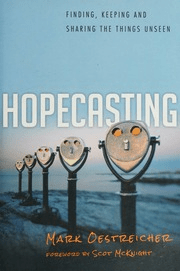
HOPECASTING: Finding, Keeping and Sharing the Things Unseen – by Mark Oestreicher

As the title states, the book is about hope. Mark Oestreicher defines hope as: “Hope is faithful confidence that God continues to author a story that moves us from vision to action.” (p. 24) His belief is that hope is not something we work hard to get, but we can only have it as God gives it to us as we spend time with him. He describes a number of enemies of hope, each a distraction that takes our eyes off of hope to other things. I like how he shows that our role is to be Hope carriers to the world around us, already giving them a glimpse of the kingdom of heaven.

Are you in need of some hope? This is the book for you.

Punctuality Begins With Arriving Early

When I started out as a young youth pastor, I was told by my Senior Pastor that I had to show up at least one hour before the Sunday morning worship service. I have experienced the value of this advice many times and followed the practice in preparation for other meetings and events as well. I have found that there have been many times when that extra hour has been beneficial.

1. Arriving early ensures I am on time.

It may seem like it goes without saying, but if you plan to be an hour early, you will most likely be on time. If you have a flat tire on the way, you may even have time to change it and still arrive on time.

2. Arriving early protects my integrity.

When you are on time and start events on time you maintain integrity, but when you are late, or start things late, people aren’t sure they can trust you when you announce the start time for an event. And when you don’t follow through on start times, it may affect people’s sense of your overall integrity. You want to be on time and ready to go for your event so that you can keep your word on when you will start.

3. Arriving early gives me time for last minute adjustments.

Often there have been issues to iron out before the service. You have time to photocopy anything you forgot, or to change that one PowerPoint slide. It gives you time to make sure all the technology is up and running. There have been days when I have needed all the time to make sure I fixed something or did a final tweak.

4. Arriving early prevents rushing.

When you are rushed you are not in the best frame of mind. Being rushed often gets our frustrations up and means we may miss something in our final arrangements prior to the event. When we have time, we can be more relaxed and work through our last-minute preparations with time to spare.

5. Arriving early gets me focused.

Everyone knows how life happens and sometimes we are distracted by what we dealt with earlier that day. If you get to your event with time to spare, you can go over the agenda and get your mind cleared and focused. You have time to pause and pray to ask God to help you focus on the moment and leave the distractions with him.

6. Arriving early helps me ensure all volunteers are ready.

When you are early, you will have time to check in with your volunteers to make sure thy are ready to go. I like to give people a heads-up about when their turn is in the service or event. When everybody knows their role, the event will go smoothly.

7. Arriving early gives me time for people.

When you are early, and ready for your event early, you have time to greet people as they arrive. There are often a few people who arrive early. I have had some significant conversations with people because I had time to slow down greet them before the service.

You may think arriving an hour early for a worship service is over the top, but I would encourage you to try it. I’m sure if you try it five or six times, you will begin to experience the benefits and establish this as your own habit. There is value in punctuality, and arriving early ensures your punctuality.

Keep looking up,

Andy Wiebe

Looking Ahead With Clarity Part 3: Where We Want To Be

This is the final of a three part series on looking ahead with clarity. Part 1 was about recognizing where we have come from. I discussed the value of reflecting on how God had used us in the past and what God has been teaching us that may give us a sense of what is next for us. In Part 2 we looked at assessing our present reality, where we are, and now in Part 3 we will discuss where we are going.

Knowing where we have been and where we are helps us identify a solid starting point from which to begin moving forward. Now we need to clarify where we are going. What is the goal we are shooting for? When that is clear, we can set appropriate steps to get us there.

There are two kinds of goals: achievement goals and habit goals. Achievement goals are goals we work towards to accomplish at some point down the road. Examples could be losing 20 pounds or running a marathon. These are specific points we can look forward to and measure clearly when accomplished. Habit goals are goals we want to work on regularly. A habit goal for me is to read my Bible every day. Habit goals can help us accomplish achievement goals. My daily reading goals help me work toward reading the whole Bible in a year, an achievement goal.

Goals help us determine where we wish to be. There is a 2005 Fountain Tire commercial where a man is buckling himself into his seat on a plane, excited to be going to Hawaii, only to find out he used the wrong gate and got on the wrong airplane. “Ok, goin’ to Winnipeg,” he declares to himself. We need to be clear on our goal and then figure out the right steps that will get us to that goal. If we don’t, we may find ourselves “going to Winnipeg” when we were geared up for a holiday in Hawaii.

While goals give us a point to work toward, it is the steps we take along the way that make a difference to where we end up.

Goals without an appropriate plan to achieve those goals are only wishes. When we create a plan with clear steps to take, we are better able to move toward the goals we have set.

Let’s work through an example. If I want to read the Bible in a year, I can break the goal down into smaller steps:

First, I need to determine which Bible I will read from. I like to choose a version I have not usually read, just to change things up a bit.

Second, I need to decide how much I will read every day. This is made simpler by all the reading options available to purchase or download online.

Third, I need to decide when I will read. Personally, I like to read first thing in the morning, right after my shower. This helps me be awake as I read, and is a perfect time to focus uninterrupted as I’m usually up before my family.

Fourth, I need to decide what I will do if I miss a day. Sometimes I miss a day. I have decided to catch up the next time I read. I do not want to skip any parts and I don’t want to fall too far behind. And I will track my progress by following a Bible laid out in daily readings, keeping a bookmark in place to remind me where I left off.

Whatever goal we are working towards, we can set achievable goals that keep moving us forward. We can develop a plan that gives us small enough steps to achieve in the short term but big enough steps that lead us to the goal.

We need to know where we are going and then make a clear plan to get there.

In part one of this series we looked back to see where we have been and if God has been leading us or preparing us in a certain direction. In part two we looked at how to get clarity on our present reality and so we have a clear starting point to move forward from. Now as we set clear goals and steps to get there, we will be moving ahead with a clear plan.

May God help you accomplish the plans He has given you.

Keep looking up,

Andy Wiebe

Looking Ahead With Clarity Series: Part 2: Where We Are

We are in the middle of a three part series about looking ahead with clarity. Part 1 was about recognizing where we have come from. I discussed the value of reflecting on how God had used us in the past and what God has been teaching us that may give us a sense of what is next for us. Today I want to suggest looking at the present reality, where we are, and then in part 3 move to where we are going.

When I use my Maps app on my phone, I type in where I want to go, ask for directions, and immediately am asked for “your location.” There is no way of knowing how to get somewhere if I don’t know where I am starting from. We want to look ahead with clarity, so we must be clear about our starting point. We need to ask, “Where am I?”

When I am considering my personal life and goals for this next year, I may evaluate things like my physical health or emotional well-being. If I want to be healthier, I need to be clear on what my reality is right now. If I want to lose twenty pounds, then I need to know how much I weigh right now so I can measure if I am moving toward my goal. A clear and accurate starting point is necessary for us to know if we are making progress toward our goals.

Alberta Einstein has been given credit for the following quote: If I had an hour to solve a problem I’d spend 55 minutes thinking about the problem and 5 minutes thinking about the solution.” While this may seem excessive, too often we want to jump to the solution too quickly. Dreaming about the future is much more appealing than trying to determine an accurate picture of our present reality. Yet, unless we are clear on where we are, we will have a hard time knowing where we are going. If we do not have a clear picture of where we are we will not know how to improve and set good growth goals.

So before you start setting goals, take the “55 minutes” needed to do an accurate reality check. If you want to be better at managing your time, first figure out how much time you allot to different activities in your day. If you want to lose weight, first determine how much you weigh and what the ideal weight for you is. If you are looking to keep growing in your skills, do an assessment of your skills and where you feel you are lacking. Take time for a reality check in the area you are looking to set goals in.

After the reality check, you can begin asking questions of yourself to determine where goals should be set. Here are some questions I’m asking as I look ahead:

  1. How can I improve my health?

Presently, I am overweight. I have less energy than I think I should have. I am eating more than I should. I need to work towards becoming healthier.

2. How can I keep on learning and growing?

Presently, I am reading regularly. I read quite a bit and listen to podcasts. How can I keep growing and developing in my role as a Transition Pastor? I do not want to stagnate as a person and as a pastor.

3. How can I keep growing in my relationship with Jesus?

Presently, I read the Bible just about every morning. I take time to talk with Jesus. Is there something I should change up or add into my life that would help me move closer to Jesus? What format should I use to read through the Bible again this year? My prayer life is better than it has been, but it could still use some improvement. How can I address that?

4. How am I doing financially?

Presently, I have some debt that needs to be cleaned up. I do not like carrying debt other than my mortgage. I spend money quite freely, maybe too freely? I tithe regularly, but should I be more generous this year?

What questions do you need to ask yourself to take an honest look at your reality? You may use some of the questions I ask myself, but I’m sure there are others that are your own questions you are facing. Set aside some time to get your reality clear so that you can set goals with clarity as well.

I’d love to hear how you go about setting goals for yourself. Leave me a comment.

Keep looking up,

Andy Wiebe

Looking Ahead With Clarity: Part 1: Where We Were

New Years is often a time of resolutions and goal setting. As we move to a new calendar year, we begin to dream about what could be. I would like us to consider the possibilities of what could happen in this new year. In the next 3 blogs I want to discuss how to look ahead with clarity, covering the following three topics: where we were, where we are, and where we want to be.

In order to look ahead with clarity, we need to first look back to see where we have been. The old Experiencing God bible study by Henry T. Blackaby (click for link to 2022 edition) identified the value of looking back at the past to gain clarity about what step God may want us to take next. Whether we are thinking of ourselves as an individual, or considering our church or organization, knowing and understanding our past can inform our future. It is rare that God will redirect us into a completely different direction than where He has already led.

Looking back helped my dad as he was making a change in his career path. My dad was a truck driver. That was his job. That was how most people saw him when I was young. At one point he decided God wanted him to become a marriage and family counselor. Some people thought this was a strange new direction for him to pursue. Others, who knew him well, said it made complete sense. They had already observed God using him to speak into other people’s lives and giving sound advice in the past. Becoming a counselor was not a drastic change but built on what God had already done in his life.

What Has God Been Up To?

As you look back over the last year or more, think about where God has been working in your life and how God has been using you. Has God been speaking to you about your life? There are times in life when every scripture we read or every time we talk with God in prayer that God impresses something on our mind or heart. There are times when, without us asking for it, a certain theme comes up again and again. Have you asked God what to do with that?

Have you seen God use you in meaningful ways with people and circumstances? Perhaps you’ve agreed to serve in a role because there is a need, only to find that God arranged for you to be in that place at that time to be a blessing to someone in need. God may use circumstances where you are exposed to a need you were not aware of, but God impresses the need on your heart, and you realize God is calling you to be part of the solution.

I know for me; I became convinced of God’s calling on me to be a pastor as I saw how He used me in my pastoral internship. It was while preaching a sermon during that period that I felt a clear call from God to serve as a pastor. That circumstance became a clear on my life. Similarly, a church may see a number of single mothers attending their church and realize God is calling them to a special ministry with them. Has God already been using you in a certain way that may give you direction for what’s next?

Has God been teaching you things that could be preparing you for something new? God can teach us in a number of different ways. It may be formal training at a school or college or hands on training in an apprenticeship. We also learn a lot just from experiences we go through. Each of these ways of learning can help us see God’s direction on our lives. As God teaches us over time, we get a clearer picture of what He is preparing us for next.

Evaluate the past in light of your relationship with God and His work in and through you. Recognize the value of knowing where you have been in order to get a sense of where to go next. What new beginning may be waiting for you as you step into the new year?

Please leave a comment, let me know how your past has helped you see the future more clearly.

Keep looking up,

Andy Wiebe

Courage to Risk

It is common to seek out safety and security. We want to know that we, and those in our care, are not in danger or lacking in anything. But progress is only made as someone has the courage to step out and try something new. If safety is our number one priority, we will never try anything new.

To be a good leader one must be willing to try something new, at least occasionally. We recognize that what we are doing may not be enough, that there might be other options out there that are better than what we are doing right now. The problem is, we don’t know if there are better options unless we try. Trying something new is a risk. When we step out of the safety of our comfort zone and the familiar, we move into uncharted territory for us and the church or organization we lead.

A pastor may need courage to try something new in a worship service – something a little unusual. I risked a change last Sunday. We had completed a sermon series I was working through and didn’t want to start a Christmas series just yet. As I thought about the service, I got an idea I felt may have been from God, but it was different. I am still a new pastor at this church, having only served them for about three months. I wasn’t sure if I was trying something they might respond to or not.

Here’s what I did: I introduced the Sunday as a Scripture Sunday. At the beginning of the service, I gave the congregation a heads up, that I would ask them to read or quote their favorite scripture. I made sure we had mics for people to go to so everyone could hear them read. I introduced the morning with a brief look at 2 Timothy 3: 16-17 which highlights the value and importance of scripture. I referenced 1 Timothy 4: 13 where the Apostle Paul encourages Timothy to include public reading of scripture in their worship services. When I opened up the floor for people to read their verses, I was pleasantly surprised at how many people came up to quote or read verses.

I had no idea how that morning would turn out, but I risked it and was pleasantly surprised. And I was encouraged to see how scripture was obviously an important part of many people’s lives.

There are many areas in a church or an organization that could benefit from a change. Have the courage to try. Though it can be tough to introduce a big change, it may help to approach it as a trial and see how it goes. Sometimes people are willing to try something new if they know it is not forever and will be evaluated later. If after a trial period it turns out to be less than ideal, then put it aside and move on, but if it is a good idea, now you can evaluate and improve it and keep going!

Courage is also required when reorganizing responsibilities, and letting someone else take over a responsibility you previously held. As much as you can prepare someone else, training and equipping them for that role, there is still the risk that they may do a terrible job and you will have to deal with problems after. Yet, if you have done your part to prepare the person taking over, they may even do a better job than you, though likely not exactly as you would had done.

Courage is necessary when you have to speak truth into a difficult situation. When you have to confront someone about their actions, you never know how they might respond. You may be risking a friendship breakdown. But sometimes you have to courageously speak up for the best for the larger organization.

Courage is required when leading a church toward a new vision. Even when many people from the church contributed to developing the vision, you do not know what the end result will be. You are moving toward a new vision, trusting that you have carefully sought out the best route. The risk is you don’t know exactly what it will look like until you get there. But take courage and move forward.

Courage is vital for any leader, vital for any pastor who is concerned about leading their church well. Prayerfully assess the risks and ask God to guide you as you courageously move in the direction you believe God is leading. Take courage and lead on.

Keep looking up,

Andy Wiebe

The Importance of Critical Assessment

Now the Berean Jews were of more noble character than those in Thessalonica, for they received the message with great eagerness and examined the Scriptures every day to see if what Paul said was true.

Acts 17:11

There are times when we need to critically assess certain things. The Bereans in the verse above were carefully assessing the good news the Apostle Paul shared with them in order to determine if what he said was true or false. Rather than writing him off, as some other towns did, the Bereans understood the value of examining the situation carefully and responding appropriately.

There are many times in the work of the church or an organization where critical examination is beneficial. Hare some examples of areas that require careful assessment.

Programs

Churches often begin a new program with excitement and a hope that it will be meaningful and accomplish a certain purpose. The program may succeed and serve the church well, but there may come a time when the program no longer serves the same purpose, or something else might serve the church better. If you do not assess the program critically, you may be holding on to something that no longer has value. Instead, ask these questions regularly:

  • What is the goal of this program, and is it achieving that goal?
  • Is this the best program to achieve that goal?
  • Would the church be best served if this program was dissolved, or replaced?

Budgets

In my years of serving the church I have been part of many budget-setting meetings. It is surprising how often a budget line is approved or denied without real assessment of its value.

Sometimes budget amounts are simply left as is, or increased slightly because of overspending the previous year. This lacks critical thought process about why each amount is designated for each area.

In my years of serving the church I have been part of many budget-setting meetings. It is surprising how often a budget line is approved or denied without real assessment of its value. Sometimes budget amounts are simply left as is, or increased slightly because of overspending the previous year. This lacks critical thought process about why each amount is designated for each area.

Some churches invite program or ministry leaders to submit budget requests. This might require that some assessment take place if those leaders prayerfully determine what their plans and expenses are for the next year, while keeping the vision in mind. The following questions could be helpful:

  • What is our ministry plan for the next year?
  • What expenses will we ask the church to fund, and why?

New Hires

As a Transition Pastor, I am continually working with churches who are looking for a new pastor. I am hired to help them make a wise choice. This includes asking the leadership questions to help them assess each candidate carefully. When a church has been without a full-time pastor for a period of time, there is a desire to find their next one quickly. As they receive resumes, it is easy to fall in love with a candidate without being critical enough. While it seems harsh to the average church leader, you must evaluate your candidate according to some strict expectations. You want the right person, not just someone who seems nice. Here are some questions to ask regarding the candidate:

  • How closely does this candidate match your job description?
  • Are the candidate’s beliefs and philosophies closely aligned with the church’s?
  • Will this person be the best one to lead your church toward its goals?

There are many other areas a church leader needs to assess critically, and there are many other questions to ask in the evaluation process, but most importantly, do the critical assessment necessary to ensure you have the best results moving forward.

Keep looking up,

Andy Wiebe

Book Reviews: Andy’s 2023 Reading Experience

I will be sharing a brief review of every book I read this year. Hope you enjoy and hope it encourages you to keep reading.


HOLY CONVERSATIONS – by Gil Rendle and Alice Mann

Holy Conversations: Strategic Planning as a Spiritual Practice for Congregations, is a practical workbook for anyone who is looking to lead a congregation to a unified vision and purpose. This book would be especially appealing to those who have little or no experience in leading a church through vision setting and strategic planning. They offer a number of examples, resources, and tools in the appendix that you could use as is or adapt to your local setting. If you are looking to lead a congregation to become more purposeful and with a unified mission, consider this book as a resource.

Book Reviews: Andy’s 2023 Reading Experience

I will be sharing a brief review of every book I read this year. Hope you enjoy and hope it encourages you to keep reading.


THE PASSIONATE CHURCH – by Mike Slaughter

Mike Slaughter draws on his United Methodist heritage and denominational connections to describe what a passionate church looks like. He addresses Four Areas of Focus as highlighted by the United Methodist Church: Developing Principled Christian Leaders, Engaging in Ministry for the Poor, Creating New and Renewed Congregations, and Improving Health. He does a great job of giving good examples for how each of these areas can become a real part of how a church does ministry. He uses examples from his own church in Ginghamsburg as well as from many others. What I love most about this book is the practicality of it. Passionate Church is a few years old now (2008), but the same questions can still be asked of our church and how we are living out our calling in our own communities.

The Benefits of Scheduling Events on Your Calendar Regularly

How do you remember meetings and appointments you have scheduled? As church leaders, we are often busy enough with our own families and work lives that we can easily forget some of our responsibilities at church. We have many options available to us if we want to keep track of our schedules. We can go old-school with a day timer or paper calendar. We can use calendars on our phones and computers. We can set alarms that remind us of an upcoming event. The problem is, these are no good unless you actually use them.

I recently talked with a church board who had just about missed planning a tradition in their church. Every Father’s Day, people would bring pies to share after church. This was tradition. Someone always reminded people and made sure it happened.  

This year, personnel had changed and no one remembered until the Friday before the special day. As a result, a few people were scrambling the day before to make sure everything was in place. If this event had gotten on the right calendar, it may have caused a lot less stress.

So what can we do? And what needs scheduling? Here are a few thoughts on scheduling and setting reminders ahead of time.

  • Choose a system of scheduling that works for you.

It doesn’t matter which system you use, the important thing is to choose one that you will continually use. Don’t use more than one system because then something is likely to fall through the cracks. 

  • Chart everything.

For me, I put everything on my calendar in my phone. When I say everything, I mean everything. All meetings are written there, whether board meetings, or board responsibilities. For bigger events, you may want to break down deadlines for parts of it to be done by earlier dates.

  •  Set reminder alarms

Often, I not only put the event at the correct date and time, I also put an alarm to remind me ahead of time so I can make sure I will be prepared and on time.

  •  Scheduling helps planning

Marking everything on your calendar allows you to also plan ahead for preparation time. Because I know of events far in advance, I know when to delegate certain aspects to other volunteers on my team. And of course, scheduling helps reduce conflicts because you know not to plan another event at the same time.

  •  Your calendar helps you say no

One value of charting everything on the same calendar is that you can see when you are getting overwhelmed and need to say no to something. If you don’t have everything – your work schedule and personal life – on your personal calendar, you may not realize how busy you are with both parts of your life at the same time. You do not need to feel guilty because you know you do not have time to take on anything else.

  • Watching your activities helps you see where you spend your time

We are not always aware of how we are spending our time. We get caught up in doing what needs to be done. When you look at your calendar and see that you are spending a large portion of your time doing things that have nothing to do with your vision, you need to adjust your activities. If you notice that an overwhelming amount of time is spent on work, and you are missing out on family time, you need to adjust your schedule.

Setting reminders of appointments and meetings and events can help you be more prepared for them, as well as help you see where you need to adjust your priorities.

Keep looking up,

Andy Wiebe