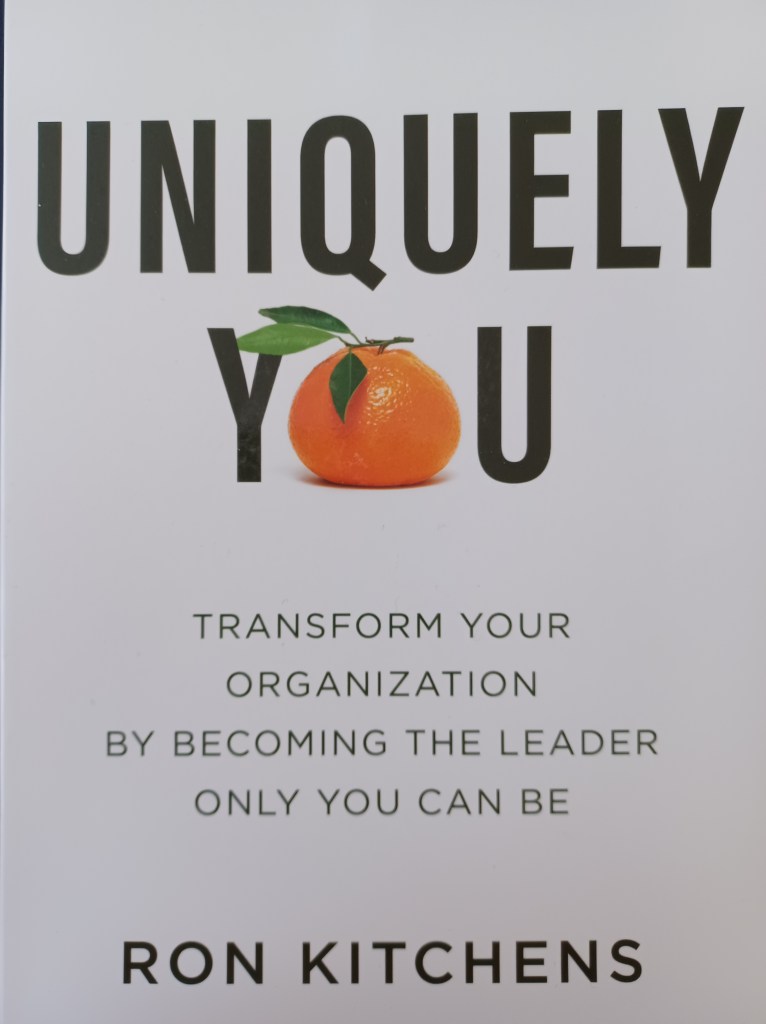
Uniquely You: Transform Your Organization by Becoming the Leader Only You Can Be is an encouraging book for any leader. Ron Kitchen builds off his own experience and the many lessons he has learned along the way. Ron shares many stories as he highlights the value of building a great team. He gives a number of great ideas on how to build that team. I like how he puts family first, and makes that an important part of his business, so that everyone on the team has that same priority. His ideas have a great track record as his teams don’t have alot of turnover because they love working together.
This books has short chapters which will be appreciated by those who don’t like reading but still want to learn.
THE BIG PICTURE FOR SMALLER CHURCHES – by John Benton
John Benton writes as the pastor of a small church, encouraging small churches that they can “thrive and survive as a small congregation”. He describes how there are certain things that can really discourage small churches while at the same time pointing out the benefits of small congregations in impacting people’s lives. He suggests there are five things that small churches can excel at, and if they do, they will have meaningful ministry:
Quality Presence
Quality Welcome
Quality Teaching
Quality Hospitality
Quality Prayer
And then he concludes with some ideas on how to fight discouragement in small churches. You will be encouraged to value your small church and make it the best small church it can be.
This is going to be a busy week for me. It is jam-packed with responsibilities and deadlines. I will be attending a funeral in another province, which will take about three days including travel. On the way home I need to make arrangements to pick up a car my daughter bought from an online auction. Then in the four days remaining this week I will preach at a Christian School chapel, plan and lead an Elders Board meeting at the church. Saturday I am to lead the Elders and their wives through a 6-hour Visioning Retreat. On Sunday I am beginning a sermon series in Colossians as well as leading the church in a communion celebration. Besides that, I already have one coffee meeting and a Men’s breakfast. And this list doesn’t include those little interruptions that come up regularly, or the fact that I am also writing a blog and posting another this morning.
So how do we handle the busy times of life?
Use the slower times to prepare and plan ahead
My weeks are not always this full. I hope yours aren’t either. So when you have a little more time on your hands, think ahead. I usually plan my sermon series weeks if not months in advance. I often take time at the beginning of the year to plan a whole year of sermons, figuring out when to preach certain topics or themes or books of the Bible.
I have already been working on the Colossians sermon series so I have a pretty good idea of how I will introduce the series on Sunday. It’s not completed, but it shouldn’t take too much more time to finish my introduction sermon.
I have known I was speaking in chapel for about eight weeks. I have a sermon I preached a few weeks ago that I think will adapt well for this purpose. I need to adjust the sermon to make it interesting and applicable to 5- 15 year olds, but at least I have an idea of what I will be doing.
So when you have slower times, think ahead. Plan what you will be doing in the future. The more you think ahead, the more likely you will have at least some of the work done for the events of those busy seasons.
Use your experience to help you in the busy times
I have had little time to specifically focus on the Vision Retreat I lead on Saturday. Fortunately, I have experience leading similar events. I have old files of other vision processes I have led and can adapt those to specific needs of this church, giving me a great starting point.
I heard of one pastor who threw away every sermon he preached. He wanted each sermon to be fresh and not a repeat of something before. While I appreciate the desire to be fresh for each teaching, there is great benefit in having old files to go to when you need to work on something you have already done at some point earlier in your life. Use your experience. Build on it. Don’t waste it by throwing it all away.
Pray
We love the story of Jesus multiplying the loaves and fishes. He prays and the little boy’s lunch becomes a buffet for a crowd! Some of us have stories of God multiplying meals we have served when we did not think we would have enough.
In the same manner, why not pray and ask God to multiply your time? Ask God to stretch out your time so you will have adequate time to do what is required in your busy seasons. Or alternately, ask God to help you work more efficiently and accomplish more than you usually do in a certain period of time. Ask God to stretch your time and abilities to you can do your best, even in busy times.
Number one priority marked with red circle on math notebook
Focus
Sometimes in busy times we cause more problems for ourselves by getting caught up in all that needs to be done rather than focusing on one thing at a time. I don’t have to do the Visioning Retreat until Saturday, so I should focus on the other events that I need to prepare first. Work on one deadline at a time.
Focus in on one thing at a time so you can give it your best. Ask God to help you with your focus. He can help you work on one thing at a time rather than being overwhelmed with everything at once.
Do your best in the time you have
If you are good at what you do, you will want to do your best with your responsibilities. That is a good thing. But sometimes we have to let go of perfection and just do our best with the time and energy we have. This is not an excuse to do a poor job or not put in the effort, but there are times when our plate is just too full for us to make everything perfect. Do your best all the time, but also be realistic about the time you have.
Busy weeks will happen. Sometimes you will have multiple deadlines to meet at the same time. Ask God to help you and do the best you can, working on one thing at a time.
A new year often brings New Years resolutions. Many people make them, and while few keep them, the idea of making commitments to improve your life is a good one. Resolutions are often about our personal health like losing weight or becoming more fit. Again, not a bad idea. Some may make commitments about their career. Maybe they want to pursue another level at their job or more education hoping that will result in a financial boost in income down the road.
But what about personal growth? What about growing in your joy? We all know that people of joy are much more fun to work with than people with no joy. And we personally feel better if we have joy inside as well.
Are you a person of joy? Do you share joy or do people sense a dark cloud over your head every time you walk by? What is it in your life that affects your Joy?
Our joy can be impacted by a number of things. If you always spend time with negative people, it will be hard to stay positive and maintain joy. It is not always possible to avoid spending time with negative people, especially if your co-workers or family are negative. What you can do, is choose to seek out and spend time with joyful people. If you have to look for them, then do that. Notice the people in life that make you feel just a bit happier and find ways to connect with them. You could even initiate a coffee date to deliberately spend some time with them.
Our joy may be impacted by the news. If you always consume the news, you will have to work at being full of joy because the news rarely shares positive stories. Make a commitment to cut down on how much news you consume. You might need to reduce your time on social media. Rather than cut these habits out completely, identify new habits that can take the place of the time you typically spend consuming new or other media
Some of us have a hard life. Things have not gone the way we hoped and dreamed. Our realities include single parenting, the loss of a child, or unemployment. The circumstances of our life can affect our joy. We can become sad, or discouraged, or even angry about what life has thrown at us. We look around and see happy people with good families and healthy children and perfect jobs and we get even more discouraged. The truth is, there are some things that we encounter in our life that are not good, terrible in fact. And yes, they drain all our joy. What can we do about that? I’ve been there, where I questioned God about what He was allowing to happen to me. I get it.
What do we do when we cannot change our life circumstances right now? How do we find joy?
One of the things that has helped me a lot is my faith in God. Yes, I said earlier that I have had times where I really questioned God, wondering if He really cared for me or not. But I have always come back to God because He and I have history together – a history of him being faithful in the past, and answering prayers. When I come back to God, I can trust Him to take care of me. I know that I am safe in His hands. I remember that He loves me, even when it seems others don’t. I remember that He has a future for me.
I can go to the Psalms in the Bible and receive encouragement there, that begins to open up the possibility of Joy again.
The Lord is my strength and shield. I trust him with all my heart. He helps me, and my heart is filled with joy. I burst out in songs of thanksgiving.
Our joy can be affected by our circumstances. Sometimes we can change them, and then we should. Sometimes we can’t. I would encourage you to turn to God. Turn to the Bible. Read the psalms. And ask God to give you new Joy.
As you make commitments for personal growth this year, I encourage you to choose to develop more joy.
Many of you would have great suggestions for books on leadership from your own reading and study. And the list would be quite varied as there are all kinds of books on leadership from many different aspects. I love to check out the latest leadership books, but I want to remind you of some ancient leadership lessons from an old book.
If you were to read the Bible with an ear for leadership concepts you would find many aspects to put into practice and learn from. While it is not a leadership book, the stories of different leaders in history can speak powerfully into our present leadership situations.
Nehemiah has been an example as he had a clear vision for how to repair the wall around Jerusalem, how he was able to recruit and delegate, and persevere through opposition. Ezra is an example of a leader as he rebuilt the temple in Jerusalem. These are some good examples for us.
Leaders, I would encourage you to read the Bible and look to the Bible to speak into and shape your leadership. Some of it is personal. We have examples of the faith of Abraham over a long period of time, continuing to trust God to be faithful to his promises. Had God given you a vision? Trust God to do his work through you to accomplish that vision. Continue to push ahead faithfully.
Joseph is an example of someone who persisted faithfully no matter the circumstances around him. All leaders face difficult situations from time to time, but we can continue to faithfully serve God even in those difficult times.
I like the desperation of Moses, begging God to go with him and the people. Moses said to God, “if you don’t personally go with us, don’t make us leave this place.” (Exodus 33:15) We need to have that kind of desperation for God to go with us too. As children of God, we know that we can accomplish little of value unless He goes with us. Christian leaders need to have that desperation of Moses that God go ahead and with you in all your endeavors.
We can learn from some of the negative examples as well. We can learn the devastation of listening to the crowd, as Aaron did, when he allowed the people to make a golden calf because Moses was gone to long. We can learn from the bad example of Eli who did not correct his sons when they disobeyed God. We can learn the importance of leading and not letting the crowd mislead us. We can learn the importance of following through and even discipling those under us when they do wrong.
We can learn from the example of the twelve spies the Israelites sent into the land God had promised them. They came back with stories, but there were two very different stories. Ten of them saw danger everywhere. They even exaggerated their stories – talking of giants who made us look like grasshoppers. But there were two others, Joshua and Caleb, who spoke of the wonderful fruit of the land and that it was flowing with “milk and honey”. It is a great place, and we can trust God to go ahead of us and give us the land. We can learn how the different views and the different stories we tell influence the people we lead in powerful ways. The Israelites listened to the majority and accepted the negative picture. They chose fear instead of trust because they listened to frightened leaders. God made them wander the wilderness until all that generation was dead and gone. Only then, were Joshua and Caleb able to enter the land with the next generation. What story are you telling? Are you pointing people to the problems or to the God who helps us through the problems?
And of course, we can look at how Jesus led his group of twelve. There are many leadership skills we can learn in how he led that small group. We can see how he loved and cared for those under his leadership, we can see examples he set when he washed their feet, we can learn from how he exhorted Peter when he misunderstood what Jesus’ plan was. We can learn from his commitment to the plan, never wavering.
Yes, learn from the great leadership books and seminars, but do not forget the ancient leadership wisdom from God’s word that still speaks into our leadership roles today.
Maybe this is the year where you take proactive steps to reach personal goals (or other goals). You want to do better and do more. I have personally benefited from using a Full Focus Planner from Michael Hyatt and his team. It guides the user through how to set goals for the year that you can break down to steps for each month and each week. Their site has helpful tools to guide your goal setting and strategic planning.
Let me suggest a few goals to pursue in your personal life and then some for your church as well.
Personal
We can set goals in our life in the domains of intellectual, emotional, relational, spiritual, vocational, and on and on. Whatever area of your life you want to grow in deserves a meaningful goal along with a strategy of how to reach that goal.
Could this be the year that you achieve goals you have been thinking about for a while?
One of my goals each year is to read the whole Bible. If you want to get to know God better, you might set a goal of reading the Bible in a year. There are several different reading plans available that help you know exactly how much to read each day in order to read all of the Bible in the 365 days of next year. Find a plan that works or check here.
Are you in need of some growth in the relational aspect of your life? Many people are lonely with few friends. Why not find a way to grow some new friendships. Join a club or a small group at your church. Set a goal of connecting with a few new people to see if some of them become good friends.
Are you looking to grow yourself as a leader? You could make a gool of reading a certain number of books on leadership, or look for a coach to help you process your next steps. A coach may help you sort out areas you want to work on and how to set a plan to do so.
Church
As a pastor, I am always looking for ways to improve what our church is doing and how I as the leader can help us move toward certain goals.
Maybe this is the year you ask someone to help your or your church pursue your God-given dreams. As a pastor or church leader, you have a heart for your church. You wish you could guide the church forward in a significant and organized way. A church assessment might be one way to do this, where a coach assesses your church and gives you a final report with clear ideas of possible next steps.
Maybe this is the year that you and your creative worship planning team become more intentional about planning transformational services. You want your Sunday services to have a greater impact but aren’t quite sure where to start. I would love to walk your worship planning through a process which will guide you in creating transformational and meaningful services your people will love.
I encourage you to find ways to continue to grow as a person and as a follower of Jesus Christ. If you would like to pursue personal growth with a coach, reach out to me. Develop a plan today that will help you to grow this year.
If you are like me, you tend to feel a little let down after a big project or event. After working so hard for weeks or months to prepare, and experiencing growing excitement and anticipation, it’s suddenly over. So how can you make the best use of the days following the big event?
With Christmas now behind us, you may be experiencing the let down after your Christmas events and projects. We planned, prepared, and practiced, and suddenly it arrived and was over. There are some things we can do to make use of the “letdown” period. There are things you can do even as you are preparing your event, and there are some specific steps to take shortly after the event.
Because Christmas is still on my mind – and it is likely on yours as well, I’ll refer to common Christmas events when discussing steps to take before and after an event.
Use the event as a springboard for more. While planning your event include in your preparations what you will do following the event.
New Guests: You may have seen a few new quests at your Christmas events, and reconnected with some you may not have seen for a long time. It is important that each person visiting feels welcomed. Get their contact information, – and then contact them in a few days following the event. You could include a guest form on each seat and ask anyone new to fill it out, or even encourage visitors to connect on an app. Some churches even offer a gift if people take their filled-in form to a welcome centre before they leave. However you choose to connect with each guest, make it simple and clear, informing them how you will use the information you acquire.
Volunteers/ Staff: Throughout the preparations and during the event, record each volunteer and staff who contributed to the event and thank them after in a personal way.
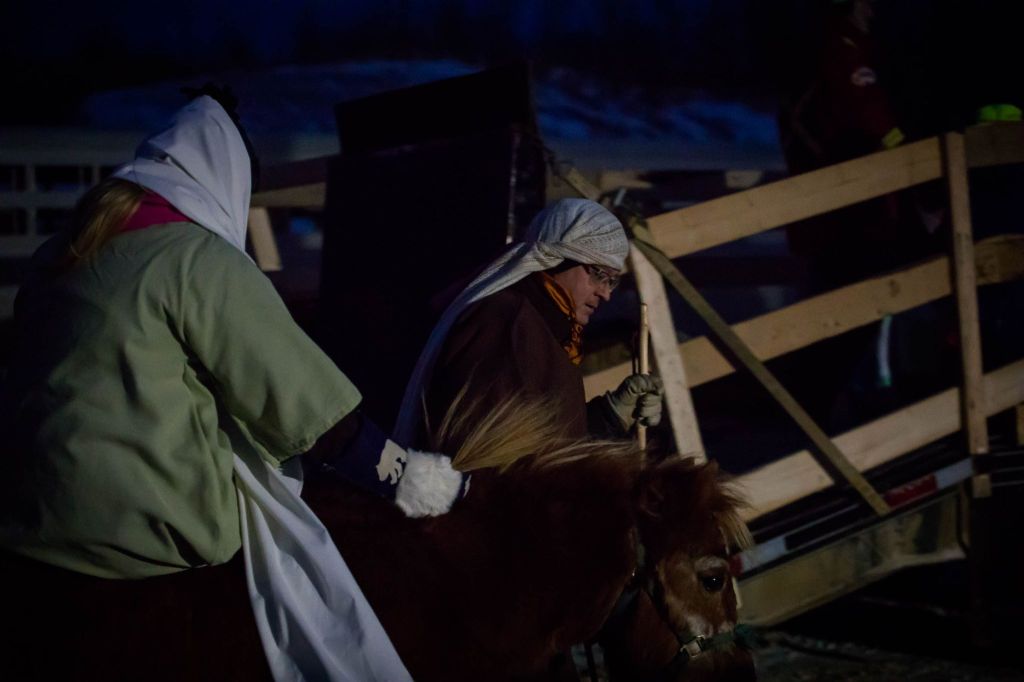
Our church just did a Living Nativity led by one of our members. Our church’s average attendance is around 85-90 people, and the leader on this project counted 75 people involved. Most of the church participated in some way! Thanking as many volunteers as possible will go a long way. And who knows, it may encourage them to volunteer again? This is going to take some work but should bring you benefits down the road as people want to serve again because they felt appreciated.
Post-event Opportunities: Plan a class or training to follow the event. These opportunities will provide meaningful material that builds off your event. For example, after a Christmas event, plan to begin new small groups in January and invite those who attended the event to join a group.
You could also plan a course to begin shortly after your event and announce this at the end of your Christmas program and allow people to sign up that evening. The course could be all about Jesus or a series like the Alpha program.
Immediate After-Party Actions
Thankyou’s: Extend your gratitude via cards, texts, or emails the day following the event. Handwritten notes are probably best. Thank all the staff and volunteers who contributed. If you had sponsors, thank them with a note, and maybe even a nice card or certificate they would like to display in their office.
Offers: Send a follow-up thankyou to all who attended and offer something before inviting them to attend something else. More than getting them to the next event, you want them to have a positive memory of the even they attended and the experience they had in your church. Offer to pray for them and invite them to join you Sundays at your services.
Invites: Invite them to attend your upcoming small groups or classes. Put together an invitation that describes the event and all the details of where and when and who will benefit from it. Do your best to present this as something that will benefit them, not you.
I love planning big events that are well-prepared and practiced and performed. It’s important to know what to do next. I hope you got some helpful ideas from the above steps.
I would love to hear how you use the time following events to connect with guests and develop relationships with them.
I will be sharing a brief review of every book I read this year. Hope you enjoy and hope it encourages you to keep reading.
WHAT TO DO NEXT – By Jeff Henderson
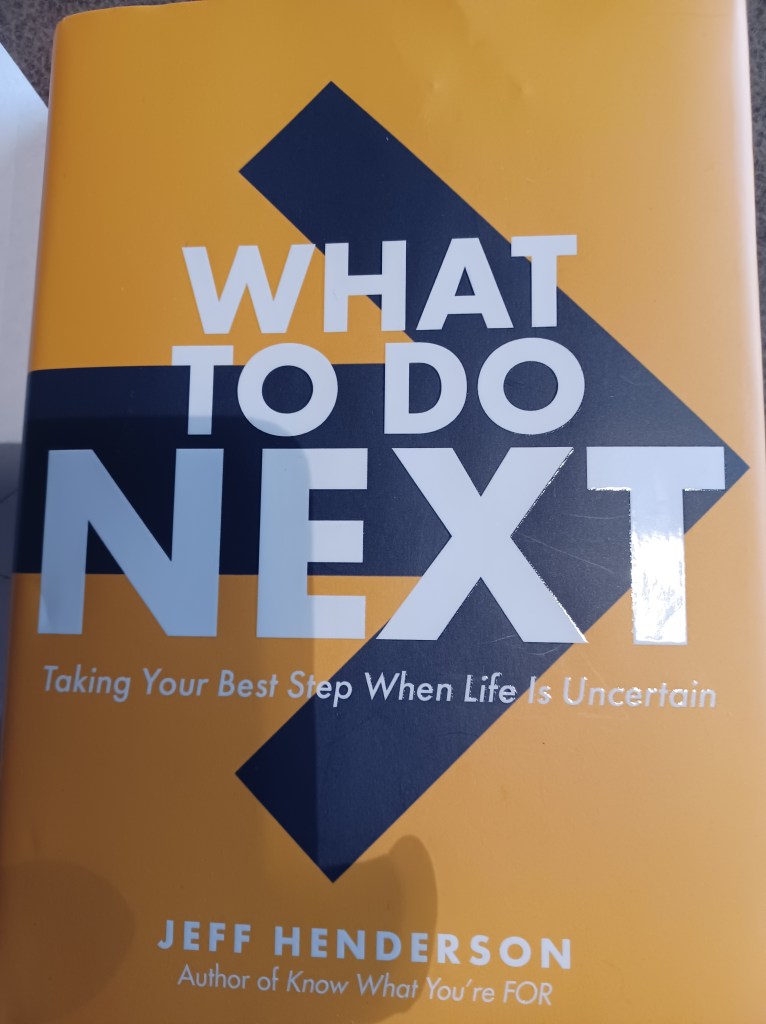
I highly recommend What to do NEXT: Taking Your Best Step When Life is Uncertain to anyone who is contemplating a possible move to a different position at work or a change in career or even just a change out of something when you are not sure what is next. Jeff Henderson reflects on his own recent journey of change of career, along with a number of helpful stories, to provide a helpful guide to anyone wishing they were somewhere else or doing something else. Many of us have faced transition in the last couple of years. This book may help make sense of transition you had to make and are now trying to cope with as well. A very helpful book.
I will be sharing a brief review of every book I read this year. Hope you enjoy and hope it encourages you to keep reading.
BEAUTIFUL OUTLAW – By John Eldredge
Beautiful Outlaw: Experiencing the Playful, Disruptive, Extravagant Personality of Jesus by John Eldredge is a book that will shock some people while encouraging others. He writes about Jesus, but not in the distant manner that we often think of him. Eldredge presents Jesus as a human in a way that few, if any, have before. It is a great reminder that Jesus was a human who walked this earth in a certain place in time within a specific community and with other human friends. Eldredge points out where Jesus responds with emotion like any other human person. He, in his words, is trying to “clear the religious fog” around who our Lord and Saviour Jesus was and is. Do you want to know Jesus better? This book will help you in that search. Your ideas may be challenged, but I do believe the person of Jesus will be revealed as a person you can actually communicate with and live your life with.
26 In the sixth month of Elizabeth’s pregnancy, God sent the angel Gabriel to Nazareth, a village in Galilee, 27 to a virgin named Mary. She was engaged to be married to a man named Joseph, a descendant of King David. 28 Gabriel appeared to her and said, “Greetings, favored woman! The Lord is with you!”
29 Confused and disturbed, Mary tried to think what the angel could mean. 30 “Don’t be afraid, Mary,” the angel told her, “for you have found favor with God! 31 You will conceive and give birth to a son, and you will name him Jesus. 32 He will be very great and will be called the Son of the Most High. The Lord God will give him the throne of his ancestor David. 33 And he will reign over Israel forever; his Kingdom will never end!”
34 Mary asked the angel, “But how can this happen? I am a virgin.”
35 The angel replied, “The Holy Spirit will come upon you, and the power of the Most High will overshadow you. So the baby to be born will be holy, and he will be called the Son of God. 36 What’s more, your relative Elizabeth has become pregnant in her old age! People used to say she was barren, but she has conceived a son and is now in her sixth month. 37 For the word of God will never fail.”
38 Mary responded, “I am the Lord’s servant. May everything you have said about me come true.” And then the angel left her. (Luke 1: 26-380
The Birth of Jesus the Messiah
18 This is how Jesus the Messiah was born. His mother, Mary, was engaged to be married to Joseph. But before the marriage took place, while she was still a virgin, she became pregnant through the power of the Holy Spirit. 19 Joseph, to whom she was engaged, was a righteous man and did not want to disgrace her publicly, so he decided to break the engagement quietly.
20 As he considered this, an angel of the Lord appeared to him in a dream. “Joseph, son of David,” the angel said, “do not be afraid to take Mary as your wife. For the child within her was conceived by the Holy Spirit. 21 And she will have a son, and you are to name him Jesus,[i] for he will save his people from their sins.”
22 All of this occurred to fulfill the Lord’s message through his prophet:
23 “Look! The virgin will conceive a child! She will give birth to a son, and they will call him Immanuel, which means ‘God is with us.’”
24 When Joseph woke up, he did as the angel of the Lord commanded and took Mary as his wife. 25 But he did not have sexual relations with her until her son was born. And Joseph named him Jesus.
(Matthew 1: 18-25)
The Birth of Jesus
2 At that time the Roman emperor, Augustus, decreed that a census should be taken throughout the Roman Empire. 2 (This was the first census taken when Quirinius was governor of Syria.) 3 All returned to their own ancestral towns to register for this census. 4 And because Joseph was a descendant of King David, he had to go to Bethlehem in Judea, David’s ancient home. He traveled there from the village of Nazareth in Galilee. 5 He took with him Mary, to whom he was engaged, who was now expecting a child.
6 And while they were there, the time came for her baby to be born. 7 She gave birth to her firstborn son. She wrapped him snugly in strips of cloth and laid him in a manger, because there was no lodging available for them.
The Shepherds and Angels
8 That night there were shepherds staying in the fields nearby, guarding their flocks of sheep. 9 Suddenly, an angel of the Lord appeared among them, and the radiance of the Lord’s glory surrounded them. They were terrified, 10 but the angel reassured them. “Don’t be afraid!” he said. “I bring you good news that will bring great joy to all people. 11 The Savior—yes, the Messiah, the Lord—has been born today in Bethlehem, the city of David! 12 And you will recognize him by this sign: You will find a baby wrapped snugly in strips of cloth, lying in a manger.”
13 Suddenly, the angel was joined by a vast host of others—the armies of heaven—praising God and saying,
14 “Glory to God in highest heaven, and peace on earth to those with whom God is pleased.”
15 When the angels had returned to heaven, the shepherds said to each other, “Let’s go to Bethlehem! Let’s see this thing that has happened, which the Lord has told us about.”
16 They hurried to the village and found Mary and Joseph. And there was the baby, lying in the manger. 17 After seeing him, the shepherds told everyone what had happened and what the angel had said to them about this child. 18 All who heard the shepherds’ story were astonished, 19 but Mary kept all these things in her heart and thought about them often. 20 The shepherds went back to their flocks, glorifying and praising God for all they had heard and seen. It was just as the angel had told them.
(Luke 2: 1-20)
Visitors from the East
2 Jesus was born in Bethlehem in Judea, during the reign of King Herod. About that time some wise men from eastern lands arrived in Jerusalem, asking, 2 “Where is the newborn king of the Jews? We saw his star as it rose, and we have come to worship him.”
3 King Herod was deeply disturbed when he heard this, as was everyone in Jerusalem. 4 He called a meeting of the leading priests and teachers of religious law and asked, “Where is the Messiah supposed to be born?”
5 “In Bethlehem in Judea,” they said, “for this is what the prophet wrote:
6 ‘And you, O Bethlehem in the land of Judah, are not least among the ruling cities of Judah, for a ruler will come from you who will be the shepherd for my people Israel.’”
7 Then Herod called for a private meeting with the wise men, and he learned from them the time when the star first appeared. 8 Then he told them, “Go to Bethlehem and search carefully for the child. And when you find him, come back and tell me so that I can go and worship him, too!”
9 After this interview the wise men went their way. And the star they had seen in the east guided them to Bethlehem. It went ahead of them and stopped over the place where the child was. 10 When they saw the star, they were filled with joy! 11 They entered the house and saw the child with his mother, Mary, and they bowed down and worshiped him. Then they opened their treasure chests and gave him gifts of gold, frankincense, and myrrh.
12 When it was time to leave, they returned to their own country by another route, for God had warned them in a dream not to return to Herod.










 Elevate with Andy