I will be sharing a brief review of every book I read this year. Hope you enjoy and hope it encourages you to keep reading.
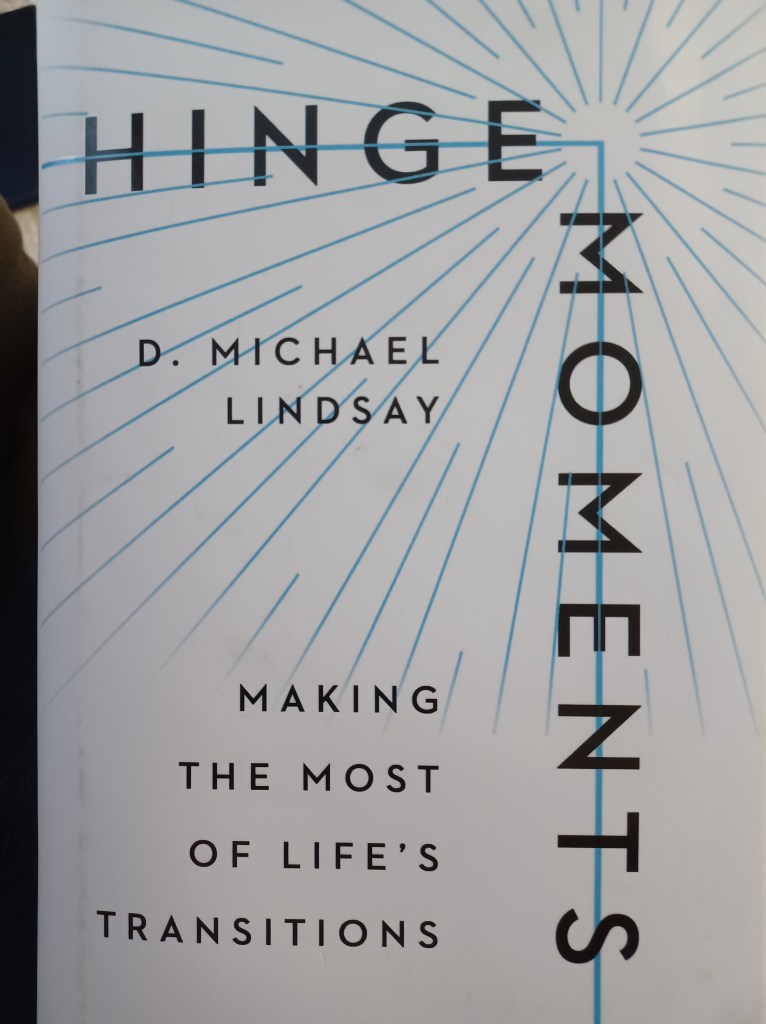
HINGE MOMENTS – by D. Michael Lindsay
Hinge Moments: Making the Most of Life’s Transitions is a powerful guide to anyone facing a transition, and in today’s world that is just about all of us. Transitions will happen, whether we choose them or not. Lindsay builds off interviews of hundreds of leaders looking at their transitions and lessons they learned in the process. He builds his book around a diagram of seven stages of transition. Discernment, Anticipation, Intersection, Landing, Integration, Inspiration, and Realization. He uses the example of a door to show how a “hinge moments” are the opportunities to open (or close) doors to various pathways of our lives. A helpful book for anyone facing or anticipating a transition in their life.
I will be sharing a brief review of every book I read this year. Hope you enjoy and hope it encourages you to keep reading.
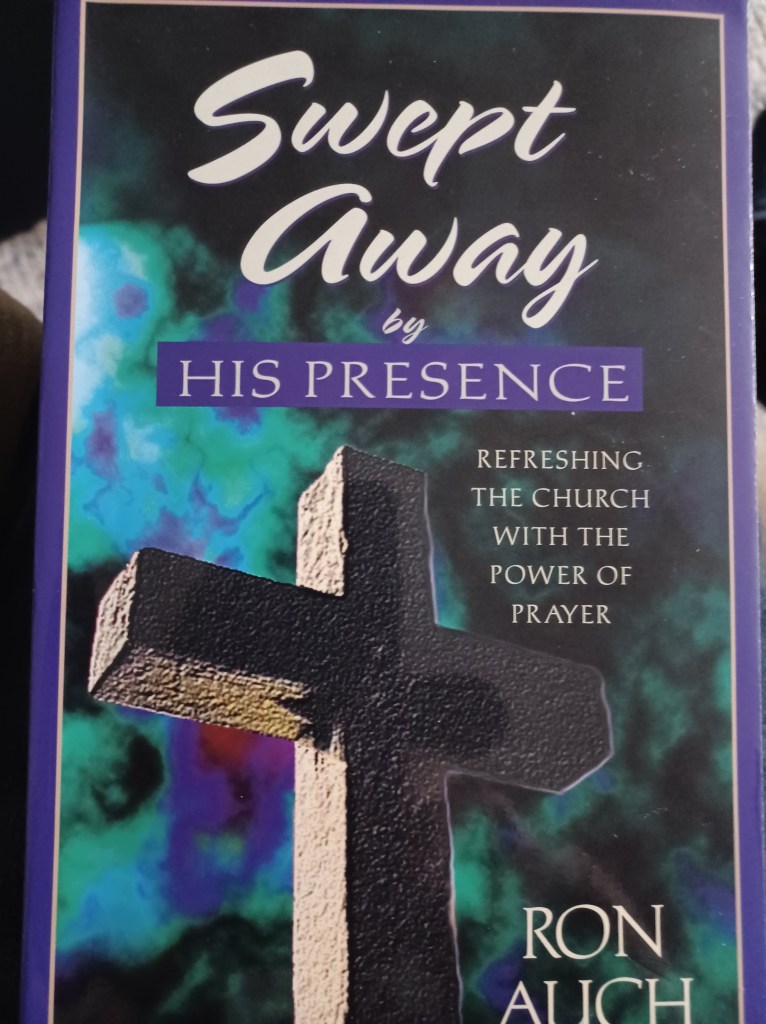
SWEPT AWAY BY HIS PRESENCE – by Ron Auch
The subtitle of the book is: Refreshing the Church with the Power of Prayer. Ron Auch is calling the church back to prayer. He writes from a Pentecostal background, reminding the reader of the early revivals such as the Asuza Street Revival. In chapter 3 Auch points out how the first generations who experience God have a much different faith experience than the second, and how the third generation often has lost any experience of God. He calls the present generation back to prayer and a real and alive relationship with God. And he says prayer is the way to get that real relationship again. While the book is a little older (1997), the call to prayer is needed just as much today as it was back then.
A Christian leader faces the same challenges that any other leader does. And a Christian leader can help himself to any of the tools other leaders use to help them lead well. But the Christian leader has one powerful tool that others do not. Prayer.
Like any tool, it may take some practice and some skill to access this tool’s full potential. Often when we think of prayer, we think of asking God to do something for us. We come to him with a request. But that is only one aspect of prayer.
Another way to use prayer is to learn to listen to God. We are so used to telling God our problems and asking him to do something about them, and that is often where a Christian leader stops. Yet if we learn to listen, God will do much more for us through prayer than just respond to our grocery list of requests.
Here are some of the ways that I have benefited from this great tool we have.
God encourages through prayer.
Every leader faces opposition from time to time in their leadership, and Christian leaders are not exempt. As a pastor, I have faced opposition many times, both from inside and outside the church I have been asked to lead. People have called me names, accused me of being controlling, demanded I be removed from my position, and more. People have not liked what I stood for and deliberately chosen to walk in a different direction. I have faced opposition from within myself. There are times I have been disappointed in what my leadership accomplished. I have been disappointed in goals not met. I have been discouraged and depressed.
These are not uncommon problems for leaders to face. There are times we need encouragement. We might find some of it in books or in encouraging words from other leaders or supporters of ours. But I have found that some of the most powerful encouragement has come directly from God.
God has encouraged me as I listened to him. One time he told me: “you are my beloved son in whom I am well pleased.” This was powerful for me as I had just come through one of the most difficult times in my ministry. Another time, God affirmed that I was on the right track. I was a little unsure of the direction to lead the church and in a conversation with Him, I heard (or felt) Him say, “You are on the right track. Just keep going.”
God encourages the Christian leader through listening prayer where we actually hear God or sense God speaking words of encouragement to us.
God directs through prayer.
Every leader needs to know where they are going. They need to know where they are trying to take their organization. They need to know the priorities of the day. Sometimes we get caught up in the urgent needs of the moment and begin to veer off track from our intended goals. I love the fact that I can talk with God about my day and ask Him for direction for the day. I am serving as a Transition Pastor right now and have a limited time to work with the church through the various exercises. There are times when I have had to readjust my schedule because it just was not working. As I talked with God about it, I was able to patiently let him give me the priorities of the week.
God instructs through prayer.
One of the roles of the Holy Spirit is to instruct and remind the believer of God’s truth. When we pray, we are able to hear God speaking to us through the Holy Spirit. There are times we will be reminded of certain scriptures that speak into a situation that we are facing. There will be times when we will be given an idea or a concept to put into practice that clearly did not come from our own wisdom but from God.
If we pray and read scripture together, God uses those scriptures we are reading to give us insight into how and what we should be learning and doing in our leadership.
There are many tools available to leaders today. One of the best and most powerful tools the Christian leader can access is prayer and hearing God speak directly into their leadership. Pray, not just with a list of requests for God, but with a listening attitude and God will direct your paths.
The moments of our life are filled with little decisions. A mother in Zambia stirs her nshima. A farmer in Peru harvests his coffee. A businessman in Japan exits an elevator. Life is going on in every corner of the world. Insignificant moments? Insignificant people?
A kind word encourages a friend. A “thank you” lifts the spirits of the barista who prepared your coffee. A word of encouragement helps a young person decide on a career. Small moments that make a difference.
A secretary phones in sick, and a temp gets a new job. A student calls for prayer and a movement takes shape A neighbor introduces himself to another neighbor – and introduces him to the Lord three years later.
A woman pours perfume on a man’s dirty feet and wipes them with her hair – and Jesus makes sure it is recorded in history. An impatient soldier shoves a spear into Jesus’ side to make sure he is dead – and fulfills prophecy. Small, seemingly insignificant moments, with significant effects.
John Maxwell is famous for his writing and speaking on leadership. I was amazed at his ability to find good quotes and the right facts – until I heard he has a crew of people who do much of that work for him. Those who have made significant contributions to the world require the support of people in the background. Unknown people are in the background of all who seem to have made significant contributions to the world.
A friend is recognized for his act of bravery by the Canadian government for helping a fellow passenger to safety when their small plane crashed. He’s seen as a hero now, but in the moment simply decided to act. And it turned out to be a significant decision. A choice made in the moment, but a lasting impact and recognition.
There are no insignificant moments. All the seemingly insignificant decisions of seemingly insignificant moments shape who you become. Everything we do, as insignificant as it may seem, has significance. Those small decisions that we make in a moment accumulate in your character. They shape you and determine who you become.
So whether you eat or drink or whatever you do, do it all for the glory of God.”
the Apostle Paul
“So whether you eat or drink or whatever you do, do it all for the glory of God” writes the Apostle Paul in 1 Corinthians 10: 31. Brush your teeth for the glory of God? Share your testimony for the glory of God? Every moment that feels insignificant can glorify God. God is at work using the moments, the words, and the actions, of each person. God uses the average, unimportant people to bring Him glory.
Every moment can make a difference. Every word can be powerful. Every person has value and purpose.
May you live a life of significance as you surrender your life to the pursuit of the glory of God. Invite him into every aspect of your life, every decision you make, and you will live a life of significance in His eyes.
May you be a leader who recognizes the value of the insignificant moments and insignificant people.
I will be sharing a brief review of every book I read this year. Hope you enjoy and hope it encourages you to keep reading.
FIRE & WIND: Unleashing the Power and Presence of the Holy Spirit – by Stan Jantz
Stan Jantz writes from the perspective of one who has not always understood or appreciated the Holy Spirit. The Introduction begins like this: “My name is Stan, and I have ignored the Holy Spirit for too long.” He then walks through his learning experience and what a difference it has made in his life to be more in tune with the Holy Spirit. This book would be especially good for anyone who has had little experience of the Holy Spirit in their life but who would like to know and experience more. He quotes from a number of writers of old who wrote extensible about the Holy Spirit, people like A. W. Tozer, A. B. Simpson, and R. A. Torrey. A great read.
Music is a part of our lives. From the song playing on your radio alarm as you wake up, to the elevator music you hear on you way to work, to the dinner music at a dinner out with your special person, music is all around us. Lullabies put our children to sleep, national anthems announce the start of a hockey game, and Happy Birthday makes us smile around a candle-lit cake. Music is also a big part of the church.
Music triggers memories.
Some couples have a song. It could be the song that was playing on their first date or another significant moment. Songs can take us back to occasions or moments of significance to us. I remember singing How Great Thou Art with some friends underneath tall evergreens on the shore of Heart Lake in northern British Columbia. We sang of God’s work in creation as the rain poured down and the lightning flashed against the night sky, lighting up the mountains around us. Every time I hear that song, I remember that place and that special moment.
In church, some songs remind us of special moments we had with God. The Goodness of God, by Bethel Music has a special place in my heart because I first heard it while in a low point in my life and it did a lot to lift me up and reorient myself with a renewed trust in God.
Songs teach us.
The tunes that stick in our head through the week remind us of the sermon we heard last Sunday and the truths that the Holy Spirit revealed to us. Humming or whistling a tune reminds us of something even when the words aren’t sung.
Statements read or spoken are not as easily retained as when in a song or put to a tune. As we sing songs together on Sunday morning or on our own throughout the week, we begin to internalize the words, and ultimately learn from them. Some of the great hymns of old were powerful because of the biblical truths they teach.
On the other hand, some of them taught us things that were not true. Christmas carols for instance taught us that baby Jesus didn’t cry, which can’t be true if He was truly human. How else would he have communicated his needs as a baby? We Three Kings declares there were three wisemen or Magi when the Bible doesn’t say that. Songs make assumptions and take poetic license, which is fine until we assume the words are truth.
Songs teach us. We just need to be aware what we are learning as we sing. Do the lyrics declare biblical truths that we can stand behind, or do they teach something contrary to what we preach and practice?
Songs speak to our hearts
Songs, and the music we sing them to, have a way of grabbing ahold of our hearts. They become personal expressions declaring great truths we agree with, or prayers expressing our hearts in a way we couldn’t until we heard and sang this song. Songs are the expression of the writer, and when we find a song where the writer expresses exactly what we want to say, it can be a wonderful experience. It gives words to feelings we may not have been able to articulate.
I have had songs help me declare my faith in God in the middle of the storms of my life. When everything seemed to be going wrong around me, I could join in with the song and reaffirm my belief that God was and is still sovereign even in my tough times.
Songs can make us laugh and make us cry as they enable us to put words to our emotions.
Songs Invigorate Us
Armies often had battle songs. National anthems inspire athletes to do their best at the Olympics. And songs can help us to rise to the challenges that face us every day. They don’t just give us something to identify with but draw us to commit to action. Songs can invite us to declare our allegiance to our God and King again.
There is power in music and song. We need to recognize that power and use it in a way that will continue to remind each other to keep looking to Jesus and honor God with our lives. Let’s encourage and inspire each other as we sing.
I will be sharing a brief review of every book I read this year. Hope you enjoy and hope it encourages you to keep reading.
IS GOD SPEAKING TO ME? – by Lysa Terkeurst
Is God Speaking to me is written by a woman (Lysa Terkeurst) to women, yet I found it very encouraging and a good little read for me too. This 57 page booklet is an excerpt from Lysa’s book, What Happens When Women Say Yes to God. Lysa writes, “I am amazed and saddened by the number of people missing out on the most exciting part of being a Christian – experiencing God.” This booklet is a great encouragement to listen and hear from God. Check it out.
I will be sharing a brief review of every book I read this year. Hope you enjoy and hope it encourages you to keep reading.
DISCIPLINES OF A GODLY MAN – R. Kent Hughes
Disciplines of a Godly Man is a call to men in the church and home to stand up and be whom God has called them to be. Kent Hughes challenges men to step up and discipline themselves with chapters dealing on personal soul issues, relationships, character, and ministry. The church is looking for good men to give themselves to the work of ministry. God is looking for good men to give themselves to leading in the home, the church, and in the culture. Hughes does a good job reminding us that this is not about legalism: doing something in order to gain God’s favor. In fact, this is the opposite. This is about living in such a way that we honor the One who already loves us and calls us to a disciplined life of faith in Him. This would be a great book to walk through with a Men’s Group.
I am leading a church through a transition period right now. One area of my focus is helping the church become more organized. Some churches are afraid that the more organized they become, the more the church resembles a business. That fear is founded in the idea that if a church becomes businesslike it loses its role as a church. But an organized church will run more efficiently and be more effective. Let me suggest four documents that will help the church become more organized and move you toward your full potential.
Bylaws
Every organization must have a written document that guides their practices. Even when a denomination has a constitution, the local church still needs to have their own bylaws that give clarity to how they will function. This document directs how membership works, who can become a member, and what benefits and responsibilities members have. It clarifies how the leadership board is formed, including who is eligible for board roles and how they will be selected. Church Bylaws should include their Statement of Faith so everyone knows what their key beliefs are.
The bylaws should not include things that may change from time to time. Bylaws need to be reviewed regularly but should not be changed lightly. Instead, practices that may change from time to time can be included in a policy manual.
2. Policies
Every organization needs policies on how to handle things as small as who gets keys to the building and as complicated as how facility rentals work. Policies guide leadership in knowing how to address situations without requiring a unique decision every time when faced with a similar issue. For example, instead of addressing every request for a key separately, policies are established which can guide every distribution of keys without another board vote needed. This creates efficiency for both the leadership and church members in that each person should know what is required of them and the correct process for achieving their desired outcomes.
Further, a policy manual reduces the amount of decisions made at the leadership level because everyone can check the policy for how to handle situations that come up.
3. Job Descriptions
Many churches are lacking in providing good job descriptions. One church I served never even had a job description for their Lead Pastor – me. Good job descriptions give direction and hold people accountable. A good job description outlines the basic responsibilities that a person must meet to fulfill their role. This gives a board criteria to evaluate the individual’s efforts and keep them accountable to.
The latest job descriptions we were working through were for the Welcome Team at church. We established clear job descriptions for the Greeters, the Ushers, and the Coffee Crew. We even had one specific to the Head Usher who would captain the team on Sunday morning and cover a few extra responsibilities. Now, as we recruit people to these roles, each person will know exactly what we are asking of them.
Job descriptions need to include the job title, who the person will be responsible to and who will be responsible to them. It needs to list the qualifications for someone to step into this role as well as a list of responsibilities of the job. It is helpful to also determine a term, so everyone knows when this role is complete.
Job descriptions help identify and organize roles within an organization, which is valuable for ensuring everything that needs to be done.
4. Systems
This is something that many organizations, churches included, never even think of. It is helpful to have systems in place. These are basically a step-by-step instruction how to handle certain situations.
For example, a Welcome Team may have a system that guides them how to get contact information from new guests and how to pass that information on to the right people who will then follow up in some way.
The clearer the system is, the more likely it will be followed.
We all benefit when things become more organized. What documents have you found to be helpful for your organization or church?
I hope you have these documents in place. Let me know if you would like help developing these for your organization.
Work is part of daily life for most people. We use our minds and our muscles to create and contribute to our world.
Work is an essential part of why we were created. In Genesis 2: 15 we read, “The Lord God took the man and put him in the garden of Eden to work it and keep it” (ESV). This happened before the Fall, where Adam and Eve sinned and received God’s judgement. And this is part of who we were created to be. When God finished creating the world, we are told he “rested from all his work that he had done in creation” (Genesis 2: 3). We are created in the image of God, so we are created – in part – to work. The ideal life is not one without work, but one in which we find joy in our work.
Work became harder after the Fall, after Adam and Eve sinned. Genesis 3: 17 – 19 tells us that work now became more difficult.
“…cursed is the ground because of you; in pain you shall eat of it all the days of your life; 18 thorns and thistles it shall bring forth for you; and you shall eat the plants of the field. 19 By the sweat of your face you shall eat bread…”
God also created us to rest. God created us for a regular rhythm of work and rest. He created for six days and then rested on the seventh. All throughout the Old Testament God continued to tell his people, to work for six days, then rest on the seventh.
Many of us work jobs that have shift work that doesn’t line up with a seven-day work week, but we can all make sure to rest when we have our days off. We fulfill our purpose as we keep a rhythm of work and rest.
The New Testament agrees with Genesis: we are created to work. Ephesians 2: 10 tells us, “For we are his workmanship, created in Christ Jesus for good works, which God prepared beforehand, that we should walk in them”. When we come to faith in Jesus, he works in us to do good works. There is no instruction about what these exact works are to look like or how we are to go about them. Instead, we are told in 1 Corinthians 10:31, “whether you eat or drink, or whatever you do, do all to the glory of God.” Whatever we do, whether we are working or taking a day off, whether we are spending time with friends or attending a church service, we are to do everything we do for the glory of God!
Like most of life, how we handle work requires balance. On one extreme is the lazy worker, the one who slacks off as soon as the boss walks away. This is the one who takes extra long breaks and helps himself to supplies from the shop for his own projects at home. This is the worker who does whatever he can to keep his contribution to the company to a minimum. If this is you, then you have some serious questions to ask yourself. How are you reflecting the creator in your work? How are you doing your work for the glory of God?
On the other extreme is the workaholic. This is the one who prides himself in how many hours he has put in this week. I have heard pastors boast about how many hours they work each week, as if this makes them extra special. Or maybe they feel this shows how much they are willing to sacrifice in order to serve the church. Sacrificing your energy, time with your spouse and your family, or even time with God is not a sacrifice that God is going to be impressed with. Boasting about how many years you have gone without a holiday does not make you a good worker in God’s eyes. Where is the balance of work and rest? Where is the understanding that work is one priority in your life, not the main one. How many, men especially, have poured their lives into their work and had no time and energy to pour into their kids at home? Sometimes we may find ourselves in a situation in which we need to work more hours than allows for a good balance, whether this is due to financial stress, busy events or seasons at work, or many other life circumstances. However, if you choose to work beyond what leads to a healthy life for you and your family, it is likely time to re-evaluate your priorities.
In the middle is the balance we are all trying to find. Putting in a good day’s work and having time to love and play with your family is ideal. Christians should always do good work. We should be able to echo the evaluation of God at the end of Creation: “And God saw everything that he had made, and behold, it was very good” (Genesis 1: 31). We should be proud of our efforts at work, and what our effort accomplishes. And we should be proud of the time we have to pour into our family and what those efforts accomplish.
I write with the Christian leader in mind. So, Christian leader, how are you doing with your work and rest, and work and family balance? And don’t get caught up in the mindset that we have to work hard for and at the church at the cost of time with family. The father who desires to have a reputation of someone always serving the church needs to balance their efforts at the church with their time with their family as well.
We are created to work, and to rest. May God guide you as you balance your work and the rest of your life.











 Elevate with Andy