A Good Team Produces Good Work

Two are better than one,
    because they have a good return for their labor:
 If either of them falls down,
    one can help the other up.
But pity anyone who falls
    and has no one to help them up.

Ecclesiastes 4: 9-10

As a pastor, much of my work is a solitary effort. I work on my sermon on my own. While I consult resources such as commentaries and word studies, I am responsible for creating the sermon myself. When I teach a Sunday School class, I generally work on it on my own. I am co-teaching a class on Acts right now. Though we spend some time discussing the scriptures together, we take turns preparing the lessons on our own. When I teach and lead, I build on all I have read and seminars I have attended, learning from the authors and presenters. Yet much of my job as a pastor I do on my own.

This last week I was reminded of the value of working with a team. Our church is in the middle of a Three-Week Prayer Focus. We will conclude with a Solemn Assembly on a Saturday, a Prayer Vigil where people will sign up to pray for an hour or more through the night, and then a Celebration Service on the Sunday morning. This has become a much better event than I first envisioned because others have helped think through how to make it the best event it can be.

When I presented the idea to the chairman of the church board, he instantly saw my vision and began to dream with me as to what we should plan and how to roll it out to the congregation. As we, together, dreamed about how the event might work for our church, we got more and more excited. We could see how to invite people to participate and even how to get them to step into some new experiences of prayer in the process. I had not thought of a prayer vigil through the night, but he suggested it.

This chairman suggested we shoot a promo video with interviews of people from our congregation telling us what they thought of prayer. He knew of someone who could create the video. He asked someone to round up people to participate, and several people did, resulting in a very effective promotional video.

He suggested that we make some promotional posters. Again, he knew of someone who would do a good job with this. Now we have some great posters for the event, and even a prayer guide for the event that people are now using to guide their prayer times. Other board members were willing to sign up to help coordinate and lead the prayer vigil. They have also volunteered to make announcements and lead group prayer times.

If I had only depended on my own dreams and skills, we would still have had an event, but it would not have become the great experience it now is. I needed the Board Chair, the other board members, the promotional materials designer, and video producer to make the event that much better.

We need others to team up with if we want to do a good job on many things. Inviting others into the process makes it better because we get to dream with others and bounce ideas off each other that make the result that much better. Working together ensures no one is left carrying the load, and everyone can use their skills and abilities to expand the capabilities of the leader. Sharing the work with others prevents your project from being a lonely experience; instead, the process becomes a shared collaboration with others who have the same convictions and ideas.

I hope you have a good team around you. If not, then I pray that God will help you to find the right people to join your team.

Keep looking up,

Andy Wiebe

Punctuality Begins With Arriving Early

When I started out as a young youth pastor, I was told by my Senior Pastor that I had to show up at least one hour before the Sunday morning worship service. I have experienced the value of this advice many times and followed the practice in preparation for other meetings and events as well. I have found that there have been many times when that extra hour has been beneficial.

1. Arriving early ensures I am on time.

It may seem like it goes without saying, but if you plan to be an hour early, you will most likely be on time. If you have a flat tire on the way, you may even have time to change it and still arrive on time.

2. Arriving early protects my integrity.

When you are on time and start events on time you maintain integrity, but when you are late, or start things late, people aren’t sure they can trust you when you announce the start time for an event. And when you don’t follow through on start times, it may affect people’s sense of your overall integrity. You want to be on time and ready to go for your event so that you can keep your word on when you will start.

3. Arriving early gives me time for last minute adjustments.

Often there have been issues to iron out before the service. You have time to photocopy anything you forgot, or to change that one PowerPoint slide. It gives you time to make sure all the technology is up and running. There have been days when I have needed all the time to make sure I fixed something or did a final tweak.

4. Arriving early prevents rushing.

When you are rushed you are not in the best frame of mind. Being rushed often gets our frustrations up and means we may miss something in our final arrangements prior to the event. When we have time, we can be more relaxed and work through our last-minute preparations with time to spare.

5. Arriving early gets me focused.

Everyone knows how life happens and sometimes we are distracted by what we dealt with earlier that day. If you get to your event with time to spare, you can go over the agenda and get your mind cleared and focused. You have time to pause and pray to ask God to help you focus on the moment and leave the distractions with him.

6. Arriving early helps me ensure all volunteers are ready.

When you are early, you will have time to check in with your volunteers to make sure thy are ready to go. I like to give people a heads-up about when their turn is in the service or event. When everybody knows their role, the event will go smoothly.

7. Arriving early gives me time for people.

When you are early, and ready for your event early, you have time to greet people as they arrive. There are often a few people who arrive early. I have had some significant conversations with people because I had time to slow down greet them before the service.

You may think arriving an hour early for a worship service is over the top, but I would encourage you to try it. I’m sure if you try it five or six times, you will begin to experience the benefits and establish this as your own habit. There is value in punctuality, and arriving early ensures your punctuality.

Keep looking up,

Andy Wiebe

We All Need Someone to Lean On

Many pastors are lonely. Many don’t have a team of staff to talk things through with. Recently I have again recognized the value of having other pastors to talk with and connect with. I have the privilege of being part of a few groups of pastors, but it has been a while since the one group has met and I realize I miss those get togethers.

In 2023 Barna.com shared a poll that highlighted the loneliness and isolation of pastors. Their poll shows “these feelings have increased significantly since 2015 when 42 percent of pastors shared they either frequently (14%) or sometimes (28%) felt this way. Now, 65 percent of pastors report feelings of loneliness and isolation, with 18 admitting these feelings occur frequently.” (7-Year Trends: Pastors Feel More Loneliness & Less Support)

As pastors, we need to take initiative to connect with others who understand what it its like being a pastor. Pastors can relate to us and pray for us in a way that others can’t. We all need good friends, and many of us have very supportive and encouraging families, but we do need to have other pastors in our circles too.

Many denominations have regular gatherings for local pastors. Take advantage of those. These are people who are in your circles and understand your church dynamics. In some places, there may not be others in the same denomination nearby; instead, connect with other pastors in your community. I have benefited greatly from connections with pastors from other denominations. We have different theological stands on some issues, but we all deal with the same day-to-day struggles of working with people and trying to have the answers our congregation needs.

One of the benefits of connecting with other pastors is that we can have people in our corner who understand us. Like any profession, it can be difficult to explain some aspects of being a pastor to others who are not. It is easier to celebrate and commiserate with people in the same field.

Other pastors may also be able to speak into our lives, offer words of encouragement, or ideas on how to handle certain situations we face. This is valuable support that requires you to open up to others.

Sometimes other pastors can help us develop our creativity as we hear of unique ministries or programs they run. We can help each other become better. Proverbs 27: 17 applies here:

As iron sharpens iron,
    so one person sharpens another.

Do not be satisfied with your loneliness. Find other pastors to connect with, and encourage them as they encourage you.

Keep looking up,

Andy Wiebe

The Importance of Consistent Messaging

Whether in conversations with a friend or making a transaction at a store, we need to be able to communicate or intended message clearly. As church leaders, we want to communicate with the people in our churches and the communities around us, and it is important that we put thought into our messages we communicate to avoid unnecessary confusion.

Every time I drive to the community where I serve as a Transition Pastor, I pass a confusing message. On the side of the road there is a big tea pot shaped sign up on a post, as if announcing a place to stop and have tea. As you get closer, you will see that they do not want you to stop, because as you turn off the highway, you are greeted by two orange traffic barricades with a sign that says, “Do not enter. Private yard.” It must have been a restaurant at one time but not anymore. Yet the teapot sign remains inviting people to enter a private yard.

Just this morning I walked by another confusing message. In a storefront at the local mall, a slogan says: “Celebrate your shape.” In my mind, that indicates that they would have clothes for a variety of shapes of people. Instead, the mannequins in the display window are all pencil thin. That seems like a confusing message to me. Does it mean you can celebrate any shape you want as long as you are very thin.

Let’s look at a few ways that we as church leaders can prevent common inconsistent messages:

  • We say we want to strengthen families and then we plan separate activities for everyone.

Many churches say they support families. That is good, and we should support them, but too often we keep the families busy with their own separate activities. Children go to Sunday School and Children’s Club. Youth go to Youth Night. Men and women go to their own Bible Studies. We say we support families and then we plan everything to separate them. I know there are benefits to the separate programs, but how about we bring them together more? Instead of planning a Youth Ski Trip, plan a Family ski trip. How about planning mixed Bible Studies occasionally?

  • We say we are an intergenerational church but don’t allow children to serve in the worship service.

In many churches, serving in the worship services is limited to adults – often only “accomplished” adults. While the messages on the website might state the church values intergenerational participation, a different message is communicated each Sunday morning. Why not add some youth to your worship team? Many of them are musical and would love to learn to play an instrument as part of a music team. How about having children reading scripture?

Some of the ushers in our church are inviting their children to help them pass the bags to collect the offering. There are many places where children and youth can learn to serve and serve well.

  •   We say we want to reach our community with the gospel but have no outreach from our church.

I understand there are many ways to reach into our community with the gospel, and much of that can be done by individual members of our church. It’s exciting when we hear of that happening. Yet if this is something that we say we want as priority in our church, the church should provide opportunities for outreach and training. We need to follow through on what we say we think is important as a church.

  • We have a website that announces activities we do not offer.

Every church needs to have a website. We need to be able to communicate with people online. But let’s make sure that our information is up to date and accurate. Recently I was looking to book a bus ride from one town to another. I searched online and found a site advertising the route and rates. I made some initial plans that revolved around catching that bus. I went to book it, only to find that the route and bus service had been cancelled for a year or two already. We don’t want to do the same thing with our information online. Communicate what you offer and make sure you it’s accurate.

 Inconsistent messaging not only misinforms people, but it also causes them to lose trust in us. If we can’t communicate accurately, it will seem as if we are not being truthful. We end up not just disappointing people but turning them away from our church. Let’s make sure that our messaging is consistent and accurate.

Keep looking up,

Andy Wiebe

Book Reviews: Andy’s 2024 Reading Experience.

I will be sharing a brief review of every book I read this year. Hope you enjoy and hope it encourages you to keep reading.


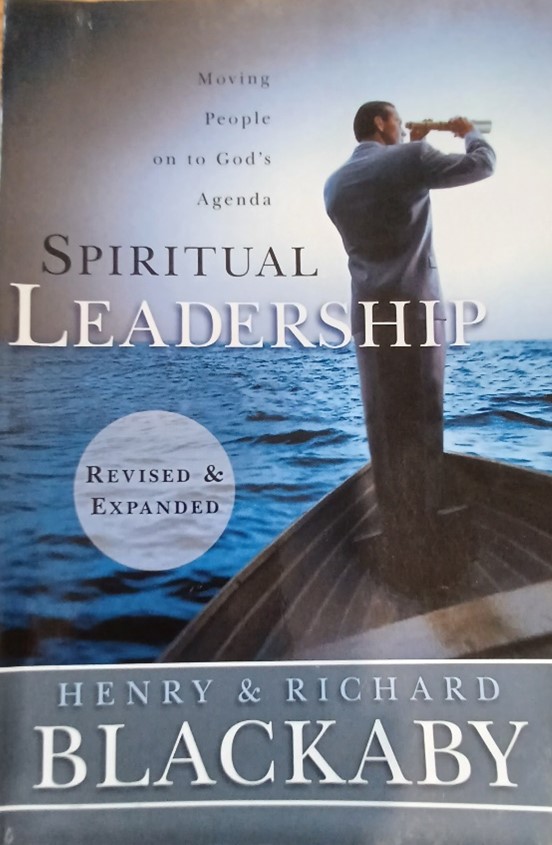
SPIRITUAL LEADERSHIP: Moving People on to God’s Agenda – by Henry & Richard Blackaby

Spiritual Leadership is one of the better leadership books I have read. The authors highlight that spiritual leadership is all about God. It is about moving people in the direction God wants them to go, about listening to God for how to lead well, and listening to God about what direction to lead. I appreciate how they point out that spiritual leadership is not the same as leadership in general. In fact, they begin the book with this statement: Spiritual leadership is not an occupation: it is a calling. Christians in any area of leadership should be spiritual leaders. This is a great book for any Christian who wants to lead well.

Book Reviews: Andy’s 2024 Reading Experience.

I will be sharing a brief review of every book I read this year. Hope you enjoy and hope it encourages you to keep reading.


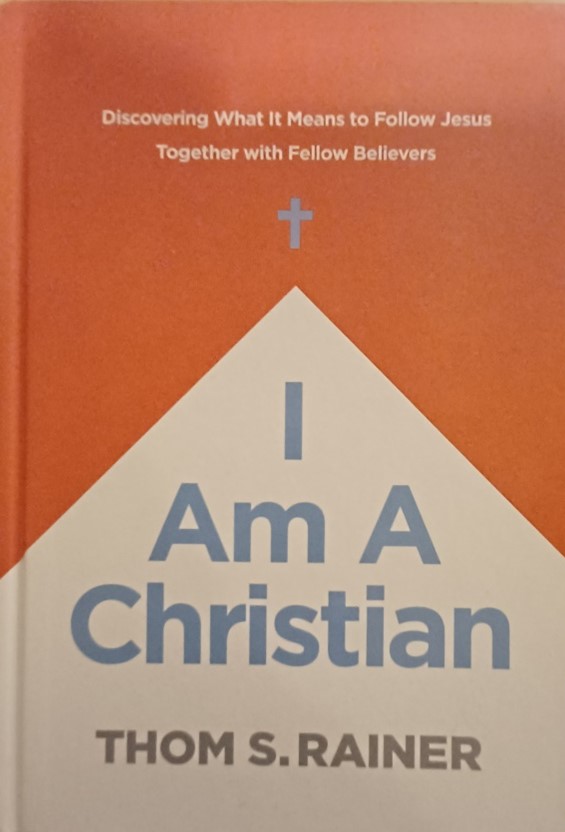
I AM A CHRISTIAN: Discovering What it Means to Follow Jesus Together with Fellow Believers – Thom S. Rainer

Thom Rainer outlines the basics of Christianity in a simple and straightforward manner. This little book would be great for new believers – and others – to explain what it really means to be a Christian in practice. Rainer introduces the reader to the main ways that a believer lives out their faith. He includes some good stories to help explain his concepts. A great biblical little book to help clarify what it means to be a Christian!

Perfect Public Prayers?

Public prayers can have great significance or be almost meaningless.

Years ago, I knew an older man whose mind was starting to deteriorate. It wasn’t easy carrying on a conversation with him, yet when asked to pray, he would pray these great prayers. They were not necessarily eloquent or filled with theology, but you could sense the love for God and the sense of friendship with Him.

When I refer to public prayers, I mean those usually prayed in our Sunday services at church. Here’s why I think some are more significant than others. Sometimes it seems a prayer is prayed strictly out of tradition or routine. The service always opens in prayer, so the pastor needs to pray something. Or the pastor prays before he begins his sermon just because that his is routine. Sometimes it even seems like it is just filler or used as a transition. We’ll pray now so the musicians can sneak onto the stage and magically appear at their instruments.

Some public prayers seem like the ramblings of someone who has no idea what they want to pray about, so they just stumble into their prayer. In some cases, you know exactly what a person will pray because they always pray the same prayer. It seems that the one leading in prayer sometimes just says a few nice words, but has forgotten they are addressing the Lord God Almighty, the Creator of the Universe!

On the other hand, there are some prayers that are well thought through and prayed with heartfelt words like the older gentleman above. So how can we improve our public prayers?

First, remember whom you are addressing. When you are praying in a public service, you are not praying to the congregation. You are praying to the God of the universe. You are praying to the One who deserves all our praise. You might even want to begin your prayer with the lines of the Lord’s Prayer, “Our Father who art in heaven,” or a similar address to the Creator of the world. As you lead in public prayer, you are functioning in a priestly role, bringing the congregation before the Father and connecting with Him.

Do not pray to teach someone something. Some public prayers seem as if the person praying is using that platform to try to tell the congregation something, rather than leading the congregation into the throne room of God. A prayer is not a time to teach a theological truth, though it is definitely a time to give thanks to God for that truth and what it means to us as believers. (And please don’t pray the announcements: “Thank you, God, that we can have a Valentines Banquet for our married couples next Friday at 7 and that we can get free tickets for the event.” Keep the prayer a prayer.)

When you are asked to pray publicly, do some preparing. Musicians practice their music. The pastor probably writes out his sermon. He might practice it out loud. Why would we not prepare, maybe even practice, what we want to say to God in our prayer?

I’m not sure where I got the impression, but when I was younger, I looked down on people who used written prayer. In my mind, you were less spiritual if you didn’t just “pray from your heart.” In my church we never used prayers of old or that others had written. Yet I have learned the value of writing out what I wanted to say. Sometimes I write out the complete prayer, other times I have a point form list to refer to. Taking time to do this means I have put some thought into what I will say.

If we write it out, we will be less likely to forget something we wanted to include. In a pastoral prayer you may want to have a reminder of the various needs of the congregation, including names of individuals needing prayer. In an opening prayer you may want to thank God for something related to the theme of the morning, or of the sermon coming later. It can be a time thank God for being the great and awesome God we have come to worship.

Writing out a prayer can help us avoid some of the annoying habits we get into without realizing it. We can cut down on the “umms” or stop repeating the same phrase. For some reason, a common word I often hear in prayer is “just.” We just want to thank you, we just want to ask you to help, we just…. Our words mean something. Saying “just” trivializes what we are asking God for or thanking him for.

It is a privilege and honour to lead in public prayer. Let’s treat it as the privilege and honour it is to approach our Heavenly Father on behalf of those gathered to worship.

Keep looking up,

Andy Wiebe

Leading Without Accolades

I remember a leader telling me that she was discouraged because she never heard from people if they appreciated what she was doing. We all long for approval and acknowledgement. We want validation because it feeds our desire for people to like us and like what we do. We need to keep leading even when the accolades are not freely given.

The general population is not good at giving approval for something they expect. If we lead well in church, we will rarely get feedback because we are doing exactly what we signed up to do. We are leading in the way we agreed to when we took on the responsibility. Sometimes, when the verbal accolades are not given, we may be able to read the body language of the crowd to recognize their approval. If people laugh at a joke you shared in a speech, take that as an accolade. If they respond with clapping or raised hands during worship you lead, receive that as a sign you are leading well as they are responding physically.

It is also important to recognize that people are more likely to give negative feedback than positive feedback. If there is absence of negative feedback, take that as a good sign. No feedback may mean that people are okay with how things are going.

As leaders, we also need to learn to get our affirmation elsewhere. We cannot depend on the people we lead to be a gauge of how well we are leading. Instead, we need to be clear about what our role is and do it to our best ability. Yes, we love and need feedback, but we must learn to lead without it coming from the ones we lead. And then when we do receive positive feedback, accept it as a bonus rather than an expectation.

Sometimes we can look at the success of our leadership and receive positive encouragement from that, but sometimes our leadership is not met with the success we long for. We may be doing it all right, but still have no success to point to.

Am I now trying to win the approval of human beings, or of God? Or am I trying to please people? If I were still trying to please people, I would not be a servant of Christ.

Galatians 1:10

In Galatians 1: 10 Paul points out that our goal should be to please God rather than look for the approval of men. Yes, it feels really good and is affirming to hear the “well done” of people, but it is even more encouraging to know that God approves of us and our leadership. Some years ago, my leadership was challenged to the point that I ended up losing my position. This affected me deeply. It was incredibly encouraging when I was at a pastor’s retreat, and God used others to affirm His love for me. Three different times in those couple of days, God said to me, “You are beloved Son in whom I am pleased.” Once it was a strong impression in my mind and twice it was as different people prayed over me. The approval of God was worth much more than that of men.

It is also valuable to recognize that anything good is done only through the work of Christ in us. 1 Corinthians 3: 7 points out, “So neither the one who plants nor the one who waters is anything, but only God, who makes things grow”. God equips us and invites us into leadership roles. Our first responsibility is to Him! As we serve in leadership, we ought to serve with a desire to please God first.

When the accolades do not come, continue to lead as God has called you. Do your job well and do it for the Master who called you to that role in the first place.

Keep looking up,

Andy Wiebe

Pushing Past Nervousness!

I remember the first time I had to speak publicly to a large crowd. It was only to make an announcement, but I was shaking so bad I didn’t know if I would be able to get the words out. Most of us will be nervous at some point, but if we want to lead, we need to push past the nervousness. Instead of just avoiding leadership, we need to find a way through. Too many people are willing to ignore their interest in leadership rather than learn how to get through it.

I’ve been in roles that require public speaking for 30 years, and still experience nervousness – though not quite like that first announcement I made years ago. Let me share some of the things I do to help me push through.

Prepare Well

I still get nervous from time to time, especially if I am leading something new or if it is a special event that we have worked towards for a while. My first step in dealing with my nervousness is to make sure that I know what my role is. If it is to make a speech, I write it out. If it is to lead an activity of some kind, I make sure I have all the directions written out step by step. Sometimes it is helpful to consider what questions others may ask as I lead, so I can address those in my write-up.

If I need any resources or props, I gather them ahead of time, and place them where I will have access to them as needed. If I am depending on others for assistance, like someone running the presentation slides for me, I make sure the presentation is easy to follow with a clear guide on how they can follow along.

Create a Step by Step Plan.

While this may be part of preparing, I want to make sure I point out that a clear plan helps calm my nerves. If I am preaching or making a speech, I need my script or outline. When leading a meeting I want to be clear on what will happen when, and make sure that my supporting documents are in the order of the agenda. I want to have my documents ready to go, and be ready to call for decisions to be made or actions to be created.

The clearer I am in my head as well as on paper, the less nervous I am.

Do a “Walk-through” Practice.

I like to physically enact the event if possible. This means talking through the talk or reading over the agenda to make sure everything makes sense. It’s a little like the basketball player who shoots 100 baskets every morning. The more we have already “experienced” an event, the more likely we will be more comfortable when the real things comes and execute it better. The practice allows time for correction if you realize something needs changing.

Prayer

As a Christian leader, prayer needs to be part of every aspect of our leadership. I probably should have put this higher up in the article! I pray through every event or talk I lead. I want to be clear that I am doing what God is asking of me. I want His guidance in preparing. I want to hear His voice as I practice to discern if changes are necessary. I want to make sure He gets the glory, and that everything I do gives Him honour.

And as I place myself and my endeavours in his hands, I can relax a bit, knowing that I am not on my own.

Just Do It.

After all the prayer and preparation and practice, there comes a point where I just have to do the event and trust that God will help me do it as well as possible. One of the ways to push through nervousness is to just do it. I’ve found the more often I do it, the less nervous I am. Just this past Sunday, as I was waiting for my time to go up and preach, I realized that I was not nervous at all. God has helped me to push through again and again so that my nerves do not hold me back like they used to.

It’s okay to be nervous, just continue to push through and see how God will help you to do your best for Him.

Keep looking up,

Andy Wiebe

Curiosity Opens Your Eyes

When our girls were little, I loved seeing the world through their eyes. They were curious about things that I had long become accustomed to and never noticed anymore. They noticed the little bugs crawling on a windowpane. They were excited about the colours of flowers – and weeds. Their little fingers loved to touch the dirt and play in water.

As Christian leaders, we need to reignite our curiosity. We need to be comfortable asking questions, even when we have no answers. It seems that somewhere in our growing up we decided we should be more concerned about answers than questions. Yet questions help us to learn more than answers. They open new ideas and new angles on answers we thought we had sorted out. We need to be more curious.

We should be curious about the people we work with whether on our team or those we serve. We assume many things about each other, and don’t know how little we know until we start asking questions. Ask people about their families, or their pets. Ask people about their dreams and experiences. Be curious enough about people for them to believe you truly care about them. I love learning about people. I love to hear stories of how couples met, or what their families are up to. I love to hear how they started a business and it grew.

Curiosity can benefit us as we give leadership to programs and ministries. It is when we are curious that we ask the questions that no one else is asking. We ask about how the program is really working. We want to know how the leaders are doing. Are they feeling adequate or is more training necessary. Are they feeling they have an impact on those they connect with? Do they have ideas to improve how they run the program and are waiting for someone to give them the courage to try them? When you are curious, you may discover great things happening that you can share with others to encourage them. I enjoy finding people who are serving in an area of their expertise. Some people serve because someone is needed in that role, while others serve because they are uniquely equipped to excel in that role. While willing volunteers are greatly appreciated, I love finding those who are serving in exactly the role they were created for.

Curiosity helps us to learn. As long as we stay curious, we will continue learning. We will search out new books or learn new skills. We will sign up for classes. Curiosity can draw us into new areas of growth as we willingly pursue new interests and new skills. My curiosity has helped me to try new things. When I was a youth pastor, I decided I needed to learn to play guitar so I could lead the youth in singing. I loved it. Some years later I tried my hand at songwriting. I wasn’t good at it but had fun trying. At one point, I learned how to create balloon animals. It was fun learning how to shape balloons into recognizable creations, and then to even use them to tell children’s stories.

Our eyes can be opened to new experiences – and so can our tastes. Just this past week my wife, Lynnette, and I tried a new restaurant, the Cozy Pierogi. I had driven by the place a few times and was curious about their menu. It turned out to be pretty good! As we try something new, we often discover new favourites. Curiosity introduces new experiences into our lives as we are willing to step into something foreign but interesting.

Last week I wrote about the courage to risk. I believe curiosity can pay a part in our courage to risk. Curiosity invites us to courageously try something new to see if it may be better than what we were doing in a program we were running.

We would all benefit from becoming like a little child occasionally, to be curious about things that we believe we have completely figured out. And as your curiosity opens your eyes, you may discover new and wonderful ways of interacting with our world and the people around us.

Keep looking up,

Andy Wiebe