When Pastoral Care is Unnatural for You

I get excited about many parts of church leadership. I love to work on vision and strategy and even bylaws, and the constitution. I enjoy preparing and preaching sermons or teaching lessons, but I am not naturally aware of people’s needs. I don’t mind spending time with people, in fact, I enjoy it when I do, but caring for people is not readily on my mind. My mind is quick to look at how to plan, lead, and direct, but I need help and reminders to slow down and be with people. Maybe some of you can relate? If so, some of the following ideas might help both you and me.

Listen for the needs people express.

This is so straightforward that it hardly seems worth mentioning, yet I don’t always do this well. When people have conversations with me, I may stop and pray for them right there if they mention a need, but I often forget to check in later to see how things went.

Sometimes you hear people raising a prayer request in a group. The other day I heard someone ask for prayer for a test she had to undergo. That was a great opportunity for me to make a note somewhere to check in on her later. If someone makes a worry known, they likely want people to be aware and take notice. This might be a great time to arrange a coffee or make an appointment to meet with them and care for them.

Follow up on cues others notice.

Recently, I was meeting with a Transition Team at a church, going through the church’s Health and Vision Assessment we had just completed together. There were many encouraging and helpful responses from the congregation, but there was one person who consistently answered negatively. I didn’t pay too much attention. I thought he may just be a more thorough person and generally critical, yet a few on the team suggested he may need a visit from me. I hadn’t even considered that but agreed to their suggestion. I met with him and he seemed glad and was very willing to talk. He even indicated that he signed his name to the assessment in hopes someone would meet with him. We had a great conversation. I’m not sure we resolved anything, but he did appreciate the opportunity to be heard. Be alert to other cues that a person needs some attention.

Pause and evaluate the day in light of people.

It might be helpful to stop at one point in your day to think and pray through your interactions of the day, asking God to point out anyone who needs a call, a text, or a visit. You could do this at the beginning of your day, asking God to point out who from yesterday needs your care today. Or you might choose to do this at the end of your day, reflecting on the day that was, and planning how you might connect with people who come to mind.

If this is difficult, it can be helpful to keep a checklist on your desk with questions to prompt you to reflect on your daily interactions. Some questions could include:

  • Who has medical needs that are weighing on them?
  • Who expressed a specific need today?
  • Who is dealing with concerns in their marriage or family?
  • Who is leading or serving in a ministry and needs encouragement?
  • Who is dealing with depression and could use a personal connection?
  • Who has someone else suggested needs care?
  • Who has been absent from church for a while?
  • Who has the potential for greater leadership responsibilities and could use a conversation to discuss the possibilities of this?
  • Who has exciting news personally or in their family that you could celebrate with them?

Pastoral care is an important aspect of effective leadership, but it doesn’t always come naturaly. If you are like me in this way, I hope this post encourages you to adopt some of my suggestions or find methods of your own to help you notice ways you can better care for those you lead.

May your ability to notice people who need care expand as you are intentional about it.

Keep looking up,

Andy Wiebe

Grief and Hope

As I’m thinking about Christmas and the family celebrations, I am well aware that my mom will not be around this year. She passed away a few months ago. Going to see my Dad at Christmas time will not be the same. There will be an empty spot at the table and a big hole in our conversations where mom would have been.

Blue Christmas Services are special services held in December. Maybe you have had the privilege of taking in one of these services which are designed especially for those who have lost loved ones in the last year. The service includes carols and scriptures like other Christmas services, but it also takes time to acknowledge the pain that many in the service are facing. It is meant to be a time of healing and encouragement for those who are grieving and to give them encouragement as they enter their first Christmas without that loved one present.

The service is a time to remember the hope we have in Christ. All who have put their faith in Christ, if they are gone from here, are present with the Heavenly Father. We have a hope, a certain understanding that to die here is only the doorway into God’s presence.

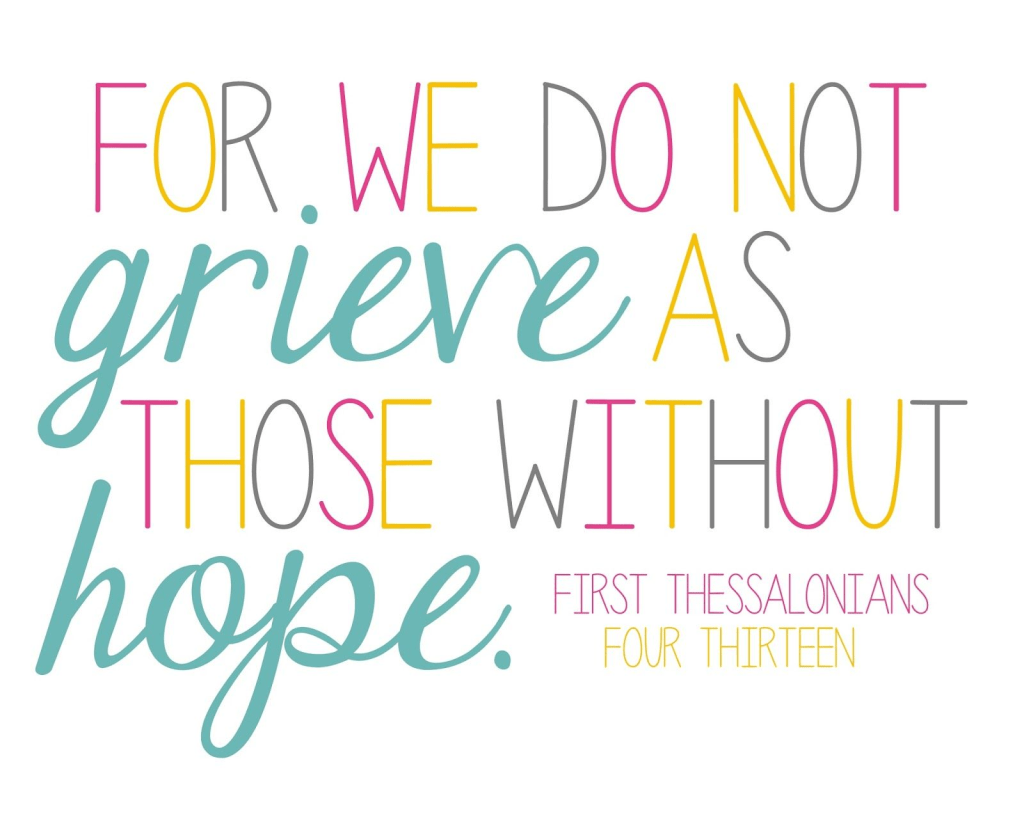
Brothers and sisters, we do not want you to be uninformed about those who sleep in death, so that you do not grieve like the rest of mankind, who have no hope. For we believe that Jesus died and rose again, and so we believe that God will bring with Jesus those who have fallen asleep in him.

1 Thessalonians 4:13-14

As believers in Jesus, we believe that His death and resurrection was for us. We put our faith in Him and receive eternal life. We get a taste of this eternal life already, but don’t experience it’s fullness until we are with Jesus in God’s presence.

When believers die, they are immediately with God. They are immediately ushered into a place of “no more death or mourning or crying or pain” (Revelation 21:4). Not only are they experiencing the joy of being in God’s presence, but they are also immediately removed from all death or mourning or crying or pain. My mom was suffering a lot of pain regularly. She was taking many different medications. Life was difficult at times. But now she is no longer suffering any crying or pain. That is encouraging even as I grieve.

Knowing that she is with Jesus gives me hope. My grieving is not for her, but for my own loss. I am excited and glad for her, but there are times when I feel the loss. We grieve with hope. We feel the loss but are encouraged by the certainty of where we believe she is now.

Are you feeling the pain of missing a loved one this Christmas season? May it not be a grieving without hope. If they had put their faith in Christ, we know that they are with Jesus. And if you have done the same, you will join them eventually as well.

Yes, we grieve. We may go through the different stages of grieving numerous times as we continue to adapt to this person not being around anymore, and still rejoice that they are now in a place of no more crying and pain in the presence of the Heavenly Father. As believers in Jesus and the promises of a future with Him in heaven, we grieve with hope.

Keep looking up,

Andy Wiebe

The Privilege of Being a Pastor #2: Walking with Families

One of the joys of being a pastor is getting to know the people in your congregation. Often, this happens during very personal and intimate moments as you walk with them through these significant milestones.

Babies and Child Dedications

In my experience, it is not unusual for the pastor to be one of the first ones outside the family to be welcomed to the home of new parents. Sometimes my wife and I have even visited the new parents and baby at the hospital to meet the baby and pray for the family before they are sent home. What a special privilege!

Often families arrange with the pastor for a Child Dedication Ceremony. I love being able to hold the child and offer a prayer of blessing on the child and the parents. What a profound moment as we ask God’s blessing on the young life – and I get to do that!

Conversion and Baptisms

Many parents have been excited to share with me that their child prayed to surrender their life to Jesus. Then later, I get to walk them through a baptism class and baptism. Often the family invites me and my family to join them for a celebration with their family and friends after the baptism. They want us to participate in the celebration!

Weddings

This is a fun one! I love to walk with young couples as they prepare for their wedding. I enjoy the conversations my wife and I can have with the couple as we teach and encourage them and help them prepare for this new journey they are beginning. It is a lot of fun to celebrate with them and their families on that special day.

Sickness

While this is not a fun one, there are times when families face serious illness and long hospital stays. It is a privilege to visit them in the hospital, to be there as a friend and a representative of God. It is good to be present with them, and to pray with them. And it exciting when we see God give them restoration and new health.

Funerals

One of the hardest things to do as a pastor is to walk with a family I have known for a long time as they cope with the death of a family member. I may be able to give a hug or an encouraging word, but most of all, I get to point them back to God and to scripture.

Some pastors have been at the same church long enough to walk through a few of these, or all of these special moments with the families they serve. Now they are marrying the same adult they dedicated as a child years ago.

As a pastor, I get the privilege, very often with my wife, to be part of some significant moments in other families lives because they love us and want us to be part of their family celebrations. What a joy to walk with people during some of their best and their worst times in their lives!

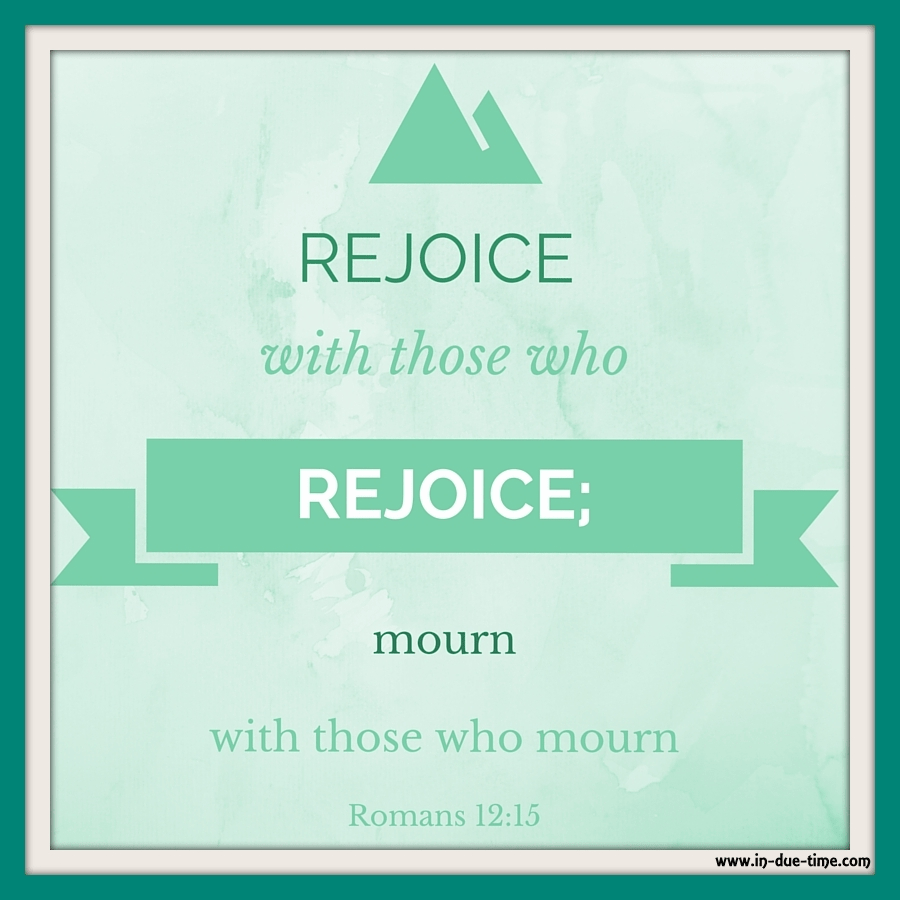
It is a privilege to rejoice with those who rejoice and weep with those who weep.

Keep looking up,

Andy Wiebe

Curiosity Opens Your Eyes

When our girls were little, I loved seeing the world through their eyes. They were curious about things that I had long become accustomed to and never noticed anymore. They noticed the little bugs crawling on a windowpane. They were excited about the colours of flowers – and weeds. Their little fingers loved to touch the dirt and play in water.

As Christian leaders, we need to reignite our curiosity. We need to be comfortable asking questions, even when we have no answers. It seems that somewhere in our growing up we decided we should be more concerned about answers than questions. Yet questions help us to learn more than answers. They open new ideas and new angles on answers we thought we had sorted out. We need to be more curious.

We should be curious about the people we work with whether on our team or those we serve. We assume many things about each other, and don’t know how little we know until we start asking questions. Ask people about their families, or their pets. Ask people about their dreams and experiences. Be curious enough about people for them to believe you truly care about them. I love learning about people. I love to hear stories of how couples met, or what their families are up to. I love to hear how they started a business and it grew.

Curiosity can benefit us as we give leadership to programs and ministries. It is when we are curious that we ask the questions that no one else is asking. We ask about how the program is really working. We want to know how the leaders are doing. Are they feeling adequate or is more training necessary. Are they feeling they have an impact on those they connect with? Do they have ideas to improve how they run the program and are waiting for someone to give them the courage to try them? When you are curious, you may discover great things happening that you can share with others to encourage them. I enjoy finding people who are serving in an area of their expertise. Some people serve because someone is needed in that role, while others serve because they are uniquely equipped to excel in that role. While willing volunteers are greatly appreciated, I love finding those who are serving in exactly the role they were created for.

Curiosity helps us to learn. As long as we stay curious, we will continue learning. We will search out new books or learn new skills. We will sign up for classes. Curiosity can draw us into new areas of growth as we willingly pursue new interests and new skills. My curiosity has helped me to try new things. When I was a youth pastor, I decided I needed to learn to play guitar so I could lead the youth in singing. I loved it. Some years later I tried my hand at songwriting. I wasn’t good at it but had fun trying. At one point, I learned how to create balloon animals. It was fun learning how to shape balloons into recognizable creations, and then to even use them to tell children’s stories.

Our eyes can be opened to new experiences – and so can our tastes. Just this past week my wife, Lynnette, and I tried a new restaurant, the Cozy Pierogi. I had driven by the place a few times and was curious about their menu. It turned out to be pretty good! As we try something new, we often discover new favourites. Curiosity introduces new experiences into our lives as we are willing to step into something foreign but interesting.

Last week I wrote about the courage to risk. I believe curiosity can pay a part in our courage to risk. Curiosity invites us to courageously try something new to see if it may be better than what we were doing in a program we were running.

We would all benefit from becoming like a little child occasionally, to be curious about things that we believe we have completely figured out. And as your curiosity opens your eyes, you may discover new and wonderful ways of interacting with our world and the people around us.

Keep looking up,

Andy Wiebe

3 Steps to Ensure You Are Not a People-Pleasing Leader

My natural tendency is to be a people pleaser. I don’t feel good when someone disagrees with me. Recently I was talking with a friend who challenged a statement made by my church. It was regarding a practice of the church that we believed was scripturally accurate, but he was not willing to agree to this statement. I realized that I was trying really hard to come up with at solution so that he would be satisfied. I was trying to please him, rather than stand true to a statement we had made and believed to be biblically accurate. There was no reason for me to try to please him except that I like this guy and didn’t want to feel like there was disagreement between us.

Any leader needs to realize the value of being considerate and finding ways to get people to follow, but we cannot lead from a position of pleasing people first.

Know What You Believe.

I realized that I was a little unsure in this conversation. I was being asked to support a statement that I hadn’t given a lot of thought to. I believed it to be true, but when questioned, my first thought was to figure out how to make him happy rather than about showing him why I believed this statement.

I realized that I needed to be clear on what I believed. My job as a leader was not first to make him feel good about this statement but to show why we believed it was biblical and one worth following. Yes, I wanted him to agree – and I wanted him to feel good about it and accept it as worthwhile. But I should have begun with a desire to protect the truth of the statement rather than trying to please him.

If you know what you believe, then you know what to stand up for.

Know Why You Believe it is True.

Not only did I need to believe the statement was one that we should live by, I needed to know why. The more we understand the why of something, the easier it is to stand up for it. When there are certain expectations in our church or organization that we don’t agree with, it is hard to stand up for them. If we believe them, it may help to also know why we believe them to be worth operating by.

Sometimes the “why” can help us explain it to those who are questioning us. If I am convinced of the value of something, I will be more likely to stand up for it instead of trying to downplay it with the hope the person I am speaking with will agree with me.

Know What You Will Do if Someone Disagrees with You.

Not everyone you encounter will agree with you on certain issues. Even the people in your organization, and your friends, will not always see eye-to-eye with you on everything. What then?

Sometimes it is easier to try to please the person, and we end up being wishy-washy, always changing our minds according to whom we are talking with.

Sometimes it is easier to fight for what we believe and stand for, with the risk of losing relationships.

We need to find a way to balance, standing up for what we believe and our desire to be in a good relationship with people. Ideally, we convince our friend to agree with us, or realize they were right. And we have maintained our relationship.

Unfortunately, we will have disagreements where we cannot convince someone to change their mind and agree with us. We need to figure out how to continue to have good relationships with people who see things differently than we do. This will not always be easy. Some relationships will not continue. Even if relationships fall apart, maintain a proper love and respect for the other person. Sometimes we will not be able to maintain our integrity and our relationships at the same time. Then part in as amiable manner as possible.

We will always come across people we disagree with. Let’s ensure we stand up for what we believe even as we value the relationships we have.

Keep looking up,

Andy Wiebe

Book Reviews: Andy’s 2022 Reading Experience

I will be sharing a brief review of every book I read this year. Hope you enjoy and hope it encourages you to keep reading.


DISCIPLINES OF A GODLY MAN – R. Kent Hughes

Disciplines of a Godly Man is a call to men in the church and home to stand up and be whom God has called them to be. Kent Hughes challenges men to step up and discipline themselves with chapters dealing on personal soul issues, relationships, character, and ministry. The church is looking for good men to give themselves to the work of ministry. God is looking for good men to give themselves to leading in the home, the church, and in the culture. Hughes does a good job reminding us that this is not about legalism: doing something in order to gain God’s favor. In fact, this is the opposite. This is about living in such a way that we honor the One who already loves us and calls us to a disciplined life of faith in Him. This would be a great book to walk through with a Men’s Group.

Leaders Inspire Hope

People need hope. There are too many things going on in our world that cause people to fear and to worry.

We can all find things to complain about or worry about. I don’t think we need any training in this area. It seems to come so naturally to us. It is much harder to look for and find the good in life, in business, and in ministry.

My grandma was a good pessimist – if there is such a thing. Don’t get me wrong. I’m not putting her down, but she was incredibly creative in finding things to worry about. If you are going to be a leader that inspires hope you will need to be an optimist. You will need to be creative in seeing the good in things and in finding things to smile about.

Hope is an antidote to fear. Hope teaches that just maybe we can make a situation a little better. If we can instill a little hope in the people we work with, we will have done a great kindness to humanity. And we may very well find that our team wants to work all the harder for us because they enjoy the environment and are excited about the good they are able to be part of.

I believe in God. I believe that He is over all things, so I can trust him to work in situations I am in. I know that no matter how dark life may get, God, through His Spirit is walking with me. Even the worst situation can become more hopeful when we realize God is looking after us.

I’ve come to recognize the value of inspiring hope in the people around me, and I’d encourage you to do the same. It can be difficult to know where to start, so here are a few suggestions:

  1. Focus on the positive things. You could use appreciative inquiry when planning ahead or looking to improve something. Appreciative inquiry is more interested in what is going well and building from that, than what is not going well and how to get rid of that. The focus is on what is positive.
  2. Be kind. People receive enough negative messages without us joining in. Be kind to others. Say something nice about who they are or how they have impacted you. Say thank you and please. Be respectful of them as a person.
  3. Seek creative solutions. Be more interested in dreaming wild dreams and allowing people to get carried away in their imaginations than stifling any conversation that goes a little off the beaten path.
  4. Be a giver. Give more than you take. Be generous with your time and money. Seek to bless others rather than receive.
  5. Be willing to learn from those who have figured out how to do something well. Instill hope by showing your team that others found solutions, and you can too.
  6. Be humble. Don’t let your pride prevent others from blossoming into incredible people. Be okay with helping others become their best, even if that means that at some point the student surpasses the teacher. That’s actually one of the best compliments you could receive.
  7. Share information freely. Sometimes hope is overcome by fear because people don’t see the whole picture. Communicate well so that people will know what they need to know.
  8. Be a friend. Sometimes people just need someone to walk with them, or to listen, and try to understand.
  9. Be a pray-er. Do not hesitate to go to God with the problems of the day. Ask God to help you. And pray that God will encourage others. Pray with people and for people. God can give hope no matter the circumstance.

Hope says there is a better tomorrow. Hope says I will have others to walk with me along the way. Hope says no matter the problem, we can find solutions.

Let’s be leaders that inspire hope in the people we work with.

Keep looking up,

Andy Wiebe

Book Reviews: Andy’s 2022 Reading Experience

I will be sharing a brief review of every book I read this year. Hope you enjoy and hope it encourages you to keep reading.


KEEP CHRISTIANITY WEIRD – by Michael Frost

Frost is encouraging the church to return to its counter-cultural beginnings. Instead of trying to blend in under the guise of being relevant, he encourages believers to be different. This is not about being strange to be noticed, but to do things differently than people expect. This is about actually caring for the needy, and being okay with doing things that the average person thinks is strange, if it means being more like Jesus. Frost writes, “Just as business and education is fostering greater creativity and innovation, the church is in a phase of rewarding compliance and conservatism and suppressing eccentricity.” (p. 16) We need to reward creativity, not “toeing the line”. We need out of the box thinkers and leaders.

Frost wants believers to come back to being different in a way that points people to Jesus and a proper understanding of God. “In a world of Moralistic Therapeutic Deism, keeping Christianity weird involves recovering our strange belief in a scary God who can’t ever be fully known, who doesn’t need us, whose face we can’t look upon, and whose name we can’t utter.” (p. 158)

This is a great book for anyone who wants their mediocre Christianity challenged!

Book Reviews: Andy’s 2022 Reading Experience

I will be sharing a brief review of every book I read this year. Hope you enjoy and hope it encourages you to keep reading.


HOPE IN THE DARK – by Craig Groeschel

Hope in the Dark: Believing God is Good When Life is Not addresses those questions we have when life is not going as well as we think it should. Craig Groeschel asks many of the questions that we have all asked from time to time, questions like: “Where are you God?” and “Why aren’t you doing something?” He draws on the book of Habakkuk where the prophet asks some of the same questions. Let me give you one quote that I thought was very helpful. He writes, “Habakkuk urges us to draw on our long-term memories of God rather than being so shortsighted that we choose to keep replaying only our immediate, distressing circumstances.” That is so good! As we take our eyes off of our present situation we can remind ourselves of God’s goodness in the past and know that that same God is still walking with us in the difficulties we face. This is a very encouraging book for anyone asking the questions about where God is in our pain.

Healing – What the Church Can Offer

I recently heard two statements by two different people that I believe are prophetic words for the church. In my experience, there have been shifts in how the church functions or what church leaders think is important in reaching people for Christ. When I was a young youth pastor, it seemed the emphasis was on finding ways to make church fun and cool. As I got a little older, books and seminars seemed to focus on the church being relevant and relatable to unbelievers. What is the next emphasis of the church as we reach out to people who have not yet met Jesus personally?

On January 24, 2022, I heard Adam Browett of Glad Tidings Church in Victoria, B.C., make a profound statement in his sermon: The church moving forward “looks more like a healing center than a rec center.” He pointed out that if we were to be following Jesus’ example, we would be surrounding ourselves with hurting people and healing their hurts.

Our world offers all kinds of entertainment. The church does not need to provide entertainment. The church needs to find ways of helping the hurting and lonely. Our church buildings should be places where people find healing. Those of us who have a relationship with Jesus, the Healer, should be people in whom others can find healing as we point them to Jesus.

Dr. Rob Reimer writes in Spiritual Authority, “I think more people are going to come to faith in Christ in this generation because they know they are broken and in need of a Healer than because they know they are sinners in need of a Savior.” Our emphasis when we share the gospel has so often been about showing people how sinful they were so they would recognize they need a Saviour. Instead, if we focus on brokenness and healing, people don’t need us to point out how hurt and lonely they are. And we have an answer to that hurt and loneliness. We have a Healer.

In his book, Reimer points out that almost every time Jesus mentioned the kingdom of God he also mentioned healing from diseases and casting out of demons and restoring what is good and right in people. The church has been too focused on the “getting out of here” aspect of the Kingdom of God, where our goal is to gain eternal life and then just wait for that to be fulfilled. The kingdom of God is where what is bad is made right. The kingdom of God must be evident in displays of God’s power, as can be seen in demons cast out and people healed and relationships restored.

Our world is full of conflict. Countries are at odds with each other. People are at mad at each other. Large demonstrations and protests are rising up out of people’s frustrations. Violence is not uncommon. Disputes and arguments dominate social media. People are mad at the government and frustrated with the pandemic and all its fallout. Marriages and families are struggling and breaking apart. Many people are struggling with depression. Suicide is a way out for many. People are hurting.

If we truly love our world, if we as Christians want to truly love the hurting as Jesus did, then we need to be people offering healing, and our churches need to be places of healing. We need to believe God can still do miracles and bring healing and restoration. We need to speak and act with His authority and power to bring healing to our world.

This will not be just up to the pastors or church leaders. This is the role of every believer. We have the Holy Spirit in us. We have his power at work in and through us. We need to learn how to bring his healing to the hurting people around us. This will take much prayer, some in depth reading, and practice, as well as a continual filling of the Holy Spirit.

This is the need of the church today, but it is really just going back to what Jesus did when he was on earth, and what the apostles did as they established churches, and what New Testament church leaders did in their communities. We need to come back to inviting God to display his power and to bring healing to our hurting world again.

Let’s pray that the church will become the healing center it is meant to be.

Keep looking up

Andy